- Inicio
- »
- Glosario de términos
- »
- Balance Sheet Definition
Balance Sheet Definition
Definición en 60 segundos
Picture the cuenta de resultados as your company’s highlight reel for the season—wins, losses, and net income. En balance general is the full‑body X‑ray taken on game day. It shows everything you own (total assets), everything you owe (liabilities), and what’s truly yours (equity) at a single point in time. Bankers, investors, and even savvy suppliers scan it to judge whether you can pay the next bill or fund the next big idea.
Por qué es importante
Credit mojo: Lenders size up collateral and leverage before green‑lighting a loan.
Investment signal: Healthy equity cushions attract investors hunting for sustainable growth.
Strategic GPS: Spot cash‑flow gaps or under‑used assets long before they derail operations.

Anatomy of a Balance Sheet (Format & Structure)
Una plantilla clásica tiene dos secciones principales apiladas de arriba abajo:
| Sección | Key Accounts | In Plain English |
|---|---|---|
| Activos | Cash, accounts receivable, inventory, PP&E, intangibles | “What we control”—listed by how fast each item can turn into cash |
| Liabilities + Equity | Accounts payable, accrued expense, long‑term debt, shareholders’ equity | “How we paid for it” — short‑term obligations first, then long‑term debt, then owner financing |
Core Formula
Assets = Liabilities + Equity
Every journal entry posts equal debits y credits to keep the equation in balance.
Real‑World Example (USD 000s)
| Date: | 31 Dec 2024 |
| Activos | |
| Cash & Cash Equivalents | 1,200 |
| Cuentas por cobrar | 750 |
| Inventario | 600 |
| Property, Plant & Equipment | 3,450 |
| Total Assets | 6,000 |
| Pasivo | |
| Accounts Payable | 500 |
| Accrued Expenses | 300 |
| Long‑Term Debt | 2,200 |
| Total Liabilities | 3,000 |
| Shareholders’ Equity | |
| Contributed Capital | 2,200 |
| Retained Earnings | 800 |
| Total Equity | 3,000 |
| Liabilities + Equity | 6,000 |
Balance Sheet vs. Income Statement
Think snapshot frente a highlight reel. The balance sheet freezes your financial position at period‑end, while the income statement films the revenue‑and‑expense action that got you there. Profit from the income statement flows into retained earnings, neatly linking the two estados financieros.
Key Accounts to Watch
- Activo circulante: cash, receivables, inventory
- Non‑current Assets: PP&E, intangibles
- Current Liabilities: payables, taxes, short‑term debt
- Long‑term Liabilities: bank loans, bonds
- Equity: common stock, additional paid‑in capital, retained earnings
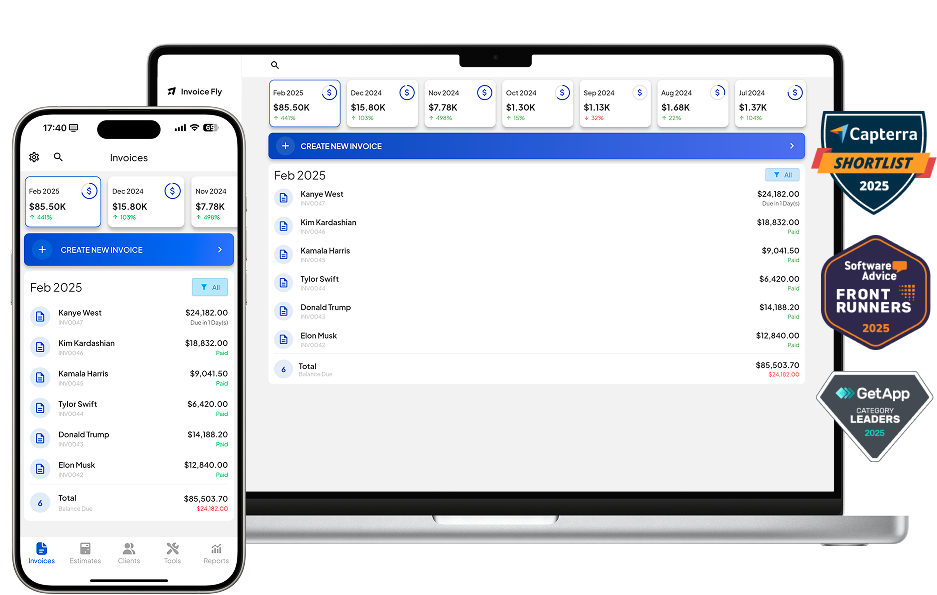
How InvoiceFly Makes It Effortless
- Receipt Scanner auto‑categorizes expenses, keeping your books clean without extra clicks.
- Time Tracking pipes labor costs straight into expense accounts for accurate project margins.
- Online Payments post to accounts receivable in real time, so your total assets reflect reality—not yesterday’s estimate.
Preguntas frecuentes
It reveals liquidity, solvency, and capital mix at a glance—vital intel for anyone assessing risk or valuing the company.
- Activo circulante
- Non‑current Assets
- Pasivo corriente
- Shareholders’ Equity (Sometimes liabilities are split into current and long‑term, making five blocks. Same story, different layout.)
Assets, liabilities, equity—everything else is just a supporting actor.
Total up every asset; total up every liability; tally equity. The sheet balances when Total Assets = Total Liabilities + Total Equity. Software like InvoiceFly does the heavy lifting so you don’t have to.
One rogue entry—often an accrual or mis‑classified equity move—can throw the equation off. Trace new postings and re‑run the totals.
Monthly is standard for SMEs; quarterly is the bare minimum if you plan to raise capital or borrow.

Otros recursos gratuitos




Pruebe Invoice Fly hoy mismo
- Envía presupuestos y facturas en segundos
- Recopilar pagos con tarjeta y en línea
- Recibir notificaciones instantáneas
- Gane más puestos de trabajo