
¿Qué es la construcción? Explicación básica
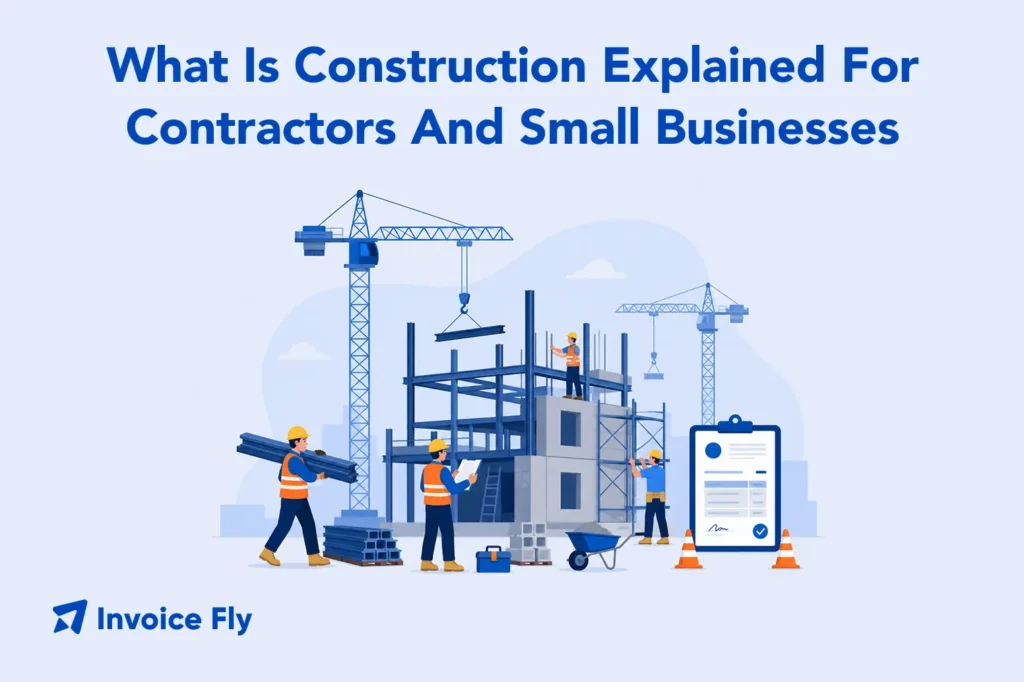
Tabla de contenidos
- What is construction?
- Brief history of construction
- Construction careers
- Types of construction
- Stages of construction
- The order of construction
- Rules and laws of construction
- Why construction is important to modern life
- Organize construction estimates, invoices, and project paperwork more efficiently
- Preguntas frecuentes
Construction is the process of planning, financing, designing, and building structures and infrastructure such as homes, offices, roads, bridges, and industrial facilities. The construction industry combines labor, materials, equipment, engineering, and project management to create and maintain the built environment people use every day.
Construction also refers to the industry itself. The construction sector includes contractors, engineers, architects, project managers, tradespeople, suppliers, and equipment operators working together to complete projects safely and efficiently.
What is construction?

The definition of construction is the process of assembling, building, repairing, or renovating structures and infrastructure.
Construction projects can include:
- Residencias
- Apartment buildings
- Commercial offices
- Factories
- Roads and bridges
Construction involves much more than physical labor. Every project also requires:
- Planning
- Financing
- Ingeniería
- Design
- Permisos
- Programación
- Gestión de la seguridad
For example, building construction for a new office tower may involve architects creating blueprints, engineers calculating structural loads, contractors managing crews, and electricians installing wiring systems.
The construction industry also includes many specialized trades such as carpenters, plumbers, electricians, roofers, masons, and heavy equipment operators. Large projects usually require multiple contractors and skilled workers coordinating together throughout the build.
People interested in starting their own company often begin by learning cómo crear una empresa de construcción before taking on larger projects or hiring crews.
Need a better way to organize construction estimates, invoices, and project paperwork? Speed up your workflow with our creador de facturas and keep construction jobs organized from estimate to final payment.
Brief history of construction
Construction has existed for thousands of years. Ancient civilizations used early construction methods to build homes, temples, roads, and defensive structures using stone, mud bricks, and timber.
Some of the best-known examples of historical construction include:
- Egyptian pyramids
- Roman roads and aqueducts
- Greek temples
- Ancient Chinese walls and bridges
As technology improved, construction methods became more advanced. The Industrial Revolution introduced steel production, cranes, reinforced concrete, and powered machinery, allowing builders to construct larger and taller structures more efficiently.
Today, construction companies use advanced technologies such as:
- 3D modeling
- Drones
- Prefabrication
- Software de gestión de la construcción
- Sustainable building materials
Modern construction also focuses heavily on worker safety, energy efficiency, and faster project delivery.
Businesses adapting to modern building methods often follow current tendencias del sector de la construcción to improve productivity and remain competitive.
Según la Oficina del Censo de EE.UU., construction includes new work, additions, alterations, reconstruction, installation, and repairs.
Construction careers
The construction industry offers many career opportunities for skilled tradespeople, managers, engineers, and business owners.
Common construction careers include:
- Contratista general
- Carpintero
- Electricista
- Fontanero
- Mason
- Heavy equipment operator
- Construction manager
- Civil engineer
- Architect
- Estimator
For example, construction managers oversee schedules, budgets, subcontractors, inspections, and project timelines to help projects stay on track.
Many workers begin with entry-level labor jobs before specializing in a trade or moving into management roles.
Construction careers often provide:
- Strong job demand
- Competitive wages
- Hands-on work
- Opportunities for business ownership
People comparing trades often review cuánto ganan los trabajadores de la construcción before choosing a career path.
Contractors planning larger projects may also need proper seguro de construcción and licensing requirements before operating legally.
Types of construction
The construction industry includes several major categories of projects.
Residential construction
Residential construction focuses on homes and housing.
Algunos ejemplos son:
- Single-family homes
- Apartments
- Condominiums
- Townhouses
- Home additions
Residential projects are usually smaller and involve homeowners directly.
Construcción comercial
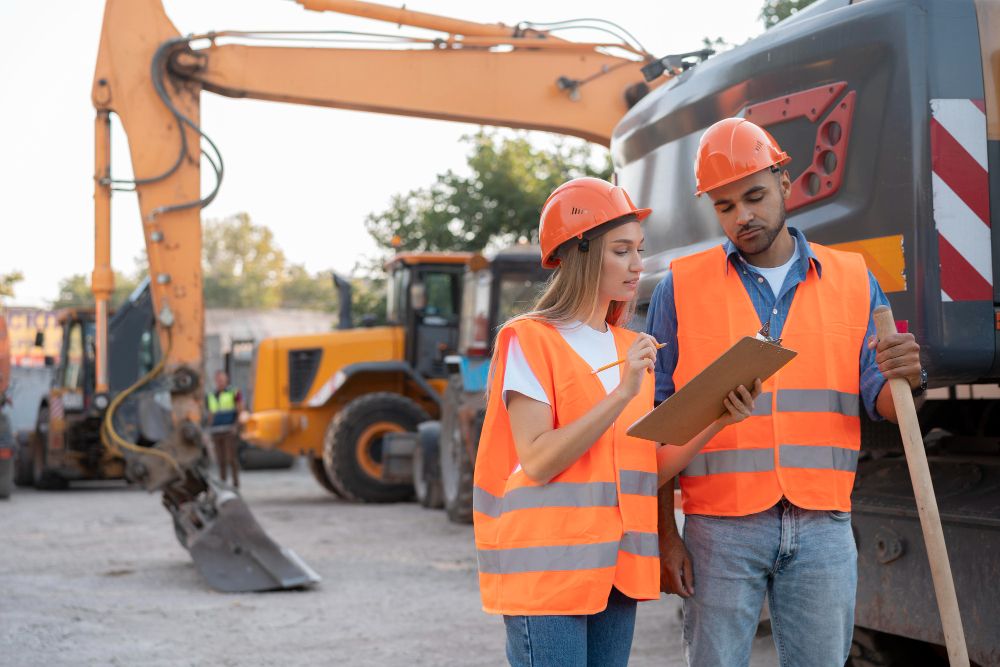
Commercial construction involves buildings used for business purposes.
Algunos ejemplos son:
- Offices
- Retail stores
- Restaurantes
- Hotels
- Shopping centers
Commercial projects often require larger budgets, more workers, and stricter building regulations.
Industrial construction
Industrial construction focuses on facilities used for manufacturing and production.
Algunos ejemplos son:
- Factories
- Almacenes
- Refineries
- Power plants
These projects usually require specialized engineering and safety standards.
Heavy civil construction
Heavy civil construction includes public infrastructure projects.
Algunos ejemplos son:
- Roads
- Bridges
- Airports
- Dams
- Water systems
Heavy civil projects often involve government agencies and large-scale equipment.
Businesses expanding into different project categories often improve operations by learning more about servicios de construcción and project management systems.
Stages of construction
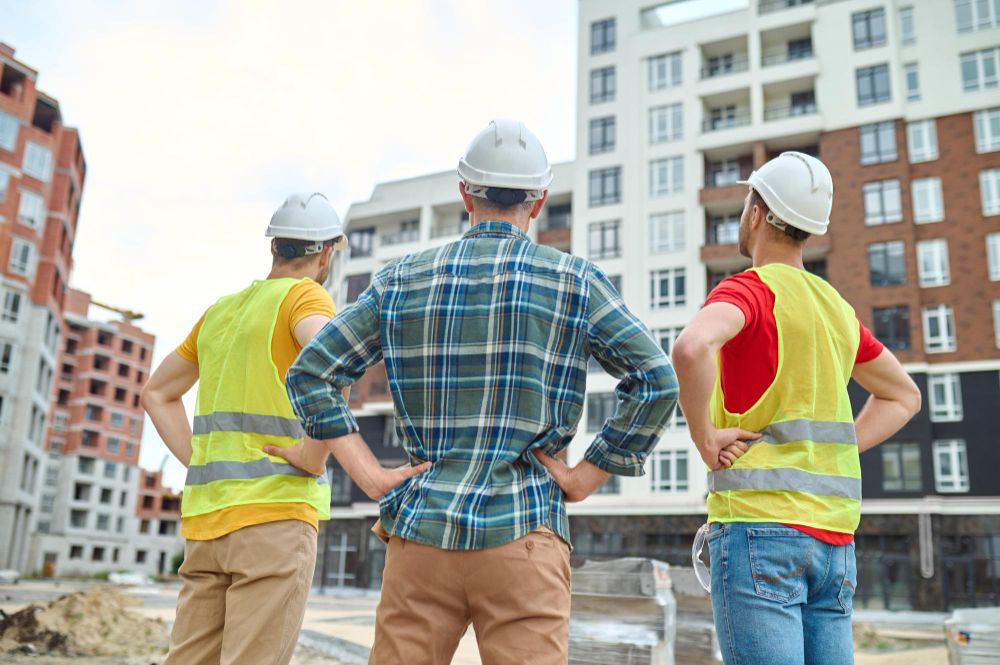
Most construction projects follow several stages from planning to completion.
1. Planning and design
This stage includes:
- Presupuesto
- Site analysis
- Ingeniería
- Architectural drawings
- Permisos
Project owners and designers create plans before physical work begins.
2. Pre-construction
Pre-construction involves preparing for the build.
Esto puede incluir:
- Hiring contractors
- Ordering materials
- Scheduling crews
- Estimación de costes
- Site inspections
Many contractors improve accuracy during this stage using presupuesto de construcción systems and digital estimating tools.
3. Site preparation
Workers prepare the land by:
- Clearing debris
- Excavating soil
- Installing temporary utilities
- Grading the site
4. Foundation work
The foundation supports the structure and helps distribute weight safely.
Common foundation types include:
- Slab foundations
- Crawl spaces
- Sótanos
5. Structural construction
This stage involves building the main framework of the project.
Algunos ejemplos son:
- Encuadre
- Steel installation
- Tejados
- Exterior walls
6. Interior systems and finishing
Workers install:
- Fontanería
- Sistemas eléctricos
- Sistemas de calefacción, ventilación y aire acondicionado
- Aislamiento
- Suelo
- Paneles de yeso
- Paint
7. Final inspections and completion
Inspectors verify that the project meets local building codes and safety requirements before final approval.
Businesses managing larger projects often improve workflow organization using software de presupuestos de construcción and digital project management tools.
The order of construction
The order of construction refers to the sequence teams follow to complete projects safely and efficiently.
Most projects follow this order:
- Planning and permits
- Site preparation
- Foundation work
- Structural framing
- Roofing and exterior work
- Mechanical systems
- Interior finishing
- Final inspections
For example, electricians and plumbers usually complete rough-in work before drywall installation begins.
Following the correct construction order helps prevent delays, safety risks, material waste, and expensive rework.
Contractors coordinating multiple crews often use organized contratos de construcción and scheduling systems to keep projects moving smoothly.
Rules and laws of construction

Construction projects must follow many regulations, building codes, and safety laws.
Construction rules help protect:
- Trabajadores
- Property owners
- Building occupants
- The public
Common construction regulations include:
- Building codes
- Normas de seguridad OSHA
- Environmental regulations
- Permit requirements
- Contractor licensing laws
For example, OSHA requires construction companies to follow strict rules for fall protection, scaffolding, heavy equipment operation, and hazardous materials.
Construction businesses may also need:
- Seguro de responsabilidad civil general
- Indemnización de los trabajadores
- Contractor licenses
- Site inspections
Companies preparing for regulated work often learn how to get a general construction license before bidding on larger projects.
Según la Departamento de Energía, construction includes activities involving building, altering, repairing, or demolishing structures and infrastructure.
Why construction is important to modern life
Construction supports nearly every part of daily life and economic growth. Homes, schools, hospitals, offices, roads, and utility systems all depend on construction projects for development and maintenance.
The construction industry also creates millions of jobs worldwide while supporting sectors such as manufacturing, transportation, engineering, architecture, and real estate.
Modern construction continues evolving through:
- Sustainable building practices
- Green construction materials
- Smart building technology
- Prefabrication and modular building
- Advanced construction software
Businesses improving operations and communication often use software CRM para la construcción and digital tools to manage projects more efficiently as they grow.
Businesses planning long-term growth often revisit cómo crear una empresa de construcción while improving operations, estimating systems, and project management processes.
Organize construction estimates, invoices, and project paperwork more efficiently
Construction businesses manage estimates, invoices, schedules, contracts, inspections, and customer communication across every project. Staying organized becomes increasingly important as projects grow larger and more complex.
Utilizando software de presupuestos de construcción helps contractors organize bids, schedules, invoices, and project information more efficiently while improving communication between teams and clients.
Growing construction companies can also simplify billing workflows using a generador de facturas gratis, plantilla de factura de construcción gratuita, y plantilla gratuita de presupuesto de construcción.

 English
  Español