
Outstanding Invoice: What it Means and How to Collect Faster
Tabla de contenidos
An outstanding invoice is simply an invoice you’ve sent to a customer that hasn’t been paid yet. Whether the due date is next week or was missed yesterday, in accounting terms, the invoice remains outstanding until the payment arrives. For small businesses, freelancers, and contractors, outstanding invoices represent money that’s owed to you and can have a direct impact on cash flow.
In this guide, we’ll explain the outstanding invoice meaning, the difference between outstanding and overdue invoices, and practical ways to follow up and get paid faster.

What Is an Outstanding Invoice
An outstanding invoice is any issued bill that hasn’t been paid yet. That’s it. It doesn’t matter whether the due date has come and gone. The moment you send a bill to a client, it becomes an outstanding invoice, and it stays that way until full payment lands in your account.
In bookkeeping terms, these invoices live in your accounts receivable. They represent money you’ve earned but haven’t collected yet. Keeping a close eye on these is key to managing your cash flow and avoiding gaps in your budget.
To understand qué es una factura and how it fits into your billing cycle, start with the basics. Once you know how invoices work, tracking outstanding ones becomes a lot easier.
Difference Between Outstanding and Past-Due or Overdue Invoices
People often use “outstanding” and “overdue” interchangeably, but did you know they don’t mean the same thing?
An outstanding invoice is simply unpaid. It may still be within the agreed condiciones de pago de las facturas, like Net 30, meaning your client still has time to pay without being late.
An overdue invoice is a past-due bill. The payment deadline has passed, and the client hasn’t settled the balance. At this point, you may be able to charge recargos por demora en la facturación depending on the terms you set.
Here’s a quick side-by-side look at how the two compare:
| Outstanding Invoice | Factura vencida |
| Has been issued but not yet paid | Has been issued but not paid after the due date |
| May still be within payment terms | Payment deadline has passed |
| No late fees typically apply | Late fees may apply |
| Appears in accounts receivable | Appears in accounts receivable |
| Requires monitoring | Requires follow-up and collection efforts |
Think of it this way: every overdue invoice was once outstanding, but not every outstanding invoice is overdue.
How Outstanding Invoices Affect Your Business
Unpaid invoices can create real problems for small businesses and freelancers.
When too many invoices sit uncollected, your cash flow tightens. You may struggle to cover payroll, buy supplies, or take on new work. According to the Cámara de Comercio de EE.UU., late payments are one of the top cash flow challenges for small businesses.
On top of that, a growing stack of outstanding invoices can make it harder to plan ahead or forecast revenue accurately.
How to Chase Outstanding Invoices
Chasing outstanding invoices doesn’t have to feel awkward. A clear, professional follow-up process helps you collect faster without damaging client relationships.
Here’s a simple escalation timeline to follow:
| Cronometraje | Recommended Action |
| 2–3 days before due date | Send a friendly reminder |
| Fecha de vencimiento | Send a payment due notification |
| 1–7 days overdue | Send a polite follow-up email |
| 8–30 days overdue | Escalate and discuss late fees |
| 30+ days overdue | Send a formal demand letter and consider next steps |
For the formal demand letter stage, be sure to apply any interest charges outlined in your Términos y condiciones de la factura. If needed, involve a collection agency or consider small claims court as a last resort.
How to Write an Outstanding Invoice Email or Letter
A good outstanding invoice email is clear, polite, and direct. It gives the client everything they need to pay you without requiring back-and-forth.
Every outstanding invoice email or letter should include:
- Nombre de su empresa e información de contacto
- The invoice number and issue date
- The total amount due and any remaining balance
- The original due date (and how many days past due, if applicable)
- A clear call to action with payment instructions
- A link or attachment to the original invoice
Here’s a sample email for a first reminder:
Subject: Friendly reminder: Invoice #[number] due [date]
Hi [Client name],
Just a quick note to let you know that Invoice #[number] for [amount] is due on [date]. Please find the invoice attached for your reference.
If you have any questions or need to discuss payment, don’t hesitate to reach out.
Thank you, [Your name]
If a phone call or email goes unanswered, a more formal outstanding invoice letter can help.
Here’s a short example for an account that’s 30+ days past due:
Dear [Client name],
This letter is a formal notice that Invoice #[number], issued on [date] for [amount], remains unpaid as of today. Per our agreed terms, this balance is now [number] days past due.
Please remit payment within 7 days of this notice. If you have already sent payment, kindly disregard this letter. For questions about your remaining balance, contact us at [phone/email].
Gracias por su pronta atención a este asunto.
[Your name / Business name]
For overdue invoices, adjust the tone slightly. Reference the due date clearly and mention any late fees that apply per your agreed terms. A free payment reminder template can help you write consistent, professional follow-ups without starting from scratch every time.
When it comes to calculating interest on outstanding invoices, the charge is usually based on a percentage of the unpaid balance, often expressed as a monthly rate (for example, 1.5% per month on the remaining balance). Always disclose this rate in your invoice terms before you start applying it, since surprise charges rarely go over well with clients.

Tips for Collecting Outstanding Invoices
Preventing late payments starts before you send a single bill. These best practices make a difference.
Set clear payment terms upfront. Before starting any project, agree on a payment window (Net 15, Net 30, etc.) and put it in writing. Include details on late fees so there are no surprises. Review your elementos de la factura profesional to make sure every invoice covers the essentials.
Send invoices promptly. The sooner you send the bill, the sooner you can expect payment. Review guidance on cuándo enviar facturas so you’re not leaving money on the table.
Make it easy to pay. The fewer steps between your invoice and a payment, the better. Before invoicing begins, make sure clients have approved a written estimación o presupuesto and understand your facturación process, so there are no surprises when the invoice arrives. Include multiple payment options, a clear due date, and a direct link or attachment.
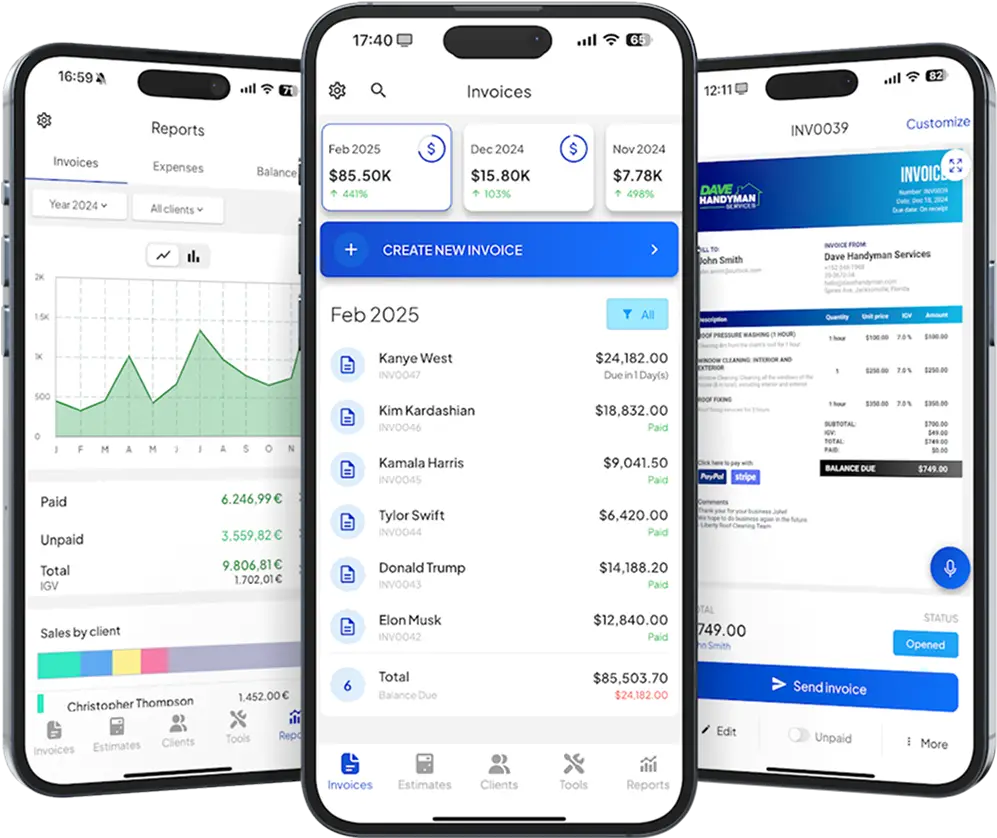
Track your accounts receivable regularly. Most accounting tools let you run an open invoices report or A/R aging summary. This groups your outstanding invoices by how long they’ve been unpaid, for example into 0–30, 31–60, 61–90, and 90+ day buckets, so you can spot at-risk clients and collection risks before things get out of hand.
Know when to escalate. For invoices that remain unpaid past 60 to 90 days, consider reaching out through more formal channels, such as the Treasury’s Prompt Payment guidelines if you’re dealing with federal contracts. Document every interaction in case you need to take further action.
A reliable creador de facturas makes it easier to send professional invoices, automate reminders, and keep tabs on what’s outstanding, all in one place.

Conclusión
Outstanding invoices are a normal part of running a business, but they don’t have to become a chronic problem. When you understand the difference between outstanding and overdue, stay on top of your accounts receivable, and follow a consistent follow-up process, you collect faster and protect your cash flow.
Start with clear payment terms, send invoices on time, and don’t wait too long to follow up. A friendly reminder sent at the right moment is usually all it takes. For tougher situations, a structured escalation approach, including formal emails, late fees, and if necessary, legal options, gives you a clear path forward.
Once you’ve got the basics of qué es una factura down, the rest of your billing process becomes much easier to manage. Use our generador de facturas gratis to create professional, payment-ready invoices, and pair it with a consistent follow-up routine to keep your cash flow healthy.
 English
 Español