
What Is Accounts Payable? Definition, Process & Best Practices
Table of Contents
- What Accounts Payable Means for a Business
- Common Examples of Accounts Payable
- Where Accounts Payable Appears on Financial Statements
- Why Accounts Payable Directly Impacts Cash Flow
- Key Accounts Payable Metrics
- How Accounts Payable Is Recorded
- Accounts Payable Aging Reports
- Internal Controls in Accounts Payable
- Accrual vs. Cash Accounting and Accounts Payable
- Accounts Payable in Contractor and Service Businesses
- The Accounts Payable Process
- Accounts Payable Software and Automation
- When Accounts Payable Becomes a Problem
- Accounts Payable and Business Growth
- Ready to take control of your accounts payable?
- Frequently Asked Questions
Accounts payable (often called AP) refers to the money a business owes to vendors for goods or services that have already been received but not yet paid for. These unpaid bills are typically due within short payment windows (such as 30, 45, or 60 days) and are recorded as short-term obligations in a company’s accounting system.
Accounts payable plays a central role in cash flow management, vendor relationships, and financial accuracy. Whether you run a service business, a construction company, or a growing small business, understanding how AP works helps you stay in control of outgoing cash and avoid costly mistakes.
This guide will cover:
- What accounts payable means in day-to-day business operations
- Common examples of accounts payable
- How accounts payable appears on financial statements
- Key metrics used to analyze payables
- The full accounts payable process from invoice receipt to payment
- Internal controls, aging reports, and risk management
- Automation options and best practices for growing businesses
Before we get into the details: keeping invoices consistent and well-documented makes accounts payable far easier to manage. Invoice Fly’s free invoice generator helps small businesses create professional invoices that are easy to track, approve, and reconcile — reducing friction on both sides of a transaction.
What Accounts Payable Means for a Business
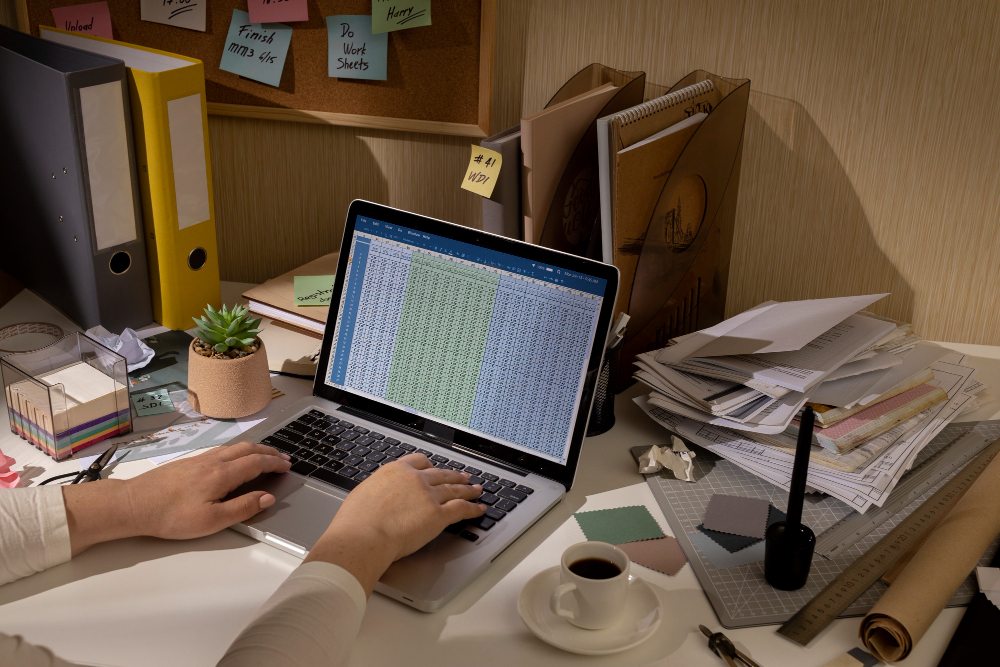
In practical terms, accounts payable represents outstanding vendor bills that a business is obligated to pay. These obligations arise when goods or services are delivered before payment is made. Once the invoice is received (or the cost is incurred) the amount becomes part of accounts payable until payment is issued.
Accounts payable is not an expense category itself. The expense is recorded separately when it occurs. Accounts payable simply reflects that the expense has not yet been paid.
Because it represents money owed to others, accounts payable is classified as a liability. Specifically, it is usually treated as a current liability, meaning it is expected to be paid within one year.
Accounts payable matters because it directly affects:
- Cash availability
- Short-term financial obligations
- Supplier trust and reliability
- The accuracy of financial statements
A well-managed AP function helps businesses remain solvent, predictable, and credible. For foundational context, small business bookkeeping shows how AP works alongside expenses, cash, and reporting.
Common Examples of Accounts Payable
Accounts payable shows up in nearly every business. Typical examples include:
- Supplier invoices for materials or inventory: A business orders inventory or supplies on credit and receives an invoice with payment terms.
- Professional services billed after completion: Accountants, consultants, or legal professionals often invoice after work is finished.
- Operating expenses billed monthly: Utilities, rent, internet, insurance, and software subscriptions are commonly billed after use.
- Subcontractor or freelancer invoices: Once work is completed and invoiced, the amount becomes payable until payment is issued.
Each of these situations creates a short-term obligation that must be tracked accurately and paid on time.
Where Accounts Payable Appears on Financial Statements

Accounts payable appear on the balance sheet, not the income statement. It is listed under current liabilities, alongside other short-term obligations such as accrued expenses or short-term debt.
Because accounts payable is a liability, it normally carries a credit balance. The balance increases when new invoices are recorded and decreases when payments are made.
Tracking accounts payable correctly ensures that financial statements reflect the true financial position of the business at any given point in time.
Why Accounts Payable Directly Impacts Cash Flow
Accounts payable is one of the most important levers in cash flow management. Timing matters just as much as accuracy.
Paying bills too early can strain cash reserves, while paying too late can damage supplier relationships or result in penalties. Effective AP management allows a business to control when cash leaves the company without missing obligations.
When managed well, accounts payable helps businesses:
- Preserve working capital
- Avoid unnecessary short-term borrowing
- Forecast cash needs more accurately
- Negotiate stronger vendor terms over time
For many small businesses, vendor payment terms act as a form of short-term financing. The key is using that flexibility intentionally rather than reacting to overdue bills.
Key Accounts Payable Metrics
Several financial metrics help evaluate how well accounts payable is being managed.
Accounts Payable Turnover Ratio
This ratio measures how often a business pays its suppliers during a period. It is commonly calculated by dividing total supplier purchases or cost of goods sold by average accounts payable.
To understand where this ratio fits in your reports, it helps to have a clean chart of accounts so AP activity is categorized consistently.
Days Payable Outstanding (DPO)
Days Payable Outstanding estimates the average number of days a business takes to pay its bills.
A higher DPO means the business holds onto cash longer. A lower DPO reflects quicker payments. Monitoring DPO over time helps identify changes in payment behavior and operational efficiency.
Cash Conversion Cycle
The cash conversion cycle measures how long cash is tied up in operations. Accounts payable affects this cycle by influencing when cash exits the business. Optimizing payment timing can shorten the cycle without reducing revenue or inventory levels.
How Accounts Payable Is Recorded
When an invoice is received, the transaction is recorded even if payment has not yet been made.
Typically:
- The related expense or asset account is increased
- Accounts payable is increased by the same amount
When the invoice is paid:
- Accounts payable is reduced
- Cash or bank balances are reduced
Because accounts payable is a liability, it increases with credits and decreases with debits. This follows standard double-entry accounting principles.
It’s also important not to confuse accounts payable with notes payable. Notes payable involve formal borrowing arrangements, often with interest and defined repayment schedules. Accounts payable usually relates to routine trade credit from suppliers.
Accounts Payable Aging Reports
An accounts payable aging report groups unpaid invoices by how long they have been outstanding. Common aging categories include:
- Current
- 1–30 days past due
- 31–60 days past due
- 61–90 days past due
Aging reports help businesses:
- Prioritize upcoming payments
- Identify overdue invoices quickly
- Detect approval or processing delays
- Prevent strained vendor relationships
Reviewing AP aging regularly is one of the simplest ways to maintain control over outgoing cash.
Internal Controls in Accounts Payable

Accounts payable is particularly vulnerable to errors and fraud because it involves outgoing payments. Even small businesses benefit from basic internal controls.
Common controls include:
- Separating invoice approval from payment execution
- Requiring documentation for every payment
- Setting approval limits for large expenses
- Restricting access to vendor record changes
These controls reduce mistakes, prevent duplicate payments, and protect the business during staff changes or audits.
Accrual vs. Cash Accounting and Accounts Payable
How accounts payable is handled depends on the accounting method used.
Under accrual accounting, expenses are recorded when they are incurred, even if payment happens later. Accounts payable is recognized as soon as the obligation exists.
Under cash accounting, expenses are recorded only when payment is made. While accounts payable may still be tracked operationally, it may not appear formally on financial statements.
Many small businesses start on a cash basis and transition to accrual accounting as they grow, making AP management increasingly important over time.
Accounts Payable in Contractor and Service Businesses
For contractors and service-based businesses, accounts payable often fluctuates with project timelines. Materials, subcontractor labor, and permit costs may be billed well before customer payments are received.
This makes AP coordination essential for:
- Job costing accuracy
- Project cash flow planning
- Avoiding mid-project cash shortages
Aligning payment schedules with expected receivables helps maintain financial stability across projects.
Pro Tip: Our guide on overhead costs provides useful context for separating job-specific costs from ongoing expenses.
The Accounts Payable Process
The accounts payable process covers the full lifecycle of a bill, from receipt to payment and reconciliation.
Most workflows include:
- Invoice receipt and logging
- Review and approval
- Payment authorization
- Payment execution
- Recordkeeping and reconciliation
As businesses grow, many pair this process with invoicing and payment tools. Invoice Fly’s invoicing software and online payments help keep both sides of the transaction smooth.
Three-Way Matching
In structured purchasing environments, invoices are verified using a three-way match. This involves comparing the purchase order, proof of receipt, and vendor invoice before approving payment. The process helps prevent overbilling and errors.
Accounts Payable Software and Automation
As transaction volume grows, manual AP processes become inefficient. Accounts payable software helps automate invoice capture, approval routing, payment scheduling, and recordkeeping.
Automation reduces data entry, improves visibility, and shortens processing times. Even partial automation can significantly improve accuracy and scalability for small businesses.
When Accounts Payable Becomes a Problem

Accounts payable itself is not a problem. Lack of visibility is.
Warning signs include:
- Regularly missed due dates
- Frequent vendor follow-ups
- Rising late fees
- Large unexplained swings in AP balances
These issues usually point to process breakdowns rather than financial instability. Tools like business reports help surface problems before they escalate and improving documentation, approval timing, or payment scheduling often resolves them quickly.
Accounts Payable and Business Growth
As businesses grow, accounts payable processes must evolve. What works for a handful of invoices per month often fails at scale.
Growing businesses typically need to:
- Formalize approval workflows
- Standardize invoice intake
- Track payables alongside budgets and forecasts
- Introduce software to reduce manual work
AP maturity often mirrors overall financial maturity.
Ready to take control of your accounts payable?
When accounts payable is organized and predictable, your business runs with far fewer surprises. You know what you owe, when payments are due, and how those obligations fit into your overall cash position. That clarity makes it easier to plan ahead, negotiate with vendors, and make confident financial decisions.Using consistent invoicing, clear approval workflows, and reliable reporting tools from Invoice Fly can dramatically reduce the time spent managing bills while improving accuracy.