
Top 85+ Plumbing Tools You Need for Your Plumber Toolkit
Table of Contents
Equipping your plumbing business with the right tools is key to efficiency, safety, and delivering professional service. From essential wrenches to drain clearing equipment, having the right plumbing tools ensures every job runs smoothly.
This guide covers 85+ must-have plumbing tools every plumber should carry, organized by category so you can build your toolkit systematically.
Which Tools Are Most Common to Plumbing?
Every plumber relies on a core set of hand tools, pipe work equipment, drain clearing gear, and safety supplies. The most-used plumbing tools day-to-day are wrenches, pliers, augers, plungers, and pipe cutters. Build your toolkit around these first, then add specialty and power tools as your plumbing services expand.
| Tool | Primary Use |
| Pipe Wrench | Tightening and loosening threaded pipes |
| Channel-Type Pliers | Gripping fittings and nuts of various sizes |
| Tubing Cutter | Making clean cuts on copper pipe |
| Plunger | Clearing minor drain clogs |
| Hand Auger | Breaking up sink and tub drain blockages |
If you’re still setting up your operation, check out our full guide on how to start a plumbing business before you invest heavily in equipment.
Plumbing Hand Tools
Plumber Wrenches
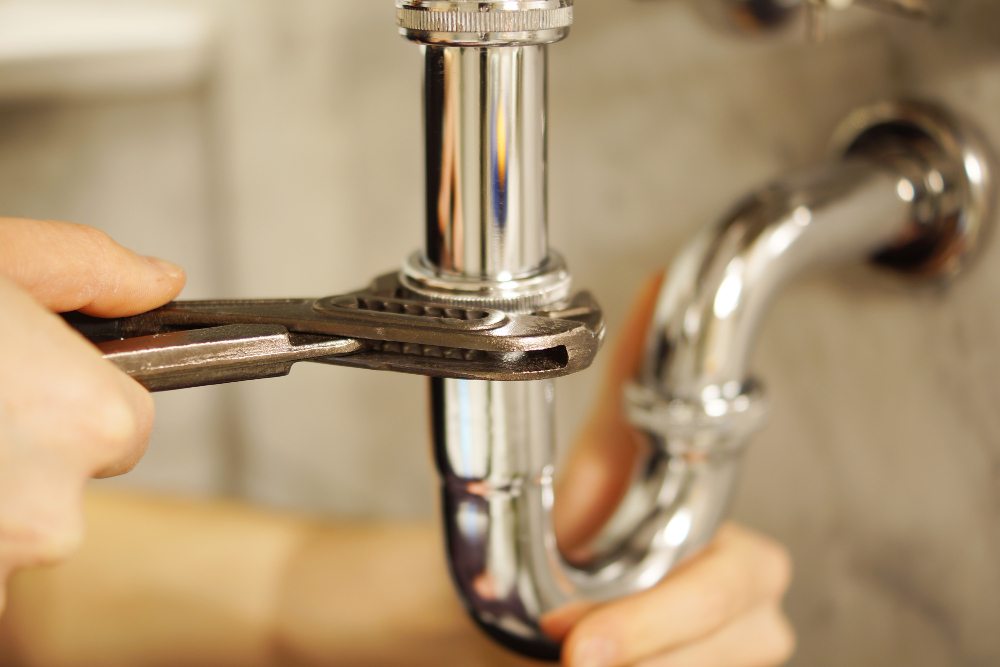
Wrenches are the backbone of any plumber’s toolkit. You’ll reach for these on nearly every job.
1. Pipe Wrench — The most iconic plumbing tool. Use it to tighten and loosen threaded pipes and fittings. Keep two on hand — one to grip, one to turn.
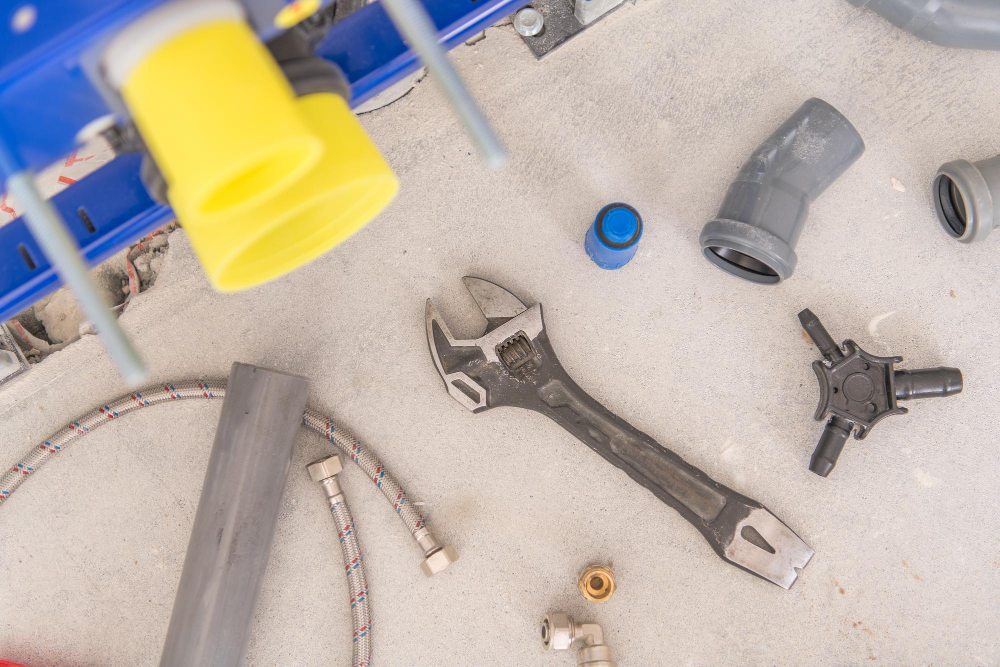
2. Adjustable Wrench — A versatile must-have for nuts, bolts, and supply lines. The adjustable jaw fits a range of sizes without needing a full wrench set.
3. Basin Wrench — Designed for hard-to-reach faucet mounting nuts under sinks. Its long handle and swiveling jaw make it invaluable in tight spaces.
4. Faucet Key — A cross-shaped tool for opening and closing outdoor spigots and curb stops. Small but essential for water shut-offs.
5. Torque Wrench — Used when precise tightening is required, especially for gas fittings where over-tightening causes damage.
6. Internal Pipe Wrench — Grips the inside of a pipe to remove broken or seized fittings. A specialty tool you’ll be glad you have when standard wrenches won’t work.
7. Strap Wrench — Uses a rubber or fabric strap instead of metal jaws, ideal for chrome or polished pipe without scratching the finish.
8. Offset Wrench — The angled head lets you work on nuts and fittings where a standard wrench can’t get enough swing.
Pliers and Gripping Tools
9. Channel-Type Pliers — Adjust to grip pipes, nuts, and fittings of various sizes. One of the most-used tools in the trade.
10. Needle Nose Pliers — Great for tight spaces, bending wire, and grabbing small parts.
11. Tongue and Groove Pliers — Strong adjustable grip on larger pipes and hex nuts. Often branded as Channellock pliers.
12. Mole Grip (Locking Pliers) — Lock onto fittings and hold them in place, freeing your other hand for stubborn connections.
13. Lineman’s Pliers — Heavy-duty pliers for gripping, twisting, and cutting wire and small fittings on commercial jobs.
Screwdrivers and Small Hand Tools
14. Stubby Screwdrivers — Short-handled drivers for tight spaces under sinks and behind toilets.
15. Hex Wrenches (Allen Keys) — For set screws on faucets and fixtures. Keep standard and metric sizes.
16. Cartridge Puller — Removes faucet cartridges without damaging the valve body.
17. Nipple Extractor — Removes broken pipe nipples from fittings without replacing the whole fitting.
18. Push-to-Connect Fittings Removal Tool — Disconnects SharkBite and similar push-fit fittings cleanly.
19. PEX Tool Kit — Includes a crimping tool, cutter, and expansion tool. Essential if you work with PEX plumbing systems.
20. Utility Knife — For scoring pipe, trimming caulk, and cutting insulation.
21. Tape Measure — Non-negotiable for measuring pipe runs, fixture placement, and rough-in distances.
Tools for Pipe Work
Cutting and Bending Tools
22. Tubing Cutter — Clean, precise cuts on copper pipe. Faster and cleaner than a hacksaw.
23. Hacksaw — Cuts metal pipe, plastic, and PVC. Keep spare blades in your bag.
24. Junior Hacksaw — Smaller version for tight spaces and short cuts.
25. Hole Saw Kit — Drills large holes through walls, floors, and framing for pipe runs.
26. Pipe Bender — Bends copper and soft metal tubing without kinking.
27. Tube Bender — For smaller-diameter tubing used in refrigeration and gas lines.
28. Ratcheting Pipe Cutter — Cuts pipe in a single ratcheting motion — ideal for cramped areas.
29. PVC Pipe Cutter — Fast, clean cuts on plastic pipe. A must-have if you work with PVC regularly.
30. Mini Tube Cutter — Compact version for cutting pipe in extremely tight spaces.
Deburring and Reaming Tools
Always deburr pipe edges after cutting to prevent leaks and flow restriction.
31. Deburring Tool — Removes burrs from inside and outside of cut pipe ends.
32. Reaming Tool — Smooths and rounds the pipe interior after cutting.
33. Metal File — Fine smoothing of cut edges, especially on copper.
34. Swaging Tool — Expands copper pipe ends to join without a fitting.
35. Flaring Tool — Creates a flared end on copper tubing for compression fittings.
36. Emery Cloth — Cleans and lightly sands copper pipe before soldering for a strong, leak-free joint.
Press and Crimping Systems
37. Press Fitting System (ProPress) — Hydraulic pressing instead of soldering. Milwaukee and Ridgid make reliable press tools that significantly speed up installation.
38. PEX Crimping Tool Kit — Crimps copper rings onto PEX fittings.
39. PEX Expansion Tool — Expands PEX pipe before inserting a fitting for a tight connection.
40. Copper Crimping Tool — For crimping copper rings on copper pipe connections — different jaws than PEX crimping tools.
Sealing and Joining Tools
41. Thread Sealing Tape (Teflon Tape) — Wraps pipe threads to create a watertight seal. Always keep several rolls on hand.
42. Plumber’s Putty — Seals drains, faucet bases, and fixtures against water intrusion.
43. Pipe Joint Compound (Pipe Dope) — Chemical seal for threaded connections, used alongside or instead of Teflon tape.
44. Caulk Gun — Applies silicone caulk around tubs, sinks, and fixtures.
45. Soldering Wire and Paste — Used together to solder copper pipe joints. Flux paste cleans the metal and helps solder flow evenly.
46. Acid Flux Brush — Applies soldering paste precisely to copper joints.
47. Heat Shield — Fireproof pad placed behind joints during soldering to protect surrounding framing.
Specialty Pipe Tools
48. Power Threader — Cuts threads into steel pipe quickly. Ridgid makes industry-standard models used by professional plumbers worldwide.
49. Ratcheting Pipe Threaders Set — Manual alternative for cutting threads on-site without power.
50. Pipe Freeze Kit — Creates a temporary ice plug so you can make repairs without shutting off the main supply.
51. Pipe Thawing Machine — Applies electrical current to frozen pipes — safer than a torch in enclosed spaces.
Best Plumbing Tools for Drain Clearing
Manual Drain Tools
52. Cup Plunger — Clears sink and tub drains on flat surfaces.
53. Flange Plunger — Designed for toilets with an extended flange for better suction.
54. Hand Auger — Flexible cable to break up or retrieve clogs in sink and tub drains.
55. Sink Auger — Rotating drum for more torque on stubborn clogs.
56. Toilet Auger (Closet Auger) — Rigid auger for toilet clogs that won’t scratch porcelain.
57. Drain-Cleaning Bladder — Attaches to a garden hose and expands inside pipe to blast out blockages with water pressure.
Power Drain Tools
58. Electric Drain Snake — Motorized cable for serious blockages in main lines and floor drains.
59. Sink Machine — Smaller electric cleaner for sinks, tubs, and showers up to 3-inch lines.
60. Hydro Jetting Machine — High-pressure water blast for grease, roots, and buildup in sewer lines.
61. SeeSnake Camera Inspection System — Travels through drain lines so you can see exactly what’s causing the blockage.
62. Borescope — Smaller, more affordable inspection camera for tight pipe runs and enclosed spaces.
Safety Equipment
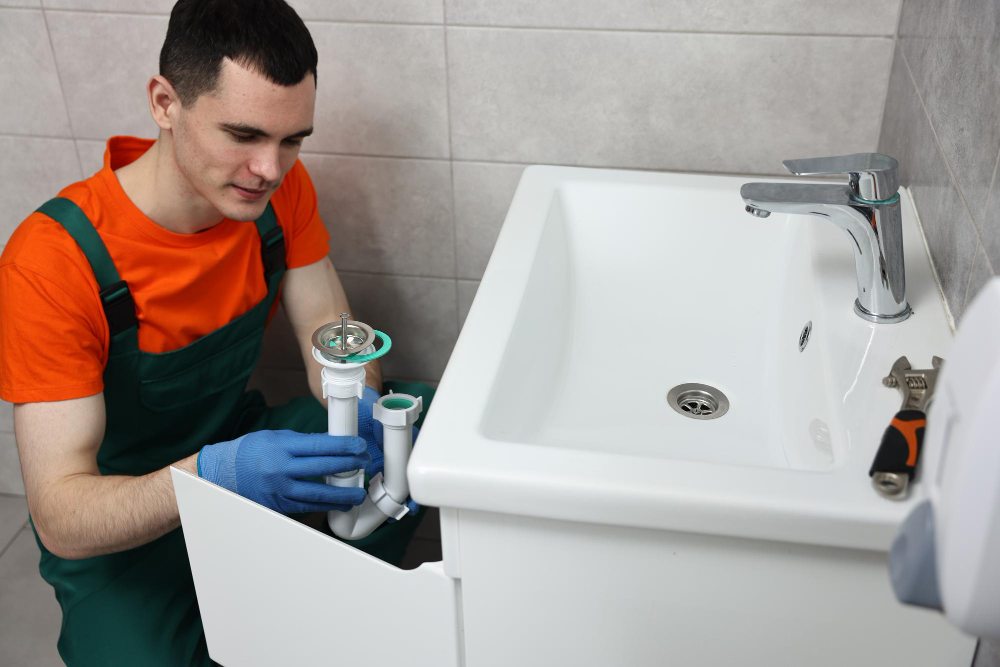
Personal Protective Equipment (PPE)
63. Gloves — Both heavy-duty rubber and lighter work gloves for different tasks.
64. Safety Glasses — Essential when cutting pipe, soldering, or working with drain chemicals.
65. Hard Hat — Required on construction sites; recommended for any overhead pipe work.
66. Face Mask — Protects against dust, insulation particles, and chemical fumes.
67. Knee Pads — Reduce joint strain significantly over a career of kneeling work.
68. Back Support Belt — Reduces lower back strain when lifting heavy equipment.
69. Steel-Toed Work Boots — Non-negotiable PPE on any professional job site.
Detection Equipment
70. Gas Detector — Non-negotiable for any work near gas lines.
71. Pressure Gauges — Measure water and gas pressure to diagnose system problems.
72. Flashlight — For crawl spaces, attics, and dark utility areas.
73. Headlamp — Hands-free lighting when both hands are busy — more useful than a flashlight on most jobs.
74. Moisture Meter — Detects moisture behind walls without cutting into them, great for hidden leak detection.
75. Stud Finder — Locates wall studs before cutting holes for pipe runs.
Additional Tools for Plumbing
76. Plumbing Clamp Tool — Applies and removes hose clamps quickly.
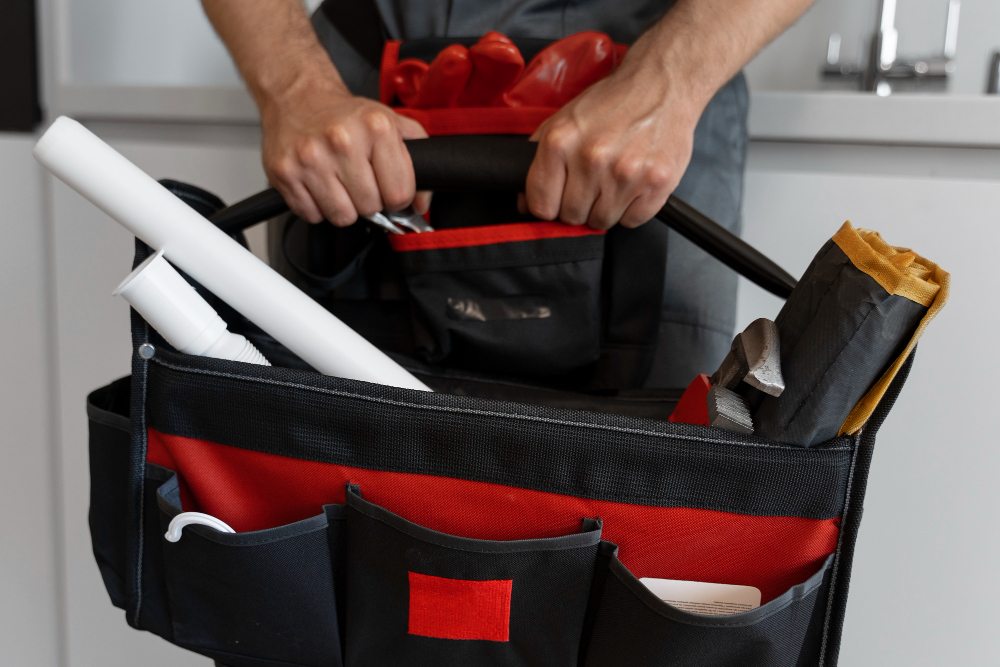
77. Tool Bag — Keeps hand tools organized and portable. A well-organized bag saves time on every job.
78. Toolbox — For heavier items and power tools.
79. Tool Belt — Keeps most-used tools within reach while working.
80. Cordless Power Drill — Used constantly for mounting fixtures and boring holes. Milwaukee and DeWalt are top choices among professional plumbers.
81. Drill Bits and Hole Saw — Match bits to the material; keep both standard and spade bits for wood framing.
82. Reciprocating Saw — Cuts through pipe, wood, and drywall when removing old systems.
83. Soldering Torch — Propane or MAPP gas for heating copper joints. Keep a heat shield nearby.
84. Angle Grinder — Cuts cast iron pipe and rusted fittings other tools can’t touch. Essential in older homes.
85. Cordless Shop Vac — Clears standing water, debris, and dust from work areas quickly and without a power outlet.
Basic Plumbing Supplies to Always Have On Hand
Never arrive at a job without common consumables (small, low-cost items that get used up regularly and need constant restocking). Running back to the supply house costs time and money. Stock your truck with faucet washers and O-rings, SharkBite copper caps, Teflon tape and plumber’s putty, spare caulk cartridges, soldering wire and paste, batteries and chargers, emery cloth, and duct tape.
Tip: Tracking your material costs carefully helps you price jobs accurately and protect your margins.
Conclusion: Digital Tools That Make Plumbing Businesses More Efficient
Having the right physical tools is only half the equation. Running a profitable plumbing business also means staying on top of estimates, invoices, and small business bookkeeping. Plumbing software helps you manage estimates, invoices, and job records from your phone — so you can focus more on the work and less on paperwork.
Send professional quotes before work starts using our free plumbing estimate template or estimates app, and get paid faster with our invoice maker. Once your toolkit and operations are dialed in, a strong plumbing marketing strategy turns your capabilities into a full pipeline of jobs.
For a complete overview of building your business from the ground up, revisit our complete guide on how to start a plumbing business to make sure your tools, licensing, and pricing strategy are aligned from day one.