
Business Tax Receipts: What to Keep for Compliance
Table of Contents
A business tax receipt is a local license that shows you’ve paid the city or county fee required to legally operate your business in that area. In states like Florida, many businesses need both a county and sometimes a separate city local business tax receipt, and they must renew it each year by a set deadline, often September 30. This requirement is separate from the federal and state taxes you already file.
In this guide, we’ll explain what a business tax receipt is, who needs one, how to get it, and what records to keep so your business stays compliant.

What Is a Business Tax Receipt?
A business tax receipt (BTR) is a document issued by a city or county that shows your business is authorized to operate in that location. It confirms that you’ve paid the local tax or registration fee required to legally do business within that jurisdiction.
In many areas, this requirement used to be called an occupational license. Some cities and counties still use the term occupational license today. The purpose is still the same: it’s a local operating permit that often needs to be renewed each year and may involve zoning approval or inspections depending on your business type. A business tax receipt is separate from your state business registration, federal EIN, and any professional licenses your industry may require.
The term “business tax receipt” is used most commonly in Florida. In other states, similar requirements are usually called business licenses, municipal registrations, or local operating permits, even though they serve the same purpose.
Keep in mind: If you’re setting up a new business in Florida, our guide on starting a Florida LLC walks through the full registration process, including where a local business tax receipt fits into your compliance checklist.
Who Needs a Business Tax Receipt?
Most businesses operating in jurisdictions that require them need a business tax receipt — including:
- Sole proprietors and freelancers: Independent contractors typically need a BTR even if they work from home.
- LLCs and corporations: Any entity operating within a city or county that issues BTRs will generally need one.
- Home-based businesses: Working from home doesn’t exempt you — most jurisdictions apply the same rules as commercial operations.
- 1099 contractors: If you work as an independent contractor rather than a W-2 employee, you’re typically required to obtain your own BTR.
- Multiple locations: A separate receipt is usually required for each physical location and each distinct business classification.
Why Are Business Tax Receipts Necessary?
Operating without a business tax receipt can result in fines, penalties, and in some cases an order to cease operations. Beyond legal authorization, a current BTR provides proof of legitimacy to clients, landlords, and partners. And the annual renewal cycle keeps your business information current and your classification accurate.
How to Get a Business Tax Receipt
The process varies by jurisdiction, but most follow a similar path:
- Register your business — in Florida, this typically means registering through Sunbiz before applying for a county or city BTR
- Identify your jurisdiction — determine whether you need a city BTR, county BTR, or both
- Submit your application — through your local tax collector’s office online or in person; Miami-Dade County and Broward County each have their own portals and fee schedules
- Complete any required inspections — some locations require zoning approval or a fire inspection before the BTR is issued
- Pay the fee — fees vary by business type and jurisdiction; new businesses starting after April 1st may qualify for a prorated half-year fee
- Display your receipt — some jurisdictions require it to be displayed at your place of business

Business Tax Receipt Requirements
Most applications ask for the following:
- Business name — legal name or DBA as registered with the state
- Business address — physical location or home address for home-based businesses
- EIN or Social Security Number — for tax identification
- Business classification — determines your fee tier
- State licenses — required license numbers for regulated industries
- Owner identification — government-issued ID
Business tax receipt renewal deadlines are generally September 30 each year. Late renewals can trigger percentage-based penalties (the amount varies by jurisdiction), so set a calendar reminder well before the deadline.
Important! The IRS generally recommends keeping supporting tax records for at least three years, though some documents may need to be kept longer. Many small business owners sort receipts by category, like operating expenses, materials, vehicle costs, and equipment purchases, and keep them separate from licensing paperwork to make tax filing easier and avoid problems if they’re ever audited.
How Do Business Tax Receipts Vary by State?
Local licensing rules for businesses are set at the city or county level, so requirements can look very different depending on where you operate. The term business tax receipt is used most often in Florida, but other states have similar requirements under different names. Here’s how the structure compares across a few common examples.
Texas
Texas does not use business tax receipts at the state level, and there is no statewide business license requirement for most industries. Instead, cities and counties may require local permits or registrations depending on your business activity. Texas also applies a state franchise tax to many businesses, which is separate from any local licensing requirements.
Ohio
Ohio uses a different system entirely. Businesses that sell taxable goods or services must obtain a vendor’s license through the Ohio Department of Taxation. In addition, many municipalities impose local income taxes and may require separate registrations or permits depending on where your business operates.
Florida
Florida is where the business tax receipt framework is most widely used. Under Florida Statute Chapter 205, counties and municipalities can levy a local business tax and issue receipts as proof of payment. Many counties such as Miami-Dade, Broward, Orange, Lee, Collier, and Palm Beach require a county-level receipt, and businesses located within city limits often need a separate city receipt as well. These receipts typically renew each year on October 1, with a September 30 renewal deadline.

Conclusion
A business tax receipt is one of the foundational compliance steps for operating a legal business — particularly in Florida, where county and city requirements are well-established and consistently enforced. Getting yours in place early, renewing on time, and keeping your classification current protects you from penalties and keeps your operation in good standing.
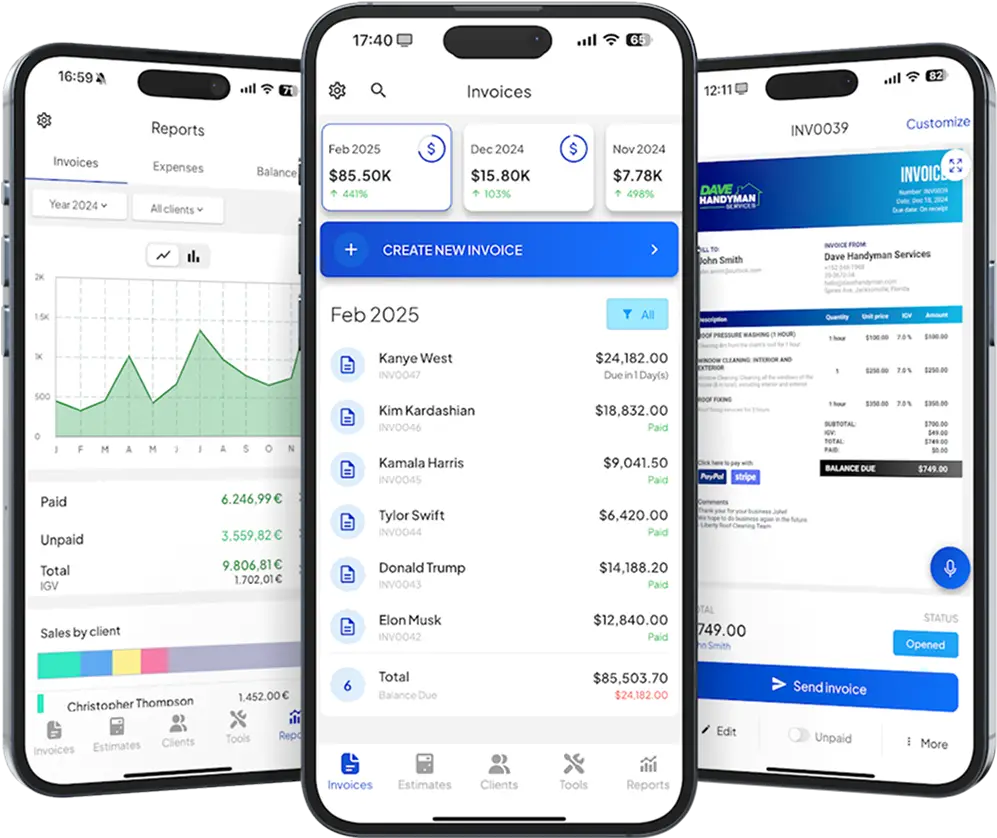
Beyond the BTR, keeping organized financial records (invoices, receipts, expense documentation) is equally important for tax compliance. InvoiceFly’s invoice maker makes it easy to generate professional invoices and maintain clean billing records year-round. If you send quotes before jobs, the estimates app lets you build and send professional estimates from your phone. For one-off billing needs, the free invoice generator gets you a clean document in minutes.
For a full guide to getting your business set up and compliant from day one, revisit our guide on starting a Florida LLC.