Painter Estimate: How to Price House Painting Jobs Accurately

Table of Contents
A painter estimate is a detailed quote that shows your client how much a paint job will cost, including labor, materials, and any prep work required. Instead of guessing a flat price, professional painting contractors measure surface area, calculate paint and material needs, and factor in labor hours, travel, and overhead to protect their margins. Typical house painting estimates range from about $2 to $6 per square foot, depending on the home’s size, condition, and the quality of paint your customer chooses. Interior-only projects with minimal prep often fall closer to $1 to $4 per square foot nationally.
In this guide, we’ll walk through who needs to estimate a paint job, how to build a reliable painter estimate step by step, and what to include so your quotes look professional and consistently make you money.

Who Needs to Estimate a Paint Job?
Any painter or painting contractor taking on residential or commercial work needs a consistent estimating process. That includes solo operators quoting a single room repaint, small crews bidding on full exterior projects, and established painting businesses managing multiple jobs at once.
A strong painter estimate does three things: it gives the client a clear picture of what the work involves and what it costs, it protects your margin by accounting for every real cost before you commit to a price, and it positions you as a professional, which directly affects your close rate when clients are comparing multiple quotes.
Estimating is also where most painting businesses lose money. Underbidding a job to win it, missing materials costs, or forgetting to factor in prep time are all common mistakes that are easy to avoid with a consistent process. For the full picture on running a profitable painting operation, see our guide on how to start a painting business.

How to Create a Painter Estimate
A professional painter estimate is built from the ground up, not guessed from experience. Here’s the step-by-step process.
Calculating the Cost of Materials
Start with paint. Measure the total surface area to be painted, then calculate how many gallons you’ll need based on coverage rate and number of coats.
According to Sherwin-Williams, one gallon of paint typically covers approximately 350–400 square feet per coat. For most jobs, two coats are standard — so double your gallon count. For darker colors going over light surfaces, or vice versa, three coats may be needed.
A quick estimating shortcut many painters use is multiplying floor square footage by 2 for walls only, or by 3 when ceilings and trim are included, then dividing by 350 to estimate the gallons of paint required.
Beyond paint, your materials estimate should include:
- Primer — required on bare drywall, stained surfaces, or major color changes
- Brushes, rollers, and covers — factor in replacement costs for longer jobs
- Painter’s tape, drop cloths, and plastic sheeting
- Caulk and patching compound for surface prep
- Sandpaper and sanding blocks
- Cleaning supplies for prep and post-job cleanup
Price materials at your actual cost — not a rough guess — then apply a standard markup to cover purchasing time, supplier coordination, and handling costs. Most painting contractors mark up materials 15–25% to cover purchasing time, supplier coordination, and handling costs.
Use InvoiceFly’s paint cost calculator to quickly calculate material quantities and costs before building your estimate.

Estimating Labor Costs
Because labor makes up 60–80% of the estimate, accurate time tracking usually affects profitability more than material pricing alone. According to the Bureau of Labor Statistics, the median hourly wage for painters in the US is around $23, but rates vary significantly by market, experience level, and job type.
To estimate labor accurately:
- Break the job into tasks: prep work, priming, painting coats, trim, cleanup
- Estimate hours for each task: be realistic about your crew’s pace — not your best day
- Multiply by your hourly labor rate: include wages, payroll taxes, and any benefits
- Add travel time if you’re pricing it into the job rather than charging separately
A useful benchmark: interior painting typically runs 100–200 square feet per hour for an experienced painter on open wall surfaces. Trim, cutting in, and tight spaces take longer — often 50–100 square feet per hour. Use realistic numbers for your crew, not industry averages.
For current market rate benchmarks, see our guide on how much do painters charge.
If you’re building a repeatable quoting system as your business grows, see our guide on how to start a painting business.
Additional Considerations
Before finalizing your estimate, account for costs that are easy to forget but directly affect your profit:
- Overhead: a portion of your fixed business costs — insurance, vehicle expenses, painting contractor software, tools, marketing — should be recovered on every job
- Equipment rental: sprayers, scaffolding, or lifts for high ceilings or exterior work
- Disposal fees: for paint cans, used materials, or debris on larger jobs
- Permits: some jurisdictions require permits for exterior work or projects above a certain value — check local requirements before quoting
Licensing requirements can also affect your pricing structure depending on your state. Learn more about how to get a painting license.
Building Your Paint Job Estimate
Once you have your material costs, labor hours, and overhead figured out, the estimate comes together in a straightforward format:
| Cost Category | Example Amount |
|---|---|
| Materials (paint, primer, supplies) | $380 |
| Materials markup (20%) | $76 |
| Labor (18 hours @ $45/hr) | $810 |
| Overhead allocation | $120 |
| Subtotal | $1,386 |
| Profit margin (20%) | $277 |
| Total estimate | $1,663 |
Round to a clean number, review for anything you might have missed, and present it clearly using a professional template. The free estimate generator from InvoiceFly produces clean, branded estimates you can send to clients in minutes.
What to Consider When Estimating a Paint Job
Getting the numbers right requires more than just measuring walls. These factors directly affect your material quantities, labor hours, and final price.
Surface Area
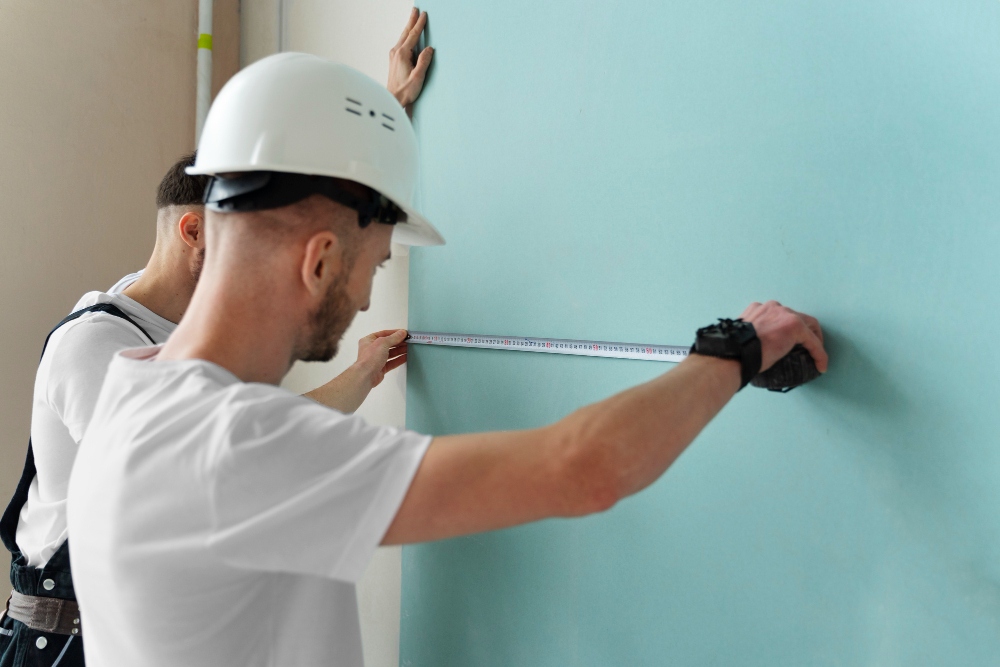
Measure every surface being painted — walls, ceilings, trim, doors, and cabinets separately if applicable. For walls, multiply the room perimeter by ceiling height, then subtract doors (approximately 21 square feet each) and windows (approximately 15 square feet each).
For exterior jobs, measure each elevation and add in soffits, fascia, trim, and any specialty surfaces like brick or stucco that require different products and techniques.
Type of Paint
Paint quality affects both your material cost and your labor time. Premium paints cover better, require fewer coats, and hold up longer, which can justify a higher price point to cost-conscious clients when you explain the long-term value. Specialty products like exterior masonry paint, cabinet enamel, or epoxy coatings carry higher price tags and often require different application techniques.
Number of Coats
Two coats is the standard for most interior and exterior work. However, certain situations require more:
- Drastic color changes (going from dark to light or vice versa)
- Bare or previously unprimed surfaces
- High-traffic areas requiring extra durability
- Stained or damaged surfaces that need blocking primer plus finish coats
Always specify the number of coats in your estimate. It protects you if a client later questions why you’re applying a second coat, and it helps clients understand what they’re paying for.
Condition of the Surfaces
Surface condition is where estimates most often go wrong. A wall that needs extensive patching, sanding, or mold remediation before painting can double your labor time compared to a clean, well-maintained surface.
Walk through the job in detail before quoting. Note any water stains, cracks, peeling paint, glossy surfaces that need sanding, or wallpaper that needs removal. Price prep work explicitly — either as a line item or built into your labor hours — and make it visible in your estimate so clients understand what they’re paying for.
Time Required (Including Preparation and Cleanup)
Prep and cleanup are often underestimated. On a typical interior paint job, prep — moving furniture, masking surfaces, patching holes, sanding, and priming — can account for 30–40% of total labor time. Post-job cleanup, touch-ups, and client walkthrough add more.
Always build realistic time estimates that include these phases. A job that takes four hours to paint may take six hours start to finish and your estimate needs to reflect that.
For a broader look at the tools that support efficient prep and application work, see our guide on painting tools.

Conclusion
A reliable painter estimate is built on real numbers — measured surface areas, accurate material quantities, honest labor hours, and full overhead recovery. Painters who estimate this way protect their margins on every job, avoid underpricing work, and present quotes that clients trust because the detail behind them is visible.
For the full picture on building a profitable painting business from the ground up, revisit our guide on how to start a painting business. Use InvoiceFly’s estimates app to build and send professional painting estimates from your phone, and the invoice maker to bill clients cleanly after every completed job.