Construction Contracts Explained: Complete Guide for Contractors
Table of Contents
A construction contract is the agreement that sets the ground rules for a building or renovation project. It defines the scope of work, the price, the timeline, and who’s responsible for what from start to finish. A good contract also explains how changes are handled, when payments are due, and what happens if delays or disputes come up. For contractors, subcontractors, and small construction business owners, understanding the main types of construction contracts — and what to include in them — helps protect your margins, reduce risk, and keep projects running smoothly.
In this guide, we’ll walk through what construction contracts are, the most common types you’ll see on real jobs, and how to choose the right structure for your next project.

What Are Construction Contracts?
A construction contract is a formal agreement between a project owner and a contractor — or between a general contractor and a subcontractor — that defines the terms under which construction work will be performed and paid for. It’s the legal foundation of every project, large or small.
Without a written contract, disputes over scope creep, payment delays, and incomplete work are far more likely and far harder to resolve. For contractors just getting started, our guide on how to start a construction company covers the full business setup process, including the role contracts play in building a professional operation.
Why Construction Contracts Are Important
Construction projects involve significant money, time, and risk. A properly written contract manages all three by defining scope clearly, establishing payment terms, allocating risk between parties, providing a formal change order process, and creating legal recourse if something goes wrong.
The Small Business Administration (SBA) emphasizes that understanding contract terms and having solid agreement documentation is essential for any contractor seeking government or commercial project work.

8 Most Common Construction Contract Types
Here are the most common types of contracts used in construction.
1. Cost-Plus Contract
The owner pays the contractor’s actual costs — labor, materials, equipment — plus an agreed fee for overhead and profit. Works well when scope isn’t fully defined, but the owner carries more financial risk since the final cost isn’t fixed.
2. Design-Build Contract
One entity handles both design and construction. This reduces disputes between designers and builders, often shortens the timeline, and works best when the owner wants a single point of responsibility.
3. Guaranteed Maximum Price (GMP) Contract
A cost-plus arrangement with a ceiling. The contractor is reimbursed for actual costs plus a fee, but only up to a defined maximum. If costs exceed that ceiling, the contractor absorbs the overage. Common on larger commercial projects.
4. Incentive Construction Contract
Part of the contractor’s compensation is tied to performance targets, such as completing ahead of schedule or under budget. These contracts align the contractor’s financial interest with the owner’s goals but require clearly defined, measurable targets.
5. Integrated Project Delivery (IPD) Contract
Owner, designer, and contractor operate under a single multi-party agreement from the project’s earliest stages, sharing risk and reward based on overall outcomes. Most common on large, complex projects, less so in residential or small commercial work.
6. Lump-Sum Contract
A single fixed price for the entire scope of work. Straightforward, gives owners complete cost certainty, and puts the risk on the contractor if costs run over. Accurate estimating is critical before signing. Use our free construction estimate template to build detailed job cost breakdowns first.
7. Time and Materials Contract
Bills the owner for actual labor hours at agreed rates plus material costs, often with a markup. No fixed total — the final cost depends on how long the work takes. Well-suited to repair work or any job where the scope can’t be defined upfront.
8. Unit Price Contract
Sets a fixed price per unit of work (per cubic yard, linear foot, or square foot). The total value depends on final quantities completed. Common in civil construction, grading, and utility work where exact scope volumes are uncertain until work is underway.

9 Essential Construction Contract Elements
No matter what type of construction contract you use, these core sections should always be included.
| # | Element | What It Covers |
|---|---|---|
| 1 | The agreement | The signed document identifying both parties, the contract price, and the documents that form part of the contract |
| 2 | General conditions | Standard rules covering insurance, payment procedures, dispute resolution, and responsibilities of each party |
| 3 | Special conditions | Project-specific changes or additions to the general conditions |
| 4 | Scope of work (SOW) | Exactly what is included in the project — and what is excluded. A vague scope is one of the most common causes of disputes. See our guide on how to estimate construction jobs for help building airtight scopes. |
| 5 | Construction drawings | Architectural, structural, and MEP plans referenced as part of the contract documents |
| 6 | Specifications | Required materials, workmanship standards, and installation methods |
| 7 | Project schedule | Start date, milestones, completion deadline, and delay procedures |
| 8 | Schedule of values | Breakdown of the contract price used to calculate progress payments. Our guide on retainage explains how funds are withheld and released through this process. |
| 9 | Bill of quantities | Itemized labor, materials, and costs supporting pricing and change orders |
Which Contract Is Right for Your Job?
- Well-defined scope, cost-conscious client: Lump-sum. Clear and gives the owner total budget certainty.
- Undefined or evolving scope: Cost-plus or T&M. Keeps billing aligned with actual work and protects your margin.
- Budget certainty with flexibility: GMP. Sets a ceiling while allowing cost transparency.
- Large project, early collaboration needed: IPD or design-build. Reduces design-construction conflict.
- Quantity-driven work: Unit price. Fair for both parties when scope volume is uncertain.
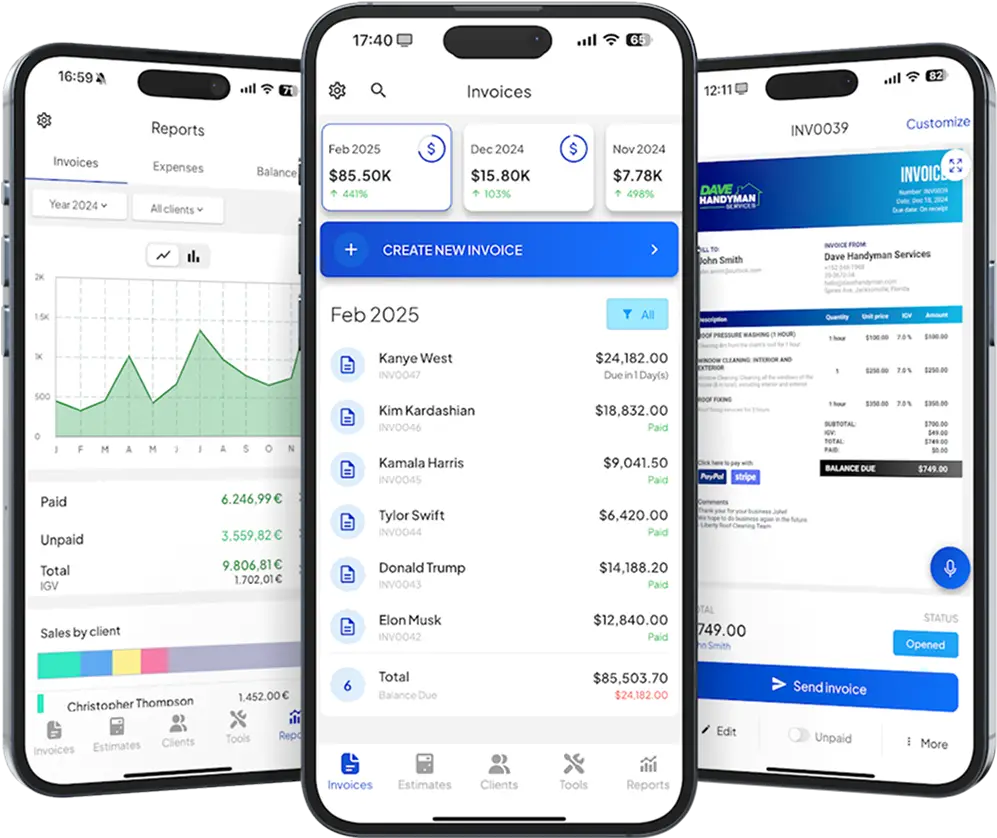
Whatever contract type you use, your billing process needs to keep pace with your payment terms. InvoiceFly’s construction software helps you track progress billing and send professional invoices aligned with your schedule of values. The estimates app helps you build detailed job estimates before signing, so your contract price is grounded in real numbers.

Conclusion
Construction contracts are the foundation of every successful project. The right contract type protects your margins, defines expectations clearly, and gives both parties a fair framework for handling the inevitable surprises that come with construction work. Understanding the contract structure and making sure every essential element is included is one of the most important skills a contractor can develop.
For the full picture on building a profitable construction operation, revisit our guide on how to start a construction company. Use InvoiceFly’s invoice maker to bill clients professionally on every project, and the free estimate generator to build accurate job cost proposals before any contract is signed.