
Profitability and Cost Management: Top 5 Tools for 2026
Table of Contents
Profitability and cost management is the process of tracking revenue, allocating direct and indirect costs, and analyzing which products, services, projects, or customers generate the strongest margins. Instead of relying only on basic accounting reports, businesses use profitability and cost management software to model costs, compare scenarios, and make better pricing and resource decisions. Modern tools can also automate reporting, improve visibility across teams, and help leaders spot hidden costs before they hurt profit.
This guide will cover:
- What profitability and cost management is and why it matters
- Key formulas for calculating costs and profitability
- The top 5 profitability and cost management software tools in 2026
- How to choose the right solution for your business
- Common questions about cost and profitability management
What is profitability and cost management
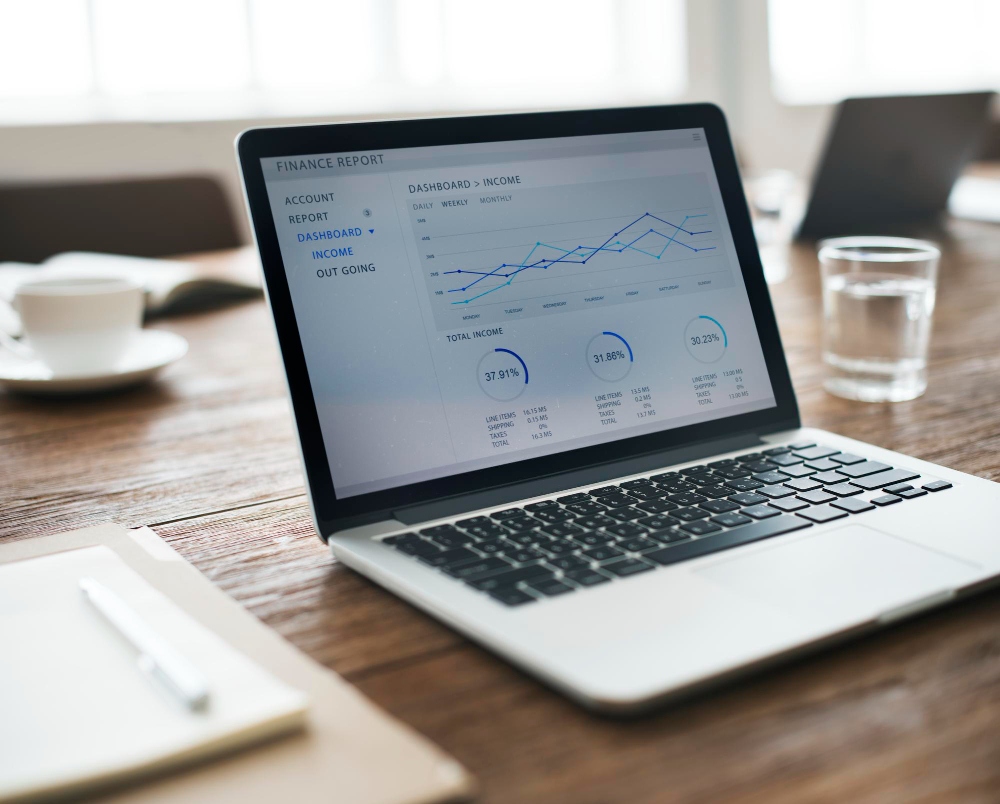
Profitability and cost management (PCM) is a strategic approach that helps businesses understand how money flows through their operations. It goes beyond traditional accounting by analyzing both revenue and costs at a deeper level—across products, services, customers, and departments.
Key components of profitability and cost management
PCM focuses on several core areas that give businesses clearer financial visibility:
- Cost allocation: Assigning both direct and indirect costs to specific activities, products, or customers
- Revenue tracking: Monitoring income streams across different segments
- Profit analysis: Measuring margins at granular levels, such as per project or client
- Scenario modeling: Testing pricing or cost changes before implementing them
For example, a construction company may discover that while one project brings in $50,000 in revenue, the true cost (including labor, materials, equipment, and overhead) is $48,000. That leaves only $2,000 in profit, far less than expected.
Why PCM matters for modern businesses
Without proper cost visibility, businesses often make decisions based on incomplete data. PCM helps fix that by offering:
- Deep visibility into hidden costs across operations
- Accurate cost allocation using consumption-based methods
- Operational optimization through “what-if” scenario planning
- Better decision-making with real-time dashboards and reports
A retail business, for instance, might assume all products are equally profitable. PCM analysis may reveal that certain items have high return rates or storage costs, reducing actual profit margins.
At a broader level, PCM supports financial planning alongside metrics like gross profit vs net profit and helps businesses understand how each cost layer impacts final earnings.
If you’re trying to track costs and profits more clearly, using an invoice maker can help connect your revenue directly with real expenses in one place.
Example
Imagine a marketing agency serving 20 clients. On paper, all clients appear profitable. After implementing PCM, the agency discovers:
- 5 clients generate 60% of total profit
- 8 clients barely break even due to high service demands
- 7 clients are actually unprofitable
With this insight, the agency can adjust pricing, reduce scope, or drop unprofitable clients altogether. Businesses often combine this analysis with metrics like operating income to get a full financial picture.
Formulas for calculating cost and profitability

Understanding profitability requires more than software—it depends on applying the right formulas. These calculations help businesses evaluate performance and make smarter financial decisions.
Gross profit formula
Gross profit measures how much money remains after subtracting the cost of goods sold (COGS).
Formula:
Gross Profit = Revenue − Cost of Goods Sold
For example, if a business generates $100,000 in revenue and spends $60,000 on production costs, the gross profit is $40,000.
This metric is useful for evaluating product-level performance. A manufacturing company might compare gross profit across different product lines to identify which ones deliver the highest returns. Learn more about how gross margin impacts pricing decisions.
Net profit formula
Net profit reflects the actual earnings after all expenses are deducted, including operating costs, taxes, and interest.
Formula:
Net Profit = Total Revenue − Total Expenses
If the same business has $40,000 in gross profit but incurs $25,000 in operating expenses, the net profit is $15,000.
This is the most important profitability metric because it shows the true financial outcome. For tax-related considerations, businesses can refer to the IRS.
Contribution margin
Contribution margin helps determine how much revenue contributes to covering fixed costs.
Formula:
Contribution Margin = Sales Revenue − Variable Costs
For instance, if a product sells for $50 and costs $30 to produce, the contribution margin is $20.
Businesses use this to decide pricing strategies and determine whether a product is worth continuing. Understanding variable cost behavior is essential when calculating this metric.
Break-even point
The break-even point tells you how much you need to sell to cover all costs.
Formula:
Break-even point = Fixed Costs ÷ Contribution Margin per unit
If fixed costs are $10,000 and each unit contributes $20, the business must sell 500 units to break even.
This is critical for startups or new product launches. You can explore this further using the break-even point formula.
Profit margin
Profit margin shows how much of each dollar earned turns into profit.
Formula:
Profit Margin = (Net Profit ÷ Revenue) × 100
If net profit is $15,000 on $100,000 revenue, the margin is 15%. Businesses often track this alongside profitability ratios to measure performance.
Example
A freelance designer charges $2,000 per project. Their costs include:
- Software subscriptions: $200/month
- Marketing: $300/month
- Time investment: 40 hours
By calculating contribution margin and profit margin, the designer can decide whether to raise rates or reduce costs. Many freelancers also rely on cost accounting principles to better understand their expenses.
Top 5 Profitability and Cost Management Software

Choosing the right software can transform how businesses track costs and improve margins. Below are five leading tools in 2026.
1. Invoice Fly
Invoice Fly is designed for small businesses and service-based professionals who need simple but powerful cost and profitability tracking.
It focuses on core workflows like invoicing, estimates, and reporting, making it easy to connect revenue with expenses.
Key features include:
- Invoice and estimate creation
- Expense tracking
- Profitability reporting
- Job and project tracking
A small HVAC business, for example, can use Invoice Fly to estimate a job at $5,000, track actual expenses of $3,800, and instantly see a $1,200 profit.
This kind of real-time insight helps business owners adjust pricing and avoid undercharging.
2. NetSuite
NetSuite offers a comprehensive ERP solution with advanced profitability and cost management capabilities.
It is ideal for mid-sized to large businesses that need detailed financial modeling and reporting.
Key features include:
- Multi-dimensional profitability analysis
- Real-time dashboards
- Automated cost allocation
- Integration with other business systems
For example, a global e-commerce company can use NetSuite to analyze profitability by region, product category, and customer segment simultaneously.
This helps identify which markets generate the highest returns.
3. Oracle
Oracle’s profitability and cost management cloud service (PCMCS) is built for enterprise-level organizations.
It provides deep financial modeling and scenario analysis.
Key features include:
- Advanced cost allocation models
- “What-if” scenario planning
- Integration with Oracle EPM tools
- Scalable cloud infrastructure
A large bank might use Oracle PCMCS to analyze profitability across thousands of customers and services, identifying high-value segments.
4. SAP
SAP profitability and cost management solutions are widely used in manufacturing and large enterprises.
They focus on detailed cost tracking and operational efficiency.
Key features include:
- Activity-based costing
- Real-time analytics
- Integration with SAP ERP systems
- Industry-specific solutions
For example, a manufacturing firm can track machine costs, labor, and materials to determine the true cost of each product. Data from the U.S. Small Business Administration shows that improving cost control is a key factor in long-term business survival.
5. PlaidCloud
PlaidCloud is a modern analytics platform that combines data integration with profitability insights.
It is ideal for companies that want flexible and customizable reporting.
Key features include:
- Data centralization
- Predictive analytics
- Custom dashboards
- Scenario modeling
A retail chain can use PlaidCloud to forecast profitability based on seasonal trends and adjust inventory accordingly.
How to choose cost and profitability management software

Selecting the right PCM software depends on your business size, complexity, and goals. Not all tools offer the same level of functionality.
Define your business needs
Start by identifying what you want to achieve.
- Do you need basic cost tracking or advanced modeling?
- Are you managing projects, products, or services?
- Do you need real-time reporting?
A freelancer may only need simple invoicing and expense tracking, while a large company requires detailed analytics. If you’re planning long-term growth, building financial projections can help guide your decision.
Consider scalability
Your software should grow with your business.
For example, a startup may begin with basic tools but later need advanced reporting as operations expand.
Choosing scalable software avoids costly migrations later. This is especially important when managing resources like working capital.
Evaluate ease of use
Complex tools can slow down adoption.
If your team struggles to use the system, the data becomes unreliable.
A small business owner, for instance, may prefer a tool with a simple dashboard over one with complex financial models.
Integration capabilities
Your PCM software should connect with existing tools like:
- Accounting software
- CRM systems
- Payroll platforms
This ensures data flows seamlessly across your business and improves accuracy in reporting.
Cost vs value
Pricing varies widely.
- Basic tools: $10–$50/month
- Mid-range solutions: $100–$500/month
- Enterprise systems: thousands per month
A small business should focus on value, not just price. Spending $50/month on a tool that improves margins by 10% is a strong investment.
Example
A growing construction company tested two tools:
- Tool A: $30/month, basic tracking
- Tool B: $200/month, advanced reporting
After switching to Tool B, they identified cost overruns that saved $3,000 per project. The higher cost delivered far greater value.
Improve Your Profitability with the Right Tools
Tracking profitability manually can quickly become overwhelming, especially as your business grows. Using the right tools helps you stay in control of your numbers without adding complexity.
With Invoice Fly, you can create invoices, track expenses, and monitor profitability in one place. Whether you’re managing projects or day-to-day operations, having clear financial data helps you make faster and more accurate decisions.Start by organizing your workflow with tools like an invoice maker or improve your pricing process using a free estimate generator to send professional quotes that reflect your true costs.