
Variable Cost: Definition, Formula, and How to Calculate It

Table of Contents
- What Is a Variable Cost?
- How Variable Costs Work in Practice
- How to Calculate Variable Cost
- Variable Cost Formula
- Variable Cost Per Unit Formula
- Common Types of Variable Costs
- Variable Cost Examples
- Why Variable Costs Matter for Business Decisions
- Variable Costs vs. Fixed Costs
- Ready to Take Control of Your Variable Costs?
- Frequently Asked Questions
Variable costs are one of the most important, and often the most misunderstood, parts of running a business. These expenses change based on how much you produce or sell, which makes them critical for pricing, budgeting, and profitability decisions.
If you understand your variable costs, you can quickly answer questions like:
- How much does each job or product actually cost me?
- What happens to profit if sales increase or slow down?
- Where can I reduce costs without hurting operations?
This guide will cover:
- What a variable cost is, explained in plain English
- How variable costs work in real businesses
- How to calculate total variable cost and cost per unit
- Common variable cost examples across industries
- Why variable costs matter for pricing and profit planning
- Frequently asked questions about variable vs. fixed costs
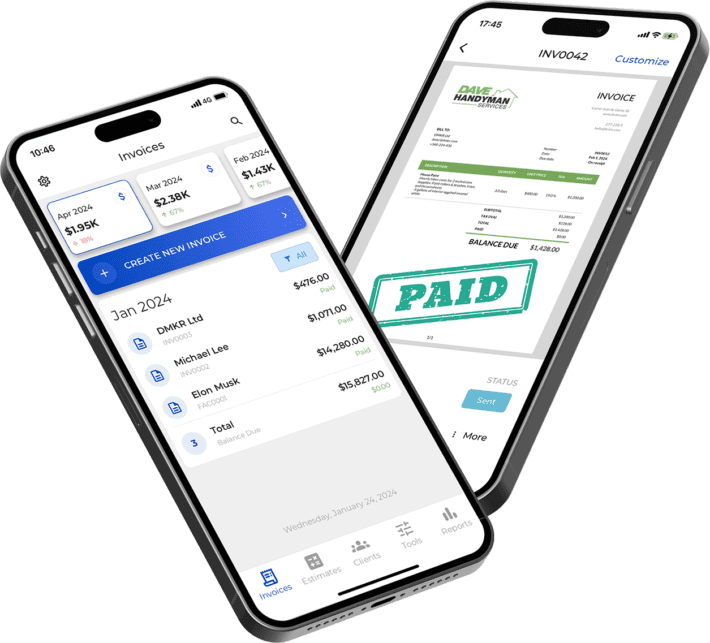
Before we get into the details: accurate cost tracking starts with clean records. Using a simple invoicing system helps you tie revenue to jobs, products, and time periods. Invoice Fly’s free invoice generator makes it easy to send professional invoices and keep your financial data organized for accounting and analysis.
What Is a Variable Cost?

A variable cost is a business expense that changes in proportion to activity. When production or sales increase, variable costs increase. When activity slows down, they decrease.
These costs are directly tied to doing the work or making the sale. If the work doesn’t happen, the cost usually doesn’t either.
Common variable costs include:
- Raw materials used to make products
- Hourly wages for production or service staff
- Sales commissions
- Shipping and packaging costs per order
- Payment processing fees based on sales volume
Variable costs differ from fixed costs, which stay the same regardless of output in the short term. Rent, base insurance premiums, and many salaried roles are typical fixed costs.
Understanding this difference is essential for reading your income statement and knowing how revenue turns into profit.
How Variable Costs Work in Practice
Variable costs move with activity, but they don’t always change perfectly dollar-for-dollar. Some scale smoothly, while others change in steps.
For example:
- A bakery uses more flour and packaging as it sells more bread.
- A contractor pays more in hourly labor as projects increase.
- An online store pays higher credit card fees as sales volume rises.
In each case, the expense exists because the sale or job exists. That relationship is what makes the cost variable. This also explains why variable costs are often easier to reduce quickly than fixed costs. When demand drops, variable expenses usually fall with it.
How to Calculate Variable Cost

There are two practical ways to calculate variable cost. Both are valid—the right one depends on how your records are set up.
Method 1: Add Up Variable Expenses for a Period
This approach looks at a specific time frame, such as a month or quarter.
Steps:
- Choose a time period.
- List all expenses that change with sales or production.
- Exclude fixed costs like rent, base software fees, and salaried admin pay.
- Add the remaining expenses together.
The total is your total variable cost for that period.
This method works well when reviewing historical performance or preparing financial statements using cost accounting principles.
Method 2: Calculate Variable Cost Per Unit
This method focuses on the cost of one product or service unit.
You:
- Identify all variable costs tied to a single unit.
- Add them together to find the cost per unit.
- Multiply by the number of units sold or produced.
This approach is especially useful for pricing, quoting jobs, and forecasting profit.
Variable Cost Formula
The most common variable cost formula is:
Total Variable Cost = Variable Cost per Unit × Number of Units
This formula is widely used in accounting, economics, and business planning because it clearly shows how costs scale with output.
If you already know total cost and fixed cost for a period, you can also use:
Total Variable Cost = Total Cost − Total Fixed Cost
Both formulas lead to the same result when the underlying data is accurate.
Variable Cost Per Unit Formula
To calculate the cost of producing or delivering one unit:
Variable Cost per Unit = Total Variable Costs ÷ Number of Units
This number is critical for:
- Setting prices
- Estimating margins
- Comparing products or services
- Deciding whether additional sales are profitable
If your selling price is lower than your variable cost per unit, each sale increases losses, even if revenue is rising.
Common Types of Variable Costs

Variable costs appear across nearly every industry, though the specific expenses vary.
Typical categories include:
- Materials: Inputs consumed during production.
- Direct labor: Hourly or job-based wages tied to output.
- Commissions: Payments based on sales revenue or volume.
- Shipping and fulfillment: Per-order delivery and packaging costs.
- Transaction fees: Credit card or platform fees that scale with sales.
- Production utilities: Electricity, gas, or water used directly in manufacturing.
Some costs are mixed rather than purely variable. A utility bill may include a flat service charge plus usage. In those cases, only the usage portion behaves like a variable cost.
Variable Cost Examples
Example 1: Manufacturing business
A company produces custom notebooks.
- Paper and materials per unit: $6
- Packaging per unit: $2
- Units produced: 1,000
Variable cost per unit = $8
Total variable cost = $8 × 1,000 = $8,000
Example 2: Service-based business
A landscaping company pays crews hourly.
- Labor: $25/hour
- Average job time: 3 hours
- Supplies per job: $10
Variable cost per job = ($25 × 3) + $10 = $85
This number helps the owner price jobs profitably and estimate margins before accepting new work.
Example 3: Sales commissions
A salesperson earns a 6% commission.
- Monthly sales: $120,000
Variable commission cost = $7,200
As sales increase, this expense rises automatically, but so does revenue.
Tracking examples like these alongside invoices makes cost control easier. Using Invoice Fly’s free invoice generator ensures each sale is documented clearly and tied to real numbers.
Why Variable Costs Matter for Business Decisions

Understanding variable costs supports better decisions across your business.
Key benefits include:
- Smarter pricing: Variable costs define the minimum price you can charge without losing money.
- Profit planning: They help calculate contribution margin and break-even points.
- Cost control: Variable expenses are often easier to adjust than fixed ones.
- Forecasting: You can model how profit changes as sales rise or fall.
For small businesses, variable cost analysis is often the difference between growing sustainably and growing into cash flow problems. Strong bookkeeping practices make this analysis far more reliable.
Variable Costs vs. Fixed Costs
The distinction between variable and fixed costs is foundational.
Fixed costs usually include:
- Rent
- Insurance premiums
- Salaried administrative staff
- Base software subscriptions
Variable costs typically include:
- Materials
- Hourly labor
- Commissions
- Shipping and transaction fees
Some expenses fall in between. When categorizing costs, focus on what actually changes when sales or production changes, and document your assumptions. This clarity also improves financial reporting across statements like the balance sheet.
Ready to Take Control of Your Variable Costs?
When you understand which expenses scale with your business, pricing becomes clearer and profit planning becomes more predictable.Pair solid cost analysis with clean invoicing by using Invoice Fly’s free invoice generator to bill clients professionally and maintain organized records that support smarter financial decisions.