CHAPTER 1
Invoicing Fundamentals
Before you optimize invoicing, you need to understand the fundamentals.
A good invoice is simple, clear, and complete. When invoices are structured properly, clients pay faster and disputes decrease.

1.1 What Is an Invoice?
An invoice is a formal request for payment. It explains:
- What was delivered
- How much is owed
- When payment is due
It’s both a payment request and a financial record.
1.2 Key Components of Every Invoice
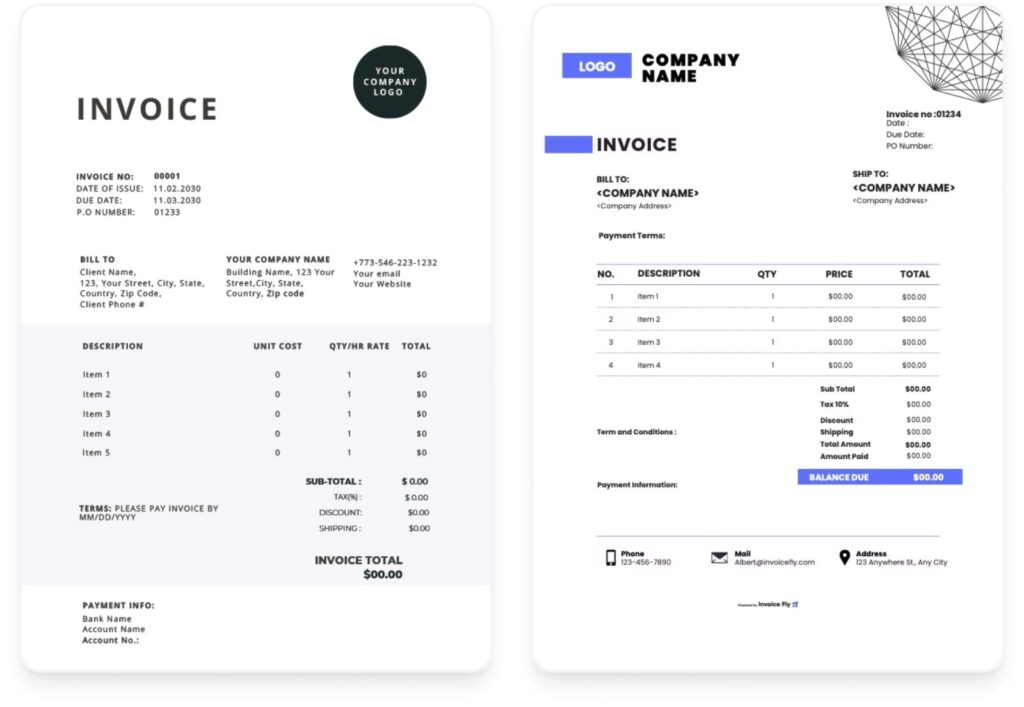
Every invoice should include:
- Invoice Date – Shows when the invoice was issued and starts the payment timeline.
- Invoice Number – A unique ID that keeps your records organized and traceable.
- Your Business Details – Clearly identifies who is requesting payment.
- Client Details – Specifies who is responsible for paying the invoice.
- Itemized Services or Products – Breaks down exactly what the client is being charged for.
- Unit Pricing – Shows how each item or service contributes to the total.
- Taxes – Separates required charges to maintain transparency and compliance.
- Total Amount Due – Makes the final payable amount impossible to miss.
- Payment Terms – Defines when and how you expect to be paid.
- Notes – Provides space for context, project references, or additional clarity.
Clarity prevents delays. Confusion causes late payments.
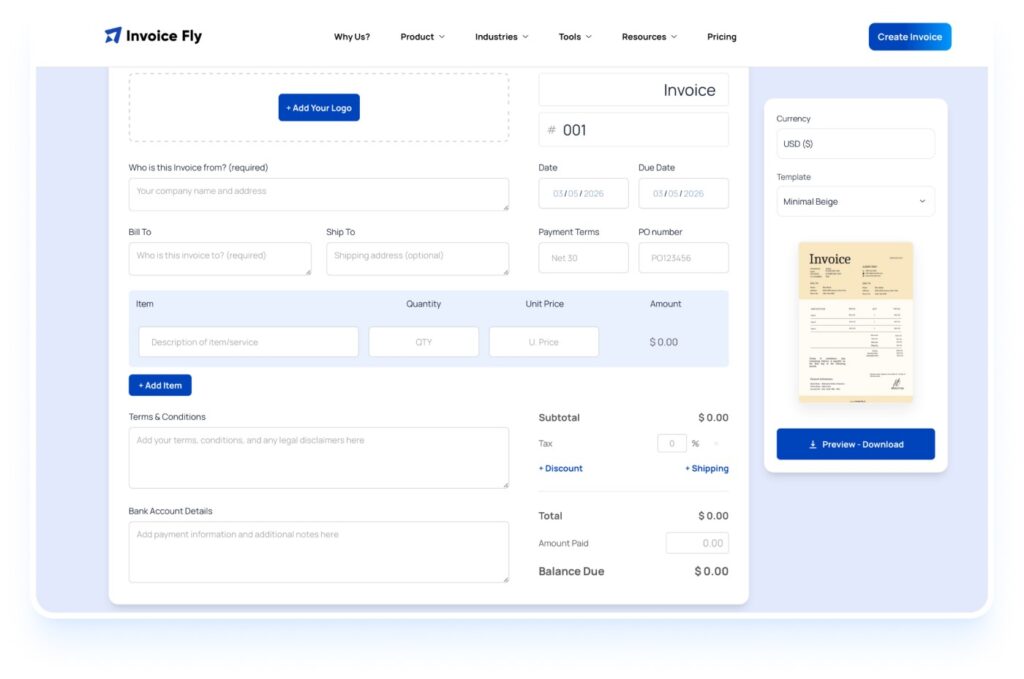
Invoice Fly’s invoice maker structures these fields automatically so nothing important is missed.
1.3 Invoice vs. Bill vs. Receipt vs. Estimate
Invoice – Sent before payment.
Bill – Often used in everyday consumer transactions.
Receipt – Sent after payment is received.
Estimate – A projection of cost before work begins.
Each serves a different stage of the payment process.
1.4 Types of Invoices
Standard Invoice – A one-time invoice issued after completing work or delivering goods.
Recurring Invoice – Automatically issued at regular intervals for ongoing services.
Deposit Invoice – Requests upfront payment before work begins.
Milestone Invoice – Issued at agreed stages throughout a larger project.
Final Invoice – Sent once the entire project is completed and ready for full settlement.
Credit Invoice – Adjusts or reduces a previously issued invoice.
Proforma Invoice – A preliminary invoice outlining expected costs before work starts.
Different projects require different billing structures – the format stays the same, the timing changes.
1.5 When to Issue an Invoice
After completing work
After delivering goods
At project milestones
On a recurring schedule
The rule is simple: Invoice immediately.
Waiting to invoice only delays payment. Invoice Fly can send invoices automatically the moment your work is complete, speeding up your entire billing process.
Invoice Examples