
Payment Gateway: How They Work and Choosing the Best Option

Table of Contents
- What is a payment gateway?
- Types of payment gateways
- What are the benefits of using a payment gateway?
- How do payment gateways work?
- Choosing the right payment gateway for your business
- Payment Gateways vs Payment Processors
- Payment gateway examples
- How Much Does a Payment Gateway Cost?
- What Is a White Label Payment Gateway?
- Can I Build My Own Payment Gateway?
- Managing Payments Alongside Business Finances
- Conclusion
- Payment Gateway FAQs
A payment gateway is a secure digital service that allows businesses to accept online payments from customers using credit cards, debit cards, bank transfers, and digital wallets. It acts as a bridge between a customer, the merchant, and their banks—encrypting sensitive data, verifying transactions, and ensuring money moves safely from one account to another.
For freelancers, small business owners, and online sellers, understanding how a payment gateway works is essential. The right payment gateway can help you get paid faster, reduce manual work, and give customers a smooth, trustworthy checkout experience.
In this guide, we’ll explain what payment gateways are, how they work, the different types available, how to choose the right one, and what costs to expect.
What is a payment gateway?
A payment gateway is the technology that securely captures payment information and sends it through the financial system for approval. Think of it as the online equivalent of a physical card machine or point-of-sale terminal used in brick-and-mortar stores.
When a customer enters their card details on a website or mobile app, the payment gateway encrypts that information so it can’t be intercepted by unauthorized parties. It then sends the data to the payment processor and banks involved to verify whether the transaction can be approved.
The payment gateway definition centers on three core functions: protecting sensitive card and bank data, connecting customers with merchants and financial institutions, and confirming whether a payment is approved or declined. Without a secure online payment gateway, ecommerce websites, digital services, and online invoicing platforms would struggle to function safely.
Who needs a payment gateway?
- Freelancers accepting card payments from clients
- Small businesses selling services or products online
- Ecommerce stores processing checkout payments
- Subscription-based businesses charging recurring fees
- Service providers who send digital invoices
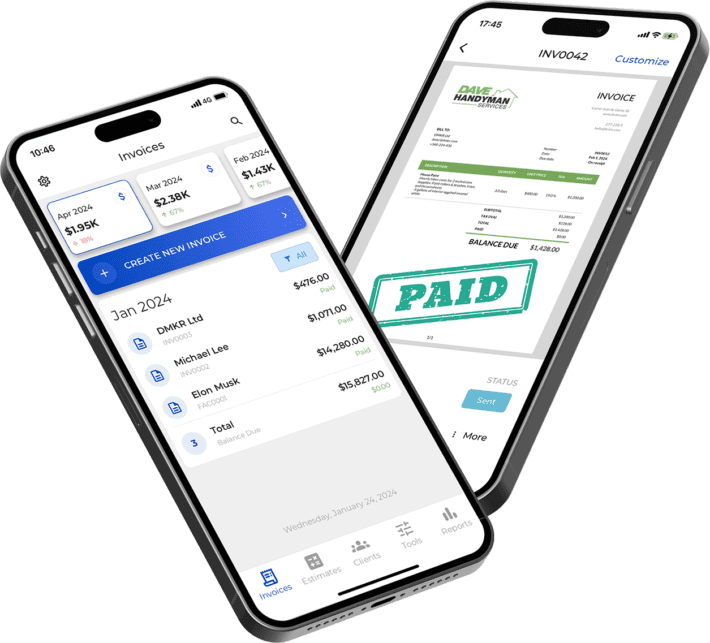
Tip: Integrating an invoicing app can help you get paid within days and spend less time following up on unpaid invoices.
Types of payment gateways
Understanding the different types of payment gateways helps you choose the solution that best fits your business model and technical capabilities.
| How It Works | Best For | Key Considerations | |
| Hosted payment gateways (redirect) | Customers are redirected to a third-party payment page to complete the transaction, then returned to your site (e.g., PayPal). The provider handles all security and compliance. | Freelancers, small businesses, quick setup | Less control over checkout experience; relies on third-party branding |
| Integrated payment gateways (API) | The payment gateway integrates directly into your website via an API, allowing customers to complete checkout without leaving your site. | Growing businesses, ecommerce stores | Requires technical setup; greater control and branding |
| Self-hosted payment gateways | Payment data is collected on your own server and then sent to the gateway for processing. | Large enterprises with in-house security teams | Full responsibility for PCI compliance; high complexity and risk |
| Local bank integration gateways | Connect directly to specific banks or regional payment networks for processing transactions. | Businesses focused on domestic markets | Often lower local fees; limited international payment support |

What are the benefits of using a payment gateway?
Payment gateways offer numerous advantages that make them essential for modern businesses accepting online payments.
- Security and fraud protection
Payment gateways encrypt sensitive data using advanced security protocols, protecting both your business and your customers from data breaches. They also include fraud detection tools that flag suspicious transactions, as required by financial regulations from organizations like FinCEN. - Customer convenience
Customers can pay instantly from anywhere using their preferred payment method—credit cards, debit cards, or digital wallets. This convenience increases conversion rates and reduces abandoned carts. - Faster payment processing
Instead of waiting days or weeks for checks to clear, you receive payment confirmation within seconds and funds in your small business bank account within 1-3 business days, improving cash flow. - Automated record-keeping
Every transaction creates a digital record automatically, simplifying your small business bookkeeping and making it easier to track transactions for tax purposes. - Global reach
International payment gateways allow you to accept payments from customers worldwide in multiple currencies, expanding your potential market without opening foreign bank accounts. - Professional image
Offering secure online payments signals legitimacy and professionalism, building customer trust and making your business appear more established.
How do payment gateways work?
Although the payment process feels instant to customers, several steps happen behind the scenes each time someone completes a transaction online.
Simplified payment gateway workflow:
1. Customer initiates payment
The customer enters their payment details—card number, expiration date, CVV—or selects a digital wallet like PayPal or Google Pay at checkout. This happens on your website, mobile platform, or through a payment portal embedded in an invoice.
2. Encryption and secure transmission
The online payment gateway immediately encrypts this sensitive information using advanced security protocols, then transmits it securely to the payment processor.
3. Verification with banks and card networks
The payment processor forwards the authorization request through the appropriate card network (Visa, Mastercard, American Express) to the customer’s issuing bank. The bank checks whether sufficient funds are available and whether the transaction passes fraud detection screening.
4. Approval or decline
The issuing bank sends a response back through the same network—either approving or declining the transaction.
5. Confirmation and settlement
If approved, the merchant receives immediate confirmation, and the customer sees a success message. The actual fund transfer happens later during settlement, typically within 1-3 business days.
This automated process reduces fraud risk, protects customer data, and ensures payments are handled accurately without manual intervention.
Choosing the right payment gateway for your business
Not all payment gateways offer the same features or pricing structures. The best choice depends on your business model, customer preferences, transaction volume, and where you operate.
Key factors to consider:
Supported payment methods
Look for a payment gateway that accepts credit card payments, debit cards, digital wallets like PayPal gateway options, and even ACH payment transfers for business-to-business transactions. The more payment options you offer, the easier you make it for customers to complete purchases.
Fee structure and pricing transparency
Payment gateways charge various fees including per-transaction fees (often a percentage plus a fixed amount), monthly service fees, setup fees, and chargeback fees. Understanding the complete cost structure helps you calculate accurate profit margins.
Security and compliance features
A secure online payment gateway should include data encryption, fraud detection tools, and support for PCI DSS compliance—the security standard required for businesses handling credit card information.

Ease of payment gateway integration
Choose a gateway that integrates smoothly with your existing systems—whether that’s your ecommerce platform, bookkeeping software, or invoicing tools.
International payment capabilities
If you work with clients across borders, an international payment gateway that supports multiple currencies and international card types becomes essential.
Customer support quality
When payment issues arise, responsive customer support makes the difference between a quick resolution and lost revenue.
Payment Gateways vs Payment Processors
The terms “payment gateway” and “payment processor” are often used interchangeably, but they serve distinct roles in the payment ecosystem.
Payment gateway role:
- Captures and encrypts customer payment details
- Securely transmits data for authorization
- Provides the checkout interface customers see
- Returns approval or decline messages
Payment processor role:
- Communicates directly with banks and card networks
- Facilitates the actual movement of funds
- Handles settlement and depositing money into your account
- Manages the “back office” of payment operations
Many modern platforms bundle both services together under one provider. For example, when you use a platform like Stripe or PayPal, you’re getting both gateway and processing services in a single package. This bundled approach simplifies setup but may cost slightly more than using separate providers.
Payment gateway examples
Real-world payment gateway examples help illustrate how these systems work across different business scenarios.
An ecommerce clothing store uses a payment gateway integrated into their website checkout page. Customers add items to their cart, enter card details, and complete purchases—all within seconds. The gateway handles encryption, authorization, and confirmation while the customer stays on the store’s website.
A freelance web developer sends project invoices through an invoicing software platform. Each invoice includes a “Pay Now” button powered by a payment gateway. Clients click the button, enter their payment information, and the developer receives notification immediately. This eliminates the delays associated with traditional check payments and the need to track when to send invoices.

A subscription box service uses recurring payment gateway features to automatically charge customers monthly. The system securely stores payment information (tokenization) and processes charges on scheduled dates, reducing manual billing work while maintaining security standards.
How Much Does a Payment Gateway Cost?
Payment gateway costs vary significantly depending on the provider, your transaction volume, and the features you need.
Typical fee structures:
Transaction fees
Most payment gateways charge a percentage of each sale plus a small fixed amount. Common rates range from 2.5% to 3.5% plus $0.15 to $0.30 per transaction.
Monthly subscription fees
Some providers charge flat monthly fees ranging from $10 to $50, particularly for businesses with higher transaction volumes.
Setup or integration fees
Less common today, but some enterprise-level gateways charge one-time setup fees between $100 and $500.
Chargeback fees
When a customer disputes a charge, you may face fees of $15 to $25 per chargeback, regardless of whether you win the dispute.
Additional service fees
- PCI compliance fees: $5-$15 monthly
- Statement fees: $5-$10 monthly
- Minimum monthly fees: Some providers charge minimums if transaction volume is low
- International transaction fees: Additional 1-2% for cross-border payments
Calculate your expected monthly transaction volume and compare total costs across providers rather than just looking at advertised rates. Factor these costs into your small business tax planning to ensure accurate profit calculations.
What Is a White Label Payment Gateway?
A white label payment gateway is a fully-developed payment processing solution that can be rebranded and offered under a company’s own name rather than the original provider’s brand. This approach is most relevant for software companies, financial technology platforms, and large-scale marketplace operators.
When white label solutions make sense:
- Building a proprietary platform or app
- Operating a marketplace with multiple sellers
- Offering payment services as part of a broader business solution
- Needing complete branding control throughout the payment process
For most freelancers, contractors, and small businesses, a white label payment gateway adds unnecessary complexity and cost. Standard payment gateway solutions from established providers offer better value, proven security, and simpler implementation.

Can I Build My Own Payment Gateway?
While technically possible, building a custom payment gateway is rarely practical or advisable for small businesses.
What building your own gateway requires:
You must implement military-grade encryption, secure data storage, and protection against constantly evolving cyber threats. Payment systems must comply with PCI DSS standards, anti-money laundering regulations, and data protection laws. Maintaining compliance requires dedicated staff and regular audits.
You need established relationships with acquiring banks, card networks (Visa, Mastercard, etc.), and potentially international financial institutions. These relationships take years to develop and often require substantial deposits.
Payment technology evolves constantly. You must dedicate resources to updating systems, patching vulnerabilities, monitoring transactions for fraud, and providing 24/7 uptime. Operating a payment gateway exposes you to significant legal liability if anything goes wrong.
For the vast majority of businesses, using an established payment gateway platform is safer, faster, more affordable, and more reliable.
Managing Payments Alongside Business Finances
When your payment gateway connects with your accounting and invoicing systems, you automatically create journal entries for each transaction, track outstanding invoice payments, and maintain accurate records for tax purposes. This integration reduces manual data entry and gives you real-time visibility into your financial position.
Consider how payments fit into your broader billing cycles. Many businesses offer payment terms like net 30 vs net 60, but collecting faster improves cash flow. Payment gateways make immediate or deposit-based payment models more feasible.
Conclusion
A payment gateway is an essential tool for any business accepting payments online. It ensures transactions are secure, protects sensitive customer data, and enables money to move efficiently through the financial system.
When selecting a payment gateway, prioritize security features, transparent pricing, ease of integration with your existing systems, and support for payment methods your customers prefer. Consider which type of gateway—hosted, integrated, or self-hosted—best fits your technical capabilities and business needs.
Remember that payment gateways work best when integrated into your complete financial system—connecting with your invoicing, accounting, and bookkeeping processes. This holistic approach reduces administrative work and gives you better financial visibility.Whether you’re a freelancer sending your first digital invoice or a growing business scaling online payments, understanding how payment gateways work empowers you to make informed decisions that benefit your bottom line.