
Fixed Costs: Definition, Examples & How They Work in Business

Table of Contents
- What Are Fixed Costs?
- How Fixed Costs Appear on Financial Statements
- Examples of Fixed Costs
- Fixed Costs vs. Variable Costs
- How to Calculate Fixed Costs
- How Fixed Costs Affect Business Performance
- Special Considerations for Fixed Costs
- Tips to Manage and Reduce Fixed Costs
- Ready to Take Control of Your Fixed Costs?
- FAQs About Fixed Costs
Fixed costs are expenses your business must pay regardless of how much you sell or produce. Rent, insurance, and salaried wages are common examples. Because these costs don’t change with sales volume in the short term, they play a critical role in budgeting, pricing, and understanding how much revenue your business needs to remain profitable.
For small business owners, contractors, and service providers, fixed costs often determine financial stability. When you know exactly what expenses stay the same each month, you can plan cash flow more accurately and avoid surprises during slower periods.
This guide will cover:
- What fixed costs are and how they work
- Common fixed cost examples across industries
- How fixed costs differ from variable costs
- How to calculate fixed costs and fixed cost per unit
- How fixed costs affect break-even point and profitability
- Practical ways to manage and reduce fixed costs
- Frequently asked questions about fixed costs
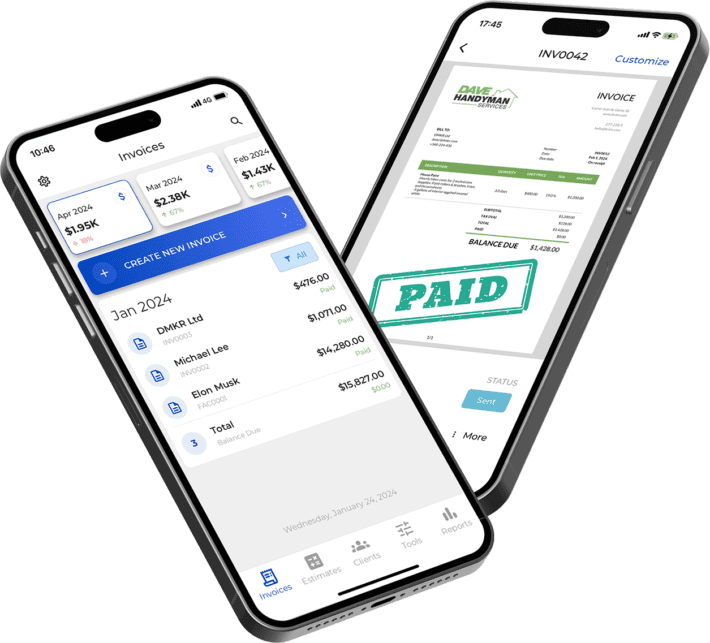
Before we get into the details: staying on top of fixed costs is much easier when your billing and cash flow are organized. Invoice Fly helps you manage invoices so incoming payments are easier to match against recurring monthly expenses.
What Are Fixed Costs?

Fixed costs are business expenses that remain constant over a defined period, regardless of changes in production or sales. Whether you sell one product or one hundred, these costs do not change in the short term.
In simple terms, fixed cost meaning refers to the expenses required to keep your business operating. You pay them even if revenue slows or stops temporarily. Because of this, fixed costs are often described as unavoidable or baseline expenses.
Fixed costs are sometimes called fixed expenses. While the wording differs, the concept is the same: expenses that do not fluctuate with output during a specific time frame.
These expenses remain unchanged within a relevant range of activity, which is why they are central to cost analysis and financial planning.
Key characteristics of fixed costs
- They are predictable and recurring
- They do not change with short-term sales volume
- They create a minimum monthly cash requirement
- They affect pricing and break-even analysis
It’s important to note that fixed costs are not permanent forever. They are fixed only within a certain period, such as the length of a lease or loan agreement.
How Fixed Costs Appear on Financial Statements
Fixed costs usually appear as operating expenses on your income statement (profit and loss statement). Common categories include rent, insurance, depreciation, and administrative salaries.
How clearly these costs appear depends on how your books are structured. Using a properly organized chart of accounts helps separate fixed costs from variable expenses, making financial analysis easier.
Income statement (P&L)
On the income statement, fixed costs often include:
- Rent or lease expense
- Insurance premiums
- Salaried wages
- Depreciation expense
- Software subscriptions
These expenses reduce profit regardless of sales volume.
Balance sheet considerations
Some fixed costs are tied to long-term obligations that appear on the balance sheet, such as:
- Loan balances
- Lease liabilities
- Accumulated depreciation
Tax treatment
Many fixed expenses may be deductible if they are ordinary and necessary for your business. If you run your business from home, certain fixed costs (such as a portion of rent, utilities, or insurance) may qualify as deductible business expenses under IRS Topic No. 509 on business use of home.
Examples of Fixed Costs

If you’re wondering what fixed expenses look like in practice, they are the bills you must pay even during slow months.
Common fixed cost examples include:
- Rent or lease payments
- Insurance premiums
- Salaried employee wages
- Equipment or vehicle depreciation
- Loan or lease payments with fixed terms
- Software subscriptions
- Property taxes
These examples of fixed cost usually stay the same unless a contract is renegotiated or staffing levels change.
Fixed costs by industry
Service businesses:
Office rent, administrative salaries, insurance, scheduling software
Contractors:
Truck payments, insurance, licensing fees, office rent, equipment financing
Retail businesses:
Store lease, insurance, POS subscriptions, management salaries
Manufacturing:
Facility rent, equipment depreciation, salaried supervisors, property taxes
To see how these expenses fit into daily bookkeeping, the Invoice Fly small business bookkeeping guide explains how fixed and variable costs are typically tracked.
Fixed Costs vs. Variable Costs

Fixed costs stay the same in total over a set period. Variable costs change based on production or sales volume.
Examples of variable costs include raw materials, shipping, transaction fees, and hourly labor tied directly to output. When sales increase, variable costs increase. When sales decrease, they fall.
Fixed costs behave differently. Rent stays the same whether you sell ten units or a thousand.
This difference matters because fixed costs determine your baseline monthly expenses. Variable costs determine how much it costs to deliver each additional product or service.
As sales increase, fixed cost per unit decreases. This is why businesses with stable fixed costs can improve profitability as volume grows.
How to Calculate Fixed Costs
To calculate fixed costs, list all recurring expenses that do not change with sales volume during the period you’re analyzing, then add them together.
Total Fixed Costs = Rent + Salaries + Insurance + Loan Payments + Subscriptions + Depreciation
Example calculation
Assume a business has the following monthly fixed expenses:
- Rent: $2,000
- Salaried wages: $3,500
- Insurance: $300
- Loan payment: $700
- Software subscriptions: $200
Total fixed costs equal $6,700 per month.
Knowing this number helps you plan pricing and cash flow. If you want to see how fixed costs affect your required revenue, our break even point calculator is a useful tool.
Fixed cost per unit
Fixed cost per unit is calculated by dividing total fixed costs by the number of units sold or services delivered. As output increases, fixed cost per unit decreases, improving margins without increasing overhead.
How Fixed Costs Affect Business Performance
Fixed costs play a major role in how profitable, resilient, and scalable a business can be. Because these expenses must be paid regardless of sales volume, they shape how much revenue a business needs to generate, how it responds to changes in demand, and how much financial risk it carries over time.
Fixed Cost and Break Even Point
Higher fixed costs raise a business’s break-even point, meaning more revenue is required before the business begins to earn a profit. Until fixed expenses like rent, insurance, and salaries are covered, additional sales simply offset those costs rather than contributing to profit.
This is why understanding fixed costs is essential for pricing decisions and cash flow planning, especially when modeling growth scenarios and learning how to create financial projections that reflect realistic revenue targets.
Fixed Cost and Operating Leverage
Businesses with higher fixed costs tend to experience larger swings in profit as sales rise or fall, a dynamic known as operating leverage. When sales increase, profits can grow quickly because fixed costs are already covered.
When sales decline, however, those same fixed costs remain in place, increasing financial pressure and risk during slow periods. Balancing operating leverage is key to scaling sustainably without exposing the business to unnecessary volatility.
Special Considerations for Fixed Costs

Not all fixed costs behave the same way in every situation. While they are generally stable over a defined period, some fixed costs change once certain thresholds are reached or over longer time frames.
Step-fixed costs
Some fixed costs remain constant until business activity reaches a certain level, then increase in steps.
For example, you may be able to operate with one administrative employee up to a certain workload, but once you exceed that level, hiring an additional salaried employee causes fixed costs to jump. These costs are fixed within each range but increase when capacity limits are reached.
Semi-variable (mixed) costs
Some expenses include both fixed and variable components. A common example is a utility or phone bill that has a flat monthly base charge plus usage-based fees. The base portion behaves like a fixed cost, while the usage portion varies with activity.
Fixed costs over time
Fixed costs are not permanent forever. Lease renewals, insurance repricing, loan refinancing, or changes in staffing can all alter fixed costs over time. For planning purposes, they are considered fixed only within the relevant period, which is why businesses review them regularly when updating budgets and forecasts.
Understanding these variations helps prevent underestimating risk and improves long-term planning, especially as a business grows or changes its operating model.
Tips to Manage and Reduce Fixed Costs
Managing fixed costs does not always mean cutting aggressively. Often, small adjustments can improve cash flow without disrupting operations.
Common strategies include:
- Renegotiating rent or long-term service contracts
- Reviewing insurance policies annually
- Eliminating unused subscriptions
- Refinancing debt using a loan calculator to compare payment options
- Outsourcing non-core functions instead of adding salaried roles
Understanding overhead helps put these decisions in context, since overheads and profitability show how fixed costs affect overall efficiency.
Ready to Take Control of Your Fixed Costs?
Fixed costs don’t have to limit your business. When you understand them clearly, you can price with confidence, plan for slow periods, and protect cash flow. That clarity also makes it easier to decide when to cut expenses, when to invest, and how much revenue you need each month to stay profitable.Invoice Fly helps you manage invoices, accept online payments, and organize customers through a secure client portal so revenue timing better aligns with recurring expenses.