
LLC Formation Guide: How to Start an LLC Step-by-Step
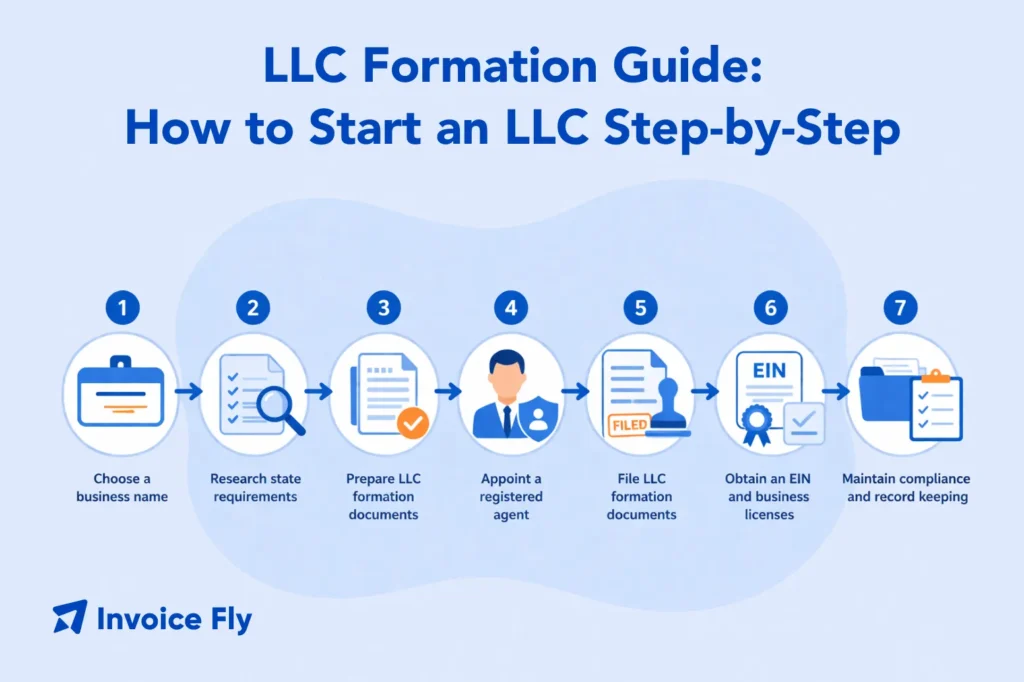
Table of Contents
LLC formation is one of the most popular ways to start a business in the United States. A Limited Liability Company (LLC) protects your personal assets, offers flexible taxation, and is relatively easy to set up.
Forming an LLC usually involves choosing a business name, appointing a registered agent, filing Articles of Organization with your state, and creating an operating agreement. Depending on the state, filing fees typically range from $35 to $500, and many states allow you to complete the process online in just a few days.
This guide will cover:
- What an LLC is and how it works
- Why forming an LLC is beneficial
- Step-by-step instructions for LLC formation
- Costs and timelines by state
- How to register your LLC properly
If you’re starting a business or side hustle, understanding how LLC formation works will help you set things up correctly from the beginning.
What is an LLC

A Limited Liability Company (LLC) is a business structure that separates your personal finances from your business finances. This means your personal assets—like your home, car, or savings—are generally protected if your business faces debts or lawsuits.
For example, imagine a freelance web developer who accidentally breaches a contract and gets sued for $10,000.
- As a sole proprietor: your personal bank account could be at risk
- With an LLC: only your business assets are typically exposed
LLCs are popular because they combine features of both corporations and sole proprietorships. They offer liability protection like a corporation but are simpler to manage and have fewer formal requirements. According to the IRS, LLCs also provide flexible tax classification options.
Another key advantage is tax flexibility:
- A single-member LLC is taxed like a sole proprietorship by default
- Profits pass through to your personal tax return
- You can elect S corporation taxation if it better fits your income level
For independent contractors and freelancers, LLCs create a clear separation between business income and personal finances. This becomes especially important when:
- Filing taxes
- Tracking deductions
- Proving income
If you’re self-employed, understanding how to file taxes as an independent contractor is a key next step.
Why form an LLC?
Forming an LLC provides several practical advantages that directly impact how you run and protect your business.
1. Personal liability protection
This is the biggest reason most people choose an LLC. If your business is sued or cannot pay its debts, your personal assets are usually protected. For example, a contractor facing a dispute over a project would not risk losing their personal savings if they operate under an LLC.
2. Flexible taxation
LLCs allow you to choose how you’re taxed. Many small business owners stick with pass-through taxation, where profits are reported on personal tax returns. Others elect S corp status to potentially reduce self-employment taxes once their income grows. To understand this better, review how LLC tax classification works.
3. Professional credibility
Having “LLC” in your business name signals legitimacy. Clients, landlords, and vendors often take LLCs more seriously than sole proprietors. For instance, a cleaning business operating as “Sparkle Clean LLC” may win more contracts than one operating under a personal name.
4. Simpler compliance
Compared to corporations, LLCs require less paperwork. There are fewer formal meetings, and reporting requirements are typically minimal.
5. Easier financial management
An LLC encourages separating personal and business finances. This makes bookkeeping, expense tracking, and tax filing much easier.
For example, a freelance photographer who forms an LLC can clearly separate equipment purchases, travel expenses, and client payments. This reduces confusion and lowers the risk of errors during tax season.
At this stage, many business owners start thinking about how they’ll handle billing and payments. Using a free invoice generator helps you create professional invoices and keep income organized from day one.
How to form an LLC

Step 1: Choose a formation state for your LLC
Most people form their LLC in the state where they live and operate. This keeps things simple and avoids extra fees.
For example, if you live and work in Texas, forming your LLC in Texas is usually the best option. If you register in another state, you may have to file as a “foreign LLC” in your home state, which adds complexity and cost.
Some states like Delaware, Wyoming, and Nevada are popular for business-friendly laws. However, these are typically better suited for larger companies or those operating in multiple states.
Step 2: Select a name for your LLC
Your LLC name must be unique within your state and include “LLC” or “Limited Liability Company.”
For example:
- “Bright Path Consulting LLC” ✔
- “Bright Path Consulting” ✖ (missing LLC designation)
Most states provide an online database where you can check name availability. It’s also smart to check if a matching domain name is available for your website.
Choosing the right name matters for branding. A clear, professional name helps customers understand what your business does. If you plan to operate under a different name, you may need a DBA—learn more about doing business as (DBA).
Step 3: Choose a registered agent
A registered agent is a person or service that receives legal documents on behalf of your LLC.
This can be:
- You (if allowed in your state)
- A business partner
- A professional registered agent service
For example, if your LLC is sued, the registered agent will receive the legal notice. Using a professional service can help maintain privacy by keeping your home address off public records.
Step 4: Determine the LLC management structure
LLCs can be either:
- Member-managed: Owners handle daily operations
- Manager-managed: Managers are appointed to run the business
For example, a solo freelancer will typically choose member-managed. A multi-owner business, like a real estate group, may prefer manager-managed to assign responsibilities clearly.
Choosing the right structure helps avoid confusion and ensures smooth decision-making.
Step 5: Draft your LLC operating agreement
An operating agreement outlines how your LLC will run. While not always required by law, it is highly recommended.
It typically includes:
- Ownership percentages
- Roles and responsibilities
- Profit distribution
- Decision-making rules
For example, if two partners start a landscaping business, the agreement might state that one handles operations while the other manages finances.
Without this document, disputes can become difficult to resolve.
Step 6: File your LLC’s Articles of Organization with the state

This is the official step that creates your LLC.
You’ll need to submit basic information, such as:
- Business name
- Registered agent
- Business address
Filing fees vary by state. For example:
- Kentucky: around $40
- California: $70+ (plus annual fees)
- Massachusetts: up to $500
Most states allow online filing, which speeds up processing.
Step 7: Obtain EIN, sales tax ID, and licenses
An Employer Identification Number (EIN) is issued by the IRS and is required for:
- Hiring employees
- Opening a business bank account
- Filing taxes
You may also need:
- Sales tax permits
- Local business licenses
For example, a food truck business may need health permits, while a contractor may need a state license. If you’re unsure about tax obligations, reviewing Schedule SE and how to file Schedule C can help clarify requirements.
Step 8: Open a business bank account
Opening a separate bank account is essential for maintaining liability protection.
For example, if you mix personal and business funds, courts may not recognize your LLC as separate. This is called “piercing the corporate veil.”
A dedicated account makes it easier to:
- Track income and expenses
- Prepare for taxes
- Build business credit
As your business grows, using an invoice maker can help you manage payments, track income, and stay organized without manual work.
Step 9: Register to do business in other states (if necessary)
If your LLC operates in multiple states, you may need to register as a foreign LLC.
For example, if your LLC is based in Florida but you start working regularly in Georgia, you may need to register there as well.
This ensures compliance with local laws and avoids penalties.
How much does it cost to form an LLC?
The cost of LLC formation depends on your state and any additional services you use.
Typical costs include:
- Filing fees: $35 to $500
- Registered agent (optional): $50 to $300 per year
- Business licenses: $50 to $200+
For example:
- Texas: around $300
- Florida: about $125
- California: $70 filing + $800 annual franchise tax
If you use formation services, expect to pay an additional $50 to $300.
While you can form an LLC yourself, some business owners choose professional services for convenience and accuracy.
How long does it take to form an LLC?

The time required depends on the state and how you file.
Typical timelines:
- Online filing: 1–5 business days
- Mail filing: 2–4 weeks
- Expedited processing: 24–48 hours (extra fee)
For example, forming an LLC in New York online may take just a few days, while mail filings can take several weeks.
Delays can happen if:
- Your application has errors
- Your chosen name is unavailable
- Additional documentation is required
Planning ahead helps avoid delays, especially if you need your LLC active by a specific date.
How to form an LLC in your state
While the overall process is similar across the U.S., each state has its own rules, fees, and requirements.
For example:
- Texas: Requires filing with the Secretary of State and paying a $300 fee
- California: Includes annual franchise tax requirements
- Florida: Offers relatively low filing fees and fast processing
Some states also require:
- Annual reports
- Publication requirements (e.g., New York)
- Additional permits or licenses
If you’re unsure where to start, reviewing state-specific guides like starting a Florida LLC can provide clarity.
Start and Manage Your LLC with Confidence
LLC formation is one of the simplest and most effective ways to start a business while protecting your personal assets. By following the correct steps—choosing a name, filing the right documents, and setting up your finances—you can create a solid legal foundation for your business.
Once your LLC is set up, the next step is managing your business finances efficiently. From sending invoices to tracking payments, having the right tools in place makes a big difference.With an invoice maker, you can create professional invoices, stay on top of payments, and keep your business organized as you grow.