
What Is Unbilled Revenue? Accounting, Journal Entries & Examples
Table of Contents
- What is Unbilled Revenue?
- Why Unbilled Revenue Matters for Businesses
- Unbilled Revenue vs. Other Revenue Types
- Unbilled vs. Billed Revenue
- How to Record Unbilled Revenue Journal Entry
- Unbilled Revenue on the Balance Sheet
- Common Causes and Challenges of Unbilled Revenue
- Strategies to Minimize Unbilled Revenue
- Conclusion
- FAQs
Unbilled revenue is income your business has earned by delivering goods or services but has not yet invoiced to the customer. Under accrual accounting, this revenue must still be recognized and recorded as an asset—often called unbilled accounts receivable—to accurately reflect financial performance.
Understanding how unbilled revenue works, how to record it, and how it differs from deferred or unearned revenue is essential for accurate financial statements and cash flow forecasting.
What is Unbilled Revenue?
Unbilled revenue represents money your business has rightfully earned but hasn’t billed yet. When you complete work for a client but haven’t sent the invoice, that uncollected payment sits in your accounting records as unbilled revenue.
Unbilled revenue meaning: you’ve fulfilled your obligation by delivering the product or service, which means you’ve earned the income. The fact that you haven’t sent an invoice doesn’t change this fundamental reality. Under accrual basis accounting, you recognize revenue when you earn it, not when you receive payment or send an invoice.
What does unbilled mean in accounting?
When something is unbilled, it means the work is complete and revenue has been earned, but no invoice has been issued to the customer yet. This creates a gap between earning income and requesting payment.
Common scenarios creating unbilled revenue:
- You complete a consulting project but wait until month-end to invoice
- Your agency finishes design work but holds the invoice until the client approves deliverables
- You provide ongoing services throughout the billing period and invoice at period-end
- Your construction project reaches a milestone but contractual terms delay billing
- You deliver products but administrative delays prevent immediate invoicing
According to the Tax Adviser, recognizing unbilled revenue correctly ensures financial statements accurately reflect your business’s financial position and prevents understating income during the period work was performed.
Understanding Unbilled Accounts Receivable (UAR)
What is unbilled accounts receivable? Unbilled accounts receivable (UAR), also called unbilled receivables or unbilled AR, is the balance sheet account where you record unbilled revenue. It represents amounts customers owe you for work completed but not yet billed.
UAR is an asset account that bridges the gap between completing work and issuing invoices. Once you send the invoice, you transfer the amount from unbilled accounts receivable to regular accounts receivable.
The lifecycle of unbilled receivables:
- Service performed but unbilled: You complete work worth $5,000
- Record unbilled revenue: Create journal entry recognizing $5,000 in unbilled AR
- Invoice issued: Send invoice to customer for $5,000
- Reclassify: Move $5,000 from unbilled AR to regular accounts receivable
- Payment received: Customer pays, reducing accounts receivable
This progression ensures your balance sheet always reflects money owed to you, whether you’ve billed for it yet or not.

Why Unbilled Revenue Matters for Businesses
Tracking unbilled revenue provides critical insights into your business’s financial health and operational efficiency. It’s not just an accounting technicality—it directly impacts how you understand your business performance.
Preventing Revenue Leakage
Revenue leakage happens when you complete work but never bill for it. Without a system to track unbilled revenue, completed projects can slip through the cracks, costing your business real money.
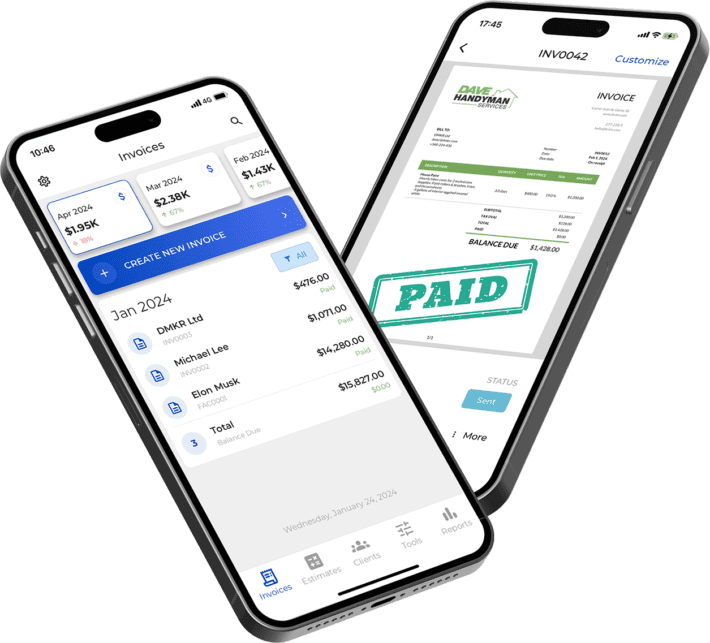
When you maintain accurate unbilled revenue records, you create accountability. Every completed project generates an unbilled revenue entry that stays visible until you convert it to an invoice. This visibility prevents forgotten invoices and ensures you collect payment for all work performed.
How unbilled revenue tracking prevents losses:
- Creates a clear list of uninvoiced work requiring billing action
- Flags aging unbilled items that need immediate attention
- Helps identify patterns in billing delays that may indicate process problems
- Ensures all earned income appears in financial reports even before invoicing
If you’re regularly reviewing your unbilled accounts receivable aging report, you can spot problems early. When unbilled amounts sit for 60-90 days without being invoiced, something in your billing process needs fixing.
Impact on Cash Flow and Financial Forecasting
Unbilled revenue significantly impacts how you forecast cash flow and plan for future expenses. When you know exactly how much revenue you’ve earned but haven’t collected yet, you can predict incoming cash more accurately.
Your unbilled revenue balance tells you the minimum amount of cash you should expect from invoicing in the near term. If you have $50,000 in unbilled revenue, you know you have at least $50,000 in invoices to send, which will eventually convert to cash (assuming timely customer payment).
This information helps with cash flow problems by giving you visibility into your billing pipeline. You can see exactly how much revenue you’ve earned but haven’t yet requested payment for, which helps you understand the timing gap between earning money and collecting it.
When creating financial projections, unbilled revenue provides a more accurate picture than just looking at accounts receivable. It shows both billed and unbilled amounts owed to you, giving investors and lenders a complete view of your expected cash collections.
Unbilled Revenue vs. Other Revenue Types
Understanding how unbilled revenue differs from related accounting concepts helps you categorize and record transactions correctly.
| Unbilled Revenue | Deferred (Unearned) Revenue |
| Work has been completed | Work has not yet been completed |
| Invoice has not been sent | Payment has already been received |
| Revenue has been earned | Revenue has not yet been earned |
| Recorded as an asset on the balance sheet | Recorded as a liability on the balance sheet |
| Increases revenue on the income statement | Does not increase revenue until work is performed |
Is unbilled revenue the same as deferred revenue? No—they’re opposites. Unbilled revenue means you performed work without billing. Deferred revenue means you received payment without performing work yet.
When you review unearned income guidance from the IRS, you’ll see it’s treated as a liability because you owe the customer either the service or a refund.

Unbilled Revenue vs. Accrued Revenue
What is the difference between accrued revenue and unbilled revenue? In most accounting contexts, these terms are interchangeable—they both refer to revenue you’ve earned but haven’t billed yet.
Some accountants use “accrued revenue” as the broader term and “unbilled revenue” or “unbilled receivables” as the specific balance sheet account name. The concept is identical: income earned but not yet invoiced.
Both terms indicate:
- Work has been completed
- Revenue recognition has occurred
- No invoice has been sent
- The amount appears as an asset
If there’s any distinction, it’s that “accrued revenue” emphasizes the accrual accounting principle of recognizing revenue when earned, while “unbilled revenue” emphasizes the operational fact that you haven’t sent an invoice yet.
Tip: These terms are interchangeable in practice. Don’t worry about which one to use—they describe the same situation.
Unbilled vs. Billed Revenue
The difference between unbilled and billed revenue comes down to one thing: whether you’ve sent an invoice.
Unbilled revenue means you’ve completed the work and earned the money, but you haven’t invoiced the customer yet. They might not even know the exact amount they owe.
Billed revenue means you’ve sent an invoice. The customer has been formally notified of the amount due and the payment terms.
Here’s how revenue progresses from unbilled to billed:
| Unbilled Revenue | Billed Revenue | |
| Work completed | ✓ Yes | ✓ Yes |
| Invoice sent | ✗ No | ✓ Yes |
| Customer aware of exact amount | ✗ No | ✓ Yes |
| Recorded as | Unbilled Accounts Receivable (Asset) | Accounts Receivable (Asset) |
| Payment timeline | Unclear to customer | Clear due date established |
Both unbilled and billed revenue appear as assets on your balance sheet. However, billed revenue has a much clearer path to collection because the customer has received formal notice of what they owe and when payment is expected.
How to Record Unbilled Revenue Journal Entry
Recording unbilled revenue requires creating proper journal entries that reflect both the revenue earned and the corresponding asset created.
Accounting Entry for Unbilled Revenue
The journal entry for unbilled revenue follows standard double-entry accounting principles. You need to record both the increase in assets (unbilled accounts receivable) and the increase in revenue.
Basic unbilled revenue journal entry:
Debit: Unbilled Accounts Receivable (Asset)
Credit: Revenue (Income)
This entry accomplishes two things:
- Records the revenue in your income statement for the period when you earned it
- Creates an asset on your balance sheet representing the customer’s obligation to pay
When you later send the invoice, you create a second journal entry:
Debit: Accounts Receivable (Asset)
Credit: Unbilled Accounts Receivable (Asset)
This entry moves the amount from unbilled to billed status without affecting revenue—you already recognized the revenue when you completed the work.
Unbilled Revenue Accounting Entry Examples
Let’s walk through specific examples showing how to record unbilled revenue in different scenarios.
Example 1: Consulting services completed
You complete a consulting project worth $10,000 on March 28, but your policy is to invoice on the first of the following month.
March 28 entry (recognizing unbilled revenue):
Debit: Unbilled Accounts Receivable $10,000
Credit: Consulting Revenue $10,000
April 1 entry (converting to billed):
Debit: Accounts Receivable $10,000
Credit: Unbilled Accounts Receivable $10,000
Example 2: Subscription services provided
Your SaaS company provides service throughout January but invoices on January 31. Monthly subscription value is $5,000.
January 31 entry (if you track daily accruals):
Debit: Unbilled Accounts Receivable $5,000
Credit: Subscription Revenue $5,000
Followed immediately by:
Debit: Accounts Receivable $5,000
Credit: Unbilled Accounts Receivable $5,000
In this case, you might skip the unbilled step and record directly to accounts receivable when you create the invoice on the same day you recognize the revenue.
Example 3: Milestone-based project
You complete 50% of a $100,000 project in February. Your contract allows billing at 50% completion.
February 28 entry (recognizing revenue):
Debit: Unbilled Accounts Receivable $50,000
Credit: Project Revenue $50,000
March 15 entry (when invoice is prepared and sent):
Debit: Accounts Receivable $50,000
Credit: Unbilled Accounts Receivable $50,000
These examples show how the accounting entry for unbilled revenue captures earned income while the unbilled accounts receivable accounting creates visibility for work that needs invoicing.

Unbilled Revenue on the Balance Sheet
Understanding where unbilled revenue appears on your balance sheet and how it’s classified helps you read financial statements accurately.
Placement Within Assets
Where is unbilled revenue shown in a balance sheet? Unbilled revenue appears as an asset, typically under current assets, often labeled as “Unbilled Accounts Receivable,” “Unbilled Receivables,” or “Accrued Revenue.”
Typical balance sheet presentation:
Current Assets:
- Cash and cash equivalents
- Accounts receivable
- Unbilled accounts receivable ← Here
- Inventory
- Prepaid expenses
Is unbilled revenue an asset or liability? It’s always an asset because it represents money customers owe you for work you’ve completed. The customer has an obligation to pay you, which makes it a receivable (asset) from your perspective.
The placement in current assets makes sense because you expect to convert unbilled revenue to cash within one year (and usually within 30-90 days). You’ll send the invoice, the customer will pay according to your net 30 vs net 60 payment terms, and the cycle completes.
Accrual Accounting and Unbilled Receivables
Unbilled receivables accounting only exists under accrual basis accounting. If you use cash basis accounting, you don’t record revenue until you receive payment, so there’s no unbilled revenue to track.
Under accrual accounting principles, you recognize revenue when you earn it by completing the performance obligation, regardless of when cash changes hands. This creates three possible states:
- Unbilled revenue: Work completed, no invoice sent
- Billed receivable: Work completed, invoice sent, payment pending
- Cash: Work completed, invoice sent, payment received
The accrual method provides a more accurate picture of business performance because it matches revenue with the period when you actually performed the work, not when you happened to send invoices or receive payments.
Common Causes and Challenges of Unbilled Revenue
Understanding why unbilled revenue accumulates helps you address the root causes and improve your billing processes.
Service Performed but Unbilled
The most common cause of unbilled revenue is simply completing work before your scheduled billing date. This is normal and expected in many business models.
Standard situations creating unbilled revenue:
- Monthly invoicing cycles: When you provide services daily but invoice monthly, you accumulate unbilled revenue throughout the month. On day 15, you’ve performed half a month of work but haven’t sent an invoice yet.
- Milestone-based contracts: Large projects often have billing tied to completion milestones. You might complete significant work between milestones, creating periods of substantial unbilled revenue.
- Client approval requirements: Some contracts require client approval of deliverables before invoicing. The gap between delivery and approval creates unbilled revenue.
- Retainer services: When clients pay retainers for future work, you earn the revenue as you perform services but may only invoice against the retainer at specific intervals.
These situations are manageable when you track them properly. The challenge arises when unbilled revenue grows beyond expected levels or ages without being converted to invoices.
Delays in Invoicing and Project Milestones
When unbilled revenue sits for extended periods without being invoiced, it often indicates operational problems rather than normal billing cycles.
Common causes of excessive unbilled revenue:
- Administrative backlogs: Your team completes work faster than your accounting department can process invoices. This bottleneck creates growing unbilled balances.
- Poor time tracking: Without accurate time tracking, you can’t determine how much revenue you’ve earned, causing delays in recognizing and billing for completed work. Using invoicing software with built-in time tracking helps solve this.
- Unclear billing milestones: When project contracts have vague milestone definitions, disagreements about whether you’ve reached the billing trigger can delay invoicing.
- Client relationship issues: Sometimes you delay invoicing because you’re uncertain about the client’s satisfaction or ability to pay, even though the work is technically complete.
- System limitations: Manual processes for tracking completed work and generating invoices create delays. Automation through accounts payable automation software can streamline these processes.
Monitoring how long amounts sit in unbilled accounts receivable helps identify these problems. If your average unbilled revenue age exceeds your normal billing cycle by more than 10-15 days, investigate the delays.
Strategies to Minimize Unbilled Revenue
While some unbilled revenue is normal and expected, minimizing the balance and conversion time improves cash flow and reduces revenue leakage risk.
Automating Billing and Invoice Processes
Automation dramatically reduces the time between completing work and sending invoices. When your systems automatically track completed work and generate invoices on schedule, unbilled revenue converts to billed receivables faster.
Automation strategies that reduce unbilled revenue:
- Time tracking integration: Connect time tracking directly to billing systems so hours worked automatically flow into invoice generation without manual data entry.
- Milestone triggers: Configure your project management software to notify accounting when milestones are reached, triggering invoice creation.
- Recurring invoice automation: For subscription or retainer services, automate invoice generation at the end of each billing period. Your system should create and send invoices without manual intervention.
- Approval workflows: Set up automated approval routing so completed work moves quickly through any required approval steps before invoicing.
When you automate these processes, work completed on the last day of the month can be invoiced on the first day of the next month, minimizing the unbilled revenue balance.

Creating Effective Billing Policies and Client Communication
Clear policies and proactive communication reduce confusion about when invoicing should occur and what triggers billing events.
Policy best practices:
- Define billing schedules clearly: Specify in contracts exactly when invoices will be sent—first of month, last day of service period, within X days of milestone completion, etc.
- Set expectations early: During onboarding, explain your billing cycle so clients know when to send invoices and aren’t surprised by timing.
- Create billing calendars: Maintain a calendar of recurring billing dates and project milestone dates so nothing falls through the cracks.
- Review unbilled revenue weekly: Regular reviews of your unbilled accounts receivable balance help you catch delays quickly and take corrective action.
- Streamline approval processes: If client approval is required before billing, establish quick turnaround expectations and follow-up procedures when approvals lag.
- Use progress billing: Instead of waiting for full project completion, invoice regularly based on work completed or time elapsed. This keeps unbilled revenue balances manageable.
Consider using tools like a free quote generator at the start of projects to establish clear pricing expectations, and follow up with timely invoices using free bill templates to maintain professional consistency.
Conclusion
Unbilled revenue represents a normal part of accrual accounting, reflecting the gap between completing work and sending invoices. When properly tracked and managed, it provides valuable insights into your billing pipeline, helps prevent revenue leakage, and improves cash flow forecasting.
The key to effective unbilled revenue management is balance. Some unbilled revenue is unavoidable and expected—you can’t always invoice on the same day you complete work. The goal is minimizing the time between earning revenue and converting it to billed accounts receivable.
By implementing automation, establishing clear billing policies, and regularly monitoring your unbilled accounts receivable balance, you can keep this asset account at healthy levels while ensuring you collect payment for all work performed. Understanding how to record unbilled revenue journal entries correctly ensures your financial statements accurately reflect your business’s true financial position.
Whether you’re a service business invoicing monthly, a project-based company billing at milestones, or a subscription business recognizing revenue as you deliver services, tracking unbilled revenue gives you visibility into earned income that hasn’t been invoiced yet—a critical metric for understanding both operational efficiency and financial health.