Itemized Bill Meaning: How to Read, Create, and Use Detailed Bills
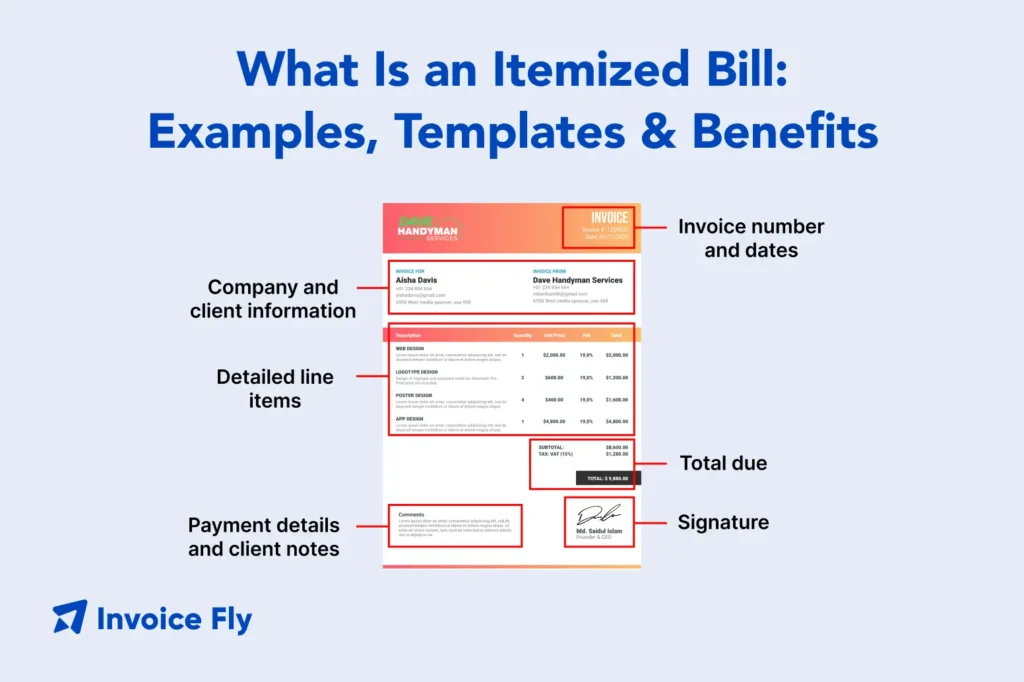
Table of Contents
The itemized bill meaning refers to a detailed billing document that lists every product or service separately, including the quantity, date, and cost of each charge. Instead of showing only a final total, an itemized bill breaks down exactly what the customer is paying for. This format improves transparency, reduces disputes, and strengthens accounting accuracy.
Itemized billing is widely used in hospitals, medical offices, legal services, colleges, hospitality businesses, and service-based industries where multiple charges may apply to a single transaction. It allows customers to verify charges, identify errors, and submit documentation for reimbursement when needed.
This guide will cover:
- What is an itemized bill?
- How it differs from a standard bill
- Itemized bill vs itemized invoice
- What an itemized bill looks like
- What information to include
- How to create an effective itemized bill
- Why itemized billing benefits businesses and customers
What Is an Itemized Bill?

An itemized bill is a detailed billing statement that separates each product or service into its own line entry rather than combining everything into one total.
Each line typically includes:
- Description of the service or product
- Quantity provided
- Date of service
- Unit price
- Line total (quantity × unit price)
This breakdown allows both businesses and customers to clearly see how the total amount was calculated.
Itemized bills are especially common in:
- Medical hospital billing
- Legal services
- Hotel statements
- College tuition and fee breakdowns
- Professional service industries
According to IRS guidance on record retention, businesses must maintain detailed financial records to support income reporting and expense documentation. Itemized bills provide stronger documentation than summary billing statements, making audits and financial reviews easier to manage.
Understanding what an invoice is also helps clarify how itemized bills function within broader accounting systems.
How Does It Differ From a Standard Bill?
A standard bill usually provides:
- Business name
- Customer name
- Total amount due
An itemized bill provides:
- Detailed line-by-line charges
- Specific dates of service
- Unit pricing
- Separate tax or fee breakdowns
Standard Bill vs Itemized Bill
| Feature | Standard Bill | Itemized Bill |
| Shows individual services | No | Yes |
| Displays unit pricing | No | Yes |
| Includes tax breakdown | Sometimes | Yes |
| Supports audit documentation | Limited | Strong |
| Easier to dispute errors | No | Yes |
Itemized billing provides greater accountability and helps prevent misunderstandings about pricing.
Itemized Bill vs Itemized Invoice

Many people use the terms interchangeably, but there is a technical difference.
A bill is typically issued after services are completed and requests payment.
An invoice is a formal request for payment that may include payment terms such as Net 30, Net 60, or Net 15.
In practice, both documents can be itemized. The difference lies in timing and financial classification. Our guide on invoice vs bill clarifies the accounting distinctions between these documents.
What Does an Itemized Bill Look Like?
An effective itemized bill includes clearly separated sections:
- Business logo and contact information
- Customer details
- Bill number
- Date issued
- Line-item table
- Subtotal
- Taxes and additional fees
- Grand total
- Payment instructions
Below is a simplified structural layout:
| Section | Purpose |
| Header | Identifies the business |
| Client Info | Identifies who is being billed |
| Line Items | Breaks down each charge |
| Subtotal | Total before tax |
| Tax/Fees | Adds transparency |
| Grand Total | Final amount due |
Using a structured free bill template ensures your format includes all required sections and reduces layout errors.
What Information Should Be Included on an Itemized Bill?

An itemized bill should include enough detail to justify every charge.
Business Information
- Business name
- Address
- Phone number
- Tax identification number (if required)
Clear branding builds trust and professionalism.
Bill Number and Date
A unique bill number improves tracking and simplifies reconciliation in accounting systems.
Including a clear issue date ensures proper payment tracking and aging analysis.
Line Items
Each line item should contain:
- Service description
- Quantity
- Unit cost
- Date provided
- Line total
Clear itemization reduces confusion and improves client confidence.
Additional Fees, Taxes, and Discounts
Be transparent about:
- Sales tax
- Service charges
- Processing fees
- Discounts
Including detailed invoice terms and conditions helps clarify how charges are calculated.
Subtotals and Grand Total
Break out subtotals before tax. Then display the final amount clearly.
Incorrect totals are among the most common invoicing mistakes businesses make, often leading to payment delays.
Notes or Special Instructions
Add:
- Payment instructions
- Accepted payment methods
- Refund policies
- Late fee terms
Clear invoice payment terms reduce misunderstandings and speed up collections.
How to Create an Effective Itemized Bill for Your Business
Creating professional itemized billing statements requires structure and consistency.
Step 1: Organize Business and Client Information
Ensure all identifying information is accurate and updated.
Step 2: Assign a Unique Bill Number
Consistent numbering helps track transactions and simplifies audits.
Step 3: Add Detailed Line Items
Use clear, concise descriptions. Avoid vague terms like “service fee” without explanation.
Step 4: Calculate Totals Accurately
Separate subtotal, tax, and grand total.
Step 5: Add Payment Terms
Specify due dates and accepted methods.
Step 6: Review for Errors
Double-check calculations and formatting before sending.
Using professional invoice templates ensures consistent formatting. For businesses that send frequent bills, structured periodic invoice formats help maintain recurring billing clarity.
Why You Should Use Itemized Billing

Itemized billing improves both financial control and customer satisfaction.
Benefits for Businesses
- Clear documentation for tax compliance
- Reduced billing disputes
- Easier reconciliation of invoicing payments
- Stronger professionalism
- Better tracking of revenue sources
Benefits for Customers
- Transparency in pricing
- Ability to verify charges
- Easier reimbursement for insurance or expense claims
- Clear understanding of service value
In medical settings, itemized hospital bills allow patients to verify procedure codes and dispute incorrect charges. In hospitality, detailed statements clarify room charges, taxes, and service fees.
Strengthen Transparency and Accuracy in Your Billing
Understanding the itemized bill meaning allows businesses to improve documentation, reduce errors, and build customer trust.
Detailed billing supports compliance, improves payment speed, and strengthens your financial records. Understanding what is an invoice within your billing system ensures your documentation aligns with accounting best practices and supports accurate financial reporting.