
Donation Receipts: What They Are and How to Use Them (+ template)
Table of Contents
- What Is a Donation Receipt?
- Why Receipts Are Important for Charitable Donations
- When to Send a Donation Receipt for a Charitable Contribution
- How to Create a Donation Receipt
- Information to Include on a Donation Receipt
- Gift Acknowledgment Types
- Using Invoice Fly to Create and Send Donation Receipts
- Conclusion
- FAQs
A donation receipt is a simple document that proves a charitable contribution was made — and helps donors claim eligible tax deductions at filing time. It typically includes the donor’s name, the organization’s information, the date, and the value of the gift, creating a clear record for both your books and the IRS. Understanding what a donation receipt is, when you need one, and how to fill it out correctly makes it much easier to stay compliant and organized.
In this guide, we’ll walk through exactly how donation receipts work and how to use ready-made templates step by step.

What Is a Donation Receipt?
A donation receipt is a written acknowledgment issued by a nonprofit organization confirming that a charitable contribution was received. It’s the official record donors need to support a tax deduction — and the document nonprofits rely on to keep their giving records accurate and audit-ready.
Receipts can cover cash donations, checks, credit card payments, and non-cash gifts like clothing, furniture, or electronics. For non-cash items, the receipt describes what was donated but does not assign a dollar value. That’s the donor’s responsibility, not the organization’s.
Whether you run a small church, a school fundraiser, or a registered 501(c)(3) organization, issuing proper donation receipts protects your donors and your nonprofit. To understand how donation receipts connect to your broader record-keeping, see our guide on what is a receipt.
Why Receipts Are Important for Charitable Donations
Donation receipts serve two clear purposes: they give donors the documentation they need to claim deductions, and they help nonprofits maintain organized, compliant financial records.
Gift Receipts for Donors
For donors, a receipt isn’t just a courtesy, it’s the official record the IRS may require. Without written acknowledgment, a tax deduction could be disallowed, especially for contributions of $250 or more where a receipt is legally required.
Donors giving non-cash items also benefit from a written description of what they contributed. Even if no dollar value appears on the receipt, having that documentation supports their deduction when they determine fair market value on their own.
Wondering what else you might be able to deduct? Our guide on what deductions you can claim without receipts is a good place to start.
Donation Receipts for Nonprofits
For nonprofits, issuing proper receipts builds donor trust and signals that your organization runs a professional, accountable operation. It also keeps your financial records clean in case of an audit. Consistent, IRS-compliant receipts show donors that their gift landed in good hands.

When to Send a Donation Receipt for a Charitable Contribution
Timing matters when it comes to donation receipts. Here’s a quick breakdown:
- Single gifts of $250 or more: A written receipt is required before the donor files their tax return for that year. The sooner you send it, the better.
- Gifts under $250: Not legally required, but strongly recommended as good practice.
- Year-end giving statements: Many nonprofits send annual summaries by January 31st covering all contributions from the previous calendar year.
- In-kind (non-cash) donations: Send a receipt as soon as the donation is received, describing what was given — without estimating a value.
According to the IRS, written acknowledgment must be in the donor’s hands on or before the date they file their return, or the due date — whichever comes first.
How to Create a Donation Receipt
Creating a donation receipt doesn’t have to be complicated. A Word document, a PDF template, or an online tool can all work well. The process is straightforward:
- Choose a format — a printable template, fillable PDF, or online generator
- Fill in all required fields (see the next section for exactly what to include)
- Review for accuracy — check the date, donor name, amount, and tax ID number
- Send it promptly — email works fine and meets IRS requirements when all required fields are present
Using free receipt templates speeds up the process significantly and reduces the chance of missing a required element. For cash contributions specifically, a free cash receipt template is a practical starting point.
Information to Include on a Donation Receipt
According to IRS Publication 1771, a valid donation receipt must include:
- The legal name of the nonprofit organization
- The date the contribution was received
- The amount for cash, check, or card donations
- A description of donated goods (for non-cash gifts — no value estimate)
- A quid pro quo statement confirming whether goods or services were provided in exchange
- Your organization’s EIN (tax ID number) — optional but recommended
Disclosure for Goods and Services
If your organization provided something in return for the donation — like a tote bag, event tickets, or a catered dinner — that needs to be disclosed. The receipt should describe the benefit and include a good-faith estimate of its fair market value.
For example: “In exchange for your $150 contribution, you received a fundraising dinner valued at $40. The deductible portion of your gift is $110.”
This is called a quid pro quo disclosure. The IRS requires it when the total payment exceeds $75 and something of value was received in exchange.
Hard vs. Soft Credits
When recording donations internally, nonprofits use two types of credits:
| Hard credit | Soft credit | |
| What it means | Assigned to the donor who actually made the payment | Assigned to someone who influenced or facilitated the gift |
| Who receives it | The individual or organization named on the receipt | Example: matching gift employers, tribute honorees, or fundraising influencers |
| On official donation receipt? | Yes | No (internal tracking only) |

Gift Acknowledgment Types
Not every donation acknowledgment looks the same. Here are the most common formats:
- Written receipt — the standard letter or PDF issued after a donation
- Email acknowledgment — quick, eco-friendly, and IRS-compliant when all required fields are present
- Year-end giving statement — a single summary of all gifts from one donor during the calendar year; commonly used by churches and larger nonprofits
- In-kind gift receipt — used for donated goods; describes items without assigning a value
Many organizations combine a formal receipt with a personalized thank-you. The receipt section at the top covers all the legal requirements; a note below adds a human touch that strengthens donor relationships.
For more on how to handle payment acknowledgments across different contexts, see our guide to confirming receipt.
Using Invoice Fly to Create and Send Donation Receipts
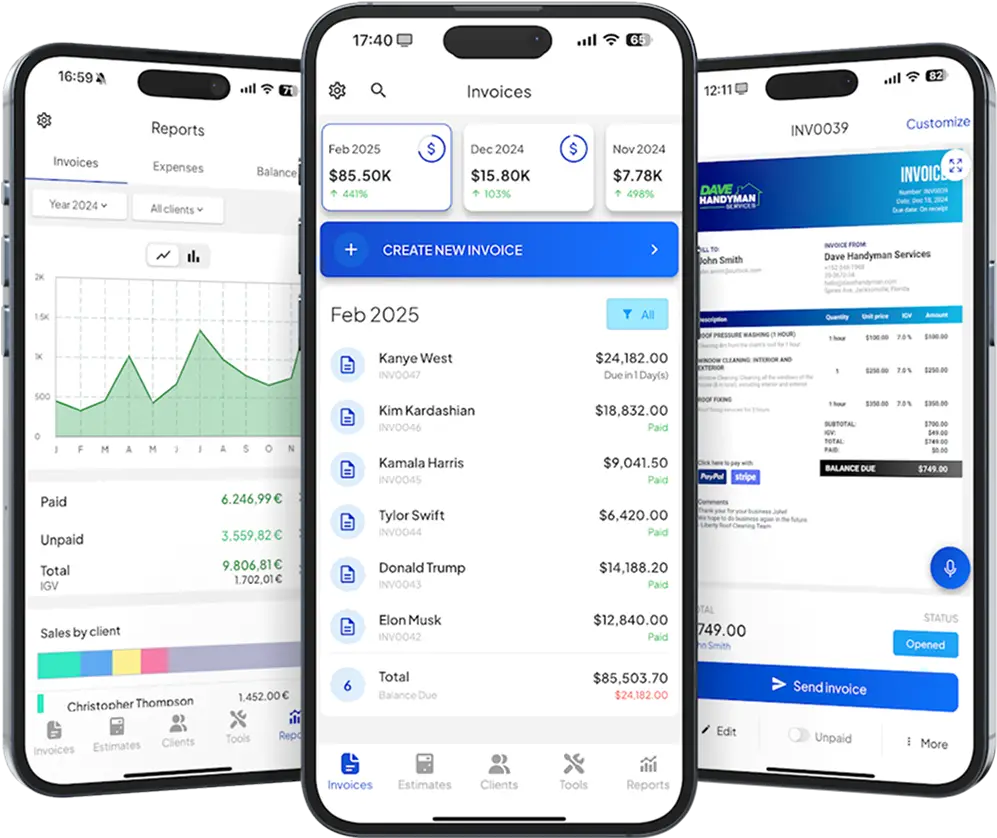
InvoiceFly makes it easy to generate professional, IRS-compliant donation receipts without starting from scratch each time. You can customize templates with your organization’s name, logo, EIN, and a pre-written quid pro quo statement — then send them directly to donors.
Our free receipt templates are a practical starting point for churches, schools, and small nonprofits handling a range of gift types. For higher-volume organizations, the invoice maker helps you produce consistent, branded receipts in minutes while keeping your records organized year-round. You can also use the free receipt generator to create individual receipts on the spot.
To better understand how donation acknowledgments fit into your overall documentation workflow, revisit our guide on what is a receipt.
Donation Receipt Template
Here’s a simple, IRS-compliant donation receipt template you can adapt for your organization:
[Organization Name]
[Address]
[City, State, ZIP]
[Phone/Website]
EIN: [Tax ID Number]
DONATION RECEIPT
Date: [Date]
Donor Name: [Full Name]
Donor Address: [Address]
Dear [Donor Name],
Thank you for your generous donation to [Organization Name].
Contribution Amount: $[Amount] Description (non-cash gifts): [Description of donated items]
No goods or services were provided in exchange for this contribution. [Organization Name] is a registered 501(c)(3) nonprofit organization. Your contribution is tax-deductible to the extent permitted by law.
Please retain this receipt for your tax records.
Sincerely,
[Name and Title]
[Signature]

Conclusion
A well-written donation receipt protects donors, supports your nonprofit’s credibility, and keeps everything IRS-compliant. Whether you’re issuing a single acknowledgment for a major gift or sending year-end summaries to hundreds of supporters, the basics stay the same: include the right information, send it on time, and keep your records organized.
Use InvoiceFly’s free receipt templates or free receipt generator to take the admin burden off your plate — so you can spend less time on paperwork and more time on the work that matters.