
Contracts for Contractors: Contractor Agreements Explained
Table of Contents
- What Is a General Contractor Agreement Contract?
- Why Are General Contractor Contracts Important?
- When Do You Need a General Contractor Contract?
- Types of General Contractor Agreement Contracts
- Clauses to Include in a General Contractor Contract Template
- How to Create a General Contractor Contract Step-by-Step
- Can a Contractor Sue for Non-Payment Without a Contract?
- General Contractor Contract Tips
- Conclusion
- FAQs
A contractor contract is a written, legally binding document that spells out the scope of work, payment terms, timeline, and responsibilities between a contractor and their client. In other words, it’s the document that keeps everyone on the same page before a project begins. By putting details in writing, contractor contracts help prevent disputes, clarify that the worker is an independent contractor rather than an employee, and protect both sides if something goes wrong on the project.
In this guide, you’ll learn what contractor contracts include, the main types used in construction and home improvement, and how to create a clear contractor contract template you can reuse for future projects.
What Is a General Contractor Agreement Contract?
A general contractor contract is a formal agreement between a contractor and a client that documents exactly what work will be done, how much it costs, and when it will be completed. It also establishes that the contractor is self-employed — not an employee — which has significant implications for taxes, insurance, and liability.
Whether you’re a general contractor taking on a home remodel, an electrical contractor wiring a new build, or an independent contractor providing services, a written contract is the foundation of any professional working relationship. According to the IRS, the distinction between an employee and an independent contractor matters for tax purposes, and a properly drafted contract helps establish that status clearly.
Ready to take your contracting business further? Our guide on how to start a general contracting business covers everything from licensing to landing your first client.
Why Are General Contractor Contracts Important?
Skipping a contract is one of the most common, and costly, mistakes contractors make. Here’s what a solid agreement protects you from:
- Payment disputes — A contract spells out payment amounts, due dates, and consequences for non-payment
- Scope creep — Clients can’t add work for free if the original scope is clearly documented
- Liability exposure — A contract limits your responsibility for issues outside your defined scope
- Misclassification risk — A written agreement reinforces independent contractor status, which matters at tax time
- Project abandonment — Termination clauses define how either party can exit the agreement legally
Without a contract, you’re relying on a handshake and goodwill, neither of which is likely to hold up in court.
When Do You Need a General Contractor Contract?
The short answer: always. But there are specific situations where a written contractor contract agreement may be legally required.
In California, for example, the CSLB requires a written contract for home improvement projects valued at $500 or more. Many other states have similar thresholds for residential construction contracts.
Beyond legal requirements, use a contract any time you’re:
- Starting a new project with a new client
- Taking on a subcontractor for part of a job
- Working on a project with a long timeline or multiple milestones
- Handling projects involving significant materials, equipment, or permits
Types of General Contractor Agreement Contracts
Not every project uses the same contract structure. The right type depends on how well the scope and costs are defined upfront. According to the SBA, the most common contract types used in construction and contracting include fixed-price, time and materials, cost-plus, and guaranteed maximum price agreements. For federal projects, the FAR outlines additional contract type requirements that apply to government work.
| Contract Type | How It Works | Best For | Main Risk |
| Lump Sum (Fixed Price) | A single fixed price covers the entire defined scope of work. | Projects with a clear, stable scope and timeline. | The contractor absorbs unexpected cost overruns. |
| Time and Materials | The client pays for actual labor hours and materials used during the project. | Projects where the scope may change or isn’t fully defined upfront. | Costs can rise quickly without careful tracking and approvals. |
| Cost-Plus | The client covers project expenses plus an agreed profit margin or contractor fee. | Large remodeling or residential construction projects with uncertain costs. | Final project costs may exceed the original estimate. |
| Guaranteed Maximum Price (GMP) | Similar to cost-plus, but with a maximum total price cap for the client. | Projects needing flexibility while still controlling budget risk. | The contractor may need to absorb costs above the agreed cap. |
For more on the day-to-day reality of the trade, see our overview of what a contractor does and how to become a general contractor.

Clauses to Include in a General Contractor Contract Template
A strong contractor contract agreement template covers these essential sections:
- Scope of work — Detailed description of tasks, deliverables, and materials included (and excluded)
- Payment terms — Rates, payment schedule, deposit requirements, and accepted payment methods
- Project timeline — Start date, completion date, and any key milestones
- Change order process — How additional work is requested, approved, and priced
- Independent contractor status — Confirms the contractor is self-employed, not an employee
- Insurance and liability — What coverage the contractor carries and who is responsible for what
- Termination clause — Conditions under which either party can end the agreement and required notice
- Dispute resolution — How disagreements will be handled (mediation, arbitration, or litigation)
- Warranty — What work is guaranteed and for how long
- Confidentiality — Protection of client information, project details, or proprietary processes
The U.S. Chamber of Commerce recommends being as specific as possible with scope and payment terms. Vague language is the most common source of contractor disputes.
How to Create a General Contractor Contract Step-by-Step

- Start with a contractor contract template — Don’t write from scratch. A simple contractor contract template ensures you don’t miss key clauses. Whether you need a roofing contractor contract template, an electrical contractor contract, or a general contractor contract agreement form, starting with the right template saves time.
- Define the scope of work in detail — Be specific. Include what’s in scope, what’s out, and what materials or equipment you’ll provide.
- Set clear payment terms — State the total price, deposit amount, payment schedule, and what triggers each payment.
- Add a timeline with milestones — List start and end dates, and flag key checkpoints where the client reviews progress.
- Include a change order clause — Specify that any work beyond the original scope requires a signed change order before proceeding.
- Address insurance and liability — Note what general liability insurance you carry and clarify what you’re not responsible for.
- Add termination and dispute terms — Be clear about how either party can exit and what happens to partial payments if they do.
- Get it signed — Both parties should sign and date before any work begins. Electronic signatures are legally valid in most jurisdictions.
Can a Contractor Sue for Non-Payment Without a Contract?
This is one of the most searched questions in the industry and the answer is: technically yes, but it’s much harder.
Verbal agreements can be legally enforceable in some states, but proving the terms of an unwritten agreement is extremely difficult. Without a written contractor contract, you have no documented scope, no agreed payment schedule, and no clear record of what was promised. It becomes your word against the client’s.
A contractor breach of contract claim is far stronger, and far easier to pursue, when there’s a signed document outlining exactly what was agreed. Courts and mediators rely on written evidence. Without it, you may still be able to recover payment through small claims court or a mechanic’s lien, but the process is slower, costlier, and less certain.
The bottom line: a free contractor contract template costs you nothing and gives you a much stronger starting point.
General Contractor Contract Tips
A few best practices that experienced contractors rely on:
- Never start work without a signed contract — Verbal agreements are nearly impossible to enforce
- Collect a deposit upfront — Protects you from clients who disappear before the job is done
- Document every change order — Every scope change, no matter how small, should be in writing
- Keep copies of everything — Signed contracts, change orders, invoices, and payment records
- Review contracts before renewal — Adjust terms to reflect current material and labor costs
- Use a free independent contractor contract template as your starting point, then customize it for each job type

Conclusion
A contractor contract is one of the most important tools in your business. It protects your payment, defines your work, and establishes your status as an independent professional. Whether you’re using a simple contractor contract for a small job or a detailed construction subcontractor agreement for a multi-phase build, the key is getting the terms in writing before any work begins.
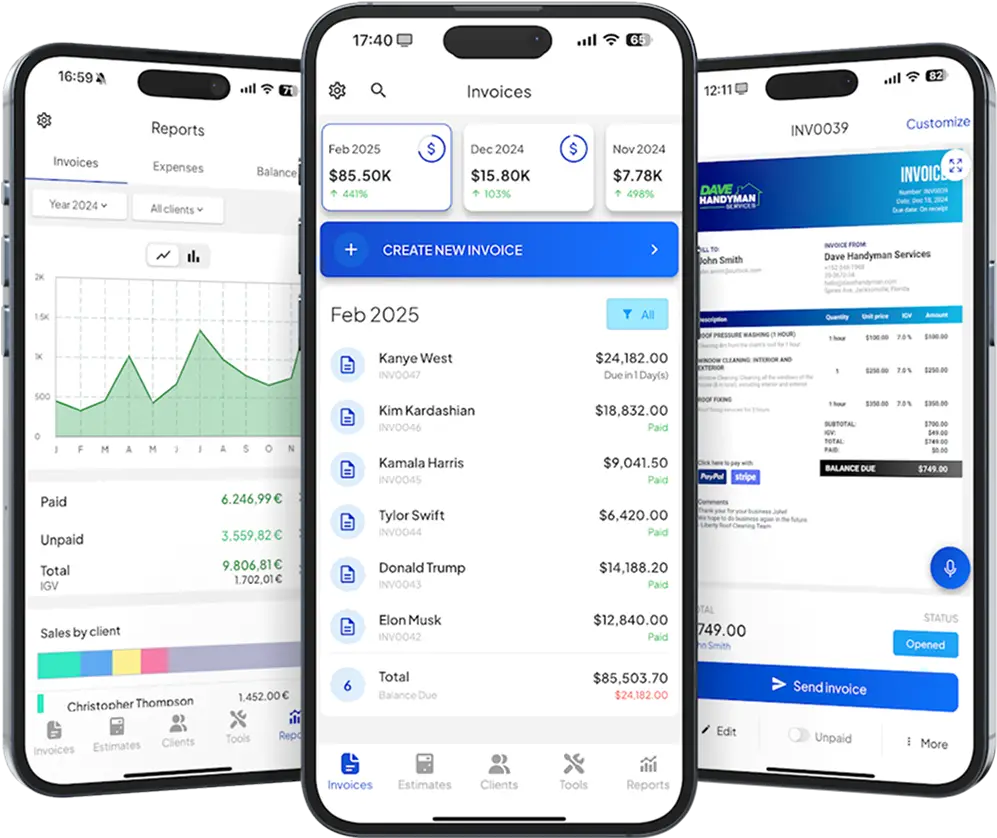
Once your contracts are locked in, keeping your billing just as organized matters. An invoice maker helps you issue professional invoices tied to each contract milestone, and a free invoice generator gets you started without any cost.
For a full business setup roadmap, revisit our guide on how to start a general contracting business.