
Pressure Washing Contracts: How to Bid Jobs with Examples
Table of Contents
- What is a Pressure Washing Contract?
- Why You Need a Pressure Washing Agreement
- Send Invoices in Seconds
- Legal Documents Needed for a Pressure Washing Contract
- What to Include on Your Pressure Washing Contract
- Where to Find Pressure Washing Service Contracts
- How to Bid Pressure Washing Jobs
- Managing Your Pressure Washing Business Finances
- Conclusion
- Send Invoices in Seconds
- Pressure Washing Contract FAQs
Pressure washing contracts are essential legal agreements that protect both contractors and clients by clearly defining the scope of work, pricing, timelines, and responsibilities. Whether you’re cleaning residential driveways, commercial buildings, or bidding on government pressure washing contracts, having a proper service agreement in place helps prevent disputes, ensures timely payment, and supports long-term business growth. In this guide, we’ll break down what pressure washing contracts are, what to include, where to find them, and how to bid for pressure washing jobs successfully.
What is a Pressure Washing Contract?
A pressure washing contract is a legally binding service agreement between a contractor and a client that outlines the terms of a cleaning job. Unlike a handshake deal, a written contract protects both parties by documenting exactly what services will be provided, when they’ll be completed, and how much they’ll cost.
A pressure washing contract template typically includes details about the property being cleaned, the specific services (like roof cleaning, window cleaning, or soft wash treatments), payment terms, and liability provisions. Think of it as your business safety net.
If you’ve ever completed a job based on a verbal agreement and had a client dispute the final price, you know exactly why a written pressure washing contract sample matters. Without it, you have no documentation of what was originally agreed. To build a solid foundation from day one, learn how to start a pressure washing business the right way.

Why You Need a Pressure Washing Agreement
A customer contract doesn’t just make you look professional, it helps protect your business and sets clear expectations. Here’s why pressure washing terms and conditions matter:
- Legal protection: A service agreement template shields you from liability claims if something goes wrong during the job.
- Payment security: Clear payment terms reduce disputes about pricing and late payments.
- Scope clarity: When you document exactly what services you’ll provide, clients can’t expect free extras later.
- Professional credibility: Written contracts show you run a legitimate service business that takes its commitments seriously.
- Insurance compliance: Many liability waivers and insurance policies require written contracts for claims to be valid.
Legal Documents Needed for a Pressure Washing Contract
Beyond the basic contract, professional contractors typically need several supporting documents:
- Liability waiver: Protects you if a client’s property has pre-existing damage that becomes visible after cleaning — especially important for delicate surfaces or older properties.
- Certificate of insurance: Clients want proof you carry proper pressure washer business insurance before you start work.
- Business license: Depending on your location, you may need a valid pressure washer business license for commercial jobs.
- Terms and conditions document: Outlines your general policies, cancellation procedures, and what happens if weather delays the job.

What to Include on Your Pressure Washing Contract
A solid pressure washing contract should cover these essential elements:
- Client and contractor information: Full legal names, addresses, and contact details for both parties.
- Property details: Complete address and description of the property being serviced.
- Scope of work: Be specific. Instead of “clean driveway,” write “pressure wash 500 sq ft concrete driveway, including oil stain treatment.”
- Pricing breakdown: Itemize your pressure washing prices so clients understand exactly what they’re paying for.
- Payment terms: When is payment due? What methods do you accept? What happens if payment is late?
- Timeline: Start date, estimated completion, and weather delay policy.
- Cancellation policy: How much notice is required? Are there cancellation fees?
- Liability and insurance: Who’s responsible if something breaks?
- Warranty information: Do you guarantee your work, and for how long?
Key Terms for Pressure Washing Contracts
Understanding standard contract language strengthens your pressure washing contracts and reduces legal risk.
Indemnification
Limits your liability for pre-existing damage or conditions beyond your control, such as aged paint, loose mortar, or deteriorated surfaces.
Scope of Work / Scope Creep
Defines the exact services included. Any additional work requested outside the original scope should require a written change order or contract amendment.
Force Majeure
Protects both parties if performance is delayed or prevented by events beyond reasonable control, such as severe weather or government restrictions.
Warranty Period
Specifies the duration and limits of any workmanship guarantee, clearly outlining what is covered and excluded.
Where to Find Pressure Washing Service Contracts
Commercial Pressure Washing Contracts
Commercial contracts involve larger properties like office buildings, shopping centers, or industrial facilities. These jobs typically pay more but require detailed proposals. To find commercial work, network with property management companies, join local business associations, and create recurring pressure washing service packages for quarterly or monthly cleaning.
Commercial clients want proof of insurance, references, and professional estimates before signing. Your washing proposal template needs to be more comprehensive than what you’d use for residential work.

Government Pressure Washing Contracts
Government contracts can provide steady, reliable work — but the bidding process is more formal. Federal, state, and local agencies regularly need pressure washing and pressure cleaning contracts for public buildings, parks, and facilities. You can find open bids through platforms like GovWin, which lists active government contracts by service category.
To win government work:
- Register as a government vendor before you can bid.
- Watch for RFPs (Requests for Proposals) posted publicly by agencies.
- Understand prevailing wage requirements — government jobs often require specific pay rates.
- Meet any certification requirements for the facility type.
Residential Pressure Washing Contracts
Residential contracts are simpler but still need to protect both parties. Homeowners hire pressure washers for driveways, siding, decks, and fences. Use a standardized contract you can quickly customize for each job, and always clarify access requirements — will you need water and electricity from the property? Address landscaping concerns about who’s responsible if plants or lawn areas are affected.
Many contractors find residential work through targeted pressure washing advertising and marketing aimed at homeowners in specific neighborhoods.
How to Bid Pressure Washing Jobs
Winning contracts starts with submitting competitive, professional bids. Here’s how to bid pressure washing jobs effectively:
- Inspect the property first. Never quote without seeing the job in person. Check surface type, condition, accessibility, and potential obstacles.
- Calculate your costs accurately. Factor in labor, materials, equipment wear, travel time, and overhead. A service price calculator helps ensure you’re not undercharging.
- Research local rates. Know what other contractors charge in your area. Understanding how much pressure washers make helps you set realistic, competitive rates.
- Submit a detailed proposal. Use a professional free pressure washing estimate template that breaks down all costs clearly.
- Follow up promptly. Contact the client within 24–48 hours after submitting your bid to answer any questions.
- Highlight your value. Don’t compete solely on price — emphasize your experience, insurance coverage, equipment quality, and customer reviews.
When estimating on-site, Invoice Fly’s free estimate generator lets you create professional proposals immediately after inspecting the property — so you never lose a lead because your quote arrived too late.

Managing Your Pressure Washing Business Finances
Winning contracts is only half the battle. Staying profitable means keeping a close eye on your numbers. Good small business bookkeeping helps you compare what you bid against what each job actually costs, so you can price smarter over time.
As your business grows, your setup may need to grow too. Many contractors start out as a DBA (Doing Business As) and later shift to a more formal business structure that better protects their assets. If you need funding for new equipment or expansion, it’s worth exploring how to get business loans for small businesses.
Before going after bigger contracts, do your homework. Solid market research helps you understand what competitors charge and where you can stand out on value rather than price.
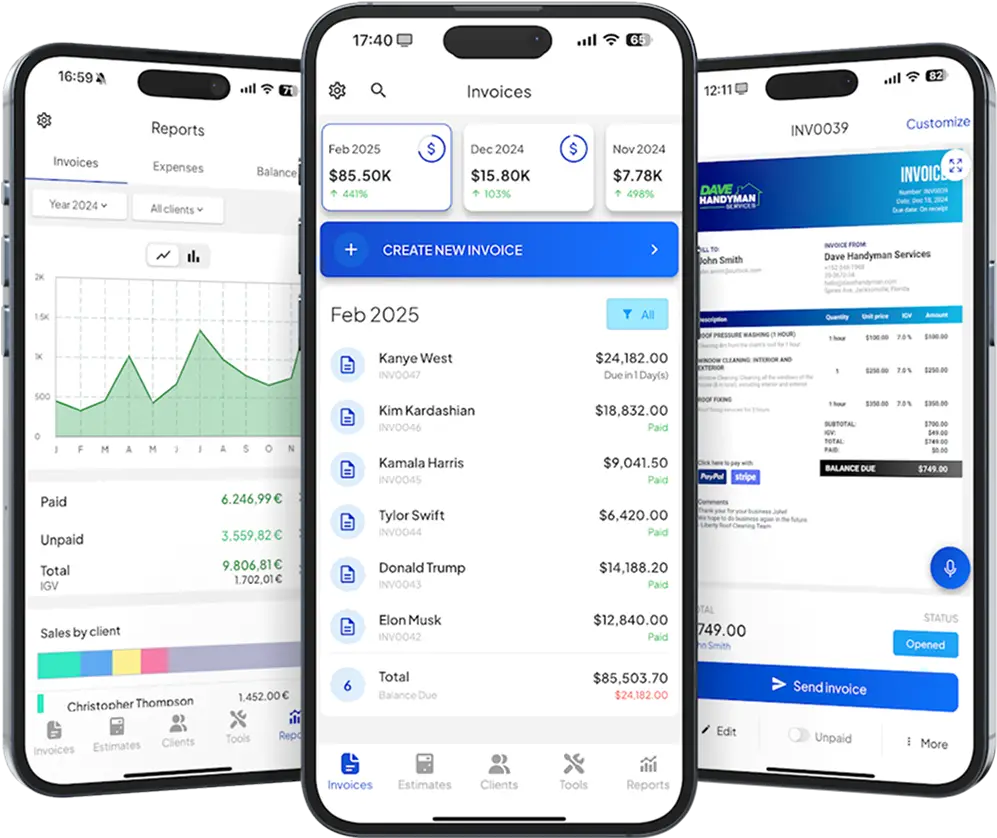
On the admin side, cleaning business software keeps your workflow organized from the first estimate to the final invoice. Need to bill a client quickly? A free invoice generator or free invoice template makes it easy to send professional, on-brand invoices in minutes.
Conclusion
Pressure washing contracts form the foundation of a professional, profitable washing business. Whether you’re pursuing residential jobs, commercial contracts, or government pressure cleaning contracts, having proper service agreements protects your interests and builds client confidence.
Start with a solid pressure washing contract template you can customize for each job. Include scope of work, pricing, payment terms, and liability provisions. Take time to learn how to use a pressure washer safely and get familiar with the right pressure washing tools for different surfaces.
Winning bids isn’t just about offering the lowest price. It’s about presenting professional proposals that show reliability and attention to detail. For everything you need to build a sustainable operation from the ground up, revisit our full guide on how to start a pressure washing business.