
Top 25 Pressure Washing Tools You Need to Start Your Business
Table of Contents
- Pressure Washers: Top 5 Options to Choose From
- Send Invoices in Seconds
- Hoses, Reels, and Hose Accessories
- Spray Guns, Wands, and Application Tools
- Nozzles and Spray Attachments
- Single-Purpose Specialty Tools
- Water Supply, Recovery, and Pump Protection
- Chemical Application Equipment
- Safety Gear
- Vehicle and Transport Setup
- Business Management Tools
- Conclusion
- Send Invoices in Seconds
- FAQs
Pressure washing tools are the backbone of any successful exterior cleaning business. From choosing the right pressure washer to essential accessories like hoses, nozzles, surface cleaners, and safety gear, having the proper equipment directly impacts job quality, efficiency, and profitability.
Whether you’re starting a new washing business or upgrading your setup, this guide covers the must-have pressure washing tools and equipment professionals rely on—and how to choose the right gear for residential, commercial, and specialty cleaning jobs. For a complete overview of launching your business, check out our guide on how to start a pressure washing business.
Pressure Washers: Top 5 Options to Choose From
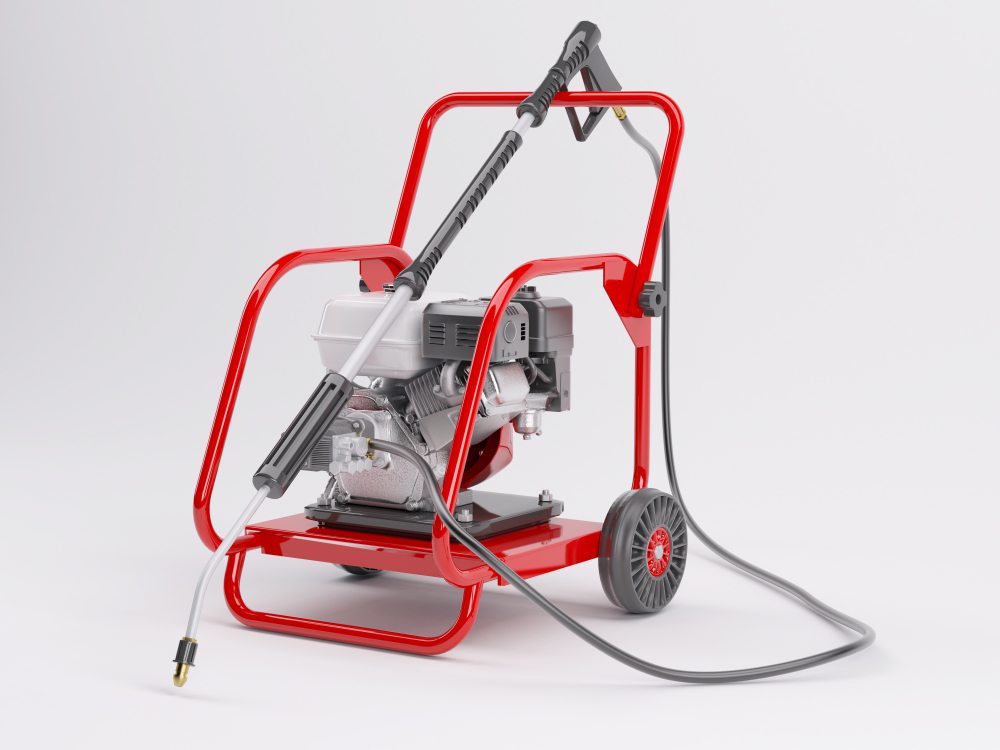
Your pressure washer is your most critical investment. The machine you choose determines what jobs you can handle, how fast you work, and your operating costs.
1. Giraffe Tools Pressure Washer
The Giraffe Tools Grandfalls Pressure Washer Pro delivers up to 3,400 PSI with a wall-mounted, retractable hose design that keeps equipment organized. Reading through Giraffe Tools pressure washer reviews, users consistently praise the convenience, though some note it’s less durable than traditional commercial units for heavy daily use. Giraffe Tools pressure washer parts and pump replacements are available, though servicing can be more complex than standard models.
Best for: Part-time operators focused on residential house washing. Price: Mid-range ($400–$800).
2. Northern Tool Pressure Washer
Northern Tool and Equipment offers a wide range—from northern tool electric pressure washer models starting around $300 to hot water pressure washer trailer-mounted systems built for commercial and industrial use. Their northern tool pressure washer hose, parts, and accessories are all stocked together, making maintenance easier.
Best for: Commercial operators needing hot water capability. Price: $300–$5,000+.
3. Milwaukee Tool Pressure Washer
Milwaukee tools pressure washer options are cordless, battery-powered units ideal for contractors already in the Milwaukee ecosystem. Great for portability, though PSI ratings run lower than gas or electric models.
Best for: Contractors who need occasional washing capability on job sites. Price: Mid to high ($400–$600, not including batteries).
4. Ridgid Tools Pressure Washer
Ridgid pressure washer models—many Honda-powered—deliver 3,000–4,000 PSI with reliable warranty coverage. Parts are easy to find through Home Depot.
Best for: Professional contractors wanting dependable performance. Price: Mid-range ($400–$900).
5. Harbor Freight Pressure Washer
Harbor Freight tools pressure washer selection is the most affordable entry point, with electric models starting around $100–$150. These are light-duty units—daily commercial work will wear them out fast.
Best for: Beginners testing the market. Price: Budget ($100–$400).
Hoses, Reels, and Hose Accessories
6. High-Pressure Hoses
High-pressure hoses must withstand 2,000–4,000 PSI without bursting. Professionals typically run 50–100 feet for residential work and 150–200 feet for commercial jobs. Always carry a backup—a blown line can shut down your day.
7. Hose Reels
Hose reels keep lines organized and prevent kinking. Spring-loaded reels retract automatically for quick cleanup. Either style extends hose life and speeds up setup on every job.
8. Hose Repair Kit
Keep splice connectors, O-rings, and thread seal tape in your truck at all times. A burst fitting or leaking coupler mid-job doesn’t have to end your day—a basic hose repair kit gets you back up and running in minutes and costs less than $15.
9. Quick-Connect Set
Standardize all your equipment on one quick-connect system. Quality brass or stainless fittings let you swap nozzles, wands, and hoses in seconds without threading. They reduce wear on your spray gun inlet and prevent slow leaks that drop your working pressure.
Spray Guns, Wands, and Application Tools
10. Spray Gun and Wand
Your washer gun is where power meets control. Look for adjustable pressure triggers, ergonomic grips, and quick-connect fittings. Lightweight aluminum wands extend your reach and reduce arm fatigue during long jobs—telescoping wands adjust from 18 inches to second-story height.
11. X-Jet
The X-jet is a downstream nozzle that draws chemical from a bucket and applies it at a safe distance—ideal for two-story house washing where you want precise control over mix ratios without over-dilution through your machine’s injector.
12. J-Rod
A J-rod is a four-nozzle manifold that attaches to your wand and lets you rotate instantly between a soap setting and a rinse setting. It eliminates nozzle swaps between pre-treatment and rinsing, saving real time across a full day of jobs.
Nozzles and Spray Attachments
13. Standard Nozzle Set
Carry a complete set of five color-coded nozzles. Each angle matches a surface and task:
- 0° (red): Maximum pressure for stubborn concrete stains
- 15° (yellow): Heavy buildup on driveways and siding
- 25° (green): General surface cleaning
- 40° (white): Delicate surfaces like painted wood
- Soap nozzle (black): Chemical application
A quality set runs $20–$50 and prevents costly surface damage from using the wrong pressure.
14. Turbo Nozzle
A turbo nozzle spins a zero-degree jet in a fast circular pattern, combining the cutting power of a 0° nozzle with the coverage of a 25° fan. It’s especially effective on heavily stained concrete, brick, and grout where standard nozzles fall short. Expect to pay $30–$80 for a quality rotary nozzle rated for your machine’s PSI.
15. Foam Cannon
A foam cannon attaches to your spray gun and generates thick, clinging foam from liquid soap concentrate. The foam dwells on surfaces longer than standard downstream injection—popular for vehicle washing and pre-treating house siding before a full wash.
Single-Purpose Specialty Tools
16. Nozzle Cleaning Tool
Nozzles clog from mineral deposits and debris. A pressure washer nozzle cleaning tool includes small wire picks that clear blockages without damaging the precision orifice inside. It costs less than $10 but saves you from replacing expensive nozzles mid-job.
17. Surface Cleaner
A surface cleaner houses multiple rotating nozzles under a protective cover, cleaning driveways, sidewalks, and parking lots dramatically faster than a wand alone. For driveway pressure washing, a surface cleaner cuts job time in half while delivering more even results. Professional models range from 14–24 inches in diameter.
18. Gutter Cleaning Tool
Gutter cleaning tools for pressure washer work use a telescoping pole and angled nozzle to direct spray inside gutters, which can reduce ladder use on many single-story and some two-story homes. A gutter cleaner tool for pressure washer expands your service menu and lets you charge premium rates for a high-demand job.
Water Supply, Recovery, and Pump Protection
19. Water Tanks
Mobile operators carry 100–500 gallon tanks mounted on trucks or trailers, giving you independence from customer water sources. Most operators find 200–300 gallon tanks offer the best balance of capacity and portability for residential and light commercial pressure cleaning equipment setups.
20. Inline Filter and Strainer
Fit an inline strainer to your water inlet to catch sediment and debris before it reaches your pump. Grit can accelerate premature pump wear—a simple filter under $20 can add years to your machine’s lifespan. Clean it regularly, especially when drawing from tanks or outdoor hose bibs.
21. Containment Berm
A portable containment berm creates a watertight barrier around your work area to capture runoff on parking lots, driveways, and industrial sites. San Diego County regulations, for example, outline wastewater management requirements for commercial pressure washing. A berm is often essential for landing high-value commercial contracts.

Chemical Application Equipment
22. Downstream Chemical Injector
A downstream injector attaches between your pump and spray gun, automatically drawing cleaning solution into the water stream at a fixed ratio. It’s the standard starting point for applying detergent and works well for most residential house washing and driveway jobs.
23. Proportioner
A proportioner is an adjustable dilution manifold that lets you dial in exact chemical ratios for different jobs. Unlike a fixed-rate injector, it gives you precise control over concentration—useful when switching between a light house wash mix and a stronger degreaser for commercial or industrial work.
24. Soft Wash Pump
Soft washing uses a dedicated low-pressure, high-volume pump (typically 60–100 PSI) to apply chemical solutions to surfaces like roofs, stucco, and wood that would be damaged by high pressure. It’s essential for expanding into roof cleaning and delicate surface services. Stock multiple formulas for different jobs: degreasers for parking garages, concrete cleaners for driveways, and specialty solutions for graffiti removal or roof washing.
Safety Gear
25. Full Safety Kit
Never skip protective equipment. Every job requires:
- Safety glasses or face shield — ANSI-rated, with side shields
- Chemical-resistant gloves — nitrile or rubber, rated for your cleaning solutions
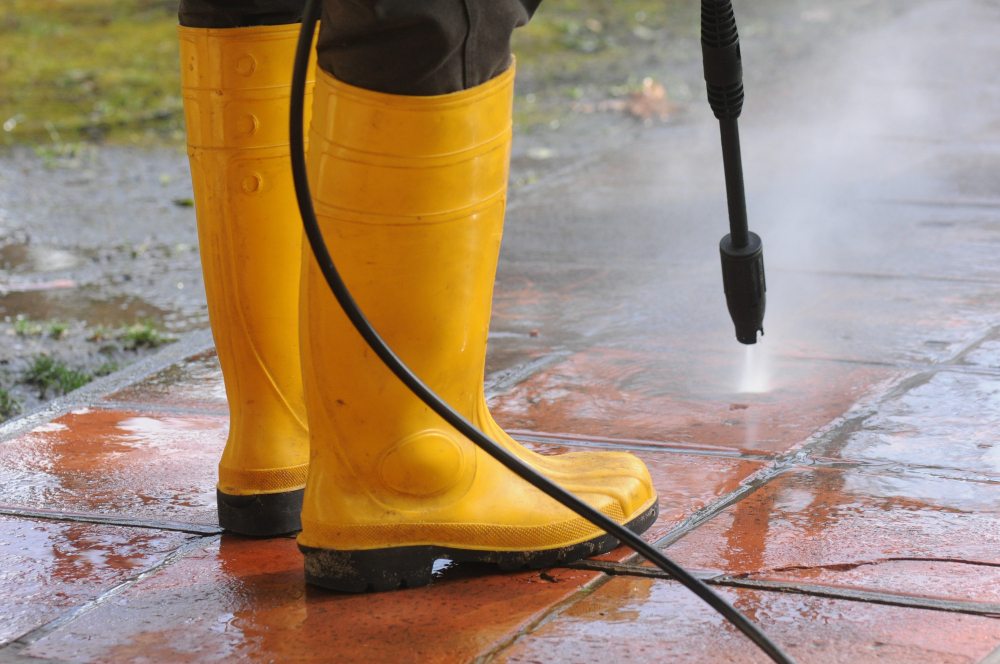
- Non-slip waterproof boots — steel-toed, oil-resistant soles
- Hearing protection — earplugs or earmuffs rated 25 dB+ for gas-powered machines
Vehicle and Transport Setup
Your vehicle setup determines how efficiently you can serve clients and how professional you look on arrival. Common configurations include:
- Truck bed setup: Works well for residential service with a water tank, pressure washer, and storage
- Flatbed or custom trailer: More capacity for commercial jobs with larger water tanks and hot water systems
- Skid-mounted system: Flexible deployment on flatbed trucks for commercial and industrial sites
Our step-by-step guide on how to pressure wash a house covers surface prep and technique once you’re set up and on site. Learn more about structuring your offerings in our guide on pressure washing services.
Business Management Tools
Once your physical pressure washing tools and equipment are dialed in, the business systems behind them matter just as much. Before your first job, confirm your pressure washer business license requirements and carry proper pressure washer business insurance.
Use an estimates app to send fast, professional quotes, and a service price calculator to set pressure washing prices that cover your costs. An invoice maker helps you send clean, branded invoices that speed up payment. Pair it with solid small business bookkeeping to track job profitability, and use our guide on pressure washing advertising and marketing to keep a steady flow of clients coming in.
If you’re ready to grow beyond residential work, government pressure washing contracts offer steady commercial income—just make sure your licensing, insurance, and pressure washing contracts are squared away first.
Conclusion
Building a professional pressure washing toolkit is a process, not a one-time purchase. Start with a commercial-grade pressure washer, add core accessories—hoses, spray guns, nozzles, and safety gear—then layer in specialty tools like surface cleaners, chemical injectors, and soft wash equipment as your services expand.
For complete guidance on building your business from the ground up, revisit our guide on how to start a pressure washing business.