
What Is a Construction Contractor? Roles, Types & Responsibilities
Table of Contents
A construction contractor is a professional responsible for managing and executing building projects, including residential homes, commercial buildings, and renovations. They coordinate workers, oversee timelines, handle permits, and ensure the work meets safety standards and local building regulations. Many construction contractors also manage subcontractors like electricians, plumbers, and roofers while keeping projects on time and within budget.
Whether you’re planning a project or thinking about becoming a contractor in construction, understanding how the role works can save you time, money, and stress. In this guide, we’ll break down what construction contractors do, the different types, and how they manage projects from start to finish.

What Does Construction Contractor Mean?
A construction contractor is a person or business hired under a legal agreement to manage or perform specific work on a construction project. They provide the labor, equipment, and materials required for their scope of work — and serve as the primary point of contact for everyone involved in the build.
Unlike employees, construction contractors are self-employed specialists engaged for specific projects. They take legal responsibility for completing work according to the contract, meeting building codes, maintaining safety standards, and delivering results that match the client’s specifications.
Key distinction: The term “construction contractor” includes both general contractors (GCs) who manage the full project, and trade contractors (subcontractors) who handle specific work like electrical, plumbing, HVAC, or concrete. Both are contractors — but their scope and accountability differ significantly.
According to the SBA, federal and state governments award billions in construction contracts annually, making contracting one of the most significant business categories in the U.S. economy.
For a detailed breakdown of every task involved in the contractor role, see our guide on what a contractor does. And if you’re ready to build a contracting operation of your own, our guide on how to start a general contracting business covers licensing, insurance, and business setup from the ground up.
Types of Construction Contractors
Construction contractors fall into several categories depending on their scope of work, specialization, and the types of projects they take on.
General Contractors (GCs)
A general contractor manages the entire construction project. They coordinate subcontractors, order materials, obtain permits, supervise the job site, and serve as the primary liaison between the client, architects, and engineers. The GC is responsible for keeping the project on schedule and within budget from first shovel to final inspection. For a deeper look at this role, see our full guide on general contracting.
Residential Contractors
Residential contractors specialize in single-family homes, townhouses, condominiums, and small multi-unit buildings. Their work covers new construction, additions, remodels, and renovation projects. They manage the specific trades involved in residential construction — framing, roofing, electrical, plumbing, and finishing — while minimizing disruption during occupied renovations.
Commercial Contractors
Commercial contractors work on office buildings, retail centers, schools, healthcare facilities, warehouses, and other non-residential structures. Projects are larger, more complex, and require stricter compliance with commercial building codes. Commercial construction business typically involves higher contract values and longer project timelines than residential work.
Specialty and Trade Contractors
Specialty contractors handle specific scopes within a larger project. Common examples include electrical contractors, plumbing and HVAC contractors, roofing contractors, concrete and masonry contractors, and fencing contractors. Specialty contractors typically work as subcontractors under a GC but many also take direct contracts from property owners for standalone jobs.
Civil and Infrastructure Contractors
Civil contractors work on roads, bridges, drainage systems, utilities, and large-scale public infrastructure. This segment of the construction sector often involves government contracts and requires specific licensing, bonding, and experience with heavy civil equipment.
Types of Construction Contractors (Quick Overview)
| Type | What They Do | Projects |
| General Contractor | Manages the full project and all trades | Homes, buildings, renovations |
| Residential Contractor | Focuses on home building and remodeling | Houses, apartments |
| Commercial Contractor | Handles large, non-residential builds | Offices, schools, retail |
| Specialty Contractor | Works on one specific trade | Electrical, plumbing, roofing |
| Civil Contractor | Builds infrastructure and public works | Roads, bridges, utilities |
How to Become a Construction Contractor
Becoming a licensed contractor in construction requires a combination of field experience, education, and legal compliance. Here’s the path most construction contractors follow:
- Build Hands-On Experience: Most licensed contractors start as tradespeople — carpenters, electricians, plumbers, or general construction laborers. Hands-on field experience is typically required before a state will issue a contractor’s license, and there’s no substitute for time spent actually building things.
- Get Educated: Vocational programs, apprenticeships, and construction management courses build the technical and business knowledge needed to run a contracting operation. Core topics include blueprint reading, estimating, project scheduling, safety regulations, and contract law.
- Get Licensed: Licensing requirements vary significantly by state. Most states require contractors to pass an exam covering trade knowledge, building codes, and business law, and to demonstrate a minimum number of years of field experience. For a practical look at what licensing involves, see what’s required to obtain a Michigan builder’s license — a solid reference point for what most states require. Our guide on how to become a general contractor walks through the full process.
- Get Insured and Bonded: General liability insurance, workers’ compensation, and a surety bond are standard requirements for licensed contractors. These protect your business, your crew, and your clients.
- Register Your Business and Build Your Systems: Choose a business entity (LLC, S-Corp, or sole proprietor), register with your state, and obtain an Employer Identification Number (EIN). Then build the operational systems that keep your business running: professional estimates, clean invoices, accurate job costing, and reliable client communication.
Invoice Fly’s free estimate generator lets you build detailed, itemized proposals on-site. Knowing where to source materials competitively also matters — our guide on Lowe’s vs Home Depot covers supplier options, and Home Depot contractor benefits can make a real difference on material costs at scale.

Construction Contractor Responsibilities
This is essentially what a contractor does in construction — managing people, timelines, materials, and compliance from start to finish. Here’s what that looks like day to day.
Project Planning and Scheduling
Every construction project starts with a plan. Contractors develop timelines, sequence tasks to prevent bottlenecks, and build contingency buffers for weather delays, material shortages, and change orders. Scheduling is a continuous discipline — not a document you create once and forget.
Subcontractor Management
GCs hire, coordinate, and hold accountable the specialty trades working under them. This involves vetting subcontractors, negotiating contracts, sequencing their work correctly, and ensuring quality and timeline compliance across every trade on the site.
Budgeting and Cost Control
Contractors estimate project costs before work begins and track actual costs throughout. Managing the gap between estimated and actual costs — job costing — is one of the most critical financial skills in contracting.
Permitting and Code Compliance
Contractors pull required building permits, schedule inspections, and ensure all work meets local building codes and OSHA safety standards. Fall protection, scaffolding requirements, and site safety protocols are non-negotiable responsibilities for any licensed contractor.
Common challenges
Common challenges general contractors face include scope creep (clients adding work mid-project without adjusting the contract price), cash flow gaps between billing milestones, subcontractor scheduling conflicts, and material price fluctuations. Building clear written contracts and invoicing promptly at each milestone are the most effective defenses.
Key skills for success
Key skills include project management, financial literacy, strong communication, knowledge of construction codes and materials, leadership under pressure, and the ability to make fast, well-informed decisions when things don’t go according to plan.
Invoicing and Getting Paid as a contractor
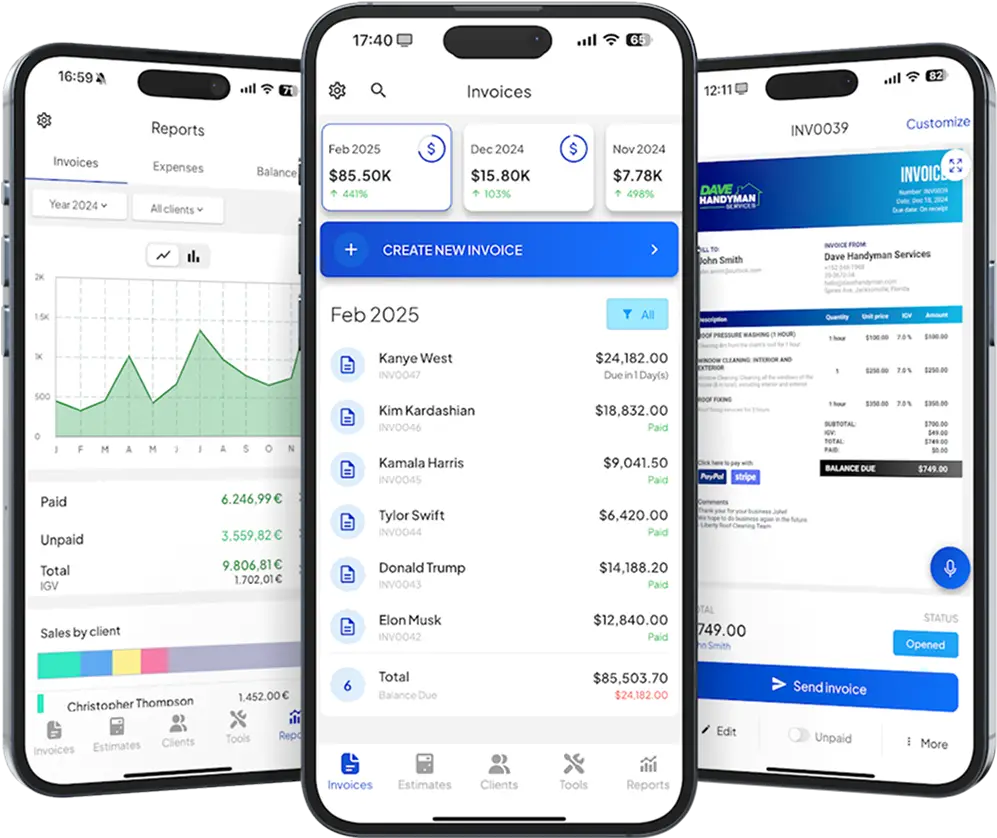
Getting paid on time is one of the biggest operational challenges in contracting. Professional invoicing with clear payment terms and milestone billing schedules contribute to healthy cash flow. Use Invoice Fly’s invoice maker to bill accurately after each milestone and the free estimate generator to send professional proposals that win jobs.

Conclusion
A construction contractor is the backbone of any building project — managing people, materials, timelines, and compliance to deliver a finished structure that meets the client’s specifications and budget. Whether you’re a tradesperson looking to move into contracting or a professional trying to understand the construction industry, knowing what contractors do and how they operate is foundational knowledge for anyone in or around the construction sector.
Ready to make the move into business ownership? Our guide on how to start a general contracting business walks you through licensing, setup, and winning your first projects. Use Invoice Fly’s invoice maker to bill clients professionally and the free estimate generator to send winning proposals from your very first job.