
General Liability Insurance for Contractors: Coverage, Cost, and Quotes
Table of Contents
- What Is General Liability Insurance for Contractors?
- What Does General Liability Insurance Cover for Contractors?
- Cost of General Liability Insurance for Contractors
- Send Invoices in Seconds
- How Is General Liability Insurance Calculated for Contractors?
- How to Get General Liability Insurance Quotes for Your Company as a Contractor
- What Other Insurance Policies Do Contractors Need?
- Ready to Insure Your Contracting Business?
- Send Invoices in Seconds
- General Liability Insurance for Contractors FAQs
General liability insurance for contractors protects your business when your work causes third-party injury or property damage. If a homeowner trips over your equipment, or your crew damages a finished surface during installation, this policy covers legal defense, medical costs, and settlements.
For most contractors, this coverage is required before pulling permits, signing commercial contracts, or issuing a certificate of insurance.
This guide will cover:
- What is general liability insurance for contractors
- What does general liability insurance cover for contractors
- What’s excluded from coverage
- The cost of general liability insurance for contractors
- How general liability insurance is calculated
- How to get general liability insurance quotes
- What other policies contractors typically need
What Is General Liability Insurance for Contractors?

General liability (GL) insurance is a core business policy that protects contractors from third-party claims tied to everyday operations.
It applies when:
- A non-employee is injured at your job site
- You accidentally damage client property
- A claim arises after project completion
- A dispute leads to legal action
Construction work carries higher exposure than most service industries. The SBA business insurance guide explains why liability coverage is considered foundational protection for small businesses.
If you’re building your company from the ground up, aligning insurance with proper contractor business setup ensures your licensing, entity structure, and compliance requirements match your coverage.
Many states require proof of insurance before approving licenses. For example, Michigan builder license requirements include minimum insurance standards contractors must meet.
What Does General Liability Insurance Cover for Contractors?
Contractors often assume general liability covers “anything that goes wrong.” It doesn’t. It covers specific third-party risks.
Core Coverage Areas
| Coverage Type | What It Covers | Real Job Example |
| Bodily Injury | Injury to non-employees | Client slips on loose debris |
| Property Damage | Third-party property damage | You damage drywall during install |
| Completed Operations | Post-project liability | Improper install causes later leak |
| Personal Injury | Libel or advertising disputes | Marketing disagreement |
| Medical Payments | Minor injuries without lawsuit | Customer requires stitches |
If you operate across multiple regions, defining your general contracting operations clearly helps ensure your policy reflects your actual business activities.
Coverage Limits and Policy Structure
Most GL policies include:
- Per-occurrence limit (often $1 million)
- General aggregate limit (often $2 million)
- Completed operations coverage
- Annual policy term
Higher limits increase your premium but provide stronger protection on larger commercial projects.
What’s Excluded?
General liability does not cover everything.
| Not Covered | Separate Coverage Needed |
| Employee injuries | Workers compensation |
| Design errors | Professional liability |
| Tool or equipment damage | Inland marine |
| Company vehicles | Commercial auto |
Independent contractors should understand these gaps before signing agreements. Reviewing contractor role responsibilities can help clarify where liability exposure begins and ends.
Cost of General Liability Insurance for Contractors

The cost of general liability insurance for contractors varies based on trade, payroll, revenue, and claims history.
Many small contractors pay around $1,351 per year. However, premiums differ significantly depending on exposure.
Estimated Annual Premium by Trade
| Trade | Typical Annual Cost |
| Handyman | $400 – $900 |
| Electrician | $900 – $2,000 |
| HVAC contractor | $1,000 – $2,500 |
| Concrete contractor | $1,200 – $3,000 |
| General contractor | $1,500 – $3,500+ |
The cost of general liability insurance for general contractors is typically higher because they oversee subcontractors and manage multiple job sites.
If you’re expanding operations or hiring subs, understanding your path to becoming a licensed GC through general contractor requirements helps anticipate how insurance costs may increase with business growth.
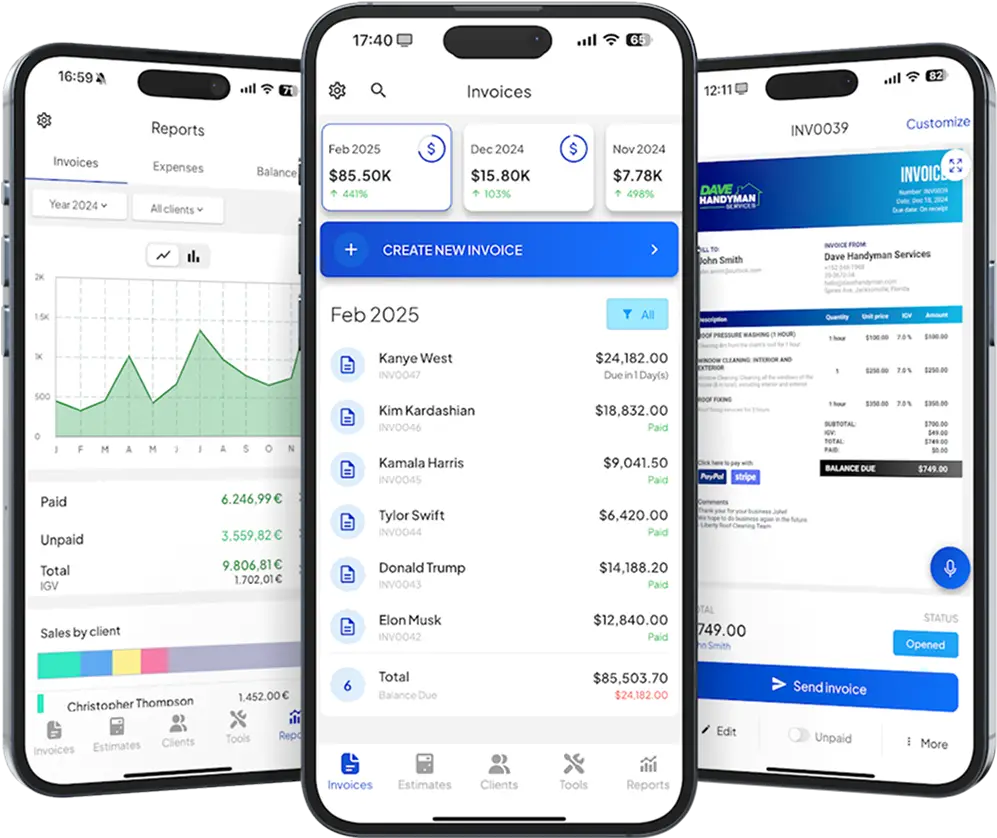
When your estimates are organized inside a contractor estimates app, it’s easier to provide accurate revenue and job classifications during the insurance application process.
How Is General Liability Insurance Calculated for Contractors?

Insurers use underwriting formulas based on measurable exposure. In construction, that exposure can vary widely between trades.
At a basic level, insurers use a formula built around:
- Trade classification
- Annual revenue
- Payroll (if employees are involved)
- Subcontractor use
- Claims history
- Coverage limits
Here’s what that means in practice.
1. Trade Classification Drives the Base Rate
Every contractor is assigned a classification code. A painting contractor and a concrete contractor do not pay the same base rate because the risk of injury and property damage is different.
- Higher-risk trades — roofing, structural concrete, demolition — carry higher base premiums.
- Lower-risk trades — light interior finish work — are rated lower.
If your business model changes, your classification may need to change too.
2. Revenue Multiplies Your Risk
Most general liability policies are revenue-rated. The more revenue you generate, the more exposure the insurer assumes.
If you double your annual revenue, your premium will usually increase. That’s because:
- You’re completing more jobs
- You’re working on more properties
- You have more opportunities for claims
This is why accurate reporting matters. If you underreport revenue and it’s discovered during an audit, you may owe additional premium at the end of the policy year.
3. Payroll and Subcontractors Matter
If you have employees, payroll increases exposure. More workers mean:
- More job site activity
- More potential for accidents
- Greater operational complexity
Subcontractors are another major factor. General contractors are often held responsible for subcontractor work unless proper additional insured endorsements are in place.
As your company grows beyond solo work, your premium structure changes.
4. Claims History Follows You
Insurers review your prior claims. A history of frequent small claims can raise rates just as much as one large claim.
Even if claims were paid years ago, they remain part of your risk profile.
5. Coverage Limits Increase Premium
A $2M aggregate policy costs more than a $1M policy. Commercial clients often require higher limits, especially on public or municipal jobs.
Choosing limits isn’t only about cost. Remember to consider contract requirements and risk tolerance while comparing.
Clear financial documentation supports more accurate quoting. Many contractors use professional invoice templates to maintain consistent revenue records across projects.
How to Get General Liability Insurance Quotes for Your Company as a Contractor

If you’re wondering how to get general liability insurance quotes for your company as a contractor, preparation makes a difference.
Step 1: Gather Business Information
Prepare:
- Legal entity details
- Annual revenue
- Payroll totals
- Years in operation
- Claims history
Contractors often review their overall general contracting structure before applying, ensuring business classification matches insurer expectations.
Step 2: Compare More Than Price
| Coverage Feature | Why It Matters |
| Per-occurrence limit | Max payout per claim |
| Aggregate limit | Annual cap |
| Additional insured option | Required in many contracts |
| Completed operations | Protects after project completion |
| Deductible | Determines out-of-pocket cost |
If you regularly purchase materials from large suppliers, understanding programs like Home Depot contractor benefits or comparing supplier options through Lowe’s vs Home Depot can impact your overall operating costs — which insurers often review when evaluating business scale.
What Other Insurance Policies Do Contractors Need?
General liability is foundational, but most contractors carry additional coverage depending on operations.
Common Policies
| Policy | Purpose |
| Workers Compensation | Covers employee injuries |
| Professional Liability | Covers design or advisory errors |
| Builders Risk | Covers property under construction |
| Commercial Auto | Covers work vehicles |
| Umbrella Insurance | Extends liability limits |
As your company grows, revisiting your original contractor business setup ensures your insurance, licensing, and operational structure remain aligned.
Ready to Insure Your Contracting Business?
General liability insurance is often required before you can sign contracts, pull permits, or start commercial work. It protects your business if someone is injured or property is damaged because of your operations.
But once you’re insured, clients expect more than a certificate. They expect clear estimates, professional invoices, and organized documentation.
Using professional invoicing software helps you keep certificates, estimates, and payment records aligned across every project.