How Much Do Electricians Make? 2026 Salary Guide
Table of Contents
- Average Electrician Salary
- Calculate your electrician salary
- Salary Calculator
- Total Summary
- How Much Do Electricians Make When They First Start?
- Salaries by Electrician Role
- How Much Do Electricians Make in Different States?
- How Education and Certification Impact Earnings
- Electrician Specializations That Pay More
- How Much Do Electricians Make an Hour?
- How To Maximize Your Earnings as an Electrician
- Final Thoughts
- FAQs about HVAC Sales
If you’ve ever wondered, “How much do electricians make?” you’re in good company. Electricians are among the most sought-after professionals in the trades, keeping our homes, businesses, and infrastructure running safely and efficiently.
If you’re thinking about becoming an electrician, hiring one for your business, or just curious about the trade, knowing what electricians earn can really give you a clear picture of the opportunities in this field.
In this 2026 Electrician Salary Guide, we’ll explore the average salary, break down earnings by role (apprentice, journeyman, and master electrician), and answer questions like, “How much do electricians make in Texas or California?”
We’ll also dive into how certifications and education impact earnings and highlight high-paying specializations like renewable energy.
Let’s get into it!
Average Electrician Salary
The average electrician salary in the United States ranges between $40,000 and $80,000 annually, according to data from the U.S. Bureau of Labor Statistics (BLS).
Hourly rates usually fall between $20 and $40. Earnings depend on things like where you work, your experience, and the type of projects you handle.
- Apprentice electricians earn around $30,000 to $40,000 per year.
- Journeyman electricians make $50,000 to $70,000 annually.
- Master electricians often exceed $100,000, especially if they specialize in high-demand fields like renewable energy or industrial systems.
For example, journeyman electricians in Illinois report earning $58,000 per year on average, with overtime pushing their total earnings closer to $65,000.
Similarly, electricians working in California—where demand for renewable energy systems is surging—often earn upwards of $90,000 annually, especially in urban areas like Los Angeles and San Francisco.
RELATED ARTICLE: How To Start An Electrical Business? Step-by-Step Guide
Calculate your electrician salary
Wondering how much you’ll take home as an electrician? Use our free salary calculator to estimate your net pay. Enter your yearly gross income, federal tax, state tax, and Medicare deductions to calculate your estimated take-home salary and total taxes for 2026.
Salary Calculator
Yearly Gross Income
Income before Taxes
Federal Tax
Brackets: 10%, 12%, 22%, 24%, 32%, 35%, & 37%
State Tax
Brackets: 0% – 11.45%
Social Security
Brackets: 0% – 12.4%
Medicare
The most common Medicare Tax in USA is 1.45%

Total Summary
Per BLS, electricians earn a median $29.98/hr — yet electricians in New York lose about $29,500/year to unbilled admin work. InvoiceFly users recover up to 400 hours a year. (Source: InvoiceFly Salary & Time Gap Report 2026; wages: BLS OEWS 2023.)
Create and Send Invoices with Invoice Fly
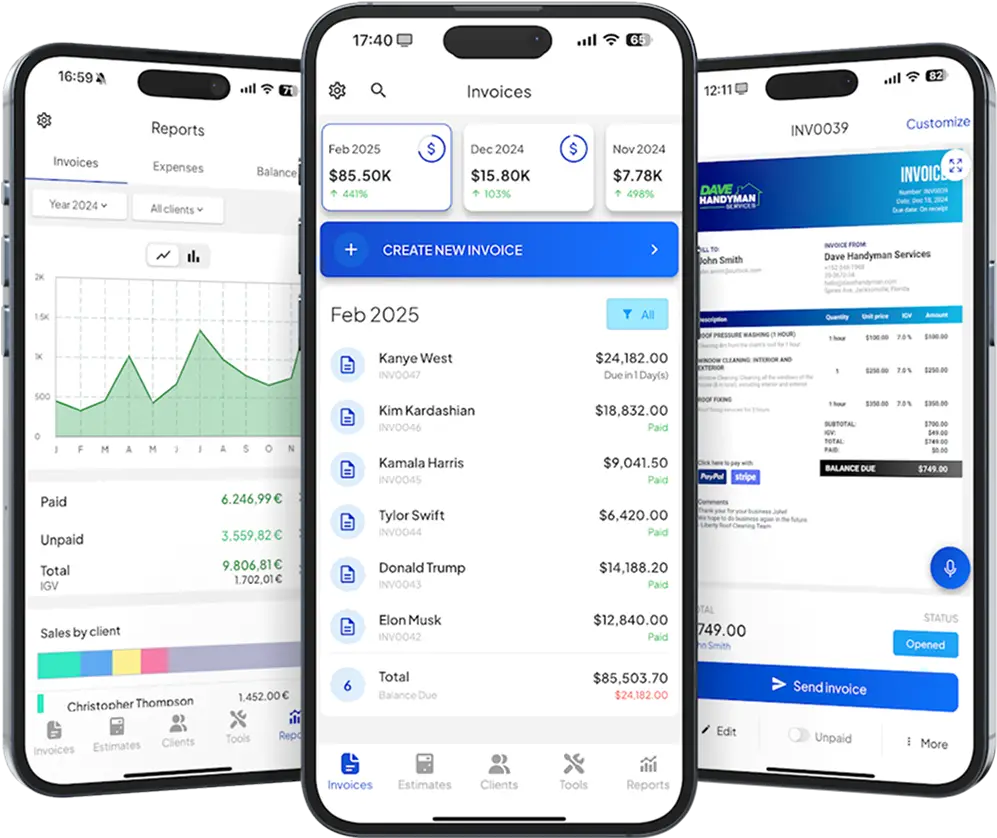
Whether you’re billing clients weekly, monthly, or per project, Invoice Fly helps you create professional invoices, track payments, and stay organized from anywhere.
Invoice Fly’s on our platforms:
★ 4.8/5.0 · +180,000 reviews
★ 4.8/5.0 on Trustpilot, Capterra, GetApp, and Software Advice.
★ App Store (+88.000 positive reviews) and Google Play (+90.000 positive reviews)
★ Over 125,000 businesses trust us.
What users say about Invoice Fly:
“Best invoice generator out there. It has helped me and my business to grow and create invoices quickly and efficiently saving my time and my clients. Has good and well made designs for the invoice slips as well.”
— Sohrab Shefaei · Trustpilot · ★★★★★ · 2026-06-18
How Much Do Electricians Make When They First Start?
When starting out, apprentice electricians typically earn between $35,000 and $45,000 annually, or $15 to $20 per hour.
These entry-level wages reflect the balance of learning and earning during apprenticeships, which combine classroom instruction with hands-on training under licensed electricians.
Take Jacob, an apprentice electrician in Florida. He started earning $18/hour (about $37,000 annually) and, within three years, completed his apprenticeship and became a journeyman electrician.
This jump raised his hourly wage to $28/hour, bringing his annual earnings to around $58,000—a significant $20,000 increase in just a few years.
Tip: Choosing an apprenticeship program sponsored by a trade union, like the International Brotherhood of Electrical Workers (IBEW), or large company can also make a big difference in starting pay. Union apprenticeships, for example, tend to offer higher wages and better benefits than non-union positions.
RELATED ARTICLE: How To Price Residential Electrical Work? Step-by-Step Guide
RELATED ARTICLE: How to become an Electrician in the US?

Salaries by Electrician Role
Your role as an electrician significantly influences your earning potential.
Starting as an apprentice offers a solid foundation, while advancing to journeyman and eventually master electrician unlocks greater financial rewards.
Additionally, specializing in high-demand areas, such as renewable energy or industrial systems, can further elevate your salary.
RELATED ARTICLE: Electrician Job Description
Let’s break it down by role:
1. Apprentice Electrician Salary
Apprentices, who are in training under licensed professionals, typically earn $30,000 to $40,000 per year. This pay reflects the balance between classroom education and hands-on experience.
For example, Ethan, an apprentice electrician in Texas, started at $15/hour, earning around $31,200 annually, with room to grow as he progressed through his apprenticeship program.
2. Journeyman Electrician Salary
Fully licensed and able to work independently, journeyman electricians see a significant pay bump, earning $50,000 to $65,000 annually on average.
They can handle a wide range of tasks, from wiring homes to troubleshooting complex electrical systems.
For instance, Liam, a journeyman in Illinois, earns $58,000 annually, with overtime regularly boosting his pay to $65,000 or more.
3. Master Electrician Salary
Master electricians, who have extensive experience and often oversee projects or manage their own businesses, command the highest salaries.
They typically earn $70,000 to $100,000 or more annually, depending on their location and specialization.
Maria, a master electrician in California, exemplifies this earning potential. Specializing in solar installations, she earned $120,000 last year, driven by the surge in demand for renewable energy systems.
4. Specialized Electrician Salary
Electricians with unique skill sets, such as those focusing on industrial systems, renewable energy, or data cabling, often earn premium wages.
Industrial electricians working in factories or manufacturing plants can earn upwards of $80,000 annually, while those in high-demand fields like renewable energy or EV charger installations may see salaries reaching $110,000 or more.
RELATED ARTICLE: Electrical Technician: What Is It? and How to Become One?

Try our Salary Calculator
Our Salary Calculator helps you quickly estimate your net income after introducing your yearly taxes.
How Much Do Electricians Make in Different States?
Where you live plays a big role in how much electricians can earn. Salaries vary widely depending on demand, cost of living, and the type of work being performed.
Let’s take a closer look at what electricians are earning in key states:
1. California
Electricians in California earn an average of $72,000 per year, with hourly rates ranging from $30 to $45. Urban areas like Los Angeles and San Francisco, where the cost of living is high, often offer wages above the state average.
For example, electricians specializing in renewable energy installations can earn upwards of $90,000 annually in these high-demand regions, thanks to California’s push for solar power and EV infrastructure.
2. Texas
In Texas, electricians typically make between $55,000 and $65,000 annually. Journeyman electricians in cities like Houston and Austin earn an average of $28 per hour, with higher wages in areas experiencing rapid growth and industrial expansion.
The growing need for electricians in Texas is driven by large-scale construction projects and the state’s increasing adoption of EV chargers.
3. Florida
Electricians in Florida earn between $50,000 and $60,000 annually, with hourly rates averaging $25 to $30. Cities like Miami and Orlando offer higher wages, fueled by residential construction booms and hurricane-related repair work.
For instance, an electrician working on new housing developments in Miami can see annual earnings exceed $65,000 due to consistent demand.
Salaries also depend on the electrician’s experience and certifications. Master electricians or those with specialized skills—such as installing renewable energy systems or smart home technology—can command higher pay in any state.
RELATED ARTICLE: How To Get Your Electrician Insurance in the United States?
RELATED ARTICLE: How to Get Electrician Licence (By State)

How Education and Certification Impact Earnings
Education and certifications can have a significant impact on how much an electrician earns. While a high school diploma or GED is the minimum requirement to enter the field, obtaining additional certifications and specialized training can greatly increase earning potential.
For starters, earning an OSHA safety certification—a credential that ensures electricians understand workplace safety standards—can lead to an annual salary boost of $2,000 to $5,000.
Employers value safety expertise, especially in high-risk environments like construction sites, making this a worthwhile investment for electricians at any stage of their careers.
Specialized certifications allow electricians to command even higher wages. For example, credentials in solar panel installation or electric vehicle (EV) charger installation have become increasingly valuable due to the growing demand for renewable energy and EV infrastructure.
Master electrician certification is another game-changer. Master electricians are qualified to take on supervisory roles, handle complex projects, and often start their own businesses.
For example, Lisa, a residential electrician in Illinois, boosted her annual salary by $15,000 after earning her master electrician certification along with energy efficiency credentials. She now specializes in smart home installations, a growing niche in the residential market.
Electrician Specializations That Pay More
Electricians who focus on specialized, high-demand areas often command significantly higher salaries than generalists.
These roles typically require additional training, certifications, and expertise, but the payoff can be substantial.
Here are some examples:
1. Industrial Electricians
Working in factories, power plants, and other industrial settings, these electricians handle complex machinery and high-voltage systems. They earn $70,000 to $90,000 annually due to the technical nature and safety risks of their work.
2. Solar Panel Installers
With renewable energy on the rise, electricians specializing in solar installations can earn $60,000 to $80,000 per year. In states like California, where solar adoption is booming, these specialists are in particularly high demand, sometimes earning even more.
3. Data Center Electricians
Maintaining and upgrading electrical systems for data centers requires advanced skills and attention to detail. These electricians earn $75,000 to $100,000 annually, reflecting the complexity and critical nature of their work.
4. EV Charger Installers
As electric vehicles become mainstream, electricians who install and maintain EV charging stations are earning $65,000 to $85,000 per year, with opportunities for even higher pay in urban areas or regions with strong EV adoption.
5. HVAC Control Electricians
Electricians specializing in heating, ventilation, and air conditioning (HVAC) systems earn $70,000 to $90,000 annually due to the technical expertise required to integrate and maintain complex control systems.
RELATED ARTICLE: Best Electrical Services

How Much Do Electricians Make an Hour?
Electricians’ hourly pay can vary significantly based on experience, location, and specialization. Here’s a general breakdown:
- Entry-Level Electricians (Apprentices): Typically earn $15 to $20 per hour as they gain hands-on experience under the supervision of licensed professionals.
- Journeyman Electricians: With full licensing and the ability to work independently, journeymen earn around $25 to $35 per hour, depending on their region and the complexity of their work.
- Master Electricians: These experienced professionals can command $40 or more per hour, especially in specialized fields like industrial systems, renewable energy installations, or data center projects.
Tip! Tracking your hours is essential for ensuring accurate pay, especially if you’re working overtime or on multiple projects. Tools like InvoiceFly Time Tracking software can help you easily log hours, calculate overtime, and generate professional invoices.
How To Maximize Your Earnings as an Electrician
If you want to boost your income as an electrician, consider these strategies:
- Specialize: Focus on areas like renewable energy, industrial systems, or data centers.
- Certify: Obtain advanced certifications like OSHA safety training or EV charger installation.
- Start Your Own Business: Many master electricians double their income by setting their own rates and scaling operations.
- Use Tools to Work Smarter: Tools like our Invoice Maker help streamline your operations, making it easier to track hours, manage projects, and send professional invoices. A free tool you can use today is our blank invoice template to get started.
RELATED ARTICLE: 39 Best Electrician Tools
As a service provider, you should read our articles “What is an estimate” and “What is quotation” in which we explain the process of estimating and the process of creating quotes for customers.
Once you complete a job you need to issue an invoice, which you can learn about in our guide on “what is an invoice” and once have return customers you also need to understand “what is billing.” After a customer pays you, you need to issue them a receipt of payment, which you can learn about in our article on “what is a receipt.”
Final Thoughts
Whether you’re starting out as an apprentice making $40,000 a year or you’ve climbed the ranks to master electrician status earning over $100,000 annually, the potential in this trade is remarkable.
And it doesn’t stop there—specializing in high-demand areas like renewable energy, industrial systems, or data center installations can take your earnings to the next level. For instance, electricians focused on EV charger setups or solar panel installations are seeing booming demand and often command premium rates for their expertise.
Location matters too. Electricians in high-cost-of-living states like California or New York generally earn more, reflecting the local demand and expenses.
Adding advanced certifications, such as a master electrician license or specialized training in energy-efficient systems, can further boost your income, giving you a competitive edge in a growing market.
If you’re running your own electrical business, staying organized and efficient is crucial to maximizing profits. Invoicing tools like Invoice Fly can simplify time-consuming tasks like invoicing, time tracking, and project management.
The possibilities are endless—what’s your next move?
RELATED ARTICLE: How to start an Eletrical Business
RELATED ARTICLE: What Is an Electrical Inspection
RELATED ARTICLE: Electrical Company Names
Download Invoice Fly today!
Create and Send Invoices with Invoice Fly
Whether you’re billing clients weekly, monthly, or per project, Invoice Fly helps you create professional invoices, track payments, and stay organized from anywhere.
What users say about Invoice Fly:
“What I liked most about Invoice Fly is how easy it is to create and send professional invoices in a just a few minutes. The interface is clean, simple to navigate, and it helps save a lot of time.”
— Omar C. · Capterra · ★★★★★
FAQs about HVAC Sales
Yes. Electricians earn a median annual pay of $62,350 in the U.S. according to BLS data, and experienced electricians can earn much more depending on their location and specialty.
Electricians who work in the power industry, industrial settings, or on large commercial projects typically earn the highest salaries. Wages also vary by state, employer, and experience.
No. Age 25 is a great time to start a trade, and many people begin apprenticeships well into their 20s or later. Skilled trades offer opportunities to earn while you learn and build a long-term career.
According to data from US News and BLS, electricians, wind turbine technicians, structural iron and steelworkers, and construction and building inspectors are among the highest paid trades.
The four main types of electricians are residential, commercial, industrial, and maintenance electricians.

Jennifer Allerson is a Senior Copywriter specialising in business, finance and UX content, and the writer behind Invoice Fly Academy's guides on contracts, invoicing, estimates and pricing for contractors. She has spent more than ten years turning complex business and financial topics into clear, practical advice for small business owners.
- Copywriter for global brands including Nespresso, San Pellegrino and SEAT, through Ogilvy
- Former VP of Brand & Communications at Qustodio and Head of Communications at Fon
- Fintech experience as UX writer for Juni, a B2B financial platform
- Taught UX Writing at the Barcelona Technology School (University of Barcelona)
- Former Accenture programmer · MBA, Stockholm School of Economics
Every guide Jennifer writes is researched from primary sources and reviewed under the Invoice Fly editorial policy. Connect with her on LinkedIn or at jenallerson.com.