
Understanding Profitability Ratios: Key Metrics and How They Work
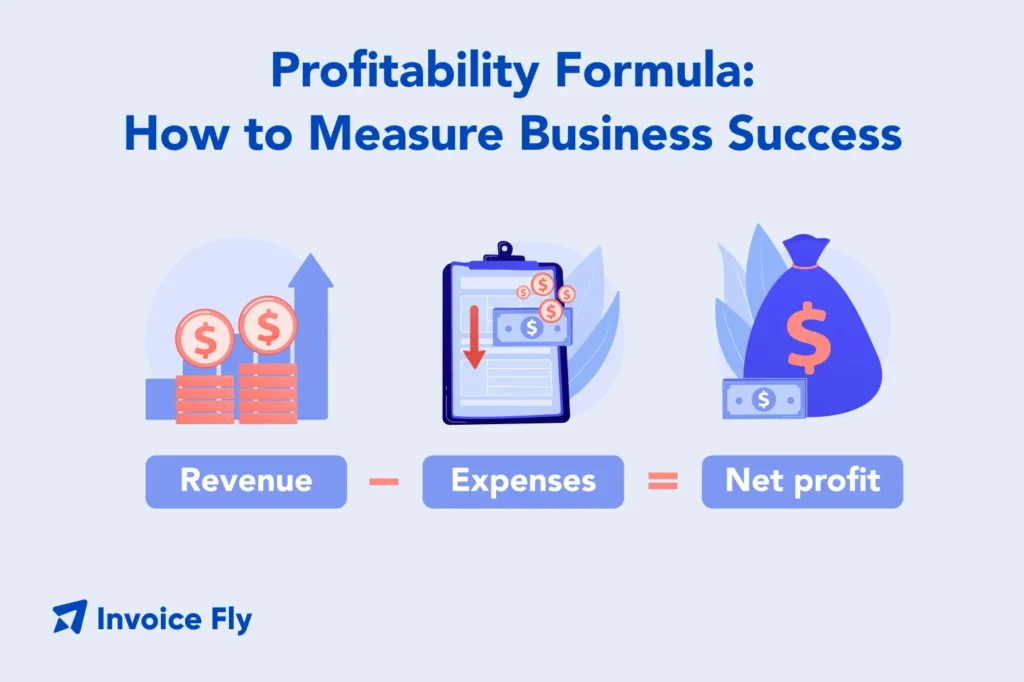
Table of Contents
Ever wonder if your business is actually making money—or just staying busy? Profitability ratios answer that question. They’re financial metrics that measure how well a company turns sales, assets, and invested money into profit. If you’re a business owner checking your numbers, an investor comparing opportunities, or a manager trying to improve results, these ratios help you spot whether a company is financially healthy and built to last.
In plain terms, the meaning of profitability isn’t just “sales went up.” It’s “after all the costs, how much do we keep—and how efficiently do we earn it?” By looking at margin ratios, return ratios, and efficiency hybrids, you see the complete picture of how profitable your business really is.
What Are Profitability Ratios?
Think of profitability ratios as your financial “scoreboard.” They translate your income statement and balance sheet into simple indicators you can track over time.
A profitability ratio compares profit to something else—revenue, assets, equity, or capital. What indicator best characterizes a company’s profitability? Usually, it’s not just one number. A strong view combines margins (how much profit you keep from sales), returns (how much profit you generate from assets/equity/capital), and efficiency hybrids (how well assets and operations support profits).
To calculate profitability ratio metrics, you’ll pull numbers from your income statement and balance sheet. Good small business bookkeeping makes this quick and repeatable.

Sarah, a marketing consultant, brought in $180,000 last year. That sounded impressive until she calculated her net profit margin and discovered it was only 8%. After comparing against industry benchmarks, she realized her overhead costs were eating into profits.
Types of Profitability Ratios
Profitability financial ratios fall into four main categories: margin ratios, return ratios, efficiency hybrids, and earnings-based ratios.
Margin Profitability Ratios
Margin ratios measure what percentage of revenue converts to profit at different stages. These common ratios show how efficiently you control costs relative to sales.
| Margin Ratio | What It Tells You | Formula | Quick Example |
| Gross Profit Margin | Profit left after paying COGS (direct costs). Shows pricing power + production efficiency. | (Revenue − COGS) ÷ Revenue × 100 | $500K revenue, $300K COGS → 40% |
| Operating Profit Margin | Profit from operations after operating expenses (before interest + taxes). | Operating Income ÷ Revenue × 100 | $500K revenue, $100K operating income → 20% |
| EBIT Margin | Profitability before interest + taxes. Useful for comparing companies with different tax situations. | EBIT ÷ Revenue × 100 | EBIT of $75K on $500K revenue → 15% |
| EBITDA Margin | Cash-earning ability before interest, taxes, depreciation, and amortization. | EBITDA ÷ Revenue × 100 | $120K EBITDA on $500K revenue → 24% |
| Net Profit Margin | “Bottom line” profit after all expenses. Most complete margin measure. | Net Income ÷ Revenue × 100 | 10% net margin = $0.10 from every $1 in sales |
| Pretax Profit Margin | Profit before taxes but after all other expenses. Helps compare across tax jurisdictions. | Pretax Income ÷ Revenue × 100 | Isolates operational performance from tax strategy |
| Contribution Margin | Revenue minus variable costs. Shows how much each sale contributes to fixed costs and profit. | Revenue − Variable Costs | Essential for pricing decisions and cost structure |
| Contribution Margin Ratio | Contribution margin as percentage of sales. Helps determine break-even point. | (Revenue − Variable Costs) ÷ Revenue × 100 | Critical for evaluating pricing strategies |
| Cash Flow Margin | Whether profits turn into real cash. Helps spot “profitable but broke” situations. | Operating Cash Flow ÷ Revenue × 100 | $60K cash flow on $500K revenue → 12% |
Tip! Check out our guides on gross profit vs net profit and margin vs markup for deeper insights. Use our profit margin calculator to quickly compute these ratios.

Tracking your margins becomes much easier when you maintain organized financial records. Our invoice maker helps you document revenue consistently so you can calculate accurate profitability ratios every month.

Return-Based Profitability Ratios
Return ratios measure profit relative to capital invested. These help investors evaluate efficiency and compare different investment opportunities.
| Return Ratio | What It Tells You | Formula | Simple Example |
| Return on Assets (ROA) | How effectively a business uses all assets to generate profit. | Net Income ÷ Total Assets × 100 | 15% ROA = $0.15 profit per $1 of assets |
| Return on Equity (ROE) | How much profit is generated from shareholder investment. Key for investors and business structure evaluation. | Net Income ÷ Shareholders’ Equity × 100 | 20% ROE = $0.20 profit per $1 of equity |
| Return on Invested Capital (ROIC) | How well management uses both debt and equity to generate profit. | NOPAT ÷ Invested Capital × 100 | 18% ROIC = $0.18 profit per $1 of capital |
| Return on Capital Employed (ROCE) | Measures profitability and capital efficiency. Shows profit generation from total capital base. | EBIT ÷ Capital Employed × 100 | Evaluates how well capital generates profits |
| Return on Investment (ROI) | Profitability of a specific investment or project (equipment, marketing, etc.). | (Gain − Cost) ÷ Cost × 100 | $12K gain on $10K investment → 20% ROI |
| Return on Net Assets (RONA) | Efficiency of net asset utilization. Useful for asset-intensive industries. | Net Income ÷ (Fixed Assets + Working Capital) × 100 | Shows how working capital and fixed assets drive profit |
| Return on Tangible Assets (ROTA) | Similar to ROA but excludes intangible assets like goodwill and patents. | Net Income ÷ Tangible Assets × 100 | Clearer picture for companies with significant intangibles |
| Return on Total Capital | Measures return on all capital sources combined (debt + equity). | EBIT ÷ Total Capital × 100 | Evaluates overall capital efficiency |
| Cash Return on Assets (Cash ROA) | Asset returns based on cash flow instead of net income. More conservative measures. | Operating Cash Flow ÷ Total Assets × 100 | Uses actual cash generated rather than accounting profit |
| Cash Return on Equity (Cash ROE) | Equity returns based on cash generation. Shows real cash for shareholders. | Operating Cash Flow ÷ Equity × 100 | Excludes non-cash items from profit calculation |
Tip! Understanding your assets and liabilities is crucial for accurate ROA and ROE calculations. Track these properly using your chart of accounts.

Efficiency & Profitability Hybrid Ratios
These combine profitability with operational efficiency, measuring how well you leverage assets to generate sales and profit.
| Efficiency Ratio | What It Tells You | Formula | Why It Matters |
| Asset Turnover (Sales to Total Assets) | How efficiently assets generate sales. Higher ratios indicate better asset productivity. | Revenue ÷ Total Assets | Shows whether assets are productive or sitting idle |
| Fixed Asset Turnover (Sales to Fixed Assets) | Revenue generated from fixed assets like equipment and property. | Revenue ÷ Fixed Assets | Critical for capital-intensive businesses evaluating equipment efficiency |
| Gross Profit to Total Assets | Combines gross profitability with asset efficiency. | Gross Profit ÷ Total Assets × 100 | Shows how well asset base supports profitable sales after direct costs |
| Operating Profit to Total Assets | Operating profitability relative to asset base. | Operating Income ÷ Total Assets × 100 | Reveals operational efficiency of asset utilization |
| DuPont Analysis (ROE Breakdown) | Breaks ROE into margin, efficiency, and leverage components. | ROE = Net Margin × Asset Turnover × Equity Multiplier | Pinpoints whether ROE comes from operations, assets, or leverage |

Earnings-Based Profitability Ratios
These focus on per-share profitability metrics that investors use to evaluate public companies.
Earnings Per Share (EPS)
Profit allocated to each common share outstanding. Formula: Net Income ÷ Outstanding Shares. Fundamental metric for stock valuation and comparing companies of different sizes. Record properly using journal entry accounting.
Adjusted EPS
EPS excluding one-time items and non-recurring expenses. Provides clearer view of ongoing profitability without distortions from unusual events like asset sales or restructuring charges.
EBITDA per Share
EBITDA divided by outstanding shares. Shows cash generation per share before accounting adjustments like depreciation and amortization, useful for comparing cash-generating ability.
Free Cash Flow per Share
Free cash flow divided by outstanding shares. Measures actual cash generated per share after capital expenditures, representing cash available for dividends or reinvestment.
What Are the Most Important Profitability Ratios?
For most businesses, these core ratios matter most:
- Net Profit Margin: Shows overall profitability after all expenses. Essential for understanding your bottom line on your profit and loss statement.
- Return on Equity: Critical for understanding shareholder returns. Important when preparing your annual report and evaluating retained earnings.
- Return on Assets: Reveals asset efficiency, particularly important for capital-intensive businesses.
- Gross Profit Margin: Essential for understanding pricing power and making informed pricing decisions.
- Operating Margin: Shows core business profitability before financing impacts.
Service businesses focus on net margin and ROE since they have fewer physical assets. Manufacturers emphasize gross margin and asset turnover because equipment and inventory represent major investments. Check industry-specific resources like lawn care business margins for targeted benchmarks.
How to Use Profitability Ratios
Profitability ratios are most useful when you look at them together over time.
- Compare Against Historical Performance: Track ratios monthly or quarterly using Excel or accounting software. Falling margins signal rising costs. Improving ROA indicates better asset use. How to find profit margin trends helps identify issues early.
- Benchmark Against Industry: Margins vary significantly by industry. NYU Stern’s margin database shows that net margins differ widely across sectors—always compare within your specific industry.
- Evaluate Changes: Use ratios before and after major decisions. Did equipment improve asset turnover? Marcus, a landscaping owner, tracked his operating margin before and after new equipment. Within eight months, his margin improved from 14% to 19% because job completion time dropped 30%.
- Support Planning: Use ratios when building a business plan. Project future performance by adjusting key ratios and testing scenarios. Understanding perpetuity concepts helps with long-term valuation planning.
- Guide Tax Planning: Understanding profit flow helps optimize taxes. According to the IRS Schedule C guidelines, net profit directly affects self-employment taxes for sole proprietors. Tracking profitability makes it easier to plan deductions, time expenses, and decide when capital investments or depreciation strategies make sense. Work with your accountant using profitability data for tax deductions for contractors.
- Improve Cash Management: ROE and ROIC help evaluate debt decisions. Cash metrics reveal whether profits support operations using the cash flow formula. Consider contractor cash flow management strategies to align profitability with liquidity.
Professional financial tools make tracking these metrics straightforward. Use our profit margin calculator and break-even point calculator to analyze your profitability ratios quickly and make data-driven decisions.
Final Thoughts
The profitability formula that matters most depends on your business type, growth stage, and strategic goals. Manufacturing businesses emphasize gross margin and asset turnover. Service businesses focus on net margin and ROE. Regardless of your industry, tracking the right ratios transforms raw financial data into actionable insights.
Start with the basics—gross margin, net margin, ROA, and ROE—then add more sophisticated metrics as your financial management capabilities grow. Regular monitoring helps you identify problems early and capitalize on opportunities quickly. Understanding these ratios also informs decisions about dividends and reinvestment strategies.
Remember that profitability ratio means more than just hitting a target number. It’s about understanding what drives profit in your business and making informed decisions to improve performance over time.