
Dealer Invoice Price: What It Means and How It Works
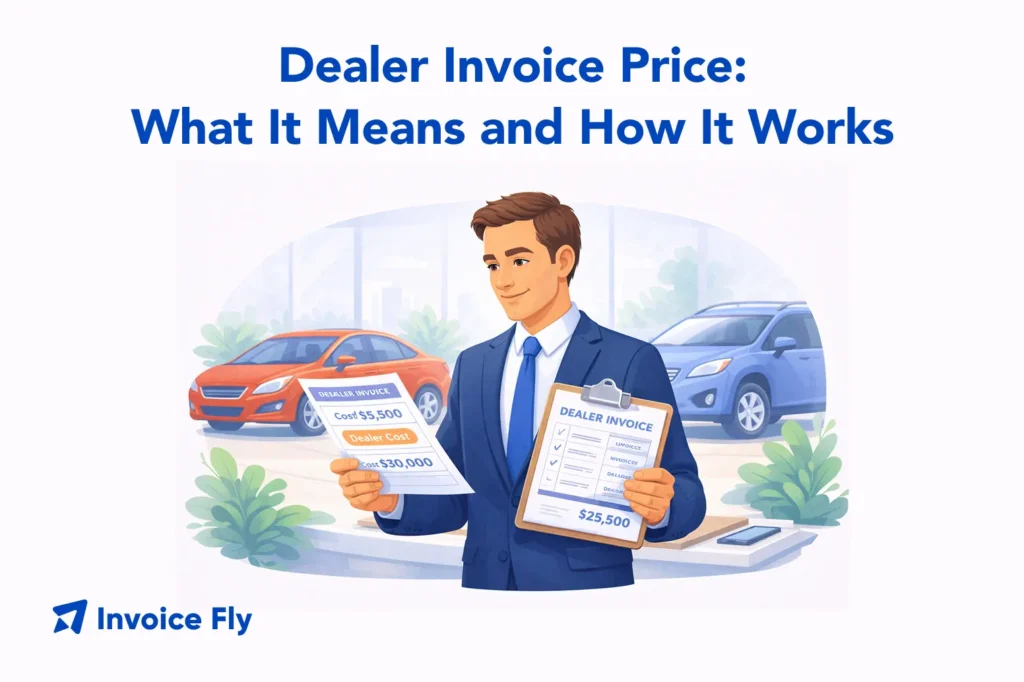
Table of Contents
Dealer invoice price is the amount a manufacturer charges a dealership for a vehicle. Many people think it reflects what the dealer actually paid, but in most cases, it’s just a starting point. Incentives like holdbacks, bonuses, and factory support can change the real cost behind the scenes. For dealers, sales teams, and small fleet buyers, understanding how dealer invoice price compares with MSRP (Manufacturer’s Suggested Retail Price) and the dealership’s true cost helps you set smarter margins and negotiate with more confidence.
In this guide, we’ll explain what dealer invoice price really means, where it fits in the overall pricing picture, and how to use it when working on retail or fleet deals.

What Is a Dealer Invoice Price?
Dealer invoice price is the amount shown on the invoice a manufacturer sends to a dealership when a vehicle is delivered. It represents what the dealer is billed for the car, not what they ultimately pay after all manufacturer incentives are applied, and not what the customer sees on the window sticker.
A typical dealer invoice includes:
- Base vehicle cost — the price of the model at its standard trim level
- Installed options — factory-added packages, features, and upgrades
- Destination and delivery fee — the manufacturer’s charge for transporting the vehicle to the dealership
What the invoice does not show is the holdback — a percentage of MSRP (typically 1–3%) that the manufacturer pays back to the dealer after the car is sold. Holdbacks exist to help dealers manage floor plan financing costs and are standard practice across most major manufacturers. This means a dealer selling at invoice price is usually still making money.
How Does Car Pricing Work for Dealers?
To understand where the dealer invoice price fits, it helps to look at how a vehicle is priced before it ever reaches the lot.
Manufacturers typically set two main numbers: the factory invoice price (what the dealer is billed for the vehicle) and the MSRP (the suggested retail price for customers). The difference between those two numbers is usually about 3–6% on most mainstream vehicles, and it forms the starting point for the dealer’s profit on a sale.
But that’s only part of the picture. Dealers may also receive additional support from the manufacturer, such as:
- Holdbacks — payments returned to the dealer after the vehicle is sold, which lower the real cost of the car
- Stair-step incentives — bonuses for hitting monthly or quarterly sales targets
- Dealer cash — extra incentives tied to specific models that customers don’t usually see advertised
- Regional incentives — programs that vary by location and change throughout the year
Because of these programs, the invoice price shown on a vehicle isn’t the dealer’s true cost. As Consumer Reports notes in its guide to car pricing terms, buyers and dealers alike benefit from understanding the difference between the invoice and the actual dealer cost.
Factory Invoice Price vs. Dealer Invoice Price vs. MSRP
These three numbers are often used as if they mean the same thing, but each plays a different role in how vehicles are priced and sold.
What Is Factory Invoice Price?
Factory invoice price is the amount the manufacturer charges the dealer for the vehicle before destination and delivery fees are added. It reflects the base amount billed as the car leaves the factory.
In many cases, factory invoice price and dealer invoice price end up very close. But they can differ when regional distributors sit between the manufacturer and the dealership, adding transport or handling costs along the way.
What Is the Manufacturer’s Suggested Retail Price (MSRP)?
MSRP — often called the sticker price — is the price the manufacturer recommends the dealer charge customers. It appears on the Monroney label, the window sticker required by federal law on all new vehicles sold in the United States.
Dealers don’t have to sell at MSRP. Depending on demand, inventory levels, and incentives, a vehicle may sell above it or below it.
Here’s how the main price points compare:
| Price Type | What It Represents | Who Uses It |
| Factory invoice price | Manufacturer’s base charge before delivery fees | Dealers, fleet buyers |
| Dealer invoice price | What the dealer is billed including destination | Sales teams, negotiators |
| MSRP | Suggested retail selling price | Consumers, finance managers |
| Actual dealer cost | Invoice minus holdbacks and incentives | Dealer principals, GMs |

Using Invoice Price and Dealer Markup in Practice
Knowing the numbers is useful. Knowing how to apply them is what separates strong negotiators from ones who leave money on the table.
Tips for Sales Teams
- Anchor on value, not just price. Invoice price gives you a floor to work from, but it shouldn’t be the center of every conversation. Customers who know the invoice price will try to negotiate up from it — which is fine, as long as your team understands where the real margin sits after holdbacks and incentives.
- Know your actual cost on every unit. Gross profit on a deal isn’t calculated from invoice price — it’s calculated from your true cost, which means accounting for holdback, any applicable dealer cash, and whether the unit is part of a stair-step program. Train your team to think in terms of actual cost, not just invoice.
- Use invoice transparency strategically. Some dealers share invoice pricing openly as a trust-building tactic. Others keep it close. Either approach can work — what matters is that your team is consistent and that front-end gross targets reflect your full cost picture, not just the invoice line.
- Price your add-ons separately. Accessories, protection packages, and dealer-installed options carry their own margins. Keeping these distinct from the vehicle negotiation protects gross on both sides of the deal.
Tips for Small Fleet Buyers
- Research invoice pricing before you visit. Major pricing resources publish dealer invoice data by make, model, and trim. Going into a negotiation knowing the invoice price — and understanding that holdbacks exist — puts you in a much stronger position than negotiating down from MSRP alone.
- Ask about fleet incentive programs. Most manufacturers offer fleet pricing for buyers purchasing multiple vehicles. Fleet programs often price at or below invoice, with additional volume discounts that aren’t available to retail buyers.
- Factor in total cost of ownership. Invoice price is the starting point, not the whole picture. Destination fees, dealer documentation fees, registration, and financing costs all affect what you’re actually paying per vehicle. Get a full out-the-door price before comparing across dealerships.

How to Find and Use Dealer Invoice Price Data
Dealer invoice prices on new vehicles are not secret. They’re widely available through online research tools. Here’s how to find them:
- Manufacturer websites: Some brands publish invoice pricing directly alongside MSRP on their configurator tools
- Third-party pricing sites: Resources like Edmunds and Kelley Blue Book publish invoice price data by VIN, trim, and installed options — useful for both consumers and fleet buyers researching specific units
- VIN-based lookup tools: Entering a specific VIN into a pricing tool pulls the invoice data for that exact configuration, including factory-installed options
Keep in mind that invoice prices vary by region and can shift mid-model year when manufacturers update pricing. Always verify against the most current data before building a deal or submitting a fleet offer.
For auto dealers who also offer vehicle-adjacent services — like detailing packages at delivery — understanding your full service cost picture matters just as much as knowing your vehicle margins. Our guides on car detailing cost and the car detailing business guide cover how detailing services are priced and packaged for dealership and independent operators alike.

Conclusion
Dealer invoice price is a foundational number in automotive retail, but it’s only one layer of a more complex pricing structure. For sales teams, the real work is understanding actual dealer cost after holdbacks and incentives, and building gross targets around that number rather than the invoice alone. For fleet buyers, invoice price is the starting point for negotiation, not the finish line.
Whether you’re structuring deals on the lot or buying vehicles for a small fleet, clear documentation of pricing, fees, and terms protects everyone involved. InvoiceFly’s invoice maker and free invoice generator make it straightforward to create professional, itemized invoices for vehicle sales, service packages, and add-on products — keeping your paperwork as organized as your pricing strategy.