How to Write an Estimate: Step-by-Step Guide for 2026

Table of Contents
- How to Write an Estimate Step-by-Step
- Key Elements of an Estimate
- What are the different types of estimates?
- Why Estimates are crucial for your business
- Using Tools and Software to Simplify Estimating
- Tips for Winning Clients with Your Estimates
- Final thoughts on how to write an estimate
- FAQs About How to Write an Estimate
How to Write an Estimate Step-by-Step
Writing an estimate is easier when you follow a clear process. The steps below walk you through what to include, how to calculate your costs, and how to present the final price professionally.
Step 1: Start by understanding the job
Before anything else, gather the core project details. What’s the client asking for? What are the deliverables, and are there any constraints or specific preferences?
Think:
- Scope of work
- Required material costs and supplies
- Labor hours (yours and subcontractors’)
- Timeline, key dates, and deadlines
- Client expectations or non-negotiables
This early cost estimation process reduces scope changes later.
Step 2: Work out your costs

Estimate your costs line item by line item. Good estimates rely on accurate assumptions and a clear understanding of direct and indirect costs. Think:
- Materials: Include delivery, potential markup, and supply chain variability
- Labor cost: Account for actual time and market rate (don’t forget taxes or insurance)
- Subcontractors: Get their pricing up front if they’re involved
- Equipment rentals or mileage if applicable
Need a hand breaking it down? Use our Service Price Calculator to work out your base cost before markup.
Step 3: Choose your tools: templates or estimating apps
Professional presentation matters. Whether you’re sending a basic estimate or a formal job estimate, your format should be clean and easy to follow.
Consider:
- A template PDF for polished, printable estimates
- A quote template in Excel for calculations
- A template Word file you can reuse
- An invoice template free version to match your branding

For a faster and more organized process, try Invoice Fly’s Estimates App — you can save templates, auto-fill line items, and send estimates directly to your clients.
Step 4: Account for the unexpected
Adding 5–10% as a contingency buffer is standard. Even if things go smoothly, your client will appreciate the transparency.
This covers:
- Price changes in materials (especially on a construction site)
- Weather or site access delays
- Changes to project scope
Stripe’s estimate guide notes that clear cost assumptions help reduce payment disputes and improve client trust.
Step 5: Double-check before sending
Before hitting send, review your estimate like a client would:
- Are all line items clearly labeled?
- Does the total cost reflect the full job?
- Are taxes and discounts noted?
- Is the company logo visible and branding consistent?
- Are disclaimers and terms and conditions visible?
Step 6: Share it the right way

Send it in the format that suits your client — email, PDF, direct link via your software, or review it live.
Tip: Stay away from editable documents (Google Docs, Microsoft Word, etc.) as they can be unintentionally altered.
Always include:
- Estimate ID or reference number
- Expiry date (15–30 days is standard)
- Next steps: how to approve, request changes, or pay a deposit
Include all customer information and follow up within 48 hours if you haven’t heard back.
Key Elements of an Estimate
An estimate is a ballpark cost projection that gives clients clarity — but it’s not legally binding. It shows your best effort to predict price and time based on current info.
Estimates are ideal early in the sales process to establish scope and trust without locking either party in. For more info, check out what is an estimate, a guide that walks you through what purpose these documents serve.
An example, to put it into perspective: A home remodeler quotes $18,000 for a kitchen renovation. The estimate includes a breakdown of flooring, cabinetry, and labor, plus a note: “Final price may vary based on appliance selection and permit timing.”
Estimates should always include disclaimers like “Pricing subject to change” or “Not a legally binding agreement.”
Below you will find the basic elements of an estimate.
Basic client details
Name, business name, address, and contact information.
Example: ABC Landscaping, 1024 Maple Street, Denver, CO 80210 — Contact: Sara Hill, sara@abclandscaping.com, (720) 555-8123
What you’re delivering (scope)
Spell out what the estimate covers. Use short bullet points or a short paragraph.
Example: Remove old turf, install sod, edge front lawn, fertilize and water thoroughly. Excludes sprinkler repair.
Itemized breakdown of costs
Be specific. Show cost per item, hourly rate, and total. Remember not to include bundle costs unless you explain it.
Example:
- Sod (500 sq. ft): $450
- Labor (2 workers × 6 hrs): $540
- Fertilizer: $35
- Equipment Rental: $65
Subtotal: $1,090

Payment terms
How much is due up front? When is the final payment due? What if the client cancels?
Example: 50% deposit due upon approval. Remaining 50% due within 3 business days of job completion. Cancellations within 48 hours of start will incur a 10% fee.
Timeline and milestones
When will work start? When are check-ins or reviews? And when will the final job be completed?
Example: Job to begin August 12, estimated completion by August 14. Check-in with client after sod installation to confirm alignment.
How long is it valid?
Protect yourself from rising costs by setting an expiration — 15, 30, or 60 days.
Example: This estimate is valid for 30 days from the issue date.
What happens if things change?
Include your change order policy — outline how added work or revisions will be handled and priced.
Example: Any client-requested changes must be agreed upon in writing. Extra labor or materials will be added to the final invoice.
How the client accepts it
Make it easy to say yes: accept via e-signature, email reply, or deposit payment.
Example: To approve, please reply to this email or sign the attached estimate and submit a deposit via PayPal or bank transfer.
Mock Estimate Overview:
Client: ABC Landscaping
Project: Front yard sod installation
Date Issued: August 1, 2025
Estimate ID: #E-2985
| Item | Qty/Rate | Cost |
|---|---|---|
| Sod (500 sq. ft) | $0.90/sq. ft | $450 |
| Labor (2 × 6 hrs) | $45/hr | $540 |
| Fertilizer | flat rate | $35 |
| Equipment Rental | daily rate | $65 |
| Subtotal | $1,090 | |
| Contingency (5%) | $54.50 | |
| Total Estimate | $1,144.50 | |
Terms: 50% deposit required. Balance due on completion. Valid for 30 days.
Approval: Reply to email, sign, or pay deposit via PayPal.
What are the different types of estimates?
Depending on how far along the job is or how defined the scope is, you may choose:
- Preliminary estimates: A rough version, used to open a conversation
- Ballpark estimates: General range based on prior jobs
- Detailed estimates: Line-by-line breakdown, with notes
- Fixed bids: Locked price, great for formal quotes or government jobs
Example: A web designer gives a client a $3,500–$5,000 ballpark estimate for a new site, with a plan to finalize a detailed fixed bid after the scope meeting.
Why Estimates are crucial for your business
A strong estimate:
- Sets expectations and scope
- Positions you as a professional
- Helps avoid client misunderstandings
- Protects your time and profit margins
Even basic estimate templates or a sample construction quote can go a long way toward looking professional and building trust with your clients.
Using Tools and Software to Simplify Estimating
Manual estimating works — until you’re drowning in spreadsheets or retyping the same line items. That’s where software steps in.
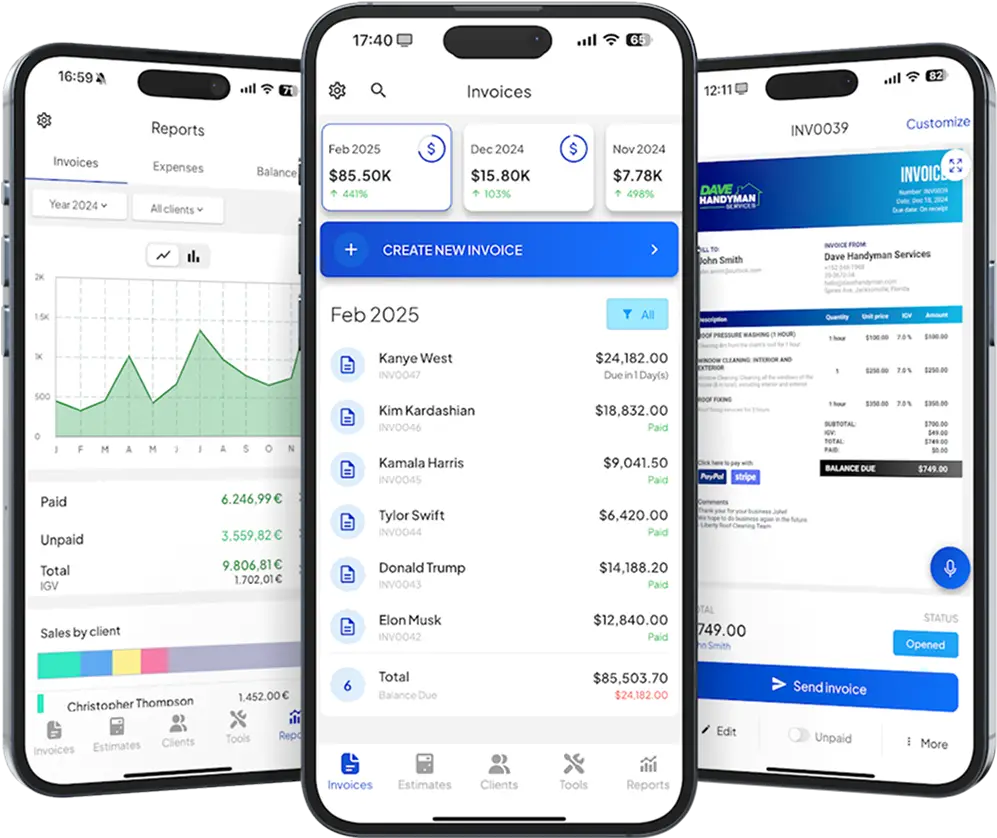
Invoice Fly’s estimate app gives you a faster, cleaner way to build and send estimates. You can:
- Pull from saved line items to avoid repetition
- Convert estimates into invoices instantly
- Track edits, client comments, and approval status in one place
Use free estimate templates that match your brand, or level up with the estimates app to manage everything in one workflow — from templates and approvals to client history.
Tips for Winning Clients with Your Estimates
When and how you do this part can make a difference in the number of jobs you win. Here are a few tips to get you started on the right track.

- Send it quickly: Within 24–48 hours of inquiry
- Make it readable: Avoid jargon, use a clean layout
- Break down the numbers: Help them see where the money goes
- Add a personal note: Recap what you discussed, and say thanks
Final thoughts on how to write an estimate
The hidden cost of invisible admin work tops $25,000 a year per professional. InvoiceFly centralizes estimates, invoicing, and payments to help users recover up to 400 hours a year. (Source: InvoiceFly Salary & Time Gap Report 2026; time data: Paychex / Oasis Study.)
InvoiceFly’s estimate app helps you create and send estimates faster. Once a customer approves the job, you can turn the estimate into an invoice using our invoice software.
A good estimate shows that you’re organised, thoughtful, and serious about the job, helping your potential client feel confident in your process from the very first touchpoint.
It sets the tone for how you do business. It shows your professionalism, attention to detail, and respect for the client’s time and budget.
With the right tools, it doesn’t need to be time-consuming. Try Invoice Fly and start building faster, clearer estimates today.