Invoice Fly vs Xero: Which Is Better for Your Business?
Table of Contents
Invoice Fly and Xero can both handle invoicing, but they approach small-business finances from different directions.
Invoice Fly is centred on the work-to-payment process: create an estimate, track the job, invoice the client and get paid. Xero combines invoicing with a wider accounting system, including bank reconciliation, bills, inventory, financial reporting and tax-related tools.
So, the decision isn’t simply about which platform has more features. In this guide, we’ll compare Invoice Fly vs Xero based on invoicing, accounting, pricing and everyday use to help you work out which tools your business actually needs.
Invoice Fly vs Xero at a glance
| Feature | Invoice Fly | Xero |
|---|---|---|
| Best suited to | Freelancers, contractors and service businesses | Small businesses needing broader accounting tools |
| Starting price* | $8.99/week or $98.99/year | $27/month |
| Unlimited invoices | Yes | From Growing |
| Estimates/quotes | Yes | Yes |
| Recurring invoices | Yes | Yes |
| Online payments | Stripe and PayPal | Multiple payment providers |
| Time tracking | Yes | With Projects on Established |
| Expense tracking | Yes | Yes, with additional employee expense tools on Established |
| Bank reconciliation | No | Yes |
| Bills and purchase orders | No | Yes |
| Inventory | No | Yes |
| W-9 and 1099 tools | No | Yes |
| Multi-currency | Yes | Established |
| Mobile access | Yes | Yes |
*US pricing shown for October 1, 2026. Payment fees and optional add-ons may apply.
The biggest difference is scope. Xero goes beyond client billing into bookkeeping and accounting, while Invoice Fly keeps more of its focus on the tasks that happen around quoting, completing work and getting paid.
What is Invoice Fly?

Invoice Fly is invoicing software designed around the everyday admin of client-based work.
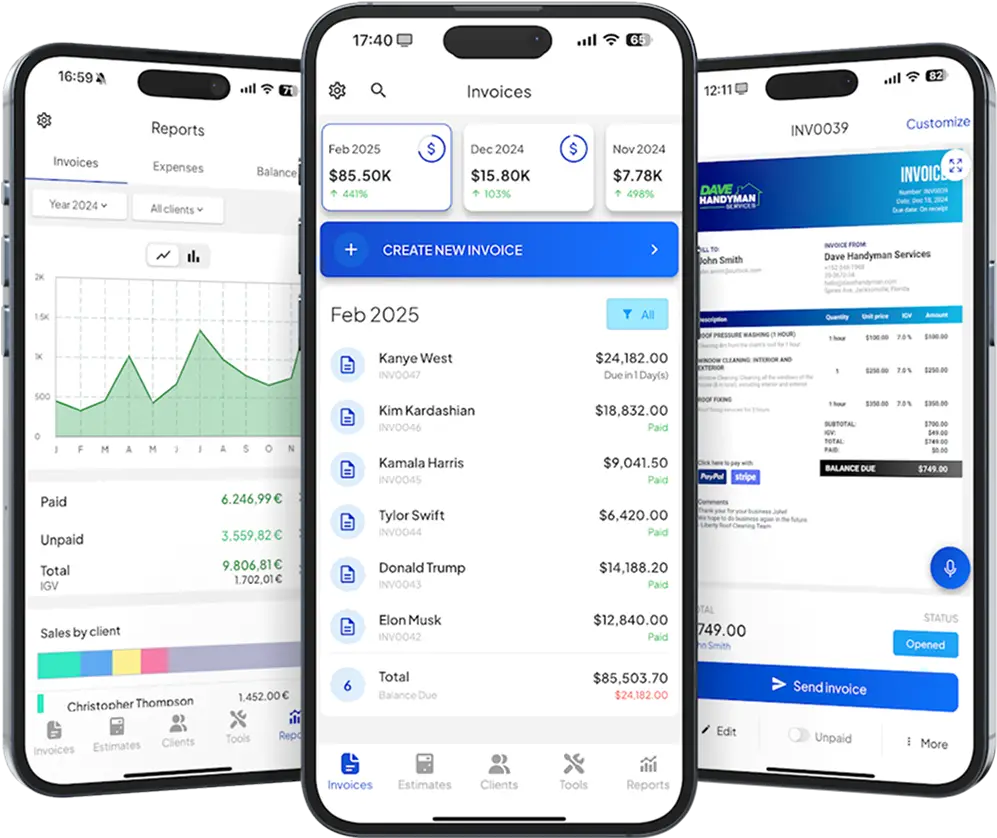
You can create estimates and invoices, convert approved estimates into invoices, set up recurring invoices, track billable time and expenses, send payment reminders and accept online payments.
For a contractor or freelancer managing jobs directly with customers, this keeps the steps from initial quote to final payment connected.
You can also see independent Invoice Fly reviews on Capterra.
What is Xero?
Xero is cloud accounting software for small businesses. Invoicing is one part of a wider set of financial tools covering bank reconciliation, bills, purchase orders, inventory, reporting, sales tax and W-9/1099 management.
Its US plans are Early, Growing and Established. Features increase as you move through the tiers, with tools such as multi-currency, project tracking and employee expense claims reserved for Established.
That wider scope is useful if you want invoicing and accounting managed within the same system, but it also means the plan you choose matters more.
For independent user feedback, you can check Xero reviews on G2.
Invoice Fly vs Xero: Key differences
The two platforms overlap most around invoicing. Beyond that, Xero moves further into accounting, while Invoice Fly stays closer to client and job administration.
Invoice limits, estimates and recurring billing
Both platforms let you create quotes or estimates and turn completed work into invoices, but their plan structures are different.
- Invoice Fly: Includes unlimited invoices and estimates on both plans, along with recurring billing, reminders and invoice-status tracking.
- Xero Early: Lets you send quotes but limits you to 20 approved or sent invoices per month.
- Xero Growing and Established: Remove the 20-invoice limit and add broader accounting features.
That 20-invoice limit is worth thinking about before choosing Xero Early. A business sending only a handful of invoices each month may stay comfortably below it, while a contractor billing several customers each week could reach it much faster.
Invoice Fly’s estimate and quote software keeps estimates connected to the billing process. For repeat customers, our guide to invoice automation also explains how recurring billing can reduce repetitive admin.
Accounting and bank reconciliation
This is where Xero starts doing something fundamentally different.
Xero connects to bank accounts so you can match transactions against your records and reconcile them. It also brings bills, sales tax, cash-flow information and financial reporting into the accounting workflow.
Invoice Fly keeps its financial tools closer to client work, including invoices, payments, expenses and business reports.
If you want invoicing and full accounting in the same platform, Xero’s broader accounting tools are relevant. If your priority is managing client billing, Invoice Fly keeps that workflow more focused.
Understanding the difference between an invoice and a receipt can also help when deciding which records belong in your billing workflow.
Online payments and payment tracking

Both platforms let customers pay invoices online.
- Invoice Fly: Connects with Stripe and PayPal and lets you track invoice and payment status alongside client billing.
- Xero: Supports online invoice payments through providers such as Stripe and GoCardless, with available methods depending on the provider and setup.
The practical question is how much you want connected around the payment itself. Invoice Fly keeps payment tracking close to estimates, invoices and customer records. With Xero, payments feed into the wider accounting system and can be matched against bank transactions.
Payment-processing fees can apply with either platform, depending on the provider you use.
Whatever your setup, clear invoice payment terms help customers understand how and when they’re expected to pay.
Expenses, time tracking and project costs
If you bill for your time, this comparison needs a closer look because Xero doesn’t include the same project tools across every plan.
Invoice Fly includes time tracking alongside invoices and expenses, letting you record billable hours by client or project and turn them into invoices.
Xero includes broader expense and accounting tools, but project time and cost tracking is included with the Established plan. Established also adds employee expense and mileage claims.
For a freelancer or contractor who mainly needs to record hours and bill clients, Invoice Fly covers that workflow directly. Xero’s project tools become more relevant if you want time and project costs connected to your wider accounting records.
Bills, purchase orders and inventory
This is one area where the platforms serve different needs.
- Invoice Fly: Tracks business expenses alongside invoices, payments and client work.
- Xero Early: Includes bills and inventory, with a limit of five bills per month.
- Xero Growing and Established: Remove the bill limit and include purchase orders alongside broader inventory and accounting tools.
If you mainly need to track the costs of completing client work, Invoice Fly keeps expenses within the same billing workflow. Xero’s additional tools are more relevant if you regularly manage suppliers, purchase orders or stock.
Payroll, W-9s and 1099s

Xero also covers areas of business administration that sit outside everyday invoicing.
- Xero: Includes W-9 collection and 1099 preparation tools. Payroll is available through Gusto as an additional paid service.
- Invoice Fly: Focuses on client billing rather than payroll, W-9 collection or 1099 preparation.
These features are more relevant if you pay employees or contractors and want those records connected to your accounting system. If you work independently and mainly invoice your own clients, they may not influence your decision.
Xero Payroll powered by Gusto is separate from the standard Xero subscription, so include that additional cost when comparing plans.
Reporting and multi-currency
The two platforms offer reporting for different purposes.
Invoice Fly provides business reports designed to help you monitor invoices, payments, expenses and performance related to your client work. It also supports billing international clients in multiple currencies.
Xero offers broader accounting reports, including financial statements based on the financial data recorded in the platform. Multi-currency accounting is available on the Established plan.
If you mainly want visibility into invoicing, payments and expenses, Invoice Fly keeps reporting closer to those everyday tasks. Xero provides more depth if you need broader accounting reports or want foreign-currency transactions incorporated into your accounting records.
Ease of use and setup

The setup experience reflects what each platform is designed to manage.
- Invoice Fly: Focuses on client-facing tasks such as estimates, time and expense tracking, invoices and payments, with less accounting setup required.
- Xero: Adds bank accounts, reconciliation, financial categories and other accounting tools, so there may be more to configure when getting started.
If your priority is managing client work and billing, Invoice Fly offers a more focused setup. Xero may make more sense if you also want to manage your wider accounting in the same platform.
Invoice Fly vs Xero pricing
Price needs some context here because Xero’s plans don’t simply unlock more invoicing features. They add accounting and business-management tools as you move up the tiers.
| Plan | Price |
|---|---|
| Invoice Fly Weekly | $8.99/week |
| Invoice Fly Yearly | $98.99/year |
| Xero Early | $27/month |
| Xero Growing | $59/month |
| Xero Established | $97/month |
Invoice Fly’s two options include unlimited invoices and estimates, so your subscription doesn’t change based on how many invoices you send.
With Xero, plan choice has a bigger effect on what you can do:
- Early: Includes core accounting tools but limits you to 20 invoices and five bills per month.
- Growing: Removes those invoice and bill limits.
- Established: Adds features including project tracking, employee expenses and mileage, and multi-currency.
Payroll is an additional cost. Xero Payroll powered by Gusto starts at $36 per month plus $6 per employee or contractor, on top of your Xero subscription.
This means the cheapest option on paper isn’t always the most useful comparison. Think about how many invoices you send and whether you need accounting, project or payroll tools before comparing the monthly cost.
US Xero pricing shown from October 1, 2026. Pricing and features may change.
Which businesses suit Invoice Fly and Xero?
You don’t necessarily need the platform with the most features. You need the one that covers the work your business actually does.
| If you… | Consider |
|---|---|
| Mainly need estimates, invoices and payment tracking | Invoice Fly |
| Want unlimited invoicing without moving to a higher tier | Invoice Fly |
| Track billable hours as part of client work | Invoice Fly |
| Need bank feeds and reconciliation | Xero |
| Manage supplier bills, purchase orders or inventory | Xero |
| Need W-9 and 1099 tools | Xero |
| Want project accounting and multi-currency | Xero Established |
| Need a full accounting system around your invoicing | Xero |
For a self-employed electrician, designer or cleaner, for example, the priority may simply be quoting work, tracking time and expenses, invoicing customers and getting paid. In that case, paying for accounting features you don’t plan to use may add unnecessary complexity.
A small business managing supplier bills, bank transactions, inventory and financial reports has different needs. Xero brings those records together with invoicing, which can reduce the need to manage separate accounting processes.
The IRS provides guidance on the financial records businesses should keep, while the SBA has further guidance on managing small-business finances.
Invoice Fly vs Xero: Which should you choose?
Invoice Fly may suit you if your day-to-day admin revolves around client work. It brings estimates, billable time, expenses, unlimited invoices, payments and reminders into one workflow, making it a practical choice for freelancers, contractors and service businesses.
Xero may suit you if you need invoicing alongside broader accounting. Bank reconciliation, supplier bills, inventory, financial reporting and tax-related tools give you more ways to manage the finances behind your business.
The right choice depends on where you need the most support. If quoting work, billing clients and getting paid are your priorities, Invoice Fly keeps that process front and centre. If you also want to manage bookkeeping and accounting in the same platform, Xero covers more of that financial workflow.