How To Price Plumbing Jobs: Complete Guide

Table of Contents
- Firstly, why is pricing plumbing correctly so important?
- How to estimate the cost of plumbing jobs
- Calculate plumbing job prices with our free calculator
- Service Price Calculator
- Total Summary
- How to prepare a quote for plumbing jobs
- How much do plumbers make?
- Plumbing services list
- Streamline your business with plumbing software tools
- FAQs
Pricing plumbing jobs correctly means covering more than labor and materials. Your rates also need to account for travel, tools, insurance, overhead, job complexity, and profit.
In 2026, plumbers commonly charge around $45 to $200 per hour, depending on experience, location, and the type of work. Emergency plumbing can cost significantly more.
This guide explains how to calculate your plumbing rates, choose between hourly and flat-rate pricing, account for expenses, and set prices that keep your business profitable.
Firstly, why is pricing plumbing correctly so important?
Pricing can make or break your plumbing business. Set your rates too low, you’ll end up working for peanuts. Price jobs too high, you’ll drive customers away. And if your pricing structure is overly complicated, you’ll waste valuable time explaining it to potential clients.
The bottom line: pricing is more than just numbers — it’s about profitability, trust, and staying competitive. Strike this balance right, and you’ll be setting your business up for success.
Key goals when pricing plumbing jobs:
- Keep your business profitable
- Build trust with customers
- Maintain a competitive edge
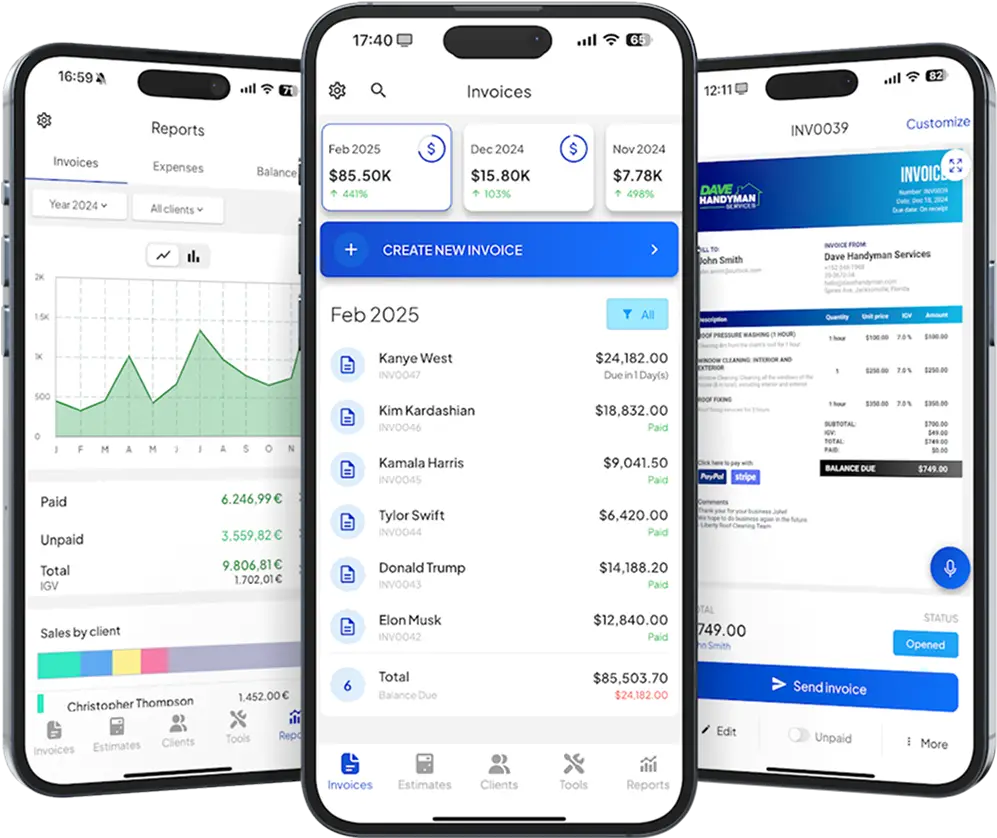
Create and Send Invoices with Invoice Fly
Whether you’re billing clients weekly, monthly, or per project, Invoice Fly helps you create professional invoices, track payments, and stay organized from anywhere.
How to estimate the cost of plumbing jobs
Estimating plumbing jobs doesn’t have to be overwhelming — and we’ve made it simple.
On the one hand, you can charge a flat rate for each plumbing service. However, if you’re a contractor or small business owner, pricing by the project is the best way to ensure accuracy and compete with local competition.
Here’s how you can do it, in four simple steps.
1. Calculate labor costs
Start by estimating the total time the job will take, including the initial set-up, the actual work, and clean-up.
Some plumbers choose to include travel time, while others don’t or will only include it if they’re traveling beyond a certain distance. This is entirely up to you.
Once you have an accurate estimate of the hours needed, multiply the total time by your hourly rate.
Your service fees should reflect your experience, skill set, and the local market demand.
For example, plumber hourly rates in San José, California, may be significantly higher than those in Florida, so it’s important to adjust your pricing based on your location.
Key factors to consider when calculating labor costs:
- Setup time
- Actual work
- Cleanup time
- Travel time (optional)
- Other additional fees
2. Add material costs
Calculate your overhead costs by making a detailed list of every material you’ll need for a specific job, including essentials like pipes and valves, along with any additional components for that particular project. It’s best to be thorough here, so as to avoid any future surprises.
Also, remember to account for any taxes that may not be included in the listed sales prices, ensuring your estimate fully covers all material expenses.
Materials you might need:
- Traps & tubes
- Supply lines
- Water heater parts
- Toilet parts
- Faucet parts and valves
- Pipes & fittings
- Adhesives & sealants
- Appliances & appliance parts
- Hangers, struts, & fasteners
- Finished plumbing products
View the complete plumbing material checklist.
3. Factor in overheads
Don’t overlook your overhead expenses — the behind-the-scenes costs that keep your business running smoothly. In doing so, you may flush away any profits you would make.
Instead, take a moment to estimate and cover overhead costs, including vehicle maintenance, plumbing tools, office supplies, insurance, licensing fees, and even marketing expenses.
How to calculate your overhead cost:
- Combine your annual overhead costs
- Divide by 12 to get your monthly overhead
- Divide your monthly overhead by your average amount of monthly billable hours
Following these three steps, you’ll have your hourly overhead rate, which you can then use to price plumbing jobs.
Simply take your hourly overhead cost and multiply it by the number of labor hours needed.
That’s it. Job done!
4. Include a profit margin
Your profit margin is the lifeline of your business, so take care of it.
Many plumbers aim for a 15-35% margin, depending on the job type, market demand, and competition. However, striking the right balance between competitive pricing and profitability is key.
How to add profit margin to a plumbing job:
- Add up your labor, material, and overhead costs for the job
- Determine what markup percentage is suitable for the job
- Multiply the total cost by your chosen markup percentage (e.g., 25% = 0.25) and add this to your total costs.
Want to make the process even easier?
Calculate plumbing job prices with our free calculator
Our free service price calculator helps you price plumbing jobs by factoring in labor, materials, overhead, and your desired profit.
Service Price Calculator
Number of workers needed for the job
Total hours required to complete the job
Average hourly rate per worker
Total monthly business expenses (rent, utilities, insurance, etc.)
Total working hours per month
Total hours needed to complete this specific job
Total cost of all supplies used for the job
Net amount your business gets to keep after costs and expenses

Total Summary
Once you’ve calculated your price, use our free estimate templates to send customers a professional quote.
Home-service pros lose an average of 852.8 hours a year—worth nearly $25,000—to non-billable admin like quoting and invoicing. InvoiceFly users send estimates 50–70% faster and recover up to 400 hours a year. (Source: InvoiceFly Salary & Time Gap Report 2026; wages: BLS OEWS 2025.)
InvoiceFly’s estimate app helps plumbers create quotes faster and turn approved estimates into invoices with our invoice software.
Create and Send Invoices with Invoice Fly
Whether you’re billing clients weekly, monthly, or per project, Invoice Fly helps you create professional invoices, track payments, and stay organized from anywhere.
How to prepare a quote for plumbing jobs
Once you complete the job, you’ll need to prepare a quote.
The goal? Keep it simple and make it clear. Do these two things, and you’ll be winning customers in no time.
Key plumbing quote details:
- Invoice number and date
- Your company information
- The customer’s information
- Plumbing service & material details
- Payment terms and conditions
- Any notes for additional information
Save time by using Invoice Fly’s Estimate App — just input the details and download your polished, professional quote instantly.
RELATED ARTICLES: How To Get A Plumbing License in 2026? 6 Simple Steps
How much do plumbers make?
The earnings of a plumber in the United States can vary widely depending on experience, location, and the type of work they specialize in.
However, according to Indeed, the average annual salary for a plumber in 2024 is $60,000.
At the lower end, entry-level or apprentice plumbers might earn around $35,000 annually, while experienced master plumbers or those running their own businesses can make well over $100,000 yearly, especially in high-demand areas.
RELATED ARTICLE: How Much Do Plumbers Make? 2026 Salary Guide

Plumbing services list
From fixing leaks and unclogging drains to installing water heaters and new piping systems, plumbers handle a wide range of essential services.
Here’s a quick breakdown of common jobs in the plumbing industry, and their average costs.
Common jobs and price ranges:
- Cost to fix a leak: $150–$450
- Water heater installation costs: $850–$1,700
- Price of unclogging a drain: $150–$350
- Drain line repair costs: $225–$1,175
- Water main repair fees: $350–$1,600
- Water main installation costs: $625–$2,700
- New plumbing pipes cost: $375–$2,000
Streamline your business with plumbing software tools
Pricing and quoting plumbing jobs doesn’t have to be a time-consuming or stressful process. With the right tools, you can save hours of effort while ensuring accuracy, professionalism, and profitability.
Wondering where to start? Try Invoice Fly’s plumbing software solutions. Each of our tools has been designed to simplify the business side of being a plumber.
From managing your client base and sending invoices to building reports, we’ve thought of everything.
Begin simplifying your workflow, and download Invoice Fly today!
Create and Send Invoices with Invoice Fly
Whether you’re billing clients weekly, monthly, or per project, Invoice Fly helps you create professional invoices, track payments, and stay organized from anywhere.
Invoice Fly’s on our platforms:
★ 4.8/5.0 · +180,000 reviews
★ 4.8/5.0 on Trustpilot, Capterra, GetApp, and Software Advice.
★ App Store (+88.000 positive reviews) and Google Play (+90.000 positive reviews)
★ Over 125,000 businesses trust us.
What users say about Invoice Fly:
“Very user friendly. I can create a invoice or estimate at the drop of a dime. Even while out at a customer’s location.”
— Marita S. · Capterra · ★★★★★ · 2025-06-28
FAQs
Start by calculating labor, materials, travel, equipment, and overhead. Then add your desired profit to get the final price. For larger jobs, include extra time for unexpected issues.
Review the full scope of work, estimate labor hours and material costs, add overhead and profit, and provide the customer with a clear written quote explaining what is included.
Compare the quote with prices from other local plumbers and check whether labor, materials, service fees, and additional charges are clearly explained. Higher prices may be reasonable for emergency, specialized, or complex work.
You can charge by the hour or use a flat rate. Whichever method you choose, make sure the price covers your labor, materials, overhead, travel, and profit.
Include your business and customer details, invoice number and date, a description of the work completed, labor and material charges, taxes, the total amount due, and payment terms. Using invoicing software can make this faster and easier.

Courteney Searle - Author Profile
Name: Courteney Searle
Email: courteney.searle@gmail.com
LinkedIn: linkedin.com/in/courteney-searle
Professional Status: Freelance Copywriter, Editorial Writer, and Creative Strategist
Location: Barcelona, Spain (EUA Market)
About Courteney Searle
Courteney Searle is a Content Strategist and SEO Copywriter with over six years of experience creating educational and search-optimized content for SaaS companies, technology businesses, and digital brands. She holds a Bachelor of Arts in Writing Studies from the University of Waikato (New Zealand) and has held senior editorial positions including Managing Editor at ArchiPro and Head of Copy at Neon Hive. Her work has been published in Country & Town House and Wiltshire Living. At Invoice Fly, Courteney writes and reviews content about invoicing, small business management, productivity software, and entrepreneurship, helping ensure articles are accurate, practical, and relevant for U.S. small business owners and independent contractors.