Invoice Fly vs Recurly: Which Billing Platform Is Better for Your Business?
Table of Contents
Choosing between Invoice Fly and Recurly comes down to how your business gets paid.
If you work with clients and mainly need to send invoices, create estimates, track payments, and automate repeat billing, Invoice Fly keeps things relatively simple. If you run a subscription business and need to manage changing plans, usage-based pricing, failed payments, and recurring revenue at scale, Recurly is built for that extra complexity.
Neither platform gives every business the best value. In this guide, we’ll compare Invoice Fly and Recurly based on their features, pricing and which types of businesses they suit.
Invoice Fly vs Recurly at a glance
| Feature | Invoice Fly | Recurly |
|---|---|---|
| Best for | Freelancers, contractors and service businesses | SaaS and subscription businesses |
| Standard invoicing | Yes | Yes |
| Estimates | Yes | More subscription-focused |
| Recurring invoices | Yes | Yes |
| Subscription management | Recurring invoicing | Advanced |
| Usage-based billing | Focused on recurring invoices | Yes |
| Automated reminders | Yes | Yes |
| Advanced dunning | No | Yes |
| Client management | Yes | Subscriber account management |
| Time tracking | Yes | No core time-tracking focus |
| Multi-currency billing | Payment-provider dependent | 140+ currencies |
| Revenue recognition | Basic business reporting | Separate RevRec product |
| Starting price* | $8.99/week or $98.99/year | $249/month + billing-volume fee |
*US pricing checked September 16, 2026. Payment processing and other third-party fees may apply.
The main difference: Invoice Fly is designed for businesses that mainly invoice clients for their work, while Recurly is built for businesses that sell and manage subscriptions. If you need straightforward invoicing, Invoice Fly is likely to be the more practical fit. If subscription management is at the heart of your business, Recurly offers more advanced tools.
What is Invoice Fly?

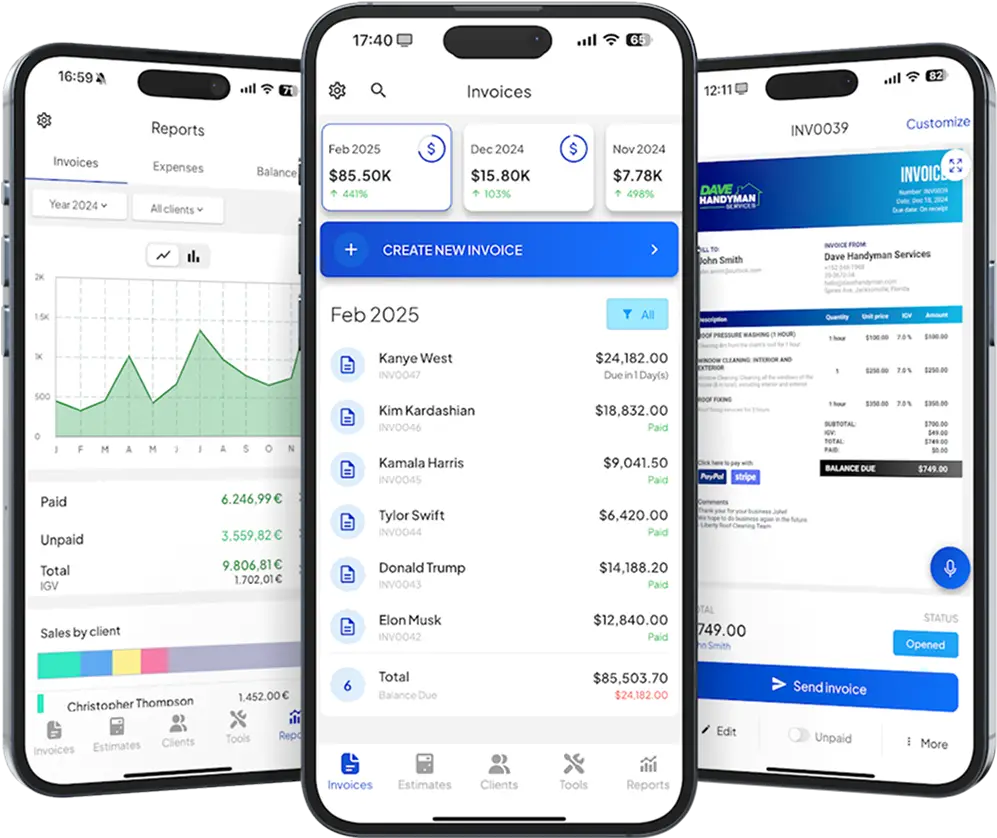
Invoice Fly is invoicing software for freelancers, contractors, service professionals, and small businesses. It combines invoices, estimates, recurring billing, payment reminders, client management, expenses, and time tracking in one platform.
The focus is on making everyday billing easier without adding unnecessary complexity. This makes it a practical option for businesses that mainly charge clients for their work.
You can also check Invoice Fly reviews on Capterra for independent user feedback.
If you’re new to the process, understanding how to send an invoice can also help you set up a more consistent billing workflow.
What is Recurly?
Recurly is a subscription management and recurring billing platform designed for businesses with more complex subscription models.
It supports different pricing models, subscription changes, recurring payments, failed-payment recovery, and subscriber management. This makes it particularly relevant to SaaS and subscription businesses that need more than basic recurring invoices.
For another perspective, Recurly reviews on G2 can help you see how users rate the platform in practice.
Invoice Fly vs Recurly: Key differences
The biggest mistake when comparing these platforms is treating recurring invoices and subscription billing as the same thing.
They overlap, but they solve different problems.
Invoicing vs subscription billing
Invoice Fly starts with the traditional client invoice. You provide a product or service, create an invoice, set payment terms, send it to your client, and track whether it has been paid.
Recurly starts with the subscription. A customer signs up for a plan, and the platform manages what they should be charged as that subscription renews or changes.
Invoice Fly therefore makes more sense for project-based and service work. Recurly makes more sense when recurring revenue is central to the business model.
There are also several types of invoices, so businesses should consider how they actually bill customers before choosing software.
Invoices and related transaction documents can also form part of your business records. The IRS explains the types of supporting documents businesses may need to keep.
Recurring invoices and subscription management

Invoice Fly supports recurring invoices and automated billing schedules. If you charge a client the same amount every week or month, you can automate that process instead of creating each invoice manually.
That is different from full subscription management.
Recurly can manage upgrades, downgrades, pauses, add-ons, pricing changes, and other events throughout a customer’s subscription.
For a cleaner or consultant charging a regular monthly fee, Invoice Fly’s approach may be enough. For a SaaS company with Basic, Pro, and Enterprise plans where customers regularly switch tiers, Recurly is designed for that added complexity.
Both approaches reduce repetitive admin, but the right level of invoice automation depends on how your customers are billed.
Billing plans, pricing models, and usage-based billing

This is one of Recurly’s clearest advantages for subscription businesses.
Recurly supports fixed recurring, one-time, ramp, quantity-based, usage-based, hybrid, and prepaid pricing models. Usage billing can charge customers based on metrics such as API calls, storage, or another measurable unit.
Usage records need to be passed to Recurly through an API, so this is not simply a setting you switch on.
Invoice Fly focuses on straightforward invoicing, estimates, and recurring billing. Recurly goes further into metered and usage-based billing, which is more relevant to businesses with complex subscription models.
If your customers receive predictable invoices, Invoice Fly’s straightforward approach can be useful. If billing varies based on customer usage, Recurly’s usage-based billing tools are designed for that model.
Online payments and payment processing
Invoice Fly lets businesses accept online payments through providers including Stripe and PayPal and track them alongside invoices.
Recurly supports a broader payment infrastructure, including cards, digital wallets, direct debit, and local payment methods through compatible gateways. This can be useful for subscription businesses operating across different countries.
Payment gateways and providers may charge their own transaction fees. Clear invoice payment terms are also important whichever system you use.
Payment reminders, dunning, and revenue recovery
Invoice Fly offers automatic payment reminders for unpaid invoices. This helps small businesses follow up without manually checking every overdue bill.
Recurly goes further with dunning and revenue recovery.
Dunning is designed around failed recurring payments. For example, if a subscriber’s card is declined during renewal, Recurly can retry the payment and use dunning campaigns to try to recover the revenue.
That is different from reminding a client that an invoice has passed its invoice due date.
For service businesses, standard reminders may be all you need. For a subscription company with hundreds or thousands of automatic renewals, failed-payment recovery can have a much bigger role.
Customer and subscriber management
Invoice Fly keeps client information connected with estimates, invoices, and payments, with a client portal for accessing relevant billing information.
Recurly’s subscriber accounts are built around subscriptions, bringing together plans, transactions, billing details, payment methods, and subscription changes. The difference is essentially client management versus managing an ongoing subscription lifecycle.
Revenue recognition and financial reporting
Invoice Fly includes business reports covering income and expenses. Recurly offers more advanced recurring-revenue tools, while revenue recognition is available separately through its RevRec product rather than as a standard feature.
Neither platform replaces complete bookkeeping or financial management. The SBA’s business guidance provides broader resources for managing business finances.
Multi-currency and global billing
Recurly offers more extensive support for global subscription billing. It currently supports more than 140 currencies, with payment options depending on the gateway and region.
Invoice Fly can support online payments through providers such as Stripe and PayPal, but it does not offer the same dedicated global subscription-billing infrastructure.
For a local contractor, that difference may not matter at all. For a SaaS business selling subscriptions across several markets, it could be a deciding factor.
Integrations, APIs, and business tools

Recurly is designed to sit within a larger software stack. It supports APIs, webhooks, and integrations across areas such as accounting, CRM, ERP, tax, payments, and customer engagement, although availability can depend on the product or plan.
Invoice Fly takes a more small-business-focused approach. Its broader tools include estimates, expenses, receipt scanning, reporting, online payments, and time-tracking software.
This is another area where “more” does not automatically mean “better.”
A SaaS development team may value Recurly’s API flexibility. A self-employed electrician may get far more value from tracking three hours of work and turning them directly into an invoice.
Ease of use and setup
Invoice Fly offers a more straightforward setup for businesses focused on client invoicing. If your workflow is estimate → job → invoice → payment, you can focus on those tasks without setting up subscription plans, usage models, dunning rules, or billing integrations.
Recurly requires more setup, particularly for advanced pricing models or integrations. That added complexity can be worthwhile for businesses that need its subscription management capabilities.
Invoice Fly vs Recurly pricing
The pricing difference is significant, but it needs context.
Invoice Fly currently offers two main US pricing options:
- Weekly: $8.99 per week
- Yearly: $98.99 per year
Both plans include unlimited invoices and estimates. See the latest Invoice Fly pricing plans for full details.
Recurly Starter currently costs $249 per month plus 0.9% of billing volume, with the first $40,000 of monthly billings excluded from the percentage charge. A 90-day Starter trial is currently advertised.
Its All-Access plan uses billing-volume pricing of less than 1%, billed annually, with a $1 million billing-volume minimum. Exact pricing depends on volume.
Recurly RevRec is separate and currently starts at $850 per month, billed annually, with pricing based on billing volume.
That makes Invoice Fly considerably less expensive in basic subscription cost. But price alone does not tell you which platform is the right fit.
Invoice Fly offers better value for businesses that mainly need straightforward invoicing and recurring billing, such as freelancers and contractors. Recurly’s higher price reflects its more advanced subscription management tools, which may be worthwhile for businesses with complex recurring-revenue models.
Pricing and plan details checked September 2026. Prices are in USD and can change. Payment-provider, gateway, and other third-party charges may also apply.
Invoice Fly vs Recurly for small businesses and subscription companies
The right fit largely depends on how you bill your customers.
| If your business… | Better fit | Why |
|---|---|---|
| Sends invoices for services or projects | Invoice Fly | Straightforward invoicing, estimates, payments, and client management |
| Bills regular clients each week or month | Invoice Fly | Recurring invoices without complex subscription management |
| Tracks billable hours | Invoice Fly | Built-in time tracking can turn hours into invoices |
| Sells subscriptions with multiple plans | Recurly | More advanced subscription and plan management |
| Charges customers based on usage | Recurly | Supports metered and usage-based billing |
| Manages subscriptions across currencies and payment methods | Recurly | More advanced global subscription infrastructure |
For freelancers, contractors, and service businesses, Invoice Fly will generally cover the billing tools you need without adding subscription features you may never use. Recurly makes more sense when subscriptions are central to your business and require more advanced management.
Before choosing, compare independent reviews from businesses with similar needs to yours. A feature that matters to a growing SaaS company may have little value to a solo contractor.
Invoice Fly vs Recurly: Which should you choose?
Choose Invoice Fly if you mainly invoice clients for services or projects and want straightforward invoicing, estimates, recurring billing, payments, and time tracking.
Choose Recurly if subscriptions are central to your business and you need tools for usage-based billing, plan changes, dunning, or global subscription management.
Ultimately, the right choice comes down to how your business gets paid and the billing tools you actually need.