Landscaping Apps: Best Tools for Contractors and Small Businesses
Table of Contents
Landscaping apps are making it easier than ever for contractators and small business owners to plan projects, stay organized, and deliver even better results to clients. From simple layout tools to advanced 3D design software and AI-powered planners, these apps can save time, reduce mistakes, and help you manage multiple jobs more efficiently. Whether you’re designing a new garden, estimating materials, or keeping track of your schedule, the right landscaping app can streamline your daily workflow.
In this guide, we’ll look at some of the best apps available and how they can support your business

What Are Landscaping Apps?
Landscaping apps are digital tools that help contractors plan outdoor spaces, create designs, and manage projects from the first client meeting to the final install. Some apps focus on visual design, letting you map plants, patios, and layouts before work begins. Others handle the business side—like estimating jobs, scheduling crews, and communicating with clients.
For most landscaping businesses, the best setup includes both: a design app to help win work and a management tool to keep projects running smoothly and profitably. If you’re building your toolkit from scratch, our guide on how to start a landscaping business explains what to prioritize first.
Landscaping Apps for Business Management
Design apps help you win jobs. Business management apps help you run them. These are two different categories, and both matter.
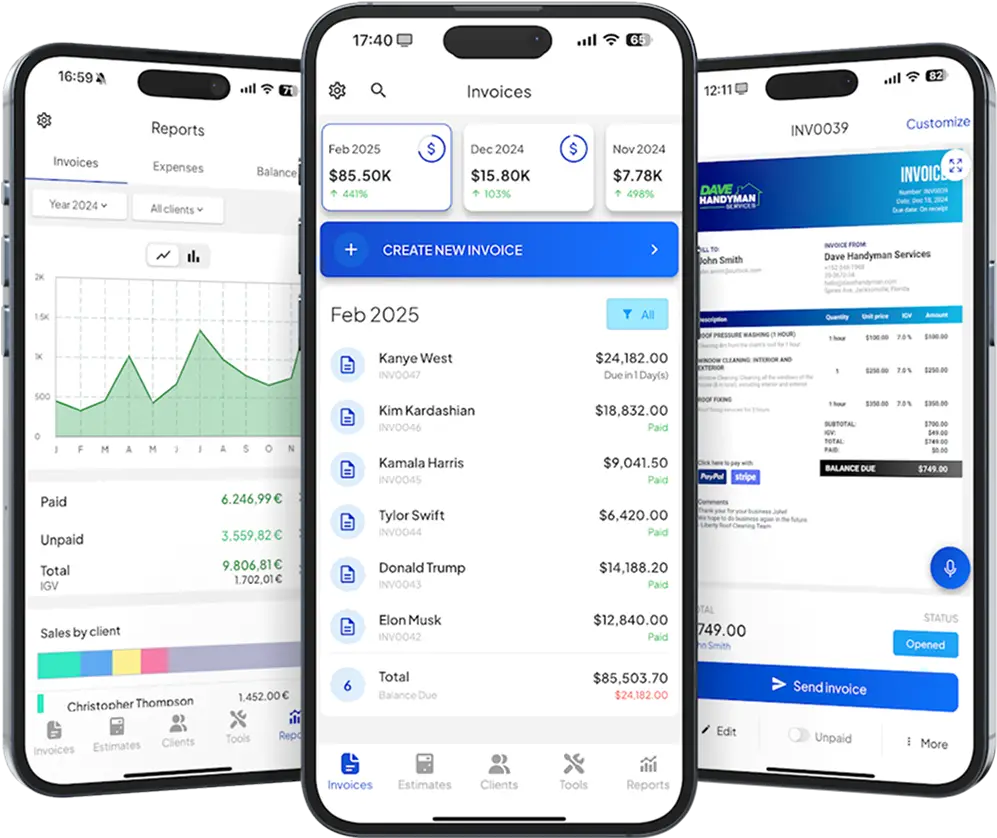
Here are some key features to look for in a landscaping business management app like Invoice Fly:
- Scheduling — assign crews to jobs, set recurring appointments, and manage calendar conflicts
- Estimates and quotes — create and send professional estimates directly from your phone or tablet
- Invoicing — bill clients after jobs are complete and track payment status
- Client management — keep contact details, job history, and notes organized by client
- Job tracking — monitor progress across multiple active jobs at once
Landscaping software that combines these functions in one platform is far more efficient than juggling separate tools for each task. For a deeper look at how to price the jobs your apps help you win, see our guide on how to price landscaping jobs.
Best Landscaping Design Apps
These are the most widely used landscaping design apps in 2026, based on ease of use, presentation quality, and real-world usefulness for contractors.
iScape (Best Overall)
iScape is one of the most popular landscape design apps available for iOS. Its standout feature is augmented reality. You can point your phone camera at a client’s yard and overlay virtual plants, trees, and hardscape elements in real time. This makes it a powerful tool for client presentations, letting them visualize the finished result before any work begins.
iScape includes a plant database, hardscaping options, and basic project planning tools. It’s best suited for residential design work and client-facing proposals rather than detailed technical drawings.
Neighborbrite (Best AI Landscaping Planner)
Neighborbrite is an AI-powered landscape planning app that generates personalized design ideas based on your specific outdoor space. You upload photos of the yard and the app produces plant combinations, layout suggestions, and visual concepts tailored to your climate zone and preferences.
For contractors looking to offer design consultations quickly and affordably, AI landscaping apps like Neighborbrite can significantly cut the time it takes to put together initial concepts for new clients.
SketchUp (Best for 3D Designs)
SketchUp is a professional 3D modeling tool used across architecture, construction, and landscape design. It has a steeper learning curve than consumer-facing apps but offers far more precision and customization for complex, large-scale projects.
If you’re working with developers, commercial clients, or projects that require detailed, build-ready plans, SketchUp is worth the investment in time to learn. A free version is available with limited features; the full professional version requires a subscription.
PRO Landscape (Best for Client Presentations)
PRO Landscape is a tablet-based app built specifically for professional landscapers. It allows contractors to create scaled drawings, select plants from a database, apply hardscaping elements, and generate instant client proposals and bids — all from a single platform.
It’s one of the more comprehensive landscaping design apps for contractors who need both design capability and proposal generation in one tool.
Home Outside (Best for Simple Residential Layouts)
Home Outside is a user-friendly landscape planning app available on iOS and Android. It’s designed for sketching property layouts and garden designs with a drag-and-drop interface that doesn’t require design experience to use. For residential landscapers working on smaller projects, it’s a practical and accessible starting point.
Tip: Many contractors, especially for small landscaping businesses and design-build contractors, don’t rely on just one app. A common setup is using iScape for client presentations and SketchUp for technical layouts. That combination helps you win jobs faster while still producing professional build-ready plans.

AI Landscaping Apps: What They Can Do
AI landscaping apps are becoming more capable and more accessible. Beyond Neighborbrite, a growing number of tools use AI to generate design ideas from photos, suggest plant combinations based on soil and climate data, and estimate material quantities automatically.
For contractors, the most practical use of AI in landscaping apps right now is speed. Generating a rough concept for a new client meeting used to take hours of manual design work. AI tools can produce usable starting points in minutes, which you can then refine and present professionally.
Many of these apps also factor in water-efficient planting strategies by recommending region-appropriate plants and drought-tolerant layouts. This aligns with guidance from the U.S. Environmental Protection Agency (EPA), which encourages climate-appropriate landscaping to reduce outdoor water use and improve sustainability.

What to Look For in a Landscaping App
With so many options available, it helps to know what actually matters before you commit to a tool. Here’s what to evaluate:
- Platform compatibility — does it work on the devices your crew uses? iOS-only apps won’t help an Android user in the field.
- Ease of use — a powerful app your team won’t use is worthless. Prioritize tools with short learning curves for field staff.
- Client presentation quality — for design apps, how polished do the outputs look? A strong visual makes a real difference when closing jobs.
- Integration with billing — the best setups connect design and planning tools to your invoicing workflow so nothing falls through the cracks.
- Free vs. paid tiers — most landscaping apps offer a free version with limited features. Test the free version thoroughly before paying for a subscription.
Managing Your Landscaping Business With InvoiceFly
Once the design work is done and the job is booked, you need a reliable system for estimates, invoicing, and getting paid. InvoiceFly’s estimates app lets you build and send professional estimates from your phone — with line items for labor, materials, and any add-on services — and convert accepted estimates directly into invoices when the job is complete.
For quick quotes in the field, the free estimate generator lets you turn around a professional-looking estimate in minutes. And when it’s time to bill, the invoice maker keeps your paperwork consistent and on-brand across every client.
For the full picture on building a profitable landscaping operation — from licensing and insurance to tools and SEO — revisit our guide on how to start a landscaping business.

Conclusion
The right landscaping apps can save you hours each week, help you win more clients, and keep your jobs running smoothly from first concept to final invoice. Start with a design app that fits your workflow — iScape for AR visualization, Neighborbrite for AI-powered planning, or Pro Landscape for full professional proposals — then pair it with business management software that handles estimates, scheduling, and billing.As your business grows, the combination of great design tools and efficient operations software becomes one of your biggest competitive advantages. Check out our guides on landscaping tools, landscaping services, and landscaping SEO to keep building from here.