Overdraft Explained: How It Works, Fees, Protection, and Management
Table of Contents
- What Is an Overdraft?
- How Does an Overdraft Work?
- Important Considerations for Managing Overdrafts
- Exploring Overdraft Protection Options
- What Is an Overdraft Fee?
- How Does Overdraft Protection Work?
- What Are the Pros and Cons of Overdrafts?
- Overdrafts, Credit Scores, and Taxes
- Ready to Take Control of Overdrafts and Cash Flow?
- FAQs
- Author
An overdraft occurs when you spend more money than the available balance in your bank account, resulting in a negative balance. Banks may choose to approve the transaction or decline it, and that decision determines whether fees, interest, or penalties apply. For bank customers, small business owners, and finance managers, overdrafts sit at the intersection of banking operations and cash flow management.
While an occasional overdraft can act as a short-term safety net, repeated overdrafts often signal deeper issues such as delayed receivables, uneven expenses, or poor visibility into account balances. Understanding how they work, and how to manage them, is essential for maintaining financial control.
What Is an Overdraft?

An overdraft happens when a transaction exceeds the funds available in your checking account. This can occur through debit card purchases, checks, ACH payments, ATM withdrawals, or online card payments. When this happens, the bank must decide whether to honor the transaction or return it unpaid.
If the bank pays the transaction, your account balance drops below zero and an overdraft fee is usually charged. If the bank declines the transaction, it may result in a non-sufficient funds (NSF) fee from the merchant and possible service interruptions.
Personal vs. Business Overdrafts
Personal overdrafts are typically smaller and fee-based, while for a business they often function more like short-term credit facilities. A business account overdraft may allow transactions to clear up to a pre-approved limit, sometimes requiring a personal guarantee from the business owner.
Business overdrafts are commonly unsecured, meaning they are not backed by collateral. This makes cash flow management especially important, as repeated use can become expensive over time.
Understanding overdrafts fits into broader business finance fundamentals, particularly when balancing liquidity needs with long-term financial planning.
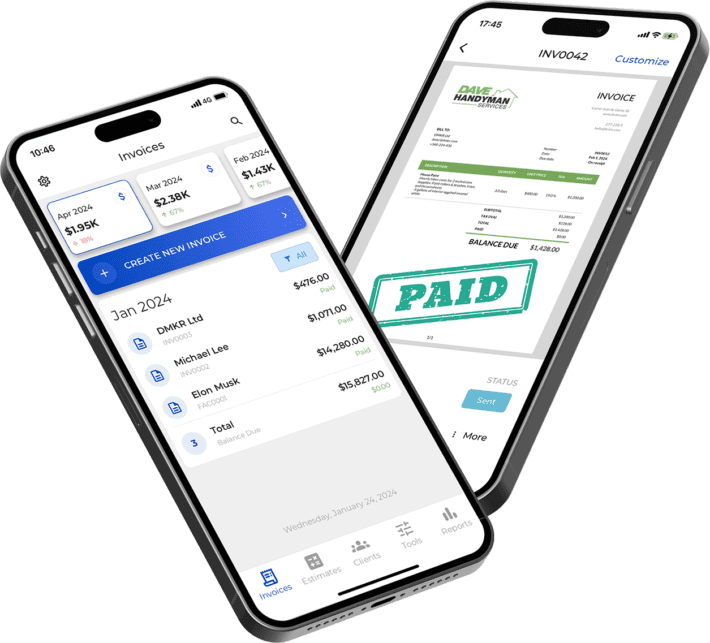
Before we go further: Improving how you bill customers and collect payments can significantly reduce the risk of negative balances. Using invoicing software allows you to issue invoices faster, track unpaid amounts, and forecast cash inflows more accurately.
How Does an Overdraft Work?
Although bank policies vary, overdrafts generally follow a consistent sequence that starts with timing and ends with repayment.
- Insufficient funds
An overdraft begins when a transaction posts for more than the available balance in your account. This can happen with debit card purchases, checks, ACH transfers, ATM withdrawals, or online card payments. In many cases, the issue isn’t always spending more than you earn overall and can be as a result of spending money before incoming funds have fully cleared.
From an accounting perspective, this transaction still needs to be recorded properly. Even though the balance goes negative, it remains a valid business transaction that affects your books and bank reconciliation.
- Bank decision
Once the transaction hits your account, the bank decides whether to pay it or decline it. This decision depends on your account settings, overdraft protection enrollment, and internal bank rules.
- If the bank declines the transaction, the payment fails and may result in an NSF fee from the merchant.
- If the bank covers the transaction, your account balance drops below zero and becomes overdrawn.
Many banks refer to this coverage as courtesy pay or overdraft privilege, especially for debit card and ATM transactions.
- Fees or interest

If the bank covers the transaction, it typically charges an overdraft fee. For personal accounts, this is usually a flat fee per transaction. For business accounts, overdrafts may function more like short-term credit.
In that case, the negative balance may be treated as a temporary liability and accrue interest until it is repaid. From a reporting standpoint, the overdrawn amount may be reflected under liabilities until funds are restored.
Frequent overdrafts can also signal underlying timing issues in how money flows through your business.
- Repayment
Repayment usually happens automatically. When your next deposit arrives (whether from customer payments, transfers, or other income) the bank applies those funds to cover the negative balance first, followed by any overdraft fees or interest.
This is why shortening the time between invoicing and payment matters. Accepting online payments allows customers to pay immediately by card or ACH, helping deposits arrive faster and reducing the window where an overdraft can occur.
If deposits are delayed or insufficient, the account may remain overdrawn longer, increasing costs and the risk of additional fees.
Posting Order and Timing
One overlooked factor is transaction posting order. Banks may post transactions in a specific sequence, such as checks before debit card purchases, which can affect whether an overdraft occurs. Delays in ACH settlement or card processing can also cause balances to appear higher than they truly are.
From an accounting standpoint, overdrafts affect how business transactions are recorded and may temporarily appear as short-term obligations under liabilities.
Important Considerations for Managing Overdrafts
Effective overdraft management depends on visibility, timing, and controls. Most of the time they are not caused by large financial mistakes, but by small timing gaps that go unnoticed until fees are charged.
Monitor balances daily
- Monitoring your account balance daily is the first line of defense.
- Bank alerts for low balances, large withdrawals, or posted transactions provide early warning before an overdraft occurs.
- For businesses with frequent transactions, daily checks are essential to account for deposits that are pending rather than fully settled.
Daily monitoring is especially important when your business relies on electronic payments, where authorization and settlement can occur on different days.
Understand payment settlement timelines
- Not all payments affect your balance immediately.
- Debit card purchases may post quickly, while ACH transfers and checks can take one or more business days to clear.
- This delay often creates a false sense of available funds.
Understanding how ACH payment processing and online card payments settle helps you distinguish between your ledger balance and your available balance. Many overdrafts occur when businesses rely on pending deposits that have not yet cleared.
Reconcile accounts regularly
- Regular reconciliation ensures that your records match your bank statement.
- This process helps identify missing transactions, duplicate charges, or timing differences that could lead to overdrafts.
Reconciling activity in your general ledger also ensures that overdraft fees, transfers, and interest are categorized correctly. Over time, this creates clearer reporting and makes overdraft patterns easier to spot.

Review recurring cash flow problems
- If overdrafts happen repeatedly, the issue is usually structural rather than accidental.
- Late customer payments, uneven billing cycles, or high fixed expenses often point to underlying cash flow problems.
Identifying these patterns allows you to adjust invoicing schedules, tighten payment terms, or change how expenses are timed throughout the month.
Evaluate overdrafts in financial context
- For businesses, overdrafts should never be reviewed in isolation.
- A negative bank balance directly affects liquidity and working capital and should be evaluated alongside your balance sheet.
When reviewed in context, overdrafts often highlight mismatches between short-term obligations and available assets. Pairing this review with broader assets and liabilities analysis helps determine whether an overdraft is a temporary timing issue or a sign that cash reserves are insufficient.
By combining daily visibility with proper reconciliation and financial review, overdrafts become easier to predict and even easier to prevent.
Exploring Overdraft Protection Options
Overdraft protection is designed to reduce declined transactions and repeated overdraft fees. Common options include:
- Automatic transfers from a linked savings account
- A linked credit card
- A business overdraft line of credit
Business Overdraft Facilities
A business account with overdraft often works like a revolving credit line. Interest applies only to the amount used, making it more flexible than a fixed loan. However, interest rates and limits vary widely.
Using financial projections can help forecast cash gaps and determine whether overdraft protection aligns with expected inflows.
What Is an Overdraft Fee?
This fee is charged when a bank covers a transaction that exceeds your available balance. In the U.S., fees commonly range from $30 to $35 per transaction, though some banks cap daily fees or offer fee-free programs.
When you analyze overdraft fees, consider:
- Per-transaction charges
- Daily fee limits
- Additional interest for business overdrafts
Regulatory guidance on overdraft disclosures is outlined in FDIC overdraft rules, while state-level overdraft oversight may also apply.
How Does Overdraft Protection Work?
With overdraft protection, the bank automatically transfers funds from a linked source when your checking balance is insufficient. Instead of a full overdraft fee, you may pay a small transfer fee or interest.
Accurate categorization of transfers and fees in your chart of accounts ensures overdraft activity is properly reflected in your records.
What Are the Pros and Cons of Overdrafts?
Pros
- Prevents declined payments
- Maintains vendor and customer relationships
- Provides short-term liquidity
Cons
- Fees and interest can accumulate quickly
- Can obscure recurring cash flow issues
- May encourage reactive financial management
Occasional overdrafts usually do not affect your credit score. However, unpaid overdrafts that are sent to collections may damage your credit under consumer overdraft rules.

Overdrafts, Credit Scores, and Taxes
Many business owners ask whether overdrafts affect credit or taxes.
Credit impact
Most banks do not report overdrafts to credit bureaus unless the account is closed with a negative balance. At that point, the debt may be sent to collections.
Tax treatment
Overdraft fees on business accounts are often treated as ordinary business expenses, though deductibility depends on proper classification and documentation.
Ready to Take Control of Overdrafts and Cash Flow?
Overdrafts become manageable when you combine timely invoicing, faster payments, and real-time financial insight.Using business reports gives you visibility into income, expenses, and balances so you can spot potential overdrafts early. If you’re standardizing billing, free invoice templates help improve consistency and payment timing.
Author