Electrical Estimate Services: What They Are and How They Work
Table of Contents
- What Are Electrical Estimate Services?
- Why Contractors Use Electrical Estimating Services
- How Electrical Estimate Services Work
- Types of Electrical Estimating Services
- Tools and Templates Used in Electrical Estimating
- When to Outsource Electrical Estimating
- Pricing, Fees, and Common Service Models
- How to Choose an Electrical Estimating Service
- Conclusion
- FAQs
Electrical estimate services help electrical contractors prepare accurate bids by calculating labor, materials, overhead, and profit for residential and commercial projects. Whether you handle estimating in-house or outsource it to a specialist, the goal is the same either way: create a bid that’s competitive, accurate, and still profitable. By using digital takeoffs, estimating software, and proven pricing methods, electrical estimating services reduce errors, save valuable time, and make the bidding process more consistent.
In this guide, you’ll learn how electrical estimate services work, when outsourcing makes sense, and how better estimating can help your business become more profitable.

What Are Electrical Estimate Services?
Electrical estimate services are professional or software-based tools that calculate the full cost of an electrical job before work begins. This includes labor hours, materials like wire and fixtures, overhead costs, and profit margin, all rolled into one clear estimate a contractor can hand to a client.
Some electrical contractors handle estimating themselves using Excel or a basic estimate form. Others use dedicated estimating software, and larger companies sometimes hire a separate electrical estimator or outsource the work entirely to a specialized estimating firm. Platforms built for the trades, such as Housecall Pro, have made it easier for contractors to move from paper forms and spreadsheets to faster, more accurate digital estimating.
If you’re just getting your business off the ground, it helps to first understand how to start an electrical business the right way, since your estimating process ties directly into how you price jobs and manage cash flow from day one.
Why Contractors Use Electrical Estimating Services
Estimating sounds simple in theory, but it gets complicated fast once real projects are involved.
Saving Time on Complex Bids
A commercial rewire or new construction job can involve hundreds of fixtures, outlets, and feet of electrical wiring. Manually counting all of that from blueprints takes hours. Electrical estimating services speed this up significantly using digital takeoff tools that count items directly from digital plans.
Improving Pricing Accuracy and Margins
Underestimating a job is one of the fastest ways to lose money on a project. A structured estimating process, whether in-house or outsourced, helps make sure labor, materials, and overhead are all accounted for before a price goes out the door. That accuracy protects your margins on every job.
Handling Residential vs. Commercial Projects
A residential electrician quote for a panel upgrade looks very different from a commercial bid on a new office building. Commercial electrical estimating services often deal with far larger scopes, tighter margins, and more complex code requirements, which is part of why some contractors bring in outside help specifically for bigger jobs.
How Electrical Estimate Services Work
Most electrical estimating services, whether software or a hired estimator, follow the same basic four-step process:
| Step | What Happens |
|---|---|
| 1. Collect project plans | Review blueprints and scope of work |
| 2. Perform a takeoff | Count fixtures, outlets, panels, and wiring |
| 3. Calculate costs | Add labor, materials, overhead, and profit |
| 4. Prepare the estimate | Deliver a professional bid to the customer |
It starts with gathering blueprints, drawings, or a written scope of work. Without a clear picture of the job, an accurate estimate isn’t possible. From there, the estimator performs a takeoff: counting every light fixture, outlet, switch, panel, and foot of wire needed for the job. This is often done digitally now, using software that lets an estimator click through plans and automatically tally quantities instead of counting by hand.
Once quantities are known, the estimator applies current material prices, labor hours based on the scope, overhead costs like insurance and vehicle expenses, and a profit margin. The last step turns all of that math into a clean, professional electrical service estimate the client can actually read and approve, not just a spreadsheet of numbers.
Types of Electrical Estimating Services

The right type of estimating service depends on the size of your projects, your workload, and whether you have someone on your team dedicated to preparing bids.
Residential Electrical Estimating Services
These focus on smaller-scale jobs like panel upgrades, rewires, and new fixture installs for homes. Pricing tends to be more standardized since residential jobs often repeat similar scopes.
Commercial Electrical Estimating Services
Commercial estimating usually involves larger scopes, more complex code requirements, and higher stakes if the bid is off. Many contractors use dedicated software for these jobs rather than estimating by hand. Many contractors eventually combine estimating with electrical contractor software that also handles scheduling, invoicing, and customer management, so the estimate flows directly into the rest of the job.
Outsource Electrical Estimating Services vs. In-House Estimating
Some contractors keep estimating in-house, using an estimate template or spreadsheet themselves. Others choose to outsource electrical estimating services to a third-party firm, especially for larger or more complex bids where accuracy really matters and time is tight.
Tools and Templates Used in Electrical Estimating
Electrical contractors use a mix of tools depending on the size and complexity of their work:
- Spreadsheets and estimate forms for smaller residential jobs
- Electrical bid templates and electrician quote templates to keep pricing consistent across jobs
- Cost estimate templates built specifically for electrical work
- Dedicated estimating software for larger commercial projects with complex takeoffs
- Reference guides like the NECA Manual of Labor Units, which many electricians use to standardize labor time estimates across different types of electrical work
Tip! If you’d rather skip building templates from scratch, a free electrical estimate template can save time while keeping your pricing structure consistent from job to job.

When to Outsource Electrical Estimating
Busy Seasons and Large Commercial Bids
During busy stretches, especially with several large bids due at once, outsourcing electrical estimating services can free up your time to focus on active jobs instead of spending nights buried in takeoffs.
Small Teams Without a Dedicated Electrical Estimator
Smaller electrical contractors often don’t have the staff to dedicate someone full-time to estimating. Outsourcing gives access to experienced estimators without adding a full-time hire to payroll.
Pros and Cons of Outsourcing Electrical Estimate Services
Outsourcing isn’t the right choice for every contractor. Consider the following advantages and disadvantages before deciding whether it’s the best fit for your business.
| Pros | Cons |
|---|---|
| Frees up time to focus on field work and customer service | Adds an extra cost to each estimate or requires a subscription |
| Gives you access to experienced electrical estimators | You have less direct control over the estimating process |
| Improves accuracy on complex residential and commercial bids | Estimators rely on complete plans and a clearly defined project scope |
| Makes it easier to handle busy seasons without hiring full-time staff | Turnaround times may vary depending on the provider’s workload |
| Helps small contractors compete for larger projects | Some providers may not be familiar with local labor rates or code requirements |
Pricing, Fees, and Common Service Models
Outsourced electrical estimating services typically charge either a flat fee per estimate, a percentage of the project value, or a subscription for ongoing access to estimating support. The right model depends on how often you need estimates and the size of your typical projects. Fees generally increase for larger commercial projects that require detailed takeoffs and more complex labor calculations. Smaller residential contractors doing occasional bids often do better with pay-per-estimate pricing, while larger commercial contractors bidding frequently may benefit more from a subscription or retainer arrangement.
If you’re handling residential estimates in-house rather than outsourcing, it’s worth reviewing how to price residential electrical work so your labor rates and markups stay consistent from job to job, whether or not you ever bring in outside estimating help.
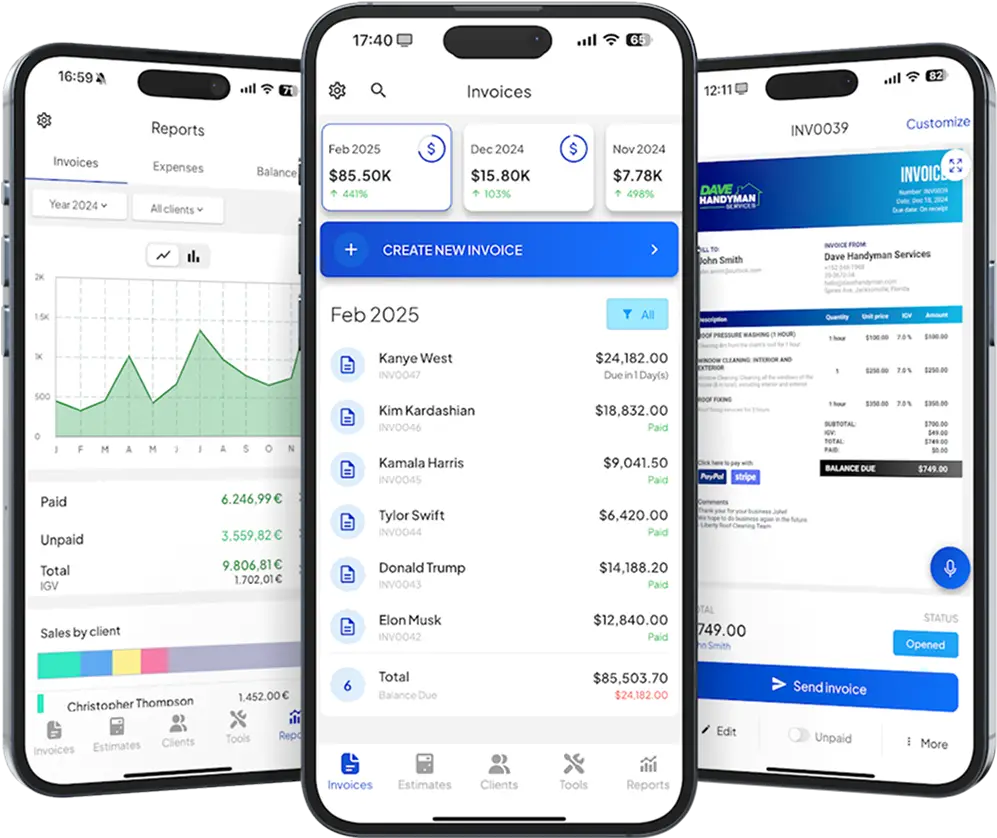
Keeping the admin side of your business efficient matters just as much as the estimate itself. According to InvoiceFly’s Salary & Time Gap Report 2026, home service professionals spend an average of 852.8 hours a year on non-billable admin tasks like quoting, invoicing, and chasing payments. Pairing a solid estimating process with an invoice maker helps turn a won bid into a paid invoice faster while reducing paperwork.
How to Choose an Electrical Estimating Service
A few things worth checking before committing to a service or software:
- Does it handle both residential and commercial scopes, or specialize in one?
- Can it integrate with your existing invoicing or project management tools?
- Does the pricing model fit how often you actually need estimates?
- Do they have experience with your local code requirements and material costs?

Conclusion
Electrical estimate services take the guesswork out of pricing a job, whether you’re quoting a simple panel upgrade or bidding on a large commercial build. Getting the estimate right protects your margins, builds trust with clients, and saves you from the headache of a job that costs more than you quoted. Whether you handle it in-house with a solid template or outsource electrical estimating services during busy stretches, a consistent process pays off. If you’re still refining the fundamentals of your business, how to start an electrical business is a good next place to look to make sure your pricing, licensing, and operations are all working together.