Invoice Fly vs Joist: Which App Is Better for Contractors?
Table of Contents
Contractor paperwork rarely waits until you’re back at a desk. It comes up between jobs, from a truck, or on-site with a customer who wants a number right away. Invoice Fly and Joist both let you quote and bill from the field, but they organize the job differently: Invoice Fly ties invoicing to time, receipts, and expenses, while Joist adds construction-focused documents like contracts, work orders, and change orders on its higher plans.
Which one fits depends on the kind of jobs you take and the paperwork they create. In this Invoice Fly vs Joist comparison, we’ll compare their estimates, deposits, payments, project tools, pricing, and mobile experience so you can see which one matches how you work.
Invoice Fly vs Joist at a Glance
| Invoice Fly | Joist | |
|---|---|---|
| Best for | Freelancers and contractors wanting affordable invoicing, time, and expense tools | Solo and small contractors needing trade-focused documents |
| Estimates and invoices | Unlimited with paid access | Five documents monthly on Basics; unlimited on Pro and above |
| Estimate conversion | Approved estimates become invoices | Estimates become invoices |
| Signatures and deposits | Available with estimates | Digital signatures, deposits, and milestone payments |
| Change orders | No dedicated tool | Included with Elite and Run |
| Contracts and work orders | Free work order generator | Custom contracts and work orders on Pro and above |
| Time and expenses | Timer, receipt capture, expenses, and reports | Expense tracking on Pro and above; no comparable timer highlighted |
| Jobs and scheduling | Project-based records without full scheduling | Job organization and visit scheduling on Run |
| QuickBooks connection | Not promoted as a core integration | Sync available on eligible paid plans |
| Starting price | $8.99 weekly or $98.99 yearly | Basics costs $10 monthly |
Invoice Fly gives contractors unlimited documents and broader personal admin tools at a low yearly cost. Joist becomes more distinctive as users move into its higher tiers for formal job documents and scheduling.
What Is Invoice Fly?
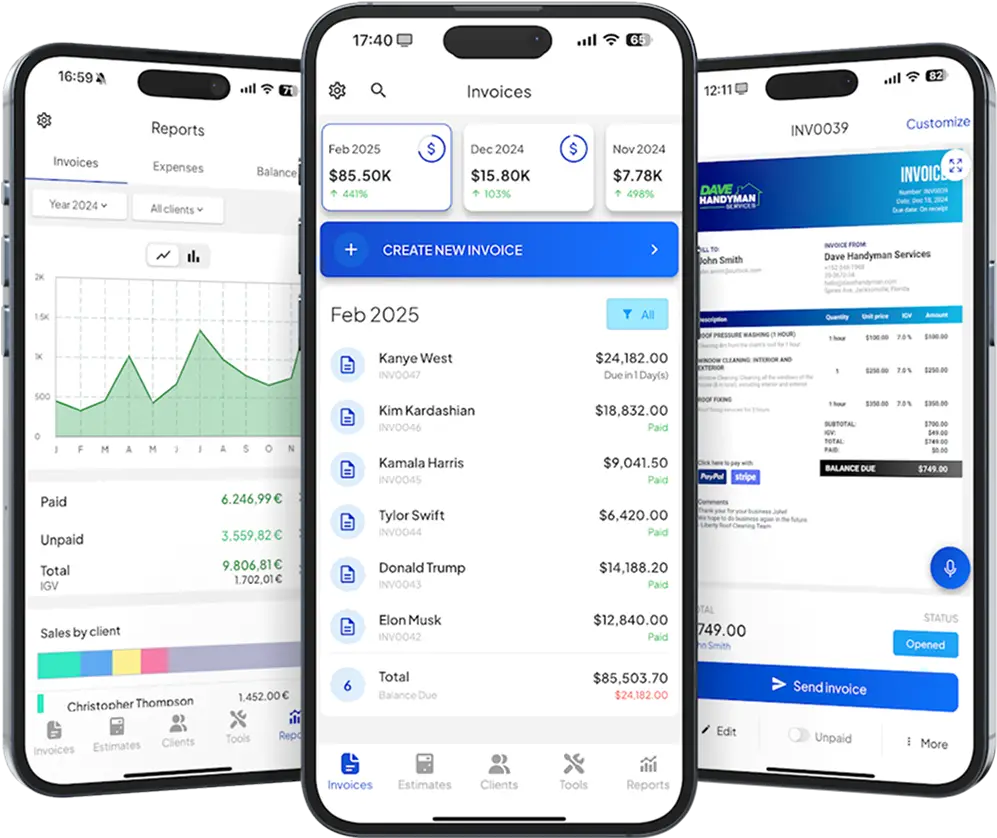
Invoice Fly is a mobile invoicing and recordkeeping app for contractors, tradespeople, freelancers, and small service businesses. It connects estimates, customer approval, invoices, online payment options, recurring billing, reminders, and document statuses. The app also records working time, scans receipts, sorts expenses, and provides reports. These tools help build the amount on the final bill.
Invoice Fly charges $8.99 weekly or $98.99 yearly. Both choices include the main feature set and unlimited estimates and invoices. Seven free browser generators are also available for occasional invoices, estimates, quotes, bills, receipts, proformas, and work orders.
What Is Joist?
Joist is estimating and invoicing software created for solo contractors and small construction or home-service businesses. It supports estimates, invoices, online payments, deposits, milestone billing, digital signatures, customer profiles, and estimate conversion.
Higher plans introduce unlimited documents, photos, contracts, work orders, expenses, QuickBooks sync, change orders, and reports. Run adds jobs and visit scheduling without becoming an enterprise construction platform.
The Capterra product overview provides a third-party summary of Joist features and its contractor-focused use cases.

Invoice Fly vs Joist: Key Differences
Invoicing and Estimates
Describing the work, adding labor and materials, applying taxes or discounts, setting terms, sending it off electronically: both apps cover that ground the same way.
Where they split is the fine print on how much you can send. Invoice Fly gives you unlimited estimates and invoices no matter which billing option you pick. Joist’s Basics plan lumps estimates and invoices into one shared pool of five documents a month, so a single estimate followed by its invoice already uses two of those five. Pro, Elite, and Run drop that limit entirely.
Joist’s upper tiers make up for that with construction-specific document tools Invoice Fly doesn’t try to match. Invoice Fly, meanwhile, wins on straightforward math: a stronger allowance at a lower annual price.
Vague charges are how customers end up with questions. This guide to using an invoice line item breaks down how to separate labor, materials, quantities, rates, and everything else that goes into the total.
Estimate-to-Invoice Workflow
Once a customer approves an estimate, Invoice Fly turns it into an invoice without making you retype the customer or job details, and a signature or deposit confirms the work is actually a go.
Joist covers the same basic path, but depending on the plan, can dress it up with project templates, photos, contracts, milestone payments, and job records, all of which can make a construction proposal look more polished.
Just don’t let that conversion happen on autopilot. Before the final invoice goes out, double-check the completed work, materials actually used, any approved changes, tax, deposits already collected, and what’s actually still owed.
Invoice Templates and Customization
Invoice Fly pulls your saved business details and branding into customizable templates, so every estimate and invoice looks like it came from the same business.
Joist starts plainer: Basics gives you functional documents, Pro adds logos, line-item photos, document photos, project templates, and work orders, and Elite goes further still, displaying licenses, insurance details, and social links right on the document.
That extra polish can build trust on a bigger job, but a good-looking invoice still isn’t a substitute for a complete one. Invoice Fly’s checklist of professional invoice elements covers what belongs on every clear bill, template or no template.
Deposits, Contracts, and E-Signatures
Before you buy materials or block off your schedule, it helps to know the job is really happening, and both apps build that confirmation in. Invoice Fly’s estimates can include a signature and a deposit request right on the document.
Joist offers digital signatures, deposits, and milestone payments starting on Basics, and Pro goes a step further with custom client contracts that keep agreement terms and payment stages attached to the estimate itself.
Just remember a template doesn’t automatically clear every state’s rules. Licensing disclosures, cancellation rights, warranties, and deposit limits are often regulated. The Federal Trade Commission’s Cooling-Off Rule notes that certain in-home sales carry a three-business-day right to cancel, and local rules can add more on top of that.

Change Orders and Job Documents
Change orders are where Joist really pulls ahead. Elite and Run users can put added or removed work in writing, adjust the price, and get approval before moving forward.
That paper trail earns its keep the moment a homeowner swaps the tile or asks for extra electrical work mid-project. A signed change order is much easier to point back to than a conversation nobody wrote down.
Pro and higher plans can also generate work orders, and Invoice Fly has a free work order generator too, but change-order management specifically isn’t something its paid app is built around. Joist Elite makes more sense for longer projects where scope keeps shifting; Invoice Fly is plenty for shorter jobs that stick close to the original estimate.
Online Payments and Payment Reminders
Invoice Fly takes digital payments through providers like Stripe and PayPal, and backs that up with reminders, recurring invoices, and status notifications so nothing unpaid slips by.
Joist covers more payment types out of the gate: card, ACH, mobile, Tap to Pay, plus deposits, milestone payments, and financing for customers who qualify. What that costs and how financing works can vary, so it’s worth checking the current terms directly.
Where it’s allowed, Joist may let eligible users pass some processing charges on to the customer, though surcharge rules depend on location and payment method and are worth confirming before adding a fee. And if you’re charging invoice late fees on either app, disclose the amount and timing before the bill goes overdue, and apply the policy the same way every time.
Expense Tracking and Business Reports
Invoice Fly’s paid plans bundle in time tracking, receipt scanning, manual expenses, categories, and reports, which makes it easier to tie actual hours and job costs back to what you’re billing a customer.
Joist adds expense tracking once you’re on Pro, and Elite layers on business and sales reporting, which gets more useful once it’s working alongside change orders, customer records, and QuickBooks sync.
Keep in mind, the IRS notes in Publication 583 that your records need to actually support the income and expenses you report at tax time, so double-check what a scanned receipt captured and hold onto whatever source documents your situation calls for.
Jobs and Scheduling
Joist Run groups clients and documents around a job, schedules visits, and flags calendar conflicts before they become a problem. That’s real help for an owner-operator juggling consultations, installations, and return trips: more organization than a plain document list, but still nowhere near a full dispatch system.
Invoice Fly ties financial activity and time to a project, but it stops short of a real visit scheduler, and plenty of solo contractors are fine sticking with whatever calendar already works for them.
Customer and Project Management
Invoice Fly keeps client records connected to estimates, invoices, time, expenses, receipts, and payments, which works well for a business where the customer relationship and the billing project are basically the same thing. Joist stores customer profiles from the start and adds client activity tracking on Pro, while Run groups documents and visits by job, which helps once you’re managing several active sites at once.
Whichever one you use, keep a dependable invoice number sequence going, so any document is easy to trace back later, whether it’s a customer question, a bookkeeping review, or something that ends up in dispute.
QuickBooks Integration and Business Tools
Eligible Joist plans sync with QuickBooks, cutting down on double entry between contractor documents and the books. Joist also bundles in products around financing, lending, supplier rewards, reviews, and an optional AI receptionist, though availability and cost vary by offering.
Invoice Fly doesn’t lead with a QuickBooks connection the same way. It keeps estimates, invoices, payment records, expenses, receipts, time, and reports inside one smaller, self-contained toolkit instead.
Remember, an integration still needs a second look now and then. Run customer matches, taxes, payments, and any exceptions past whoever handles your books.
Ease of Use and Mobile Access
Neither app needs a desk to work. Invoice Fly keeps its path short: estimate, approval, invoice, payment, with time and expenses sitting right alongside. Joist speaks the contractor’s language more directly, with documents that’ll feel familiar to remodelers and tradespeople. The catch is figuring out which plan actually gets you what you need: unlimited documents mean Pro, change orders mean Elite, and job-based visit scheduling means Run.
Reviews are a good way to see how that plan structure actually feels day to day. Check recent feedback from businesses like yours on G2, Capterra, and Trustpilot, rather than leaning on one especially glowing or especially bad review.

Invoice Fly vs Joist Pricing
Invoice Fly offers one complete app subscription, while Joist divides its features across four paid tiers.
| Invoice Fly | Joist | |
|---|---|---|
| Starting price | $8.99 per week | Basics: $10 per month |
| Annual option | $98.99 per year | Basics: $8.34 per month with annual billing |
| Higher-priced plans | None | Pro: $17, Elite: $32, and Run: $70 per month |
| Annual rates for higher plans | Not applicable | Pro: $14.17, Elite: $26.67, and Run: $58.33 per month |
| Document allowance | Unlimited estimates and invoices | Five documents per month with Basics; unlimited with Pro, Elite, and Run |
| Main features beyond invoicing | Expenses, receipts, time tracking, payments, and reports | Features expand by tier, from work orders and expenses to change orders, reports, reviews, and scheduling |
Invoice Fly’s $98.99 annual plan is slightly less expensive than a year of Joist Basics, which costs $100.08 with annual billing, and Invoice Fly does not impose a five-document monthly limit. Joist’s higher tiers add more contractor-focused tools, but the cost rises as features are added.
Joist no longer offers a permanent free plan, although it provides a 14-day trial without requiring a credit card. Its Run price reflects a 30% introductory discount from the regular $100 monthly rate. The Capterra pricing page provides another overview of Joist’s plans.
Invoice Fly vs Joist for Contractors and Tradespeople
Invoice Fly usually fits solo contractors who send more than five documents monthly, track billable hours, scan receipts, and want a low annual price. It is a practical Joist alternative when jobs have a straightforward scope and billing structure.
Joist usually fits remodelers and construction professionals who use contracts, work orders, milestone payments, photos, or formal change orders. Run also helps owner-operators who want visits connected to each job.

Review three recent projects before choosing. Count the estimates, invoices, scope changes, payment stages, visits, hours, and receipts. A useful app should reduce duplicate work across those real examples. It should also make an itemized bill easier for the customer to understand.
Invoice Fly vs Joist: Which Should You Choose?
Most jobs don’t go exactly as quoted, and that’s really the difference between these two apps. When scope changes mid-project, Joist gives you a contract, a work order, and a change order you can point back to later. When your jobs mostly stay close to the estimate, Invoice Fly gets the billing done for less, without extra plan tiers to manage. If you’re weighing Invoice Fly or Joist, let your last few jobs decide: pick Joist if change orders keep coming up, and stick with Invoice Fly if they rarely do.