Invoice Fly vs Tofu: Which Is Better for Your Business?
Table of Contents
Choosing between Invoice Fly and Tofu depends on where your business needs more control. Invoice Fly brings estimates, invoices, tracked hours, receipts, and expenses into one billing workflow. Tofu extends beyond invoicing to organize job schedules, recurring visits, worker assignments, and field activity.
The distinction becomes clearer as the workday gets busier. Invoice Fly helps turn completed work into accurate records and payments, while Tofu helps coordinate the people and appointments required to complete that work. This comparison examines their pricing, features, and everyday use so you can choose the better fit.
Invoice Fly vs Tofu at a Glance
| Invoice Fly | Tofu | |
|---|---|---|
| Best for | Freelancers and small service businesses that want simple, focused billing | Solo operators and field crews that also need scheduling and job records |
| Invoices and estimates | Unlimited on either paid billing option | Included on Solo, Team, and Business |
| Estimate conversion | Approved estimates become invoices | One-click conversion |
| Scheduling | No field-service calendar | Drag-and-drop schedule and job status tracking |
| Recurring work | Recurring invoices | Recurring visits with invoices drafted automatically |
| Job records | Client and project billing history | Client folders with visits, photos, notes, and invoices |
| Time and expenses | Timer, receipt scanning, expense tracking, and reports | No comparable timer or expense tools advertised |
| Team tools | Built mainly for individuals | Worker app, job assignments, and hidden pricing for crew |
| Offline access | Available through the native mobile app | Works offline |
| Starting price | $8.99/week or $98.99/year | Solo: $19/month or $10/month billed annually (promotional) |
In short, Invoice Fly is the better pick when quoting, billing, and tracking costs create the most admin. Tofu makes more sense when you also need to schedule visits, send out workers, and keep a record of what happened on site.
What Is Invoice Fly?
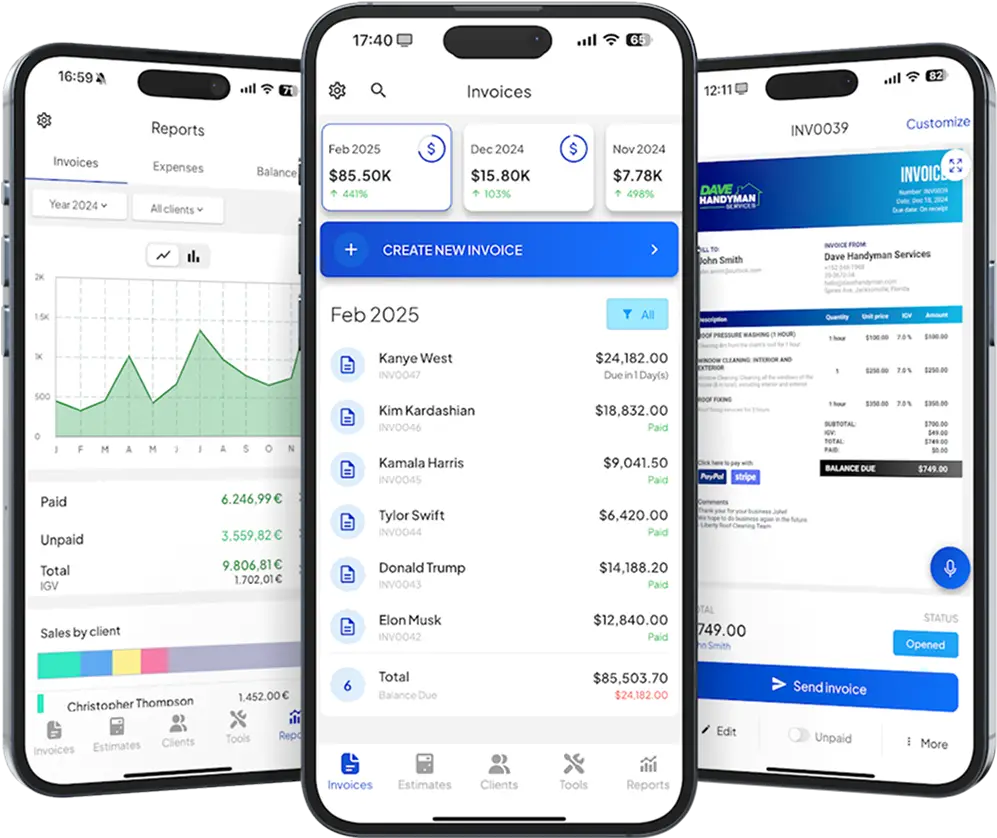
Invoice Fly puts estimates, invoices, payments, and business records in one mobile-friendly app. It’s built for freelancers, contractors, tradespeople, and service pros who handle their own paperwork.
You can ask clients to approve an estimate or pay a deposit, turn the approved estimate into an invoice, set up recurring bills, and send reminders. You’ll always see whether an invoice has been sent, viewed, paid, or is overdue. A built-in timer tracks labor, and receipt scanning keeps job costs organized.
The weekly plan costs $8.99, and the yearly plan costs $98.99. Both include unlimited estimates and invoices. If you only need the occasional document, Invoice Fly also offers free web tools for seven document types, no account required.
What Is Tofu?
Tofu is field-service software for the web, iOS, and Android. It’s aimed at cleaners, landscapers, pool services, HVAC techs, plumbers, and other trades.
It started as an invoice maker, but it now does much more. Tofu organizes each client into a folder with visits, photos, notes, and invoices. It schedules jobs on a shared calendar, stores your prices, creates estimates and invoices, and collects payments.
Team plans add a separate worker app so owners can assign visits and hide pricing from crew members. Tofu also works offline. For a closer look at Tofu features and user feedback, see the Capterra overview.

Invoice Fly vs Tofu: Key Differences
Invoicing and Estimates
Both apps make clean, professional estimates and invoices from your phone. You can add your business and client details, saved services, taxes, discounts, and notes.
The difference is what sits behind the invoice. Invoice Fly links each bill to your tracked hours, expenses, and receipts, so you can see exactly where the total came from. Tofu links each invoice to the job, the visit, and the client’s service history.
Whichever app you use, clear invoice line items should separate labor, materials, quantities, rates, and taxes.
Estimate-to-Invoice Workflow
In both apps, an approved estimate becomes an invoice without retyping a thing.
Invoice Fly can collect a signature or deposit first, and your hours and expenses stay ready to add when it’s time to bill. Tofu converts estimates in one click and ties the invoice to a job folder and the worker who did the visit.
Solo repair pros will likely find Invoice Fly faster. Crews visiting the same properties again and again get more from Tofu.
Scheduling and Recurring Service Jobs
This is where Tofu pulls ahead. Its calendar shows every job in one place, and you can set a regular client’s schedule and price once so the visits repeat on their own. At the end of the month, Tofu drafts the invoices for you.
Invoice Fly repeats invoices but doesn’t schedule visits. That works fine if you already use another calendar. It falls short when, for example, a cleaner visits every week but bills once a month and needs the app to track each visit.
Tip: Automating bills saves time, but review them when prices or services change. Invoice Fly’s guide to invoice automation walks you through it.
Job Management and Customer Records
Tofu keeps each client in a digital folder with visits, photos, notes, invoices, and full service history. It answers everyday questions like “What happened on that job?” and “Who went?”
Invoice Fly connects clients with estimates, invoices, payments, time, and expenses. It answers money questions like “What did I quote?” and “What did I spend?” Pick the app that answers the questions you ask most often.

Online and In-Person Payments
Invoice Fly lets you add payment links through providers like Stripe and PayPal, and each invoice shows its payment status.
Tofu adds a pay link to every invoice for card or ACH payments. It also lets you record cash, checks, Apple Pay, Google Pay, Cash App Pay, Zelle, and Klarna, depending on your setup. US users can choose to pass card fees on to clients. Surcharge rules vary by state and card network, so check what’s allowed and tell customers upfront.
Tip: Set a clear invoice due date on every bill. If you charge invoice late fees, agree on them in advance and apply them consistently.
Expense Tracking and Business Management
Invoice Fly has the stronger expense tools. You can photograph receipts, log and sort purchases, view charts, export reports, and track hours by client or project. Tofu focuses on clients, schedules, jobs, and payments, and its plans don’t advertise a receipt tracker, timer, or expense reports.
The IRS explains in Publication 583 that your records need to support the income and expenses on your tax return, so keep receipts and statements either way.
Team and Worker Management
Tofu offers three plans: Solo for one user, Team for up to five, and Business for up to ten. Crew members use a separate worker app to see their assigned visits, while owners can hide prices and business details and track progress in real time.
Invoice Fly doesn’t offer a comparable crew app, so it fits independent pros who handle their own admin.
Photos and Job Documentation
Tofu lets you and your crew add photos and notes to each job, and it logs a GPS location and timestamp when work starts, finishes, and when photos are taken. That proof is handy when a customer isn’t home to see the finished work.
Invoice Fly supports receipt images and billing documents but not visit-by-visit proof of work.
Tip! Keep job photos focused on the work, not people or personal items. The FTC’s guide to protecting personal information recommends collecting only what you need and limiting who can see it.
Offline Access and Mobile Use
Tofu works offline, which helps in rural areas, basements, and other weak-signal spots. Invoice Fly runs on mobile and in the browser, but it doesn’t clearly advertise offline mode. If you often work without reception, test either app in airplane mode during a trial.
Ease of Use
Invoice Fly has fewer moving parts. Add your business details, services, and clients, and you can start sending estimates right away. Tofu takes more setup, with prices, recurring visits, and worker roles to organize. That can feel like overkill for one person but saves a crew time.
For real user experiences, read recent reviews on G2, Capterra, and Trustpilot. Focus on businesses with a similar trade and team size.

Invoice Fly vs Tofu Pricing
Invoice Fly offers the same features with weekly or annual billing. Tofu uses separate plans based on team size, with lower promotional rates for annual subscriptions.
| Pricing detail | Invoice Fly | Tofu Solo | Tofu Team | Tofu Business |
|---|---|---|---|---|
| Monthly billing | Not offered | $19/month | $49/month | $99/month |
| Annual billing | $98.99/year | $10/month | $29/month | $99/month |
| Weekly billing | $8.99/week | Not offered | Not offered | Not offered |
| Users | No advertised user tier | 1 | Up to 5 | Up to 10 |
| Main features | Unlimited invoices and estimates, time tracking, expenses, payments, and reports | Invoicing, estimates, payments, scheduling, and job folders | Adds crew scheduling, assignments, and progress tracking | Adds support for larger teams and priority support |
Tofu’s displayed prices include promotional discounts, some of which apply only to the first one to three months or the first annual term. Each plan includes a seven-day trial with no upfront payment, so check the recurring price at checkout. Invoice Fly costs less for a solo user paying annually, while Tofu’s higher prices reflect its scheduling, offline job management, and crew coordination tools.
Invoice Fly vs Tofu for Contractors and Service Businesses
Invoice Fly is usually the better fit for freelancers, solo contractors, and anyone who bills by the hour or needs receipt and expense reports. It’s a practical Tofu alternative when your schedule already runs smoothly and paperwork is the real headache.
Tofu tends to suit cleaning, landscaping, pool, and lawn-care businesses with recurring routes and crews to assign. It also helps trades that often work where the signal drops.

Not sure which camp you’re in? Look at a normal week and pick the app that cuts the most repeat steps from it.
Invoice Fly vs Tofu: Which Should You Choose?
Choose Invoice Fly if your work is organized but your billing isn’t. It combines estimates, invoices, payments, reminders, time tracking, and expenses at a lower yearly price for solo users.
Choose Tofu if the jobs themselves need structure. Scheduling, recurring visits, crew assignments, job photos, and offline access go well beyond invoicing.
Still weighing Invoice Fly or Tofu? Think about which part of your day gets messy first. If you’re looking for an Invoice Fly alternative, you probably need visits and workers connected. If you’re after an alternative to Tofu, you likely want a lighter billing tool. In the Tofu vs Invoice Fly decision, the right choice is the one that fits how you work, not the one with the longest feature list.