How (and When) to Write an Invoice Email to Clients

Table of Contents
Sending an invoice email should be simple, but it is easy to overthink the wording. You want to be clear about what the client owes and when it is due without sounding stiff or overly demanding. A good invoice email keeps things brief, makes the payment details easy to find, and gives the client a clear next step.
In this guide, you’ll learn when to send invoice emails, what to include, and how to write four common types of invoice email.

When to Send an Invoice Email
Send your invoice according to the payment schedule you agreed with the client. For a one-off project, that may mean invoicing as soon as the work is complete. For larger projects, you might invoice at specific milestones, while ongoing clients may be billed weekly or monthly.
If there is no special billing schedule, sending the invoice promptly after completing the work can help prevent unnecessary delays.
Payment reminders are different. A polite reminder a few days before the due date can put the invoice back on the client’s radar, while an overdue email is appropriate once the payment deadline has passed.
| Email type | When to send it |
|---|---|
| New invoice | When the agreed work or milestone is complete |
| Payment reminder | A few days before or on the due date |
| Overdue invoice | After the payment due date has passed |
| Delayed invoice | When you are sending the invoice later than planned |
If you need more guidance on timing, see our guide to when to send invoices. You can also review what an invoice isbefore setting up your billing process.
What to Include in an Invoice Email
Your email does not need to repeat everything already shown on the invoice. It just needs to give the client enough information to identify the bill and take action.
Include:
- a clear subject line
- the client’s name
- the invoice number
- a short description of the work or project
- the total amount due
- the payment due date
- the attached invoice or secure invoice link
- brief payment instructions, if necessary
- your contact details or an invitation to ask questions
A subject line such as Invoice #1024: Website Design, Due August 25 tells the client immediately what the email is about.
Make sure the due date and payment terms in the message match the invoice itself. If you need help setting these, review our guide to invoice payment terms.
How to Write an Invoice Email
A professional invoice email can usually be written in five steps.
1. Use a Clear Subject Line
Avoid vague subject lines such as “Invoice” or “Payment.” Include the invoice number and, where useful, the project or due date.
For example:
Invoice #1024: Landscaping Services, Due August 25
2. Greet the Client by Name
Keep the greeting professional but natural. “Hi Sarah,” is usually enough unless your relationship calls for something more formal.
3. Explain What the Invoice Covers
Tell the client why you are contacting them and what the invoice relates to.
For example:
I’ve attached Invoice #1024 for the landscaping work completed this month.
There is nothing wrong with “Please find attached,” but a more conversational sentence often sounds less stiff.
4. Make the Payment Details Easy to Find
State the total amount and due date clearly. If your client can pay through a payment link, include it or direct them to the payment options on the invoice.
5. Close Politely
Thank the client and invite them to contact you if they have questions.
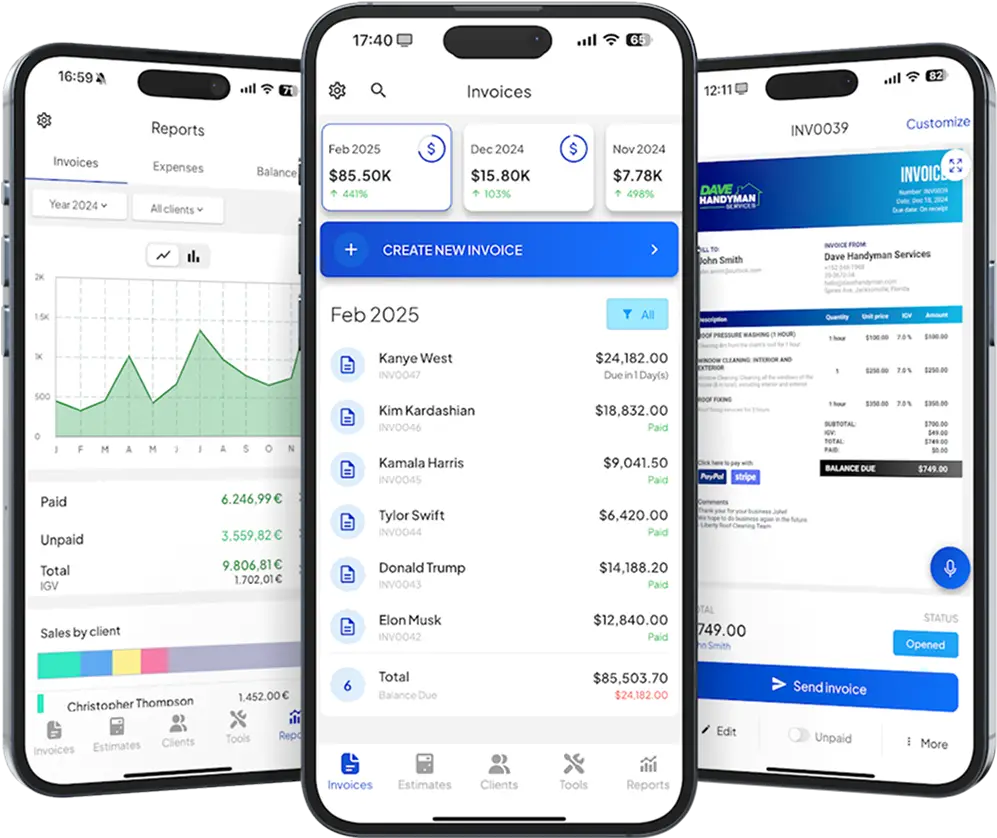
Tip! Using invoicing software can also simplify this process. InvoiceFly’s invoice maker lets businesses send invoices, track their status, and automate payment reminders.

4 Invoice Email Examples
The right message depends on where the invoice is in the payment cycle.
1. Standard Invoice Email
Use this when sending a new invoice for completed work.
Subject: Invoice #1024: Website Design, Due August 25
Hi [Client Name],
I’ve attached Invoice #1024 for the website design work completed this month.
Amount due: $1,200
Due date: August 25, 2026Payment instructions are included on the invoice. Please let me know if you have any questions.
Thanks again for your business.
Best,
[Your Name]2. Payment Reminder Email
A reminder before the due date should feel helpful rather than demanding.
Subject: Reminder: Invoice #1024 Due August 25
Hi [Client Name],
Just a quick reminder that Invoice #1024 for $1,200 is due on August 25.
I’ve attached the invoice again for convenience. Please let me know if you have any questions or need anything from me before payment.
Thanks,
[Your Name]
3. Overdue Invoice Email
If the due date has passed, stay professional and make the next action clear.
Subject: Payment Follow-Up: Invoice #1024 Overdue
Hi [Client Name],
I’m following up on Invoice #1024 for $1,200, which was due on August 25 and is still showing as unpaid.
I’ve attached another copy for reference. Could you please let me know when I can expect payment?
If payment has already been sent, please disregard this message.
Thank you,
[Your Name]
If your agreed invoice terms include a late-fee policy, you can remind the client of it here. Do not add a new late fee that was never disclosed or agreed to.

4. Delayed Invoice Email
This example is for when you are sending the invoice later than planned, not when the client is late paying.
Subject: Invoice #1024: Consulting Services
Hi [Client Name],
Apologies for the delay in sending this over. Attached is Invoice #1024 for the consulting work completed in July.
Amount due: $1,200
Due date: September 15, 2026Please let me know if you have any questions about the invoice or payment details.
Thanks for your patience,
[Your Name]
If your delay significantly shortened the client’s normal payment window, consider adjusting the due date rather than expecting them to pay immediately.
Tips for Writing an Effective Invoice Email
A good invoice email should make it immediately clear what the client needs to do next
Keep It Short
Your client does not need a long explanation. A few clear sentences are usually enough.
Make the Subject Line Specific
Including the invoice number makes the message easier to search for later.
Double-Check the Attachment
If you say an invoice is attached, make sure it actually is. You can also use invoicing software that sends the invoice directly rather than relying on a separate attachment.
Use the Same Payment Terms Everywhere
The due date, payment method, and any agreed late-fee terms should match the invoice, contract, and email.
Stay Professional When Following Up
An overdue payment can be frustrating, but an accusatory email rarely helps. Start by assuming the delay may be an oversight and ask when payment can be expected.
Track What You Have Sent
Keeping a record of invoices and follow-ups makes it easier to see which customers have paid and which still need attention. Our guide to outstanding invoices explains how to manage unpaid balances.
Good recordkeeping matters beyond collections. The IRS identifies invoices among the supporting documents businesses may need to maintain.
The SBA also recommends keeping close track of money coming into and going out of your business. Sending invoices promptly and having a consistent follow-up process can make accounts receivable easier to manage.
Make Invoice Emails Easy to Act On
A strong invoice email does not need to be complicated. Tell the client what the invoice is for, make the amount and due date easy to see, provide the invoice or payment link, and keep the tone polite and professional.
Just as importantly, send the right email at the right time. A new invoice, payment reminder, overdue follow-up, and delayed invoice all call for slightly different messages. For more help with the billing process, see our guides to what an invoice is and how to send an invoice.