How to Build a Lawn Care Website and Get More Local Leads

Table of Contents
- Why every lawn care business needs a professional website
- How to make a lawn care website that attracts clients
- Lawn care website design best practices
- Choosing the right lawn care website builder and templates
- Must-have pages for a lawn care business website
- Lawn care website examples and ideas for inspiration
- SEO for lawn care websites
- Features that help lawn care websites generate more leads
- Should you use a website builder or hire professionals?
- Create a lawn care website that helps your business grow
- FAQs
A lawn care website helps local businesses showcase services, build trust, appear in local search results, and turn visitors into mowing, treatment, or landscaping leads.
A strong website should clearly explain what you offer and where you work, feature real project photos and reviews, and make it easy for customers to request a quote.
This guide covers:
- Why lawn care businesses need a website
- How to build and design your site
- Website builders and templates
- Essential pages and features
- Lawn care website examples and ideas
- Local SEO and lead generation
Why every lawn care business needs a professional website

A professional website gives potential customers a place to learn about your services, see examples of your work, and contact your business.
It also gives you control over how your company appears online. Instead of relying entirely on social media or directories, you can create dedicated pages for your services, service areas, reviews, and previous projects.
Does my lawn care business need a website?
Even a small lawn care business can benefit from having a website. Customers searching online often want to quickly check what services you provide, whether you cover their area, and how they can request a quote.
Your website can also support other parts of your marketing, including local SEO, paid ads, social media, and referrals.
For more guidance on setting up and growing your company, see our guide on how to start a lawn care business.
How to make a lawn care website that attracts clients
Start with the information customers need most. Clearly state your services and service area, then make it easy to contact you.
A basic lawn care business website should include:
- A clear homepage
- Individual service pages
- Service areas
- Real project photos
- Customer reviews
- Contact information
- A quote or booking form
Your design should support these elements rather than distract from them.
How to design a lawn care website for better conversions
Make your primary call to action easy to see. “Request a quote,” “Call now,” or “Book lawn care” tells visitors exactly what to do next.
Use real photos wherever possible, especially before-and-after images that demonstrate the quality of your work. Keep forms short and make your phone number clickable on mobile devices.
How to launch a successful lawn care website
Before publishing, check the site on both desktop and mobile. Test every form, link, phone number, and CTA.
You should also check:
- Page loading speed
- Spelling and contact details
- Service and location information
- Page titles and descriptions
- Image sizes and alt text
- Analytics and lead tracking
Once the website is live, keep your services, photos, reviews, and business information up to date.
Lawn care website design best practices
Effective lawn care website design should be clean, easy to navigate, and focused on generating inquiries. Customers should be able to understand what you offer within a few seconds of arriving on the homepage.
Lawn care website design essentials
Prioritize practical elements such as:
- Simple navigation
- Mobile-friendly pages
- Fast loading times
- Consistent branding
- Readable fonts
- High-quality project photos
- Visible contact information
- Clear calls to action
Reviews, insurance details, and team photos can help build trust. For added credibility, reference recognized guidance from OSHA and the Bureau of Labor Statistics where relevant.
Lawn care website design trends
Modern lawn care websites tend to favor simple layouts, large project images, short sections, and prominent calls to action.
Interactive features such as online quote requests and booking forms can also make the customer journey easier. However, functionality matters more than following every web design trend. A simple website that loads quickly and generates inquiries is more useful than a complex design that customers struggle to navigate.
Choosing the right lawn care website builder and templates

You can use a website builder and template or hire a professional designer. The best option depends on your budget, time, and technical experience.
Lawn care website builder options
Website builders let you create a site without coding. Look for:
- Mobile-responsive design
- Easy editing
- Contact and quote forms
- SEO and analytics tools
- Reliable hosting and clear pricing
Choose a platform you can comfortably maintain after launch.
Lawn care website templates vs. custom design
Templates are usually faster and more affordable, while custom design gives you greater control over branding, functionality, and integrations.
When choosing a lawn care website template, focus on structure rather than demo images or colors. Make sure it supports your services, project gallery, reviews, service areas, and quote requests, and works well on mobile.
Free templates can reduce upfront costs, but check whether hosting, custom domains, or key features require a paid plan.
Must-have pages for a lawn care business website
Each page should have a clear purpose and help customers move closer to contacting your business.
Your core pages should include:
- Homepage: Summarize your services, locations, trust signals, and primary CTA.
- Service pages: Create pages for services such as mowing, edging, fertilization, aeration, weed control, and seasonal cleanups.
- About page: Introduce your business and experience.
- Service areas: Explain where you work.
- Gallery: Showcase real projects and before-and-after photos.
- Reviews: Feature genuine customer feedback.
- Contact or quote page: Give customers a simple way to request service.
Lawn care company website structure
Keep your main navigation simple. Visitors should be able to reach your services, gallery, and contact information without working through several menus.
If you offer many lawn care services, group related services logically while giving your most important offerings dedicated pages.
Lawn care website examples and ideas for inspiration
The best lawn care websites combine professional design with clear information and simple ways to get in touch. When looking for inspiration, focus on features you can adapt to your own business rather than copying another company’s website.
Useful lawn care website ideas include:
- Before-and-after project galleries
- Seasonal service sections
- Customer review sliders
- Service-area maps
- Online quote forms
- Click-to-call buttons
- Photos of your team and equipment
- FAQs covering common customer questions
A small mowing business may only need a simple website focused on local services and quote requests. A larger landscaping business may need separate pages for lawn maintenance, treatments, landscaping services, commercial work, and different service areas.
SEO for lawn care websites
Local SEO can help your lawn care website appear when nearby customers search for services such as “lawn mowing near me” or “lawn care in [city].”
Create dedicated pages for your main services and useful service-area pages, using local keywords naturally. Keep your Google Business Profile and contact details accurate, collect genuine reviews, and optimize page titles, images, site speed, and mobile usability.
Avoid near-identical location pages. Each should provide useful information specific to that area.
Support your local SEO with a wider lawn care marketing strategy to generate leads from multiple channels.
Features that help lawn care websites generate more leads

A website generates leads when it makes contacting your business quick and straightforward.
Useful lead-generation features include:
- Click-to-call phone numbers
- Short quote forms
- Online booking
- Customer reviews
- Before-and-after photos
- Service-area information
- Clear pricing information where appropriate
- Calls to action throughout key pages
Place your main CTA near the top of important pages and repeat it where it makes sense. Customers should never need to search for a way to contact you.
How to incorporate estimates into a lawn care website
Add a simple “Request an estimate” form asking only for the information you need to assess the job, such as contact details, location, service required, and a short description.
For services with predictable pricing, a free lawn care cost calculator can help customers understand potential costs. You can also review our lawn care pricing chart when developing your own rates.
Avoid making quote forms unnecessarily long. You can collect additional details once you have made contact with the customer.
Should you use a website builder or hire professionals?
A website builder is usually cheaper and works well for a simple site you can manage yourself. Professional design may be better if you need custom features, advanced SEO, integrations, or ongoing support.
If hiring a designer or agency, check:
- Upfront and ongoing costs
- Hosting and maintenance
- SEO, analytics, and lead tracking
- Website, domain, and account ownership
Whichever option you choose, make sure you retain access to your website, domain, analytics, and other business accounts.
As your business grows, our guide on how to start a lawn care business covers the wider steps involved in running and developing your operation.
Create a lawn care website that helps your business grow
A strong lawn care website makes it easier for local customers to discover your business, understand your services, see evidence of your work, and request a quote. Start with clear service pages and contact options, then improve your website over time using customer feedback and lead data.
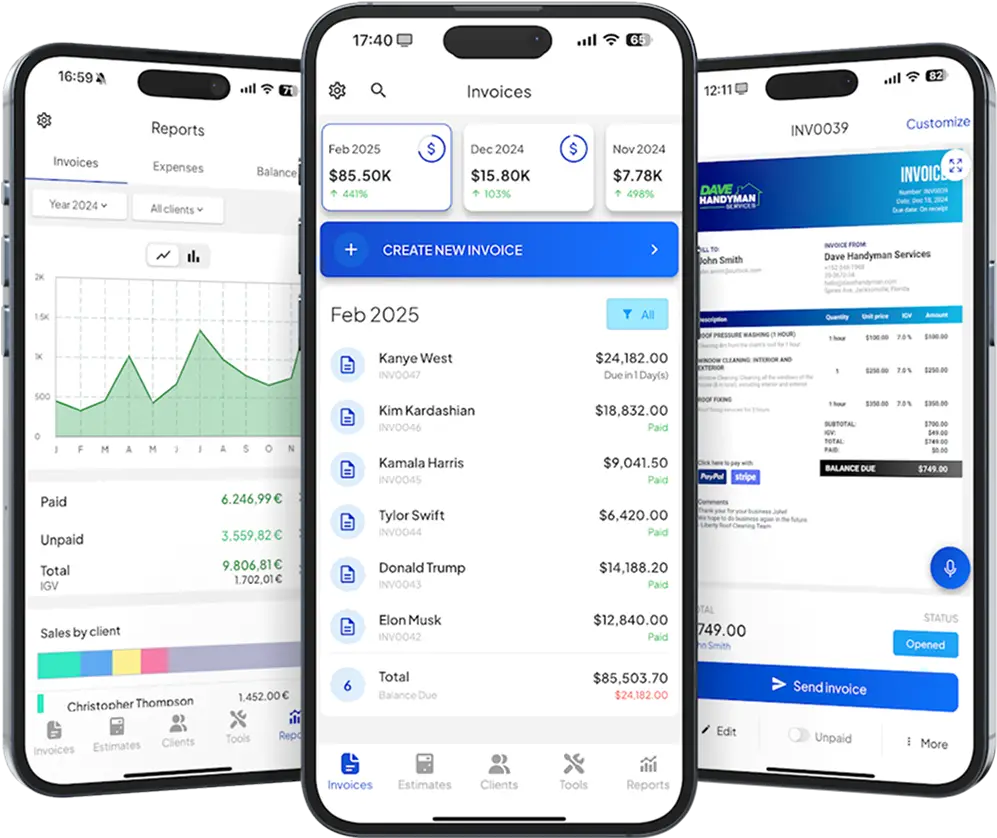
Lawn care software can also help you manage customers, estimates, invoices, and payments once those website leads become jobs.