Plumbing Estimates Guide For Contractors
Table of Contents
Plumbing estimates are more than just numbers on a page — they’re how contractors figure out what a job will actually cost before the work begins. A strong plumbing estimate helps you account for materials, labor, overhead, and profit while giving customers a clear picture of what they’re paying for. It also helps prevent underbidding, surprise costs, and awkward conversations once the project is underway.
In this guide, you’ll learn how to create accurate plumbing estimates step by step, when to use templates or plumbing estimating software, and how to improve your pricing over time using real job data.
What Is a Plumbing Estimate for Contractors?
A plumbing estimate is a written cost projection that outlines the expected price of a plumbing job before work begins. It breaks down labor hours, materials, fixtures, and overhead into a clear document that both you and the client can review and agree on.
A plumbing estimate is a professional proposal, not a final invoice. It sets expectations, protects you from scope creep, and gives clients the transparency they need to make a decision. Done well, it also signals that you run a serious, organized business.
When to Provide a Plumbing Estimate
Provide a written plumbing estimate for any job with meaningful complexity or cost: new bathroom installations, remodels, service line replacements, commercial build-outs, or any repair that involves parts and significant labor. For small routine calls, a flat service rate may be enough. But as jobs grow, so does the need for a detailed plumbing cost estimate.
For a full breakdown of how to build pricing around your estimates, see our guide on how to price plumbing jobs. And if you’re still building your business foundation, our guide on how to start a plumbing business covers everything from licensing to your first client.
Key Factors That Influence a Plumbing Estimate
Before you put numbers on paper, understand what drives the cost of any plumbing job:
- Job type and complexity — A fixture swap takes an hour; a full repipe can take days
- Material costs — Pipe type, fixtures, fittings, and specialty parts vary widely in price
- Labor hours — Driven by crew size, access difficulty, and job scope
- Location and travel — Jobs farther from your base or in high cost-of-living areas affect pricing
- Permits and inspections — Many jurisdictions require permits for new plumbing work, adding time and fees
- Site conditions — Older homes, concrete slabs, or tight crawl spaces all add labor time
- Subcontractors — If you’re hiring specialists for part of a job, their costs need to be built in
According to the BLS, plumbers, pipefitters, and steamfitters earn a median hourly wage that should anchor your labor cost baseline. Your estimate needs to cover those wages and more.
How to Create a Plumbing Estimate Step-by-Step

1. Review the Bid Request and Project Specifications
Start by reading everything the client or general contractor has provided. Understand the full scope before you commit to any numbers. Flag anything unclear and ask questions before estimating — assumptions cost money.
2. Review Drawings and Plans for the Plumbing Scope
For new construction or major renovations, review the architectural and plumbing plans. Identify rough-in locations, fixture counts, pipe runs, and any systems that intersect with your work (HVAC, electrical). The EPA’s plumbing volume estimator can also help when working with system volume calculations on larger projects.
3. Perform a Quantity Takeoff for Pipes, Fittings, and Fixtures
A quantity takeoff means counting and measuring every material the job requires: linear feet of pipe, number of fittings, valves, fixtures, and any specialty items. Be thorough — missing materials at this stage is how estimates fall apart in the field.
4. Estimate Material Costs Using Current Price Data
Price out every item from your supplier at current rates — not memory. Material costs shift constantly, and a quote based on last quarter’s prices can eat your margin fast. Add a small buffer (5–10%) for price fluctuations and waste.

5. Determine Labor Costs for Your Plumbing Crew
Calculate realistic labor hours for each phase of the job: rough-in, trim-out, fixture installation, testing. Multiply hours by your fully loaded labor rate (wages + payroll taxes + benefits + workers’ comp). Don’t forget travel time if it’s a significant factor on the job.
6. Calculate Overhead and Markups for a Profitable Plumbing Estimate
Overhead includes everything that keeps your business running: vehicle costs, insurance, tools, office expenses, marketing, and software. Divide your monthly overhead by your billable hours to get an overhead rate per hour, then build it into every estimate. Apply your markup on top of total costs to ensure profit. Many plumbing contractors use a markup range of 20–50%, depending on job type, overhead, market position, and profit goals.
7. Price the Plumbing Estimate for Competitiveness and Margin
Once you have your cost total, check it against your local market. You want to be competitive, but not the cheapest. Underbidding wins jobs and loses money. Know your floor (the minimum price at which the job is worth taking) and price above it with confidence.
8. Create and Deliver a Professional Plumbing Estimate Proposal

A professional plumbing estimate proposal includes:
- Your business name, contact info, and license number
- Client name, address, and job location
- Detailed scope of work (what’s included and what’s not)
- Itemized materials and labor
- Total price and payment terms
- Estimate validity period (e.g., “This estimate is valid for 30 days”)
- Signature line for client approval
Use our free plumbing estimate template to get a job-ready format without building one from scratch, and our free plumbing invoice template to follow up once the job is approved. Plumbing estimating software can also reduce manual errors compared with a basic Excel spreadsheet, especially when you’re managing multiple jobs at once.
Residential vs. Commercial Plumbing Estimates
Residential and commercial plumbing estimates follow the same basic process, but the scale, documentation, and pricing considerations can look very different depending on the type of project.
| Residential Plumbing Estimates | Commercial Plumbing Estimates | |
|---|---|---|
| Typical Jobs | Fixture replacements, drain repairs, bathroom remodels, water heater installs | Office buildings, retail spaces, restaurants, apartment complexes, industrial systems |
| Project Size | Smaller jobs with shorter timelines | Larger projects with multiple phases and crews |
| Estimate Complexity | Usually simpler with fewer line items | More detailed with extensive material, labor, and permit breakdowns |
| Client Expectations | Clear pricing and easy-to-read proposals | Formal bids, detailed documentation, and strict timelines |
| Labor Requirements | Small crews and faster turnaround | Larger crews, subcontractors, and sometimes union labor |
| Coordination Needs | Limited coordination with other trades | Frequent coordination with HVAC, electrical, and general contractors |
| Material Planning | Standard fixtures and smaller material quantities | Large material orders with longer lead times |
| Profit Risks | Underestimating labor or repair complexity | Delays, change orders, scheduling conflicts, and material cost fluctuations |
A straightforward plumbing repair estimate builds trust quickly in residential work, while a commercial plumbing cost estimate often needs a higher level of detail and professionalism to compete for larger contracts.
Knowing which market you’re in shapes how you build and present your estimate. For more on positioning your business in either market, see our guides on plumbing services and plumbing contractor business basics.
Common Mistakes That Hurt Plumbing Estimate Profits
Even experienced plumbers leave money on the table with these common estimating errors:
- Forgetting overhead — Material and labor don’t cover your business costs on their own
- Underestimating labor hours — Always add a buffer for access issues, unexpected conditions, and callbacks
- Using outdated material prices — Re-check supplier pricing before every estimate
- Skipping a site visit — Estimating without seeing the job is guessing, not estimating
- Not including a change order clause — Any work beyond the estimate scope should require written approval and a revised price
- Ignoring permits — Permit fees, inspection time, and administrative work are real costs that belong in your estimate
Create Better Plumbing Estimates With Invoice Fly
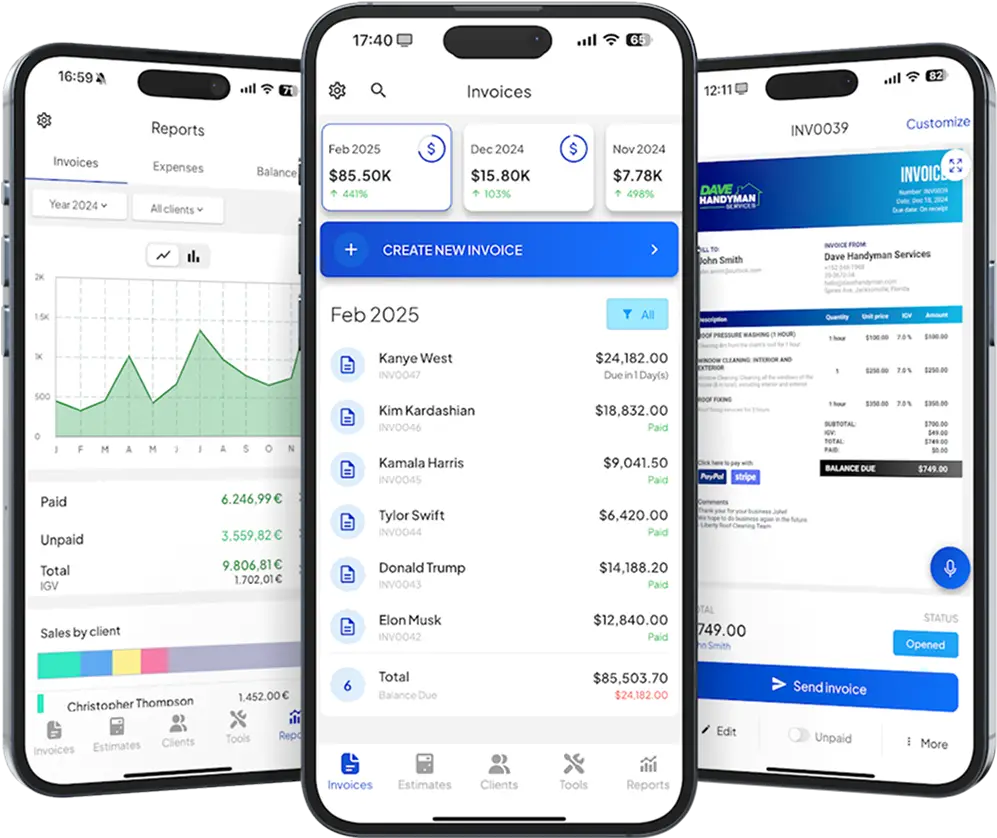
The faster and more accurately you estimate, the more jobs you can bid — and win. Our software for plumbing contractors helps you build professional estimates, convert them to invoices, and track payments all in one place. Pair it with our invoice maker or free invoice generator to keep every job organized from first estimate to final payment.
For everything else that goes into running a profitable plumbing operation, from getting licensed to marketing your services, our complete guide to how to start a plumbing business has you covered.