How to Write an Invoice: Step-by-Step Guide (+ Template)

How To Write An Invoice | Invoice Fly

Learning how to write an invoice is an important skill, whether you’re selling a product, doing a small job, or starting a business. Writing an invoice means communicating exactly what your customer is being charged for, how much they owe, and what they need to do next.

The best invoices are specific rather than wordy. A customer should be able to read yours and quickly answer three questions:

  • What am I paying for?
  • How much do I owe?
  • When and how should I pay?

This guide focuses on what to write on an invoice and how to word it clearly, with examples you can adapt for your own business.
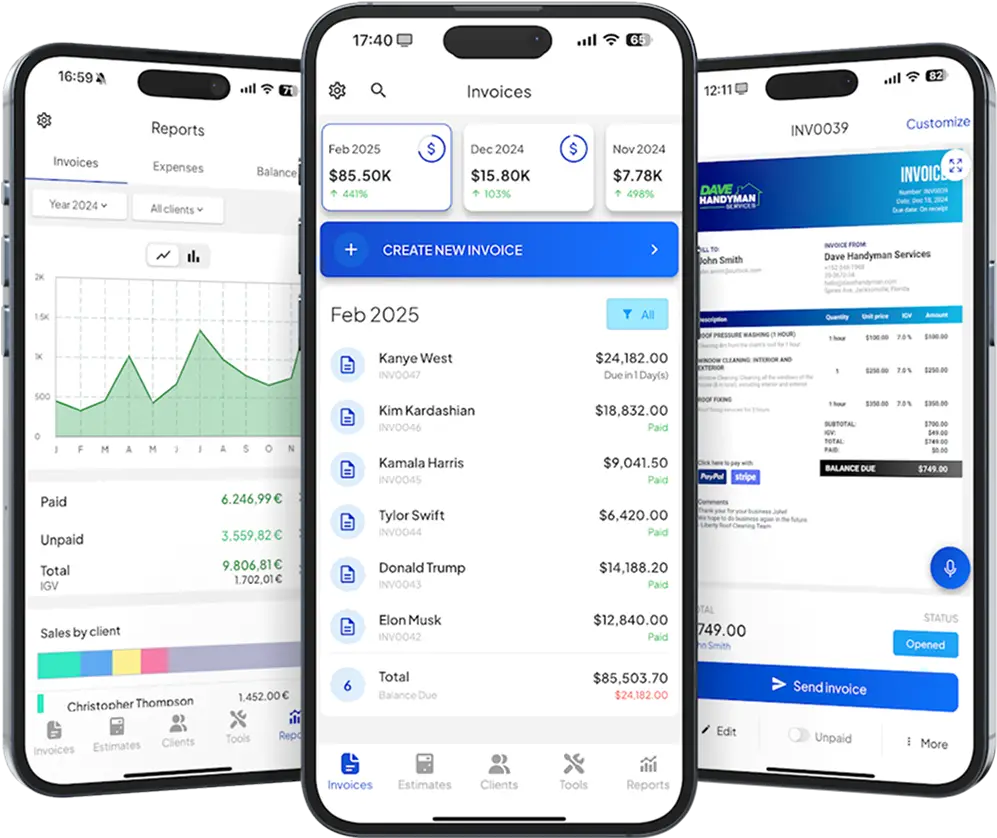
Create and Send Invoices with Invoice Fly

Whether you’re billing clients weekly, monthly, or per project, Invoice Fly helps you create professional invoices, track payments, and stay organized from anywhere.

invoice fly mobile dashboard

What Should You Write on an Invoice?

The exact requirements can vary by business and location, but an invoice will typically contain information such as:

  • Your business information
  • The customer’s billing information
  • An invoice number
  • Invoice and due dates
  • Products or services supplied
  • Quantities, hours, or rates
  • Individual charges
  • Applicable taxes or discounts
  • Total amount due
  • Payment instructions
  • Relevant terms, references, or notes

Our guide to professional invoice elements covers the complete structure of a professional invoice.

Here, we will focus on how to write those elements so they are useful to your customer to whom you are writing the invoice.

How To Write an Invoice Step-by-step

The wording you use should make each part of the invoice easy to identify, understand, and act on. From the header and customer details to service descriptions and payment instructions, the following steps explain how to write each section clearly and professionally.

1. Write a Clear Invoice Header

Start by making it obvious what the document is.

The simplest heading you can write on an invoice is:

INVOICE

Avoid any sort of creative alternative that may come to mind, such as “payment document” or “statement for services rendered” unless there is a specific reason to use them. A recognizable label makes it easier for the customer’s accounts payable team to identify and process the document.

Near the heading, include the relevant invoice reference.

For example:

Invoice #1048

Use the same invoice number whenever you discuss that invoice with the customer.

If you need help setting up your numbering system, see our guide to invoice numbers.

2. Write Your Business Details Consistently

Write your business information the same way across your invoices.

For example:

Miller Electrical Services LLC

245 Pine Street

Denver, CO 80203

billing@millerelectrical.com

(555) 013-4827

When writing an invoice, you should avoid switching between different business names, abbreviations, email addresses, or contact details from one invoice to another unless the information genuinely changes.

If you trade under a business name, make sure you use the information appropriate to your business structure and any local invoicing requirements.

You may also need to include registration or tax identification information depending on where you operate.

3. Write the Correct Customer or “Bill To” Information

Your invoice should identify who owes the money.

A customer section might read:

Bill to:

Brightway Property Management

Attn: Rebecca Chen

1840 Market Avenue

Denver, CO 80205

When working with companies, distinguish between the person who hired you and the legal or billing entity responsible for payment.

For example, you may have completed work after speaking with “John,” but the invoice may need to be addressed to:

Lakeview Apartments LLC

and submitted to its accounts payable department.

Using the wrong company name or billing contact can create unnecessary delays. Read more about what a small business means on the website of the US Department of State.

4. Write a Specific Description of the Work

The line-item description is one of the most important pieces of invoice writing.

Avoid descriptions that are so vague that the customer has to contact you to understand the charge.

Too vague:

Repair work – $450

Better:

Repair leaking kitchen supply line and replace shutoff valve – $450

Another example of what to write:

Too vague:

Landscaping – $800

Better:

Front-yard cleanup, hedge trimming, and mulch installation – $800

Your description should help the customer connect the invoice with the work they approved.

A useful line-item description can contain:

  • Type of service or product
  • Location of the work
  • Relevant date or service period
  • Quantity
  • Hours worked
  • Materials used
  • Project or job reference

You do not need to turn every line item into a paragraph. Include enough information to identify the charge.

Our separate guide to invoice line items explains line-item structure in detail.

5. Write Service Descriptions That Match the Way You Charge

The best wording depends on your billing model.

If you charge a fixed project price

When you charge your customers based a fixed price for your projects, you should write the invoice in way that includes the fixed price of the completed deliverable.

For example:

Garage interior painting – labor and materials

or:

Website homepage redesign – fixed project fee

If you charge hourly

If you charge an hourly wage for your work, you should state the work, number of hours, and rate clearly.

For example:

Electrical troubleshooting – 3 hours × $95/hour

If you bill by quantity

If your billing involves a certain of number of things delivered, that is, a quantity of items created or sold, you should write the invoice identifying the product or service and quantity.

For example:

HVAC air filters – 6 × $18

If you bill for a period of service

Finally, if what you are billing for is a certain period in which you provided a service to your customers, you should include the relevant period when writing your invoice.

For example:

Commercial cleaning service – September 1-30, 2026

When you pay attention to these things when writing an invoice, it helps customers reconcile your invoice with their own records.

6. Write Materials and Additional Charges Separately When Useful

Another thing you should pay attention to when you write an invoice is that, if materials or additional costs are part of a job, decide whether the customer needs to see them separately.

For example:

  • Labor – bathroom faucet replacement: $180
  • Replacement faucet: $125
  • Supply lines and fittings: $24

This is often clearer than simply categorizing the work you have done in a broad category as seen here:

Bathroom work: $329

Itemization is particularly useful when your estimate, quote, contract, or customer agreement separated labor and materials.

The goal is not to add unnecessary detail. It is to make the invoice easy to verify against what was agreed.

7. Write Dates So There Is No Ambiguity

Your invoice normally includes an issue date and a payment due date.

The way you write a clear format would be:

  • Invoice date: September 16, 2026
  • Due date: October 16, 2026

Using the specific due date reduces ambiguity.

Writing only:

Net 30

may be understood by many business customers, but adding the actual calendar due date makes the deadline easier to see.

You can write:

  • Payment terms: Net 30
  • Payment due: October 16, 2026

For a detailed explanation of deadlines and date calculations, see our guide to the invoice due date.

8. Write Payment Terms Clearly

Payment terms explain when payment is expected and can also establish other agreed payment conditions.

Simple wording is often best when writing an invoice.

For example:

Payment is due within 30 days of the invoice date.

Or:

Payment is due upon receipt.

If you and the customer have agreed on installment payments, deposits, discounts, or other arrangements, your invoice wording should reflect that agreement.

Avoid introducing unexpected conditions for the first time on the invoice.

For a deeper explanation of common arrangements, read our guide to invoice payment terms.

9. Write Payment Instructions the Customer Can Follow

To understand how to write an invoice, you need to understand that customers need to know how to pay you.

If they are paying by bank transfer, provide the information they need.

For example:

  • Payment method: Bank transfer
  • Account name: Miller Electrical Services LLC
  • Reference: Invoice 1048

If your invoice includes an online payment option, the wording may be as simple as:

Pay securely online using the payment link provided on this invoice.

If multiple payment methods are available, present them clearly instead of burying them inside a long paragraph.

The objective is simple: after reading the payment section, the customer should know exactly what to do.

10. Write Taxes, Discounts, and Fees Transparently

If tax applies to the invoice, label it so the customer can see how the total was reached.

For example:

  • Subtotal: $1,000
  • Sales tax (8%): $80
  • Total: $1,080

If you have provided an agreed discount:

  • Subtotal: $1,000
  • 10% discount: -$100
  • Total: $900

Do the same for other agreed charges when itemizing them makes the invoice easier to understand. Write all of this on the invoice.

11. Write Late-Payment Terms Carefully

If your agreement allows late fees or other consequences for overdue payment, write the condition plainly on the invoice.

For example:

Invoices not paid within the agreed payment period may be subject to the late-payment terms established in our service agreement.

Or, where an agreed specific fee applies:

A late fee of [agreed amount or percentage] applies to overdue balances in accordance with our agreed terms.

Do not add arbitrary fees that were never disclosed or agreed to, and make sure any late-fee policy complies with the rules that apply to your business and location.

See our guide to invoice late fees for more information. For more information on the right wording to use, refer to our article on invoice terms and conditions.

12. Add Purchase Order or Customer Reference Information When Required

Some customers (particularly larger businesses) require a purchase order number, job number, department code, vendor ID, or another internal reference before accounts payable can process an invoice.

When provided, write the reference in an easy-to-find location.

For example:

PO number: PO-48726

or:

Project: Westside Office Renovation

Job #: WS-204

If the customer requires a customer reference and you have not received it, confirm the correct reference before you submit the invoice.

13. Write an Invoice Note Only When It Adds Something Useful

A short note written on your invoice can make an invoice feel more personal, but it should not distract from the payment information.

A simple note like this may be enough:

Thank you for your business.

Or, for an established customer, you can write:

Thank you for continuing to work with us. We appreciate your business.

For projects:

Thank you for choosing Miller Electrical Services for your kitchen renovation.

You can also use the notes field for practical information relevant to the invoice.

For example:

Please reference Invoice #1048 with your payment.


Examples of How To Write an Invoice By Profession

The way you describe work should reflect the service performed. 

Contractor invoice

Instead of:

Construction work

write:

Frame and install 12 ft partition wall, including lumber and fasteners

Plumber invoice

Instead of:

Plumbing repair

write:

Replace leaking kitchen faucet cartridge and test for leaks

Electrician invoice

Instead of:

Electrical service

write:

Diagnose faulty dining-room circuit and replace damaged outlet

Cleaner invoice

Instead of:

Cleaning

write:

Move-out cleaning for 2-bedroom apartment, kitchen and 2 bathrooms

Landscaper invoice

Instead of:

Yard work

write:

Front and rear lawn mowing, edging, and hedge trimming

Handyman invoice

Instead of:

Repairs

write:

Install two floating shelves and repair bedroom door hinge

Freelancer invoice

Instead of:

Design

write:

Logo design – final concept development and export of approved files

These descriptions are more useful because they tell the customer what the charge actually relates to. Remember these to understand how to write your invoices that keep customers coming back for repeat business.

Example of a Clearly Written Invoice

Here is a simplified example:

INVOICE

Invoice #: 1048

Invoice date: September 16, 2026

Due date: October 16, 2026

From:

Miller Electrical Services LLC

245 Pine Street

Denver, CO 80203

billing@millerelectrical.com

Bill to:

Brightway Property Management

Attn: Rebecca Chen

1840 Market Avenue

Denver, CO 80205

Services

Electrical troubleshooting – 3 hours × $95: $285

Replace two GFCI outlets – 2 × $45: $90

Electrical materials: $32

Subtotal: $407

Sales tax: $32.56

Total due: $439.56

Payment terms: Payment is due within 30 days.

Payment due: October 16, 2026

Payment: Pay online using the payment link included with this invoice. Please reference Invoice #1048.

Note: Thank you for your business.

This example should help you understand how to write an invoice. The example is easy to scan because each piece of information answers a specific customer question without unnecessary wording.

What Not to Write on an Invoice

Writing a clear invoice is also about knowing what to leave out.

Avoid:

  • Vague service descriptions
  • Unexplained charges
  • Informal nicknames instead of the correct customer name
  • Conflicting payment dates
  • Payment instructions that are incomplete
  • Unexpected fees
  • Long paragraphs explaining routine charges
  • Emotional language about getting paid
  • Unrelated promotional information

An invoice is a business document. Keep the tone neutral, specific, and easy to process. See common invoicing mistakes for other errors that can cause problems.

How to Write an Invoice That Is Easy to Pay

Good invoice writing removes questions. Before finalizing the wording, read the invoice from the customer’s perspective.

Can they immediately identify:

  1. Who sent the invoice?
  2. Who is being billed?
  3. Which transaction or job it relates to?
  4. What was provided?
  5. How each charge was calculated?
  6. The total amount owed?
  7. The payment deadline?
  8. How to pay?
  9. Who to contact with a question?

If the answer is yes, your invoice is doing its job.

Once the wording is ready, our separate guide on how to make an invoice explains how to turn that information into the finished document.

And once the document itself is complete, see how to send an invoice for delivery methods, invoice emails, and best practices for sending messges.

Write Clearer Invoices With Invoice Fly

A well-written invoice makes it easier for customers to understand what they owe and how to pay. Keep your wording clear, specific, and consistent to avoid confusion and unnecessary payment delays.

With invoicing software like Invoice Fly, you can create professional invoices quickly, keep your billing organized, and make getting paid simpler.


Create and Send Invoices with Invoice Fly

Whether you’re billing clients weekly, monthly, or per project, Invoice Fly helps you create professional invoices, track payments, and stay organized from anywhere.

invoice fly mobile dashboard

FAQs About Writing an Invoice

Write your name/business name, the customer’s name, the date, a list of what you’re charging for, the costs, the total amount, and how you want to be paid.

Yes. Anyone can make their own invoice as long as it includes the needed information.

Yes. A handwritten invoice is legal as long as it is clear, readable, and contains all required details.

An invoice is basically a clean list with your business info at the top, the customer’s info, the date, a table of items or services with prices, and the total at the bottom, with a note on when and how you want to be paid.

Your name and address, the customer’s name and address, the date, a description of the goods or services, the price, the total, and any taxes if needed.

Roger is a Digital Marketeer passioned about SaaS & Mobile App products.

He considers himself a geek about invoicing, accounting, and related topics. He loves helping out contractors, freelancers, and small business owners achieve their goals when running their businesses.