Invoice Fly vs Billdu: Which Invoicing App Is Better?
Table of Contents
Invoice Fly puts unlimited estimates, invoices, time tracking, receipts, and recurring billing into one paid plan. Billdu spreads client allowances, estimates, reminders, recurring invoices, and team access across three tiers. Both handle everyday billing well, but the better fit depends on your client count, the documents you send, and whether anyone else needs access.
In this Invoice Fly vs Billdu comparison, we’ll look at pricing, invoice limits, payment tools, automation, expense tracking, and team features so you can choose the app that best supports the way you work.
Invoice Fly vs Billdu at a Glance
| Invoice Fly | Billdu | |
|---|---|---|
| Best for | Freelancers and contractors who want one affordable plan | Small businesses that want plans based on clients and team size |
| Invoices | Unlimited on either paid billing option | Unlimited on Lite, Standard, and Premium |
| Estimates | Unlimited | Standard and Premium only |
| Client limits | No advertised cap | 10 on Lite, 50 on Standard, unlimited on Premium |
| Recurring invoices | Included | Premium only |
| Payment reminders | Included | Standard and Premium |
| Expenses | Receipt scanning, categories, and reports | Expense tracking on all plans |
| Time tracking | Built in | Not a highlighted feature |
| Signatures | Estimate signatures | Client signatures on invoices |
| Team access | 1 individual | 1, 2, or up to 10 users depending on plan |
| Starting price | $8.99/week or $98.99/year | Lite: $7.99/month or $4.99/month billed annually |
If you have ten or fewer clients and mostly just send invoices, Billdu Lite can cost less. Once estimates, recurring bills, reminders, receipt scanning, and time tracking become part of your routine, Invoice Fly starts to look like the better deal.
What Is Invoice Fly?
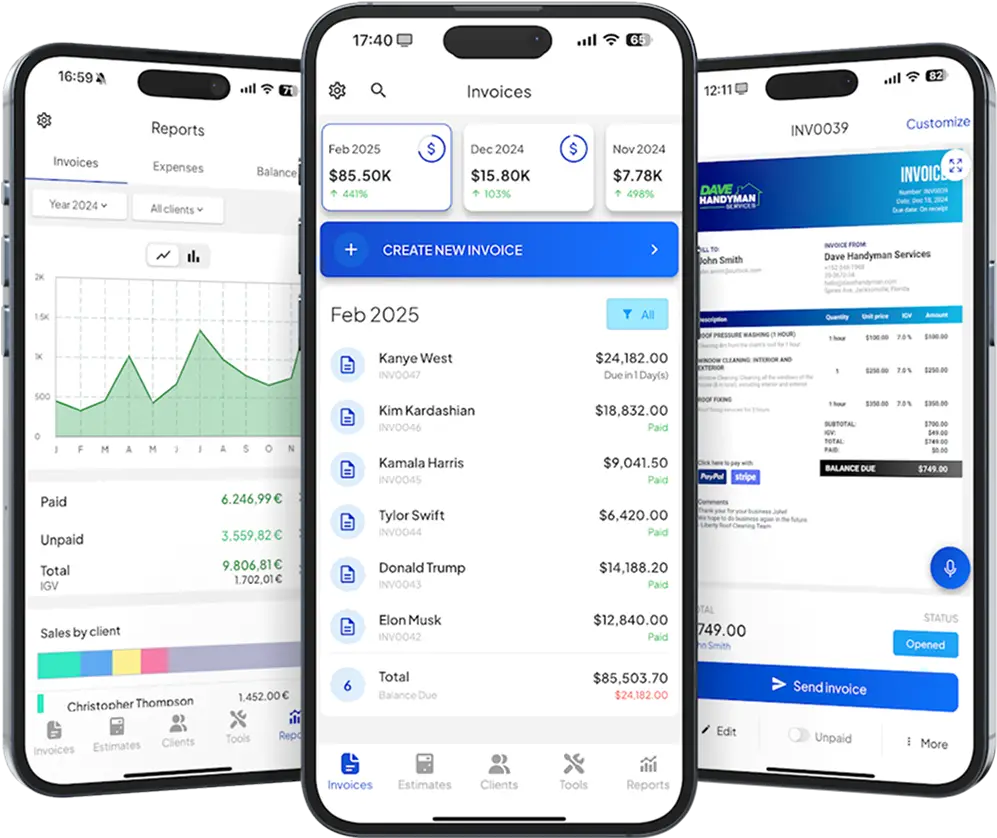
Invoice Fly helps freelancers and service pros turn finished work into payment. You can send an estimate, collect approval or a deposit, and convert it into an invoice. Status labels and reminders make follow-up easy.
Hours, purchases, and receipt photos sit next to each client’s billing history, along with recurring invoices, online payments, and reports.
The weekly plan costs $8.99, and the yearly plan costs $98.99. Both include unlimited estimates and invoices. For occasional paperwork, Invoice Fly also offers free online document generators for seven document types, with no account required. Try the free invoice generator to get started.
What Is Billdu?
Billdu is a mobile and web invoicing app for freelancers, contractors, and small businesses. Every plan sends invoices, and the higher tiers add estimates, quotes, delivery notes, and payment receipts.
You can save clients and products, track expenses, collect signatures, and attach photos. Premium, the top plan, adds recurring billing, a Xero integration, and room for up to ten users.
Billdu lets you try it free for seven days without a card, and it offers a seven-day money-back guarantee if you pay and change your mind. For an outside look at Billdu features and user feedback, the Capterra overview is a helpful read.

Invoice Fly vs Billdu: Key Differences
In this section we will go through all of the main differences between the two platforms.
Invoicing and Estimates
With Invoice Fly, estimates and invoices are unlimited no matter how you pay. You can quote a job, get the thumbs-up, convert it, and watch the invoice all the way to payment.
Billdu includes unlimited invoices on every plan, but estimates don’t show up until Standard. Lite works if you rarely quote. If quoting is how you win work, you’ll need Standard or above.
Tip: Whichever app you choose, this checklist of professional invoice elements helps make sure nothing important is missing from your bills.
Invoice Templates and Customization
Both apps let you put your own stamp on your documents. Invoice Fly reuses your saved logo and details so everything looks consistent. Billdu lets you pick colors and add notes, payment details, and photos.
The real difference is what sits behind them. Billdu offers more types of sales documents, while Invoice Fly ties its templates to your tracked time, receipts, and estimate approvals.
Recurring Invoices and Payment Reminders
Invoice Fly includes recurring invoices and reminders on both billing options. Set them up once, and they keep running.
Billdu splits them up. Standard includes reminders, but recurring invoices are Premium only, so even a consultant with five retainer clients would need the top plan to automate billing.
Tip: Automation is a time-saver, not a set-and-forget. Invoice Fly’s guide to invoice automation explains how to catch price or service changes before they repeat.
Online Payments and Payment Tracking
Invoice Fly connects with payment providers like Stripe and PayPal. At a glance, you can see which invoices are sent, viewed, paid, or overdue, so you know exactly who needs a friendly nudge.
Billdu also accepts online payments and tracks invoice status on every plan. Standard adds payment receipts and reminders.
Either way, processing fees are separate from your subscription, so compare rates and payout times before you connect a provider.
Tip: Clear invoice payment terms and a realistic invoice due date take a lot of the guesswork out of getting paid.

Expense Tracking
Invoice Fly turns the pile of receipts in your truck or bag into something useful. Snap a photo, pick a category, and it shows up in your reports, right next to your billable hours.
Billdu includes expense tracking on every plan, and Premium adds recurring expenses.
Whichever you use, keep your originals. The IRS explains in Publication 583 that your records need to back up the income and deductions on your tax return.
Client and Invoice Management
Billdu sets its plan limits by how many clients you have, not how many invoices you send. Lite covers up to 10 clients, Standard up to 50, and Premium has no limit.
That matters more than it first appears. A consultant billing the same eight companies could stay on Lite for years, while a repair pro serving new households every week could outgrow it within a month.
Invoice Fly doesn’t advertise a client cap, so it gives you more room if new customers come through the door regularly.
Team Members and Multiple Businesses
If other people need to log in, Billdu has the clearer path. Lite is for one user, Standard allows two, and Premium supports up to ten.
Invoice Fly is designed for owners who handle their own admin, so it doesn’t offer tiered team access.
Running more than one business? With either app, you’ll need a separate account or subscription for each one.
If you share access, remove former team members right away. NIST’s small business cybersecurity resources offer simple steps for keeping accounts secure.
Invoice Status Tracking and Client Signatures
Invoice Fly lets clients sign estimates before work begins, so you have their approval of the scope and price in writing. Billdu lets clients sign invoices right on your phone, which is handy on site. Neither signature replaces a contract, so keep a copy of whatever the client signs.
Tip: A consistent routine for how to send an invoice makes it easier to prove when each bill went out.
Business Documents and Additional Tools
Billdu covers more document types, with quotes, delivery notes, and payment receipts on Standard and up, which helps if you sell physical goods. Premium adds API access and a Xero integration.
Invoice Fly stays focused on service billing. Its free web tools cover invoices, estimates, quotes, receipts, and work orders, while the paid app adds time tracking and receipt scanning.
Ease of Use and Mobile Access
Both apps work on your phone and in a browser, and neither expects you to know accounting.
The bigger difference is choosing a plan. With Invoice Fly, the only decision is weekly or yearly. With Billdu, your client count, quoting, users, and recurring billing all point to different tiers.
For a sense of how they hold up day to day, check recent reviews on G2, Capterra, and Trustpilot, focusing on businesses like yours.

Invoice Fly vs Billdu Pricing
| Pricing detail | Invoice Fly | Billdu Lite | Billdu Standard | Billdu Premium |
|---|---|---|---|---|
| Monthly billing | Not offered | $7.99/month | $14.99/month | $27.99/month |
| Annual billing | $98.99/year | $4.99/month ($59.88/year) | $9.99/month ($119.88/year) | $19.99/month ($239.88/year) |
| Weekly billing | $8.99/week | Not offered | Not offered | Not offered |
| Clients | Unlimited | 10 | 50 | Unlimited |
| Users | 1 | 1 | 2 | Up to 10 |
| Key limits | Unlimited invoices and estimates | No estimates or reminders | No recurring invoices | Full feature access |
The Capterra pricing page mentions a free version, but Billdu’s own US pricing page shows only the trial and three paid plans, so check what’s on offer when you sign up.
On a yearly plan, Invoice Fly costs less than Billdu Standard or Premium. Lite is cheaper, but it leaves out estimates, reminders, and recurring invoices. If automation is on your wish list, the fair comparison is Invoice Fly against Billdu Premium.
Invoice Fly vs Billdu for Freelancers and Small Businesses
Invoice Fly usually suits freelancers who bill by the hour, contractors who quote before starting, and solo pros who want recurring billing, receipt scanning, and reports without client caps. It’s a solid Billdu alternative if you’d rather pay for one complete yearly plan.

Billdu usually suits businesses whose needs match one of its tiers. Lite works for a stable list of up to ten clients. Standard adds estimates, reminders, and a second user. Premium covers recurring billing, bigger teams, and integrations. To compare fairly, look at a typical month and pick the cheapest plan that handles all of it.
Invoice Fly vs Billdu: Which Should You Choose?
Still deciding between Invoice Fly or Billdu? Look past the starting price. Choose Invoice Fly if you want unlimited estimates and invoices, recurring billing, reminders, time tracking, receipt scanning, and reports at one yearly price. Choose Billdu if its client-based tiers fit your business, especially if you need team access, extra sales documents, or accounting integrations. Put simply, Invoice Fly suits the business you run on your own, while Billdu suits the one you’re building with others.