SEO for Cleaning Company: Improve Rankings and Get More Leads
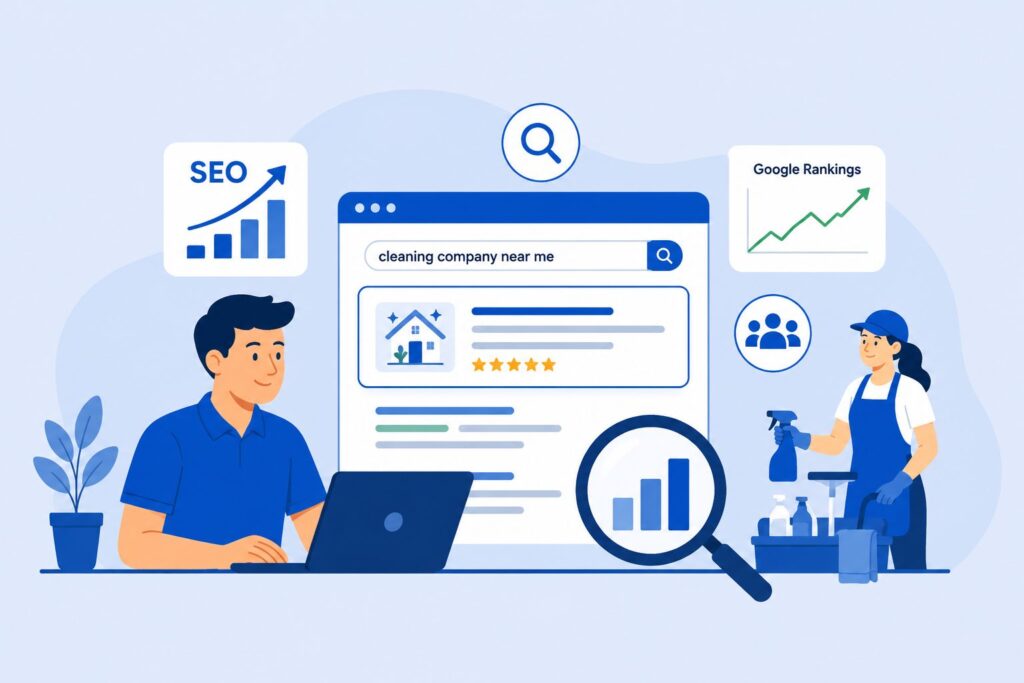
Table of Contents
- What is SEO for a cleaning company?
- Why SEO matters for cleaning companies
- Local SEO for cleaning companies
- On-page SEO for cleaning businesses
- Content marketing for cleaning companies
- Keyword research for cleaning SEO
- Technical SEO for cleaning websites
- Link building for cleaning companies
- SEO analytics and tracking
- Build an SEO strategy that generates more cleaning leads
- FAQs
SEO for cleaning company websites helps businesses rank higher on Google, attract local customers, and generate more leads without relying solely on paid advertising. By optimizing your Google Business Profile, targeting the right keywords, improving your website, and creating useful content, you can increase your online visibility and turn more searches into bookings.
This guide covers:
- What SEO is for cleaning companies
- Why SEO matters
- Local SEO strategies
- On-page SEO
- Content marketing
- Keyword research
- Technical SEO
- Link building
- SEO tracking
What is SEO for a cleaning company?

SEO (Search Engine Optimization) improves your website’s visibility in search engines so customers can find your business when searching for cleaning services.
A strong SEO strategy includes:
- Google Business Profile optimization
- Local keyword targeting
- Service pages
- Helpful content
- Customer reviews
- Technical website improvements
Unlike paid advertising, SEO can continue generating leads long after your content is published. Creating dedicated pages for your cleaning services also helps Google understand what your business offers.
If you’re starting a business, our guide on how to start a cleaning business explains everything from licensing to finding your first customers.
Why SEO matters for cleaning companies
Most customers compare several cleaning companies before booking. Ranking near the top of Google increases your chances of winning those enquiries.
SEO helps you:
- Increase organic traffic
- Generate qualified leads
- Improve local visibility
- Build trust through reviews
- Reduce reliance on paid advertising
Combining SEO with a wider marketing strategy creates multiple sources of new business.
Local SEO for cleaning companies

Local SEO helps your cleaning business appear in Google Maps and local search results when nearby customers search for cleaning services.
1. Optimize your Google Business Profile
Complete every section of your profile, choose accurate categories, upload photos, list your services, and respond to reviews. A complete profile improves both visibility and trust.
2. Maintain NAP consistency
Your Name, Address, and Phone Number (NAP) should be identical across your website, Google Business Profile, and online directories.
How to ensure consistency
- Use the same business details everywhere.
- Update every listing if information changes.
- Check directories regularly for errors.
3. Get more customer reviews
Ask satisfied customers for reviews after every completed job and reply to all feedback. Sending a professional cleaning business invoice template or explaining what a receipt is provides a natural opportunity to request one.
4. Target local keywords
Focus on searches with local intent, such as:
- House cleaning in Dallas
- Office cleaning Chicago
- Carpet cleaning Phoenix
- Commercial cleaning near me
These keywords usually convert better than broad search terms.
5. Create location-based pages
Create separate pages for every city or neighborhood you serve.
Tips for local pages
- Include local keywords naturally.
- Add customer testimonials.
- Explain the services available.
- Avoid duplicate content.
6. Optimize for mobile users
Your website should load quickly, work well on mobile devices, and make it easy for visitors to call or request a quote.
7. Submit to local directories
List your business on trusted directories such as Yelp, the Better Business Bureau, and your local Chamber of Commerce to strengthen your online presence.
8. Build local backlinks
Earn links from local businesses, community organizations, suppliers, and industry associations to improve your website’s authority.
9. Use geo-tagged images
Upload original project photos with descriptive file names and relevant location information to support your local SEO efforts.
10. Track local SEO results
Monitor your Google Business Profile, keyword rankings, website traffic, and enquiries to understand which SEO activities generate the most leads.
On-page SEO for cleaning businesses

Good on-page SEO helps search engines understand your website while making it easier for visitors to become customers.
Their are many benefits of on-page SEO for well-optimized website. It can:
- Improve search rankings
- Increase enquiries
- Enhance user experience
- Support higher conversion rates
1. Optimize title tags and meta descriptions
Include your primary keyword naturally, mention your location where appropriate, and write compelling titles and descriptions that encourage users to click.
How to write SEO-friendly metadata
- Keep titles under 60 characters.
- Write unique meta descriptions for every page.
- Include your main service and location.
2. Use proper heading structure
Organize every page using one H1 followed by H2s and H3s. This improves readability and helps search engines understand your content, according to Google.
Best practices for headings
- Use one H1 only.
- Structure content logically.
- Include keywords naturally.
- Keep headings clear and descriptive.
3. Optimize service pages
Create a dedicated page for every cleaning service instead of combining everything on one page.
Key elements of service pages
Include:
- Service overview
- Benefits
- Service area
- Customer reviews
- Clear CTA
A well-designed cleaning company website gives each service page the best chance of ranking.
4. Improve website UX and design
Your website should load quickly, be easy to navigate, and make it simple for customers to contact you from any device.
5. Add clear CTAs
Every page should encourage visitors to take action, such as requesting a quote or booking a cleaning service. Using a free cleaning business estimate template can also help standardize your quoting process.
6. Use internal linking
Link related pages together to help visitors discover more content and strengthen your SEO. For example, connect articles about cleaning business insurance, cleaning contracts, and cleaning business CRM.
Content marketing for cleaning companies
Publishing useful content helps you rank for more keywords while building trust with potential customers.
1. Create blog content
Answer common customer questions with articles covering pricing, cleaning tips, seasonal advice, and service comparisons.
Blog topic ideas
- House cleaning costs
- Office cleaning checklists
- Carpet cleaning tips
- Move-out cleaning guides
2. Target informational keywords
Create content around questions customers ask before they’re ready to book.
Content optimization tips
- Answer one topic per page.
- Use headings and bullet points.
- Link to related articles.
3. Publish service-specific content
Create separate content for residential, commercial, carpet, and window cleaning rather than combining every service into one page.
Content structuring tips
Include your process, benefits, pricing information, FAQs, and clear calls to action.
4. Maintain content consistency
Publishing regularly helps keep your website relevant.
Content calendar tips
Update existing pages and publish new articles consistently throughout the year.
5. Promote your content
Share new content through email newsletters, Facebook, Instagram, LinkedIn, and local community groups.
6. Measure content performance
Key metrics
Track organic traffic, rankings, enquiries, and conversions to understand which content generates the best results.
Keyword research for cleaning SEO
Keyword research helps you identify the searches your customers actually use.
1. Identify core keywords
Start with your primary services, such as house cleaning, office cleaning, carpet cleaning, and commercial cleaning.
2. Use long-tail keywords
Target phrases like office cleaning in Denver or move-out cleaning near me, which often have higher purchase intent.
3. Analyze competitor keywords
Review competitor websites to discover keyword opportunities and identify content gaps.
4. Map keywords to pages
Assign one primary keyword to each page to avoid competing against your own content.
5. Track keyword rankings
Use Google Search Console to monitor rankings and identify pages that need improvement.
Technical SEO for cleaning websites

Technical SEO ensures your website performs well for both users and search engines.
1. Improve site speed
Compress images, optimize code, and use reliable hosting to improve loading times.
2. Ensure mobile-friendliness
Your website should work seamlessly on smartphones and tablets.
3. Fix crawl errors
Regularly check Google Search Console for indexing and technical issues.
4. Use schema markup
Schema helps search engines understand your business information, reviews, and services.
5. Secure your website (HTTPS)
HTTPS protects customer information and is an important Google ranking signal.
Link building for cleaning companies
Backlinks from trusted websites improve your authority and search visibility.
1. Get local backlinks
Earn links through local partnerships, charities, suppliers, and community organizations.
2. Create linkable content
Publish useful resources that other websites naturally reference.
3. Partner with local businesses
Build referral relationships with property managers, contractors, and real estate agents.
4. List on industry directories
Submit your business to reputable local and cleaning industry directories.
5. Monitor backlinks
Review your backlink profile regularly and look for new link-building opportunities.
SEO analytics and tracking
Tracking performance helps you improve your SEO strategy over time.
1. Set up Google Analytics
Monitor website traffic and visitor behaviour.
2. Use Google Search Console
Track keyword rankings, indexing issues, and search performance.
3. Track conversions
Measure calls, contact forms, bookings, and quote requests—not just traffic.
4. Monitor traffic sources
Compare traffic from search engines, referrals, social media, and paid advertising.
5. Perform regular SEO audits
Review your website every few months to update content, improve rankings, and fix technical issues.
Build an SEO strategy that generates more cleaning leads
SEO is a long-term investment that helps cleaning companies attract more qualified leads and reduce their reliance on paid advertising. By combining local SEO, quality content, technical optimization, and regular performance tracking, you can build a stronger online presence and generate consistent enquiries.
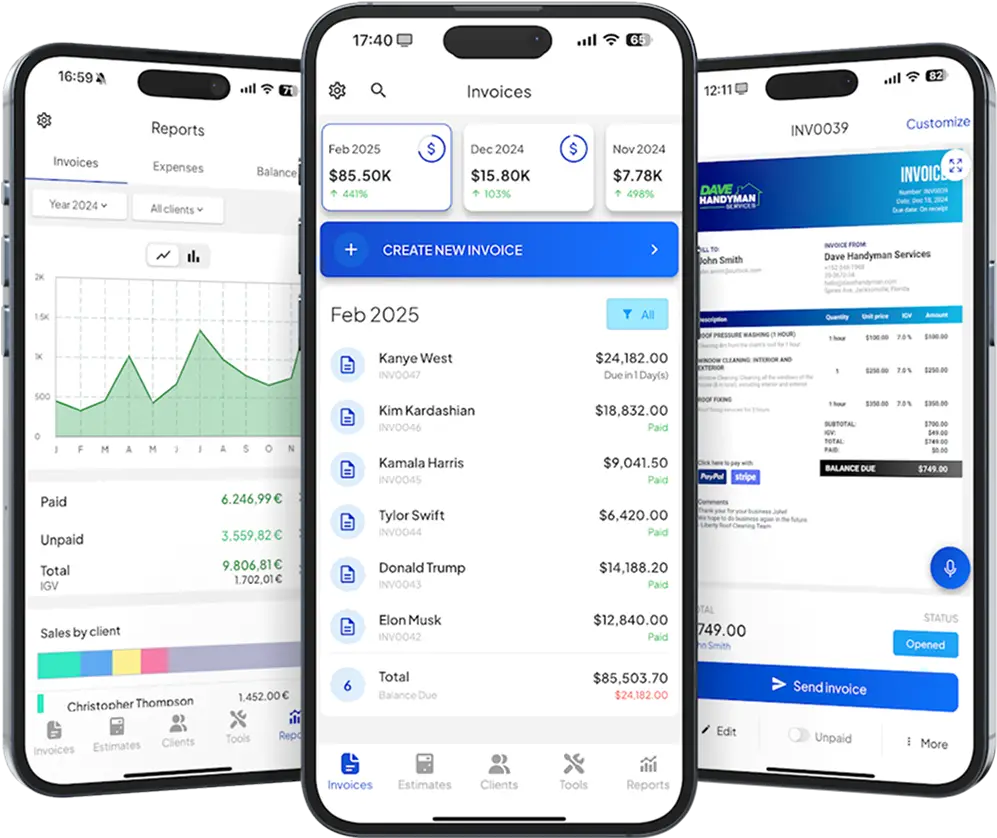
As your business grows, cleaning business software can help manage customers, scheduling, estimates, and invoicing from one place. You can also create professional invoices with an invoice maker or use a free invoice generator to bill customers quickly.
For more advice on launching and growing your company, revisit our guide on how to start a cleaning business.