Invoice Fly vs Bloom: Which App To Choose
Table of Contents
Invoice Fly and Bloom both help service professionals manage invoices and get paid, but they approach the wider client workflow differently.
Invoice Fly centres on billing tasks such as estimates, invoices, payments, expenses and time tracking. Bloom combines invoicing with a broader CRM that covers leads, contracts, projects, scheduling, client portals and other tools for managing work from first enquiry to delivery.
In this guide, we’ll compare Invoice Fly vs Bloom based on invoicing, payments, client management, projects, pricing and the types of businesses each platform suits.
Invoice Fly vs Bloom at a glance
| Feature | Invoice Fly | Bloom |
|---|---|---|
| Best suited to | Freelancers, contractors and service businesses | Freelancers, creatives, photographers, agencies and studios |
| Starting price | $8.99/week or $98.99/year | Currently $7/month |
| Free plan | No | No, 7-day trial |
| Invoices | Unlimited | Yes |
| Estimates/quotes | Unlimited | Yes |
| Recurring invoices | Yes | Yes |
| Dedicated time tracking | Yes | Hourly invoice items |
| Expense tracking | Yes | No dedicated expense tracker |
| Online payments | Stripe and PayPal | Stripe, Square and other payment options |
| Contracts/e-signatures | No dedicated contract tool | Yes |
| CRM/lead management | Client management | Yes |
| Client portal | Yes | Yes |
| Scheduling | No dedicated scheduler | Yes |
| Projects/workflows | Client/job workflow | Yes |
| QuickBooks integration | No | Yes |
| Mobile access | Yes | iOS app and web access |
Both platforms cover invoicing and payments. Invoice Fly focuses on billing, while Bloom also includes tools for leads, contracts, scheduling and projects. The right fit depends on how much you want to manage in one platform.
What is Invoice Fly?

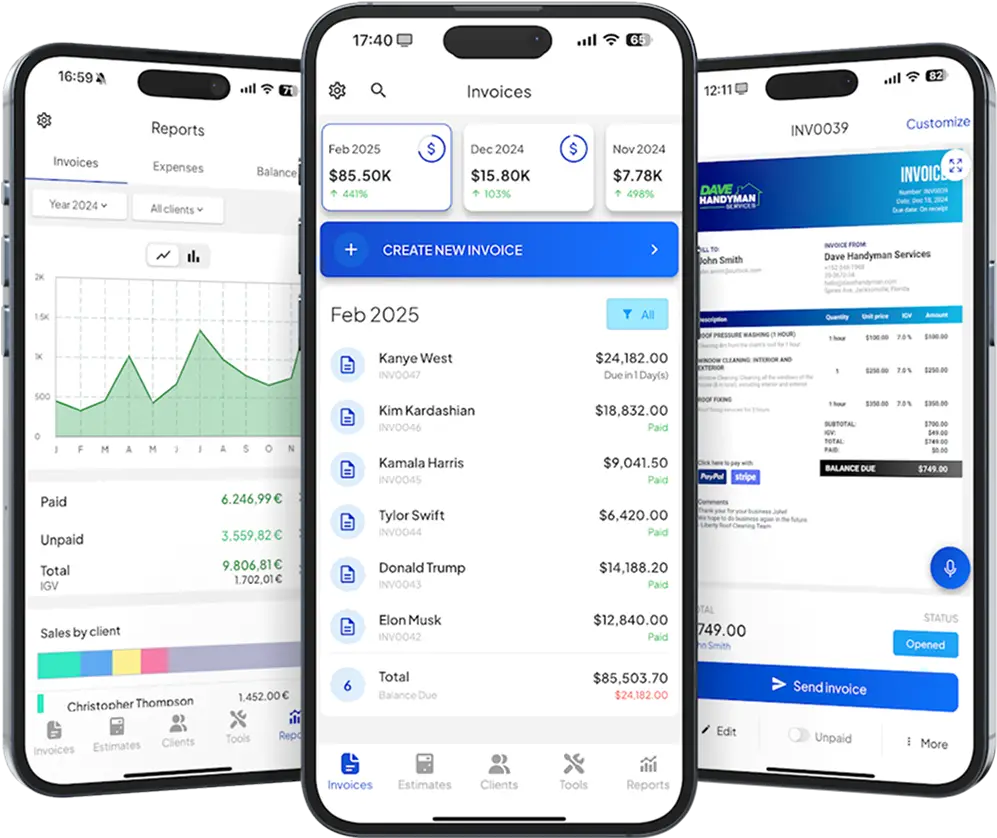
Invoice Fly is invoicing software for freelancers, contractors and small service businesses.
It combines estimates, unlimited invoices, recurring billing, time and expense tracking, payment reminders and online payments. Its tools follow the billing process from quoting work through to tracking payment, without requiring businesses to manage different invoice allowances.
Independent Invoice Fly reviews on Capterra provide additional user feedback.
What is Bloom?
Bloom is a CRM and business-management platform for freelancers and service professionals. It’s particularly geared towards creatives, photographers, studios and other businesses managing projects directly with clients.
Alongside invoicing and payments, Bloom includes lead management, contracts, scheduling, projects, workflows, client portals, galleries and website tools. Its Starter, Standard and Plus plans provide different levels of access to these features.
You can also see independent Bloom reviews on G2 for user feedback.
Invoice Fly vs Bloom: Key differences
The two platforms overlap on invoicing and payments, but the surrounding workflow is quite different.
Invoicing, quotes and contracts
Both platforms let you quote work and invoice customers.
- Invoice Fly: Create unlimited invoices and estimates, turn approved estimates into invoices and monitor payment status. Its estimate and quote software keeps quoting directly connected to billing.
- Bloom: Supports quotes, invoices and payments within projects. Quotes and invoices can also include contracts that clients sign digitally before moving forward.
For more on choosing the right billing document, see our guide to the different types of invoices.
Recurring invoices, deposits and payment schedules
Both apps support repeat billing, but Bloom adds more options around staged payments.
- Invoice Fly: Supports recurring invoices and automated billing schedules for repeat customers.
- Bloom: Can generate recurring invoices daily, weekly or monthly and optionally auto-charge a saved digital payment method on the due date.
Bloom also supports deposits and payment schedules for individual projects. These are separate from recurring invoices and are useful when a single bill needs to be split into stages.
If repeat billing is a regular part of your work, invoice automation can reduce manual invoice creation and follow-ups.
Online payments and payment fees

The platforms support several ways for customers to pay.
- Invoice Fly accepts online payments through providers including Stripe and PayPal. Payment-provider fees can vary by method and location.
- Bloom directly integrates with Stripe and Square for card and ACH payments. It can also display options such as PayPal, Venmo, Cash App, Zelle, bank transfers and cash/check, although some of these work through links or payment instructions rather than automatically processed transactions.
Bloom’s Starter plan currently adds a 1.5% platform fee to card and ACH transactions. Standard and Plus list no additional Bloom platform processing fee, although Stripe, Square or other providers may still charge their own fees.
Whatever platform you use, clear invoice payment terms help customers understand how and when they should pay.
CRM, leads and client portals
Bloom offers more tools for managing leads and client projects.
- Invoice Fly: Keeps client details connected to estimates, invoices, payment history and billing records.
- Bloom: Captures leads, tracks their status and converts them into projects containing invoices, contracts, files, dates and notes.
- Client portal: Bloom clients can access invoices, payments, contracts, galleries, project details and shared files. They can also receive invoices and contracts directly by email without using the portal.
Projects, workflows and automations
Bloom organizes much of its wider functionality around projects and workflows.
- Starter: Up to three active projects/bookings and one workflow.
- Standard: Unlimited active projects and workflows.
- Plus: Unlimited projects and workflows, plus team functionality.
Projects can bring together client information, invoices, payments, contracts, forms, files and other assets. Bloom also supports automated emails and workflow tasks.
Invoice Fly connects estimates, tracked time, expenses and invoices around client jobs rather than providing the same broader CRM workflow system.
Scheduling and online bookings
Bloom includes dedicated scheduling tools, while Invoice Fly focuses on the job and billing workflow.
- Bloom: Set availability, booking limits, lead times and appointment buffers. Booking forms can be shared by link or embedded on a website for self-booking.
- Invoice Fly: Doesn’t include the same dedicated scheduling system, keeping its tools focused on estimates, client work and billing.
For businesses that take appointments, built-in scheduling may be useful. If bookings are managed elsewhere, it may be less important.
Time tracking and hourly billing
Both can support businesses that charge by the hour, but they handle it differently.
- Invoice Fly: Its time-tracking software records billable time against clients and projects so those hours can be turned into invoices.
- Bloom: Supports hourly billing by adding an hourly service as an invoice item and entering the number of hours as the quantity.
Bloom’s current documentation focuses on hourly invoice items rather than a dedicated running timer or time-log workflow. If recording time as you work is important, that’s a useful distinction to consider.
Expenses and business records

Invoice Fly includes expense tracking and receipt scanning as part of its billing workflow. Its receipt scanner app can capture receipts and keep costs alongside other business records.
Bloom’s project tools are more focused on client information, payments, contracts, files and project assets rather than dedicated expense and receipt tracking.
Whichever platform you use, the IRS recommends keeping records that clearly show business income and expenses.
Mobile and browser access
Invoice Fly supports mobile and browser access for creating estimates, tracking time, managing clients and sending invoices.
Bloom offers an iOS app alongside its web platform. The mobile app lets you view projects, reply to clients and update tasks, while the web version provides its fuller set of business tools.
If you’re invoicing from your phone, our guide on how to send an invoice covers the details to include.
QuickBooks integration and business tools

Bloom can connect with QuickBooks to sync invoice and payment information. Payments are still processed through supported providers such as Stripe or Square rather than through QuickBooks itself.
Bloom also offers client-facing tools such as portfolio pages, galleries and asset delivery, which may be useful to photographers and other creative businesses. A separate custom website builder is available for an additional fee.
Invoice Fly keeps its feature set more closely centred on invoicing, estimates, payments, time, expenses and business reporting.
Invoice Fly vs Bloom pricing
Invoice Fly currently offers two subscription options:
- Weekly: $8.99 per week
- Yearly: $98.99 per year
Both Invoice Fly pricing plans include unlimited invoices and estimates.
Bloom currently displays a temporary 50%-off promotion for the first 12 months:
| Bloom plan | Current promotional price | Displayed regular price |
|---|---|---|
| Starter | $7/month | $14/month |
| Standard | $17/month | $34/month |
| Plus | $33/month | $66/month |
Starter includes three active projects/bookings and one workflow. Standard removes those limits, while Plus adds team functionality and removes Bloom branding.
Bloom also offers a 7-day free trial. Its pricing page says yearly billing can save up to 30%, but the current first-year promotion is separate, so check the price shown at checkout before subscribing.
Payment costs should also be considered. Starter currently adds a 1.5% Bloom platform fee to card and ACH transactions, while Standard and Plus list no additional Bloom platform fee. Third-party payment-processing fees can still apply.
Pricing checked September 2026.
Where each app works best
The choice becomes clearer when you look at what happens before and after you send an invoice.
| If you… | Consider |
|---|---|
| Want unlimited invoices and estimates | Invoice Fly |
| Need dedicated built-in time tracking | Invoice Fly |
| Want expense and receipt tracking | Invoice Fly |
| Need contracts and digital signatures | Bloom |
| Manage leads before they become clients | Bloom |
| Want built-in scheduling and self-booking | Bloom |
| Need client galleries or asset delivery | Bloom |
| Want QuickBooks integration | Bloom |
| Want CRM, projects and client management in one workspace | Bloom |
For freelancers and small service businesses, either platform can cover invoicing and payments. The deciding factor is often how much else you want the software to manage around those tasks.
The SBA also provides broader guidance on managing business finances. Invoicing and CRM software can support that work, but the features you need will depend on how your business operates.
Invoice Fly vs Bloom: Which should you choose?
Invoice Fly may suit freelancers, contractors and service businesses that want estimates, unlimited invoices, recurring billing, dedicated time tracking, expenses and payments connected in a billing-focused workflow.
Bloom may suit professionals who want invoicing alongside CRM tools such as lead management, contracts, scheduling, projects and client portals. Its galleries and asset-delivery tools may also be relevant to photographers and creative businesses.
Both can manage invoices and online payments. The main decision is whether you primarily need tools around billing or want the same platform to manage more of the client relationship.