How To Price Construction Jobs Effectively
Table of Contents
Learning how to price construction jobs starts with knowing your real costs (labor, materials, equipment, subcontractors, overhead), and how much margin to add to make the job worth taking. Most experienced contractors rely on detailed takeoffs, current supplier pricing, and past project data to check their numbers before submitting a bid. That helps them stay competitive without underpricing work and losing money to overruns, delays, or change orders.
In this guide, you’ll learn how to price construction projects step by step, which cost factors matter most, and how to choose the right pricing model for different types of jobs.
Basic Construction Pricing Formula
Before anything else, this is the formula every contractor needs to know:
Price = (Direct Costs + Indirect Costs + Contingency) × Markup Factor
- Direct costs include labor, materials, equipment, and subcontractors — the expenses tied directly to completing the job.
- Indirect costs include overhead expenses like insurance, office costs, estimating software, and project management time.
- Contingency is a buffer for the unexpected. Most contractors include a contingency of 5-10% depending on project complexity and uncertainty.
- Your markup factor is what turns covered costs into actual profit. For example, if your total project costs are $40,000 and you apply a 20% markup, your client price would be $48,000. That additional $8,000 becomes your gross profit on the project.
Markup and margin are not the same thing, which is a common source of confusion. Markup is calculated on top of costs; margin is calculated as a percentage of the final price. Getting this wrong means jobs that look profitable on paper can still lose money.
How to Price Construction Using These Major Factors
Accurate construction pricing starts with understanding not just the obvious line items, but the factors that can change costs between the time you estimate and the time the job finishes.
Inflation
Construction material prices change constantly. Lumber, steel, concrete, and fuel costs have all seen significant swings in recent years. When pricing a project that won’t start for several weeks or months, build in a buffer to account for material price increases between estimate and delivery.
Labor Rates
Labor is typically one of the largest cost components in any construction job. According to the BLS, construction is one of the largest employment sectors in the U.S., and your labor rate needs to reflect not just wages, but payroll taxes, workers’ compensation, and benefits. The BLS Occupational Outlook also projects steady demand for construction roles in the years ahead, which puts continued upward pressure on labor costs. Know your fully-loaded labor cost per hour before pricing any job. For a benchmark, our guide on how much construction workers make provides useful context.
Cost of Materials
Price materials from current supplier quotes, not memory. Build a running price list and update it regularly. For larger projects, get written quotes before locking in your bid. Verbal supplier pricing doesn’t protect you if costs rise before your order ships.
Overhead Costs
Many contractors underestimate overhead when pricing jobs. Overhead includes the cost of running your business outside the project itself, things like office rent, estimating software, insurance, trucks, advertising, accounting, and administrative labor. If overhead isn’t built into your markup, profitable-looking jobs can still lose money. To calculate your overhead rate, divide your total monthly overhead costs by your expected billable hours for that month.
Lock In Prices
When possible, lock in material prices with your suppliers at the time of estimate, especially for long-lead items or volatile commodities. A supplier confirmation of pricing for 30-60 days gives you a more defensible bid.
Specify Bid Validity
Every estimate you send should include a validity window, typically 30 days for residential work and negotiable for larger commercial projects. Without it, a client can accept your bid six months later and expect you to honor prices that no longer reflect your actual costs.
Include an Escalation Clause
For longer projects, include a construction contract clause that allows you to adjust pricing if material costs increase beyond a defined threshold (typically 5-10%) during the project. This protects your margin on multi-month jobs without overpricing upfront.
Monitor Construction Industry Reports
Staying current on material and labor cost trends in your region helps you price proactively rather than reactively. Our construction industry trends guide covers the key shifts affecting cost and demand.
Equipment Requirements
Don’t estimate equipment costs from memory. Get current rental quotes for any specialized machinery, and factor in fuel, operator time, delivery, and setup. Owned equipment should be accounted for through a depreciation or usage rate built into your overhead.
Site Conditions and Location
Access limitations, soil conditions, elevation, traffic control requirements, and distance from your base all affect real project costs. A construction site inspection before estimating is non-negotiable — pricing a job you haven’t walked is guessing, not estimating.
For a comprehensive look at launching and running the business behind these estimates, our guide on how to start a construction company is the right starting point.
The Most Common Construction Pricing Models

| Pricing Model | Best For | Main Advantage | Main Risk |
|---|---|---|---|
| Fixed Pricing | Clearly defined residential or commercial projects | Predictable total cost for client | Contractor absorbs overruns |
| Cost-Plus Pricing | Remodels or evolving scopes | Protects contractor from unexpected costs | Less budget certainty for client |
| Guaranteed Maximum Price (GMP) | Large commercial projects | Budget cap builds client trust | Contractor carries costs above cap |
| Unit Pricing | Civil work, paving, utility projects | Flexible when quantities vary | Final project cost can fluctuate |
Each pricing model changes how risk, flexibility, and profitability are shared between the contractor and client.
Fixed Pricing
A fixed price (or lump sum) contract sets one total price for a defined scope of work. The client knows exactly what they’ll pay; you absorb any cost overruns.
Fixed Pricing Advantages and Disadvantages
Advantages:
- Simple for clients to understand
- Predictable total cost upfront
- Cleaner contract terms and administration
Disadvantages:
- Contractor absorbs any cost overruns
- Requires highly accurate estimating
- Scope changes require formal change orders
Fixed pricing works best when the scope is fully defined upfront and you have high confidence in your cost projections.
Cost-Plus Pricing
With cost-plus pricing, the client pays for the actual cost of the work plus an agreed markup or flat fee for your profit. It’s a more transparent approach because the client can see exactly where the money is going throughout the project.
Cost-Plus Pricing Advantages and Disadvantages
Advantages:
- Protects you from cost overruns
- Appropriate for complex or undefined scopes
- Easier to adjust as project conditions change
Disadvantages:
- Clients may scrutinize individual costs
- Requires detailed documentation throughout
- Less budget certainty for the client
Cost-plus is common in commercial work and remodels where full scope definition isn’t possible at bid time.
Guaranteed Maximum Price (GMP)
A Guaranteed Maximum Price (GMP) contract combines elements of both models. You agree on a cost-plus structure but cap the total the client will ever pay. Costs beyond the cap are your responsibility.
Guaranteed Maximum Price Advantages and Disadvantages
Advantages:
- Gives clients a firm ceiling on spending
- Builds trust on large or long-duration projects
- Encourages efficient cost management
Disadvantages:
- Contractor absorbs all overruns above the cap
- Requires thorough upfront scoping and risk assessment
- Mistakes in estimating are fully absorbed by you
GMP contracts are most common on larger commercial or institutional projects where client budget certainty is a priority.
Unit Pricing
Unit pricing sets a fixed rate for specific repeatable items: cost per linear foot of pipe, per square foot of flooring, per cubic yard of concrete. The final total depends on actual quantities completed.
Unit Pricing Advantages and Disadvantages
Advantages:
- Flexible when exact quantities aren’t fully known
- Easy to audit and verify
- Straightforward for quantity-driven scope changes
Disadvantages:
- Final cost is variable until work is complete
- Requires accurate quantity tracking in the field
- Can create billing disputes if field measurements differ
Unit pricing is widely used in civil construction, paving, and site work where scope quantities are measured as work progresses.
Competitive Bidding vs. Negotiated Contracts

Your estimating strategy also changes depending on how you win projects.
Pricing Construction for Competitive Bidding
In competitive bidding, your estimate goes up against other contractors for the same job. The lowest qualified bid usually wins, which means accuracy matters more than padding. Overbid and you lose the job; underbid and you lose money on it.
The keys to competitive bid pricing are a thorough construction estimate process, current supplier quotes, and a markup that covers your costs without an unnecessary buffer. Use our free construction estimate template and construction estimating software to build accurate, consistent bids faster. For more on the full estimating process, see our guide on how to estimate construction jobs.
Pricing Construction for Negotiated Contracts
Negotiated contracts happen when a client selects you before finalizing price, typically based on reputation, relationship, or specialty. Here, price is one part of a broader conversation about value, not the only deciding factor.
In negotiated work, you have more flexibility to price for the real complexity of the project, and you’re less vulnerable to a race to the bottom. Focus on presenting a clear, transparent breakdown of materials, labor, overhead, and your fee, rather than a single number. Our guide to construction quotation covers how to present your numbers professionally.
Conclusion
Knowing how to price construction jobs profitably is one of the most valuable skills you can build as a contractor. It protects your margin, reduces dispute risk, and helps you win the right work at the right price. Start with a thorough takeoff, use current cost data, choose the pricing model that fits the project, and build in the contingencies that real job conditions demand.
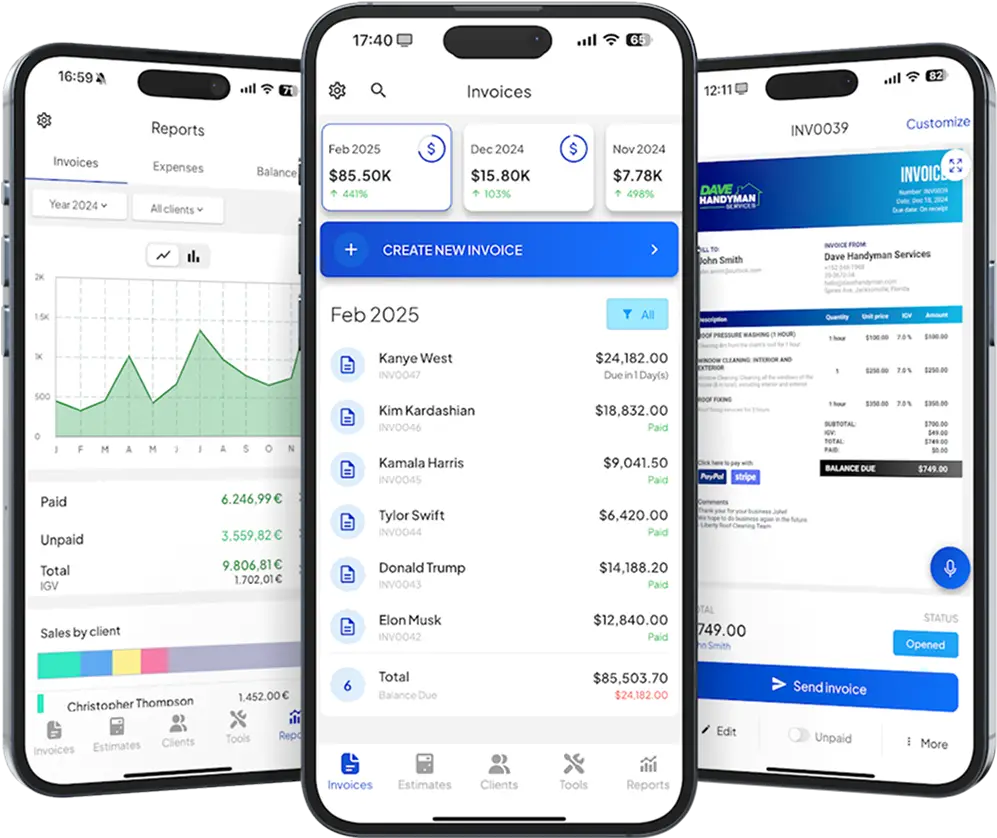
Once your pricing is right, your billing process should match. Use our invoice maker or free invoice generator to issue professional invoices tied to your project milestones, and our free construction invoice template for a ready-to-use format. For the full business blueprint behind profitable construction work, our guide on how to start a construction company covers every stage.