Construction Business Sales: Guide to Boosting Revenue
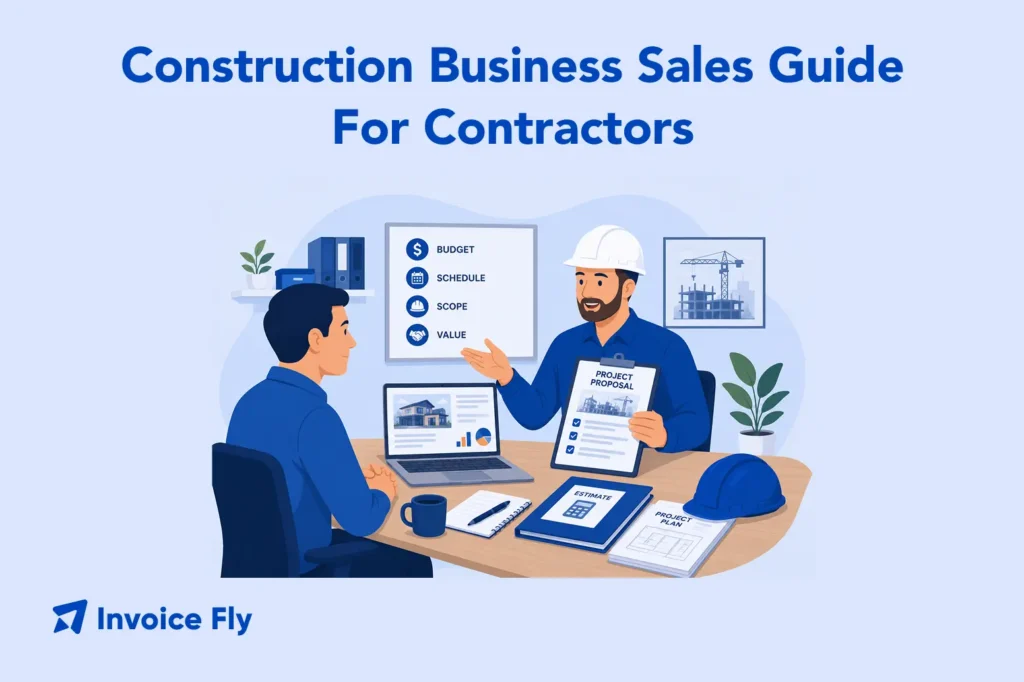
Table of Contents
Construction business sales include everything that moves a lead from first contact through site visits, estimates, proposals, and contract signing. When you build a clear sales process with consistent prospecting, fast follow-up, strong proposals, and trust-building marketing, you can win more profitable projects without racing to the bottom on price.
In this guide, you’ll learn the key steps of a construction sales process and practical tips to improve each stage so you can grow revenue and keep your pipeline full.
What Is the Construction Business Sales Process?
The construction sales process is the repeatable sequence of steps your company uses to turn a potential client into a signed contract. Without a defined process, sales happen randomly. You win some, lose others, and never really know why.
A structured sales cycle gives every lead the same professional experience: timely responses, thorough site visits, detailed proposals, and confident follow-up. According to the Bureau of Labor Statistics, construction is one of the largest industries in the US economy. The competition for projects is real, and contractors with a professional sales approach consistently outperform those who rely on word of mouth alone.
For a full picture of building a competitive construction business, our guide on how to start a construction company covers the foundation.
Key Steps in the Construction Business Sales Process

Prospecting
Prospecting is the work you do before a lead ever contacts you. It includes everything that puts your business in front of potential clients: your construction website, Google Business Profile, social media presence, job site signage, local networking, and referral outreach.
Strong prospecting means you’re not just waiting for inbound calls. You’re actively building visibility in your target market, whether that’s residential remodels, commercial build-outs, or a specific trade niche. The more touchpoints you create, the fuller your pipeline stays.
Lead Qualification
Not every inquiry is worth pursuing. Lead qualification is the process of determining whether a prospect is a realistic fit before you invest time in a full estimate and proposal.
Ask early questions that reveal budget, timeline, decision-making authority, and scope: Is the project funded? Who is making the final call? What’s the desired start date? A lead that can’t answer these questions clearly may not be ready, or may not be the right fit at your price point.
Proposal and Estimate

The proposal is often your first formal impression. A well-built construction estimate and proposal communicates professionalism, attention to detail, and confidence, all of which influence whether a client chooses you over a competitor who may have bid the same number.
Your proposal should include a clear scope of work, itemized costs, timeline, payment schedule, and what’s explicitly excluded. Use our free construction estimate template to build a clean, consistent document every time, and our construction estimating software to speed up the process on larger bids. For a deeper dive into pricing accuracy, see our guides on how to estimate construction jobs and construction quotation best practices.
Follow-Up
This is where most construction companies lose deals they should have won. Sending a proposal and waiting is not a sales strategy.
Follow up within 48 hours of submitting any estimate. Ask if they have questions, whether the scope reflects what they need, and what their timeline for deciding looks like. A single follow-up call or email dramatically improves your close rate. Most clients are simply busy, not disinterested.
Build follow-up reminders into your workflow so no proposal goes cold without at least two or three touch points.
Contract Negotiations
When a client comes back with questions about price or scope, that’s a good sign. They’re engaged. Treat negotiations as a collaborative conversation, not a battle.
Know your floor before you enter any negotiation: the minimum price at which a project is worth taking. Be willing to adjust scope to hit a budget target, but don’t discount your margin to win work that won’t be profitable to deliver. Offering tiered options, basic, standard, and premium, gives clients a choice instead of a yes-or-no on a single number.
For guidance on the legal side of agreements, our construction contracts article covers the key clauses every contractor needs.
Close the Deal

Closing isn’t a pressure tactic. It’s a natural next step when the previous stages have been done well. Once the client has reviewed the proposal and negotiations are complete, make it easy to say yes.
Send a clear contract, request a deposit, and confirm the start date. Use our free construction invoice template to issue the deposit invoice immediately. Fast billing after a signed contract signals professionalism and sets the tone for the project.
Tips to Improve Your Construction Business Sales
1. Respond Faster Than Your Competition
Speed is one of the easiest ways to stand out. Clients often go with the first contractor who responds professionally, not necessarily the cheapest. Same-day responses to inquiries set you apart in a market where slow follow-up is the norm.
2. Build a Portfolio and Collect Reviews
Before photos, after photos, and client testimonials are some of your most powerful sales tools. Post them on your website and Google Business Profile consistently. A strong construction website with real project examples builds credibility before a prospect ever calls. A solid construction marketing strategy and investment in SEO for construction companies amplify that credibility online.
3. Standardize Your Proposal Format
A messy or inconsistent estimate tells clients you might run the project the same way. A clean, itemized proposal in a consistent format signals that you’re organized, thorough, and reliable.
4. Ask for Referrals Systematically

Referrals are the highest-converting lead source in construction. Ask for them after every completed project, not just occasionally. A simple message to a satisfied client asking if they know anyone planning a project costs nothing and closes at a much higher rate than cold outreach.
5. Track Your Sales Pipeline
You can’t improve what you don’t measure. Use a simple CRM or spreadsheet to track every lead: source, status, proposal value, and outcome. Over time, patterns emerge, which lead sources close best, where deals fall apart, and which project types are most profitable. Our guide to construction CRM software covers the tools worth considering.
6. Price for Profit, Not Just to Win
Chasing every bid at the lowest price builds revenue but destroys margin. Know your true cost per project, labor, materials, overhead, and your time, and price accordingly. Focus your energy on clients and project types where you can deliver genuine value at a profitable rate.
7. Stay on Top of Industry Trends
Understanding what’s driving demand in your market helps you position your services ahead of the curve. Our construction industry trends guide is a good resource for staying informed.
8. Get Your Back-Office in Order
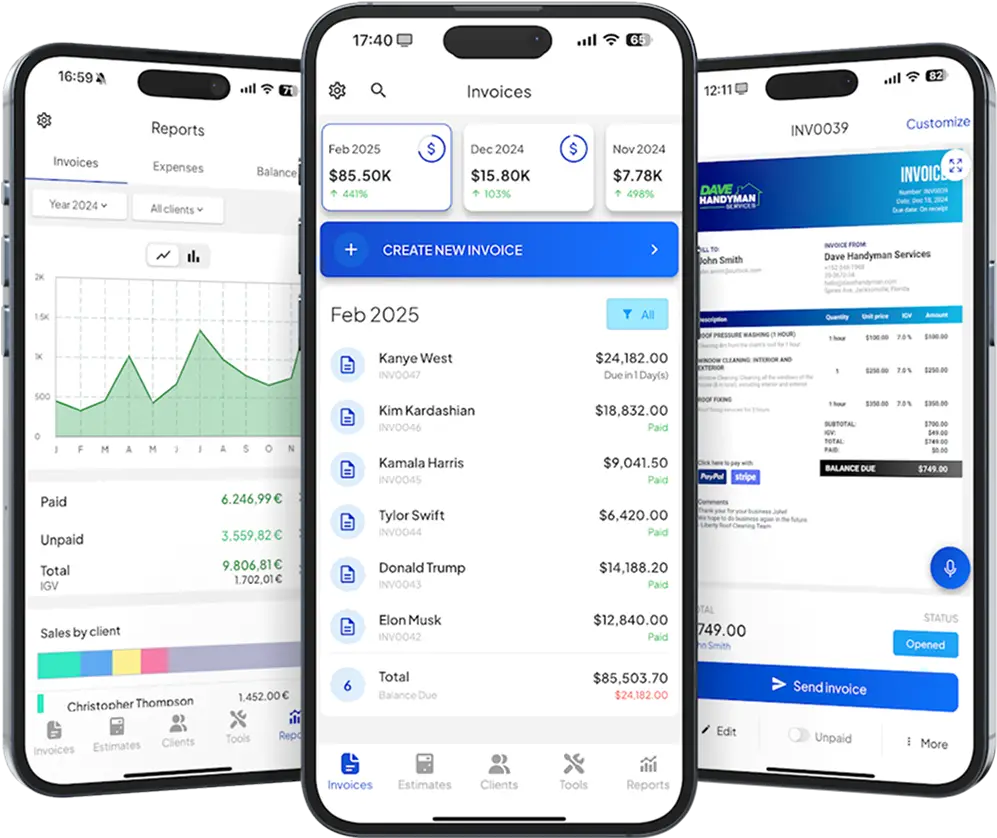
Slow invoicing, missed payment follow-ups, and disorganized job records make your business feel less professional to clients and cost you money. A clean billing process, from deposit to final invoice, reinforces the trust you built during the sales process.
Conclusion
Increasing construction business sales isn’t about working more hours or cutting prices. It’s about building a repeatable process that moves the right leads to a signed contract efficiently and professionally. Invest in your proposal quality, follow up consistently, and market your completed work to stay visible between projects.
The operational side should match the sales side. Our invoice maker and free invoice generator keep your billing sharp from first deposit to final payment. And for a complete guide to building the business that supports all of this, revisit our article on how to start a construction company.