Pest Control Contracts Explained: Types and How to Bid
Table of Contents
Pest control contracts are written service agreements that spell out how often a technician will visit, which pests are covered, what methods they use, and how much the customer pays over time. They help prevent disputes, keep revenue predictable, and prove compliance for commercial and government clients. Some customers, however, still prefer flexible, no-contract pest control for one-time jobs.
In this guide, you’ll learn how to bid pest control contracts, what to include in a strong service agreement, how government pest control contracts work, and when a no-contract model makes sense for your business.
How to Bid Pest Control Contracts
Winning a pest control contract starts long before you submit a proposal. A strong bid is built on a thorough site assessment, accurate pricing, and a professional presentation that instills confidence in your ability to deliver.
Here’s the core bidding process:
- Conduct a site inspection – Visit the property before quoting. Assess the pest pressure, building size, access points, and any specific compliance requirements for the facility type.
- Define your scope of service – Specify exactly which pests are covered, how many visits are included, what treatment methods you’ll use, and what falls outside the agreement.
- Calculate your costs accurately – Factor in labor, materials, equipment, travel, and overhead. Underbidding to win contracts is a fast way to lose money on every job.
- Price for recurring value – Annual and recurring contracts should reflect the long-term relationship, not just the first visit. Build in a margin that keeps the agreement worth servicing.
- Submit a professional proposal – Include your license number, insurance documentation, service schedule, pricing breakdown, and contract terms. A polished proposal helps clients feel confident they’re hiring a professional operation.
For a full overview of building a pest control operation from the ground up, our guide on how to start a pest control business walks through every step.
Types of Pest Control Contracts

Not all pest control contracts work the same way. Here are the different models to help you position your services for the right customers.
| Contract Type | Best For | Typical Length | Key Advantage |
|---|---|---|---|
| Residential | Homeowners | Quarterly or annual | Recurring revenue |
| Commercial | Businesses & facilities | Annual or multi-year | Higher contract value |
| Government | Public sector facilities | Multi-year | Stable long-term work |
| No-Contract | One-time customers | Per visit | Easier customer acquisition |
| Annual | Ongoing prevention | 12 months | Predictable scheduling |
| One-Time | Single infestations | Single visit | Flexible service option |
Commercial Pest Control Contracts
Commercial pest control contracts cover businesses, restaurants, warehouses, hotels, and multi-unit properties. These agreements are typically more detailed than residential ones. They often include compliance documentation, scheduled inspection reports, pest logs, and specific protocols required by health inspectors or industry regulations.
Commercial clients expect consistency and accountability. Pricing is typically higher than residential, and contracts often run for one year or multiple years. A strong pest control service contract with clear reporting requirements is essential for retaining commercial accounts.
Residential Pest Control Contracts
Residential pest control contracts are usually structured as quarterly or monthly service plans. Homeowners sign up for recurring treatments, including perimeter sprays, interior inspections, and termite monitoring, in exchange for a discounted rate versus one-time visits.
The key to selling residential contracts is demonstrating ongoing value. Customers need to understand why recurring treatment is more effective than a single application.
Government Pest Control Contracts

Government pest control contracts, covering schools, public housing, military facilities, and municipal buildings, are awarded through a formal procurement process. These contracts can be highly lucrative and long-term, but the bidding process is more involved. Most require certified applicators, liability insurance, compliance with IPM (Integrated Pest Management) standards, and detailed record-keeping.
Government contracts are typically posted on federal, state, or local procurement portals. SAM.gov is the primary portal for federal opportunities.
Pest Control With No Contract
Not every customer wants a commitment. No-contract pest control, where clients pay per visit with no recurring obligation, appeals to renters, people dealing with a one-time infestation, or customers who want to try a service before signing an annual agreement.
Offering a no-contract option can expand your customer base, but it reduces predictable revenue. Many businesses use it as a gateway, letting the quality of the first visit convert customers into recurring contracts.
Annual Pest Control Contracts
Annual contracts provide the most stable revenue for pest control businesses. Customers pay a set amount, either upfront or monthly, for a defined number of visits and treatments throughout the year. This model works especially well for general pest maintenance, termite monitoring, and commercial accounts where consistent documentation is required.
One-Time Pest Control Contracts
Even a one-time visit should be documented with a written agreement. A one-time pest control contract covers the specific treatment, the pests targeted, what the customer can expect, and any warranty or follow-up terms. It protects both parties and sets clear expectations.
Are Pest Control Contracts Worth It?
For pest control businesses, the answer is almost always yes, with the right clients and pricing.
Recurring contracts create predictable monthly revenue, reduce the cost of constantly acquiring new customers, and make your business easier to operate and scale. A strong base of annual contracts also increases the value of your business if you ever decide to sell.
For customers, contracts typically offer a lower per-visit rate than one-time services, along with priority scheduling and coverage guarantees. The EPA recommends that customers review service contracts carefully before signing, including what pests are covered, what happens if the problem persists, and how to cancel, which means your contract language needs to be clear and fair.
How to Get Government Pest Control Contracts
Government pest control contracts require more preparation than residential or commercial work, but the payoff, including long-term agreements, stable payments, and strong client references, makes the effort worthwhile.
Steps to pursue government contracts:
- Get properly licensed and certified – Federal and state facilities require certified applicators. Know your state’s requirements and make sure your team is current. See our guide on how to get a pest control license.
- Carry adequate insurance – Government contracts typically require higher liability limits than residential work. Review your coverage before bidding. Our guide on pest control insurance covers what you need.
- Register on procurement portals – SAM.gov for federal work, plus your state and local government purchasing portals. Registration is required before you can bid.
- Understand IPM requirements – Many government facilities require Integrated Pest Management protocols, emphasizing prevention and reduced chemical use. Make sure your service methods qualify.
- Follow bid specifications exactly – Government RFPs are detailed and strict. Missing a required document or specification can disqualify your bid regardless of pricing.
Requirements for Pest Control Contracts

A strong pest control service contract should clearly define the scope, terms, and responsibilities for both parties. Many businesses start with a pest control contract template and customize it for different property types and service levels. Every agreement should include:
- Business and client information – legal names, addresses, license numbers
- Scope of service – which pests are covered, treatment methods, and areas of the property included
- Service schedule – frequency of visits and expected visit windows
- Pricing and payment terms – total cost, billing cycle, and accepted payment methods
- Cancellation policy – notice required, any early termination fees
- Warranty or guarantee terms – what you’ll do if the problem persists between visits
- Liability and insurance information – proof that you carry appropriate coverage
- Compliance documentation (for commercial/government) – inspection logs, treatment records, and certifications
The National Pest Management Association provides contract resources and guidance specifically for licensed pest control professionals.
Most Common Mistakes in Pest Control Contracts
- Vague scope language – “General pest control” without specifying which pests invites disputes when a customer reports an uncovered species
- No cancellation clause – Leaving cancellation terms undefined leads to awkward conversations and potential legal issues
- Underpricing recurring services – Discounting too aggressively to win annual contracts can make them unprofitable to service
- Skipping the site inspection – Bidding without seeing the property leads to inaccurate pricing and scope gaps
- Missing compliance documentation – Commercial and government clients may void contracts if required records aren’t maintained
Tips for Success Getting Pest Control Contracts

- Start local – Small commercial accounts like restaurants, daycares, and retail stores are more accessible than large facilities and build your portfolio fast
- Ask for referrals – A satisfied commercial client is your best introduction to similar businesses in the area
- Offer flexible entry points – A one-time treatment with a follow-up offer is an easier sell than an annual commitment upfront
- Document everything – Detailed service records make renewals easier and protect you if compliance is ever questioned
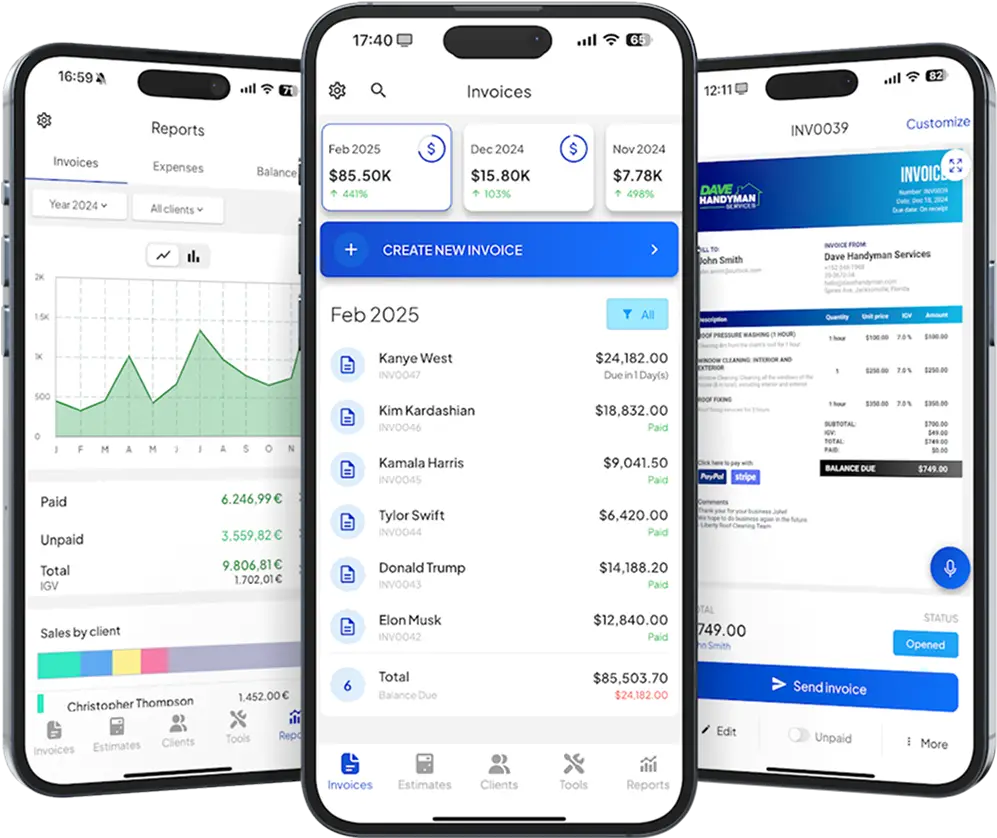
- Use software built for your industry – Our software for pest control helps you manage contracts, schedule recurring visits, and invoice clients without the paperwork overhead
Conclusion
Pest control contracts are the backbone of a sustainable service business. Whether you’re building recurring residential routes, landing commercial accounts, or pursuing government pest control contracts, a clear and professional service agreement protects your revenue, sets client expectations, and keeps your operations compliant.
Pair strong contracts with reliable billing to keep cash flow consistent. Our invoice maker and free invoice generator make it easy to issue professional invoices tied to each contract and service visit. And for everything else that goes into building a profitable pest control operation, our guide on how to start a pest control business has the full roadmap.