Invoice Fly vs. Jobber Comparison Guide 2026
Table of Contents
Some businesses need a faster way to send estimates and invoices. Others need one system to schedule jobs, coordinate workers, and collect payment. That is the central difference in the Invoice Fly vs. Jobber decision. This guide compares pricing, invoicing, scheduling, payments, team tools, and everyday usability.
Invoice Fly vs. Jobber at a Glance
| Category | Invoice Fly | Jobber |
|---|---|---|
| Best for | Freelancers, contractors, and small service businesses focused on billing | Home-service businesses managing schedules, customers, jobs, and teams |
| Estimates and invoices | Unlimited with either paid subscription | Included, with advanced quote tools on higher plans |
| Scheduling and dispatch | No full dispatch system | Calendar, online booking, routing, and worker assignments |
| Recurring work | Recurring billing is advertised, but current documentation conflicts | Recurring jobs, visits, billing schedules, and eligible automatic payments |
| Time and expenses | Included with paid subscriptions | Available from Connect, with deeper job costing on Grow |
| Customer access | Customer records and document sharing | Client hub for quotes, appointments, payments, receipts, and new requests |
| Starting paid price | $8.99/week or $98.99/year | $29/month with annual billing |
| Free option | Free browser-based document generators | 14-day trial, but no permanent free plan |
Prices and features were reviewed for the US market in September 2026. Check the current terms before subscribing.
What Is Invoice Fly?
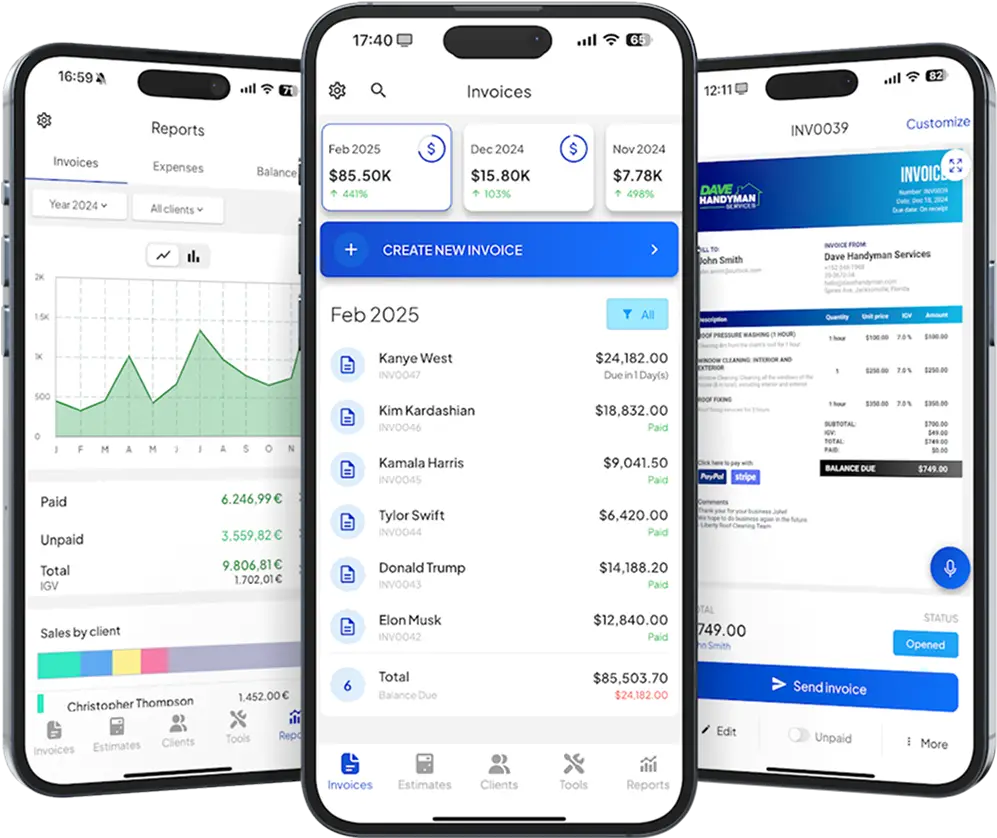
Invoice Fly helps service professionals handle admin between jobs. You can prepare an estimate, request a signature or deposit, record time and expenses, convert approved work into an invoice, and track its status.
The paid app includes receipt capture, customer records, notifications, and reports. Its weekly and yearly subscriptions offer the same main features, with no advertised limit on invoices or estimates. Free browser tools can also create one-off business documents.
Invoice Fly is focused billing software, not a complete accounting or dispatch system. New owners can learn how to write an invoice before choosing a template.
What Is Jobber?
Jobber is field-service management software for cleaners, landscapers, plumbers, electricians, painters, and similar businesses. It follows work from the first request through quoting, scheduling, service, invoicing, and payment.
Office staff can assign visits and share job instructions. Customers can use the client hub to approve quotes, check appointments, pay, and request more work. Jobber can replace several tools, although it takes more setup than a focused invoice app.

Invoice Fly vs. Jobber: Key Differences
Now we will take a look at the most important differences between the two.
Invoicing and Estimates
With Invoice Fly, an approved estimate does not become another document to rebuild. You can price the job, collect a signature or deposit, and convert the estimate into an invoice. Time and expense records stay close to billing.
Jobber connects each quote to a job record and schedule. Higher plans add options such as advanced quote customization, optional line items, and automated follow-ups. Jobber offers more structure, while Invoice Fly keeps the route from estimate to payment shorter.
Scheduling and Job Management
Scheduling is the clearest dividing line. Invoice Fly organizes billing information by customer and job, but it does not try to dispatch crews. That may be all a solo contractor needs if an existing calendar already handles appointments.
Jobber provides a shared schedule for visits, worker assignments, locations, and progress. Job records can hold instructions, notes, photos, checklists, and property details. This structure matters most when information gets lost between the office and field.
Customer Management and Client Communication
Invoice Fly keeps customer details beside estimates, invoices, statements, payments, and follow-ups. It covers the essentials when most communication happens while agreeing on the job and collecting the final payment.
Jobber maintains a fuller history of requests, properties, quotes, appointments, jobs, invoices, payments, and messages. Its client hub and automated messages reduce routine calls, although a freelancer may not need that extra layer.
Recurring Jobs and Recurring Invoices
Invoice Fly’s current product pages advertise scheduled recurring invoices and automatic reminders. However, its Help Center still says recurring billing automation is unavailable. Confirm the feature in your account before choosing Invoice Fly specifically for automated repeat billing.
Jobber separates the service schedule from billing. A lawn-care company could arrange weekly visits but invoice monthly or after each visit. Eligible plans also support automatic charges to a saved payment method. Review automated bills regularly. A careful invoice automation process should not allow outdated charges to continue.
Time and Expense Tracking
Invoice Fly keeps hours, expenses, and receipt images with the customer’s billing records. A contractor can log time and photograph a materials receipt while the job is still fresh, then use those details when preparing the invoice. This also creates a useful paper trail. IRS Publication 583 lists invoices, receipts, and paid bills among the records businesses may need to keep.
Jobber adds time and expense tracking from the Connect plan. On Grow, those figures feed into job costing, so you can compare revenue with labor, materials, and other expenses to see whether the job delivered the margin you expected.

Online Payments and Payment Follow-Ups
Invoice Fly lets customers pay online through connected providers such as Stripe and PayPal. Your provider determines the processing fees, payment methods, and payout times. You can also see when an invoice has been sent, viewed, paid, or marked overdue, making it easier to know when a customer needs a reminder.
Jobber Payments gives customers more ways to pay through the client hub, including cards, digital wallets, and eligible US bank transfers. It also supports Tap to Pay and automatic payments for qualifying recurring jobs.
Keep in mind that while payment tools can simplify collection, the invoice still needs clear payment terms and an appropriate due date so customers know what to expect.
Team and Field-Service Management
Invoice Fly now supports role-based access for owners, managers, employees, and accountants. Employees can work with their own documents, managers can handle wider operations, and accountants can receive read-only access. But Invoice Fly does not include Jobber-style crew scheduling or route optimization.
Jobber is built for businesses where the office and field team need to stay in sync. An office manager can schedule a visit, assign it to a technician, and add instructions or a checklist. The technician can then view those details, track time, add notes, and mark the work complete from the mobile app. Higher plans also offer routing and crew scheduling for businesses managing several workers or appointments.
Reporting and Job Costing
Invoice Fly reports give you a clear view of day-to-day billing. You can check how much you have invoiced, which customers still owe money, what payments have arrived, and how recorded expenses compare with income.
Jobber’s higher plans look more closely at individual jobs. By combining revenue with material, labor, and expense costs, its job-costing tools help you see which work was profitable and which jobs fell short of the expected margin.
These reports support business decisions, but they do not replace bookkeeping, payroll, tax preparation, or bank reconciliation. The US Small Business Administration’s business management resources provide broader guidance on finances, taxes, employees, and compliance.
Integrations and Business Tools
Invoice Fly is mostly self-contained. Estimates, invoices, time entries, expenses, receipts, payments, and reports stay within one focused set of tools. For a small business, that can mean less setup and fewer systems to check during the day.
Jobber is designed to connect with a wider software stack. Its marketplace offers more than 100 integrations, and Connect or higher includes QuickBooks Online syncing. These connections can reduce repeated data entry, but confirm exactly what information transfers before depending on an integration for bookkeeping or customer communication.
Ease of Use and Mobile Access
Invoice Fly asks for less setup because the experience revolves around estimates, invoices, costs, and payments. A contractor can add business details and a customer, then start preparing documents without first creating booking rules, dispatch processes, or a large team structure.
Jobber’s mobile app supports office and field work, but the platform takes longer to configure. Compare recent Jobber reviews on G2 and Jobber customer reviews on Trustpilot. Focus on reviews from businesses like yours.

Invoice Fly vs. Jobber Pricing
| Pricing detail | Invoice Fly | Jobber Core | Jobber Connect | Jobber Grow | Jobber Plus |
|---|---|---|---|---|---|
| Starting price | $8.99/week or $98.99/year | $29/month billed annually | $99/month billed annually | $149/month billed annually | $399/month billed annually |
| General fit | Unlimited invoicing and estimates with full paid access | One user needing quotes, invoices, payments, booking, and basic reports | Automation, QuickBooks Online sync, time tracking, and expenses | Advanced quotes, job costing, two-way texting, and custom automations | Larger operations needing broader crew and management tools |
Invoice Fly is the more affordable option, especially with annual billing, and offers straightforward pricing for unlimited invoicing and estimates. Jobber costs more because its plans (see Capterra pricing overview) include broader field-service management tools, with prices increasing according to features, billing commitment, and team needs. Jobber offers a 14-day trial but no permanent free plan, and its official website should be used to confirm current rates.
Invoice Fly vs. Jobber for Contractors and Service Businesses
Think about where work starts to pile up. If jobs are getting done but estimates, receipts, expenses, and invoices are still waiting for attention, Invoice Fly addresses that problem directly. It is a practical Jobber alternative for contractors who want better billing without setting up a complete field-service system.
Jobber makes more sense when the trouble begins earlier. Shared schedules, recurring visits, customer updates, and worker assignments can help an office coordinate several technicians and keep jobs moving.
Invoice Fly fits naturally when one person handles both the service and the paperwork. Jobber adds structure when information must pass between customers, office staff, field crews, and bookkeepers. In both cases, knowing when to send invoices can shorten the gap between finishing the work and getting paid.

Invoice Fly vs. Jobber: Which Should You Choose?
The choice comes down to how much of your business you want the software to run. Invoice Fly focuses on the paperwork around each job, from the first estimate to the final payment. It is affordable, quick to set up, and well suited to independent professionals who want to spend less time on admin without changing how they schedule their work.
Jobber takes on a larger role. Its schedules, client hub, recurring jobs, worker assignments, automations, and job-costing tools can help a growing field-service company coordinate work from the office to the job site. That added structure can justify the higher price when several people need to stay informed.
For a solo contractor or small service business focused on faster billing, Invoice Fly is likely to be the more natural fit. Jobber becomes the stronger choice when managing the team and schedule is just as challenging as sending the invoice.