Invoice Fly vs Zoho Comparison Guide (2026)
Table of Contents
Both Invoice Fly and Zoho Invoice simplify invoicing, but their pricing models are very different. Invoice Fly includes unlimited invoices and estimates with its paid plans, while Zoho Invoice is free but places annual limits on invoices, users, and projects.
The better option depends on how often you invoice, where you work, and how much customization you need. This guide compares pricing, automation, payment options, project tools, and everyday usability to help you find the best fit and spend less time on billing.
Invoice Fly vs Zoho at a Glance
| Invoice Fly | Zoho Invoice | |
|---|---|---|
| Best for | Contractors and mobile service businesses with regular billing work | Freelancers and small businesses that want customizable free invoicing |
| Price | $8.99/week or $98.99/year | Free |
| Invoice allowance | Unlimited on both paid plans | Up to 500 per year |
| Estimates and quotes | Unlimited | Included |
| Users | One user per account | Up to 2 |
| Organizations | One business per account | Up to 2 |
| Active projects | No advertised three-project cap | Up to 3 |
| Recurring invoices and reminders | Included | Included |
| Expense and receipt tools | Expense tracking and receipt scanning | Expense tracking, receipt uploads, and autoscan |
| Time tracking | Included | Included |
| Customer portal | Client records and statements | Customer self-service portal |
| Online payments | Stripe and PayPal, supporting cards, digital wallets, ACH, and SEPA | Multiple payment-gateway integrations |
| Wider ecosystem | Focused Invoice Fly tools | Connects with other Zoho products |
Quick verdict: Zoho Invoice offers exceptional value for businesses that can stay within its usage limits. Invoice Fly is the more flexible choice for contractors who send invoices often and want a direct, mobile-friendly path from quote to payment.

What Is Invoice Fly?
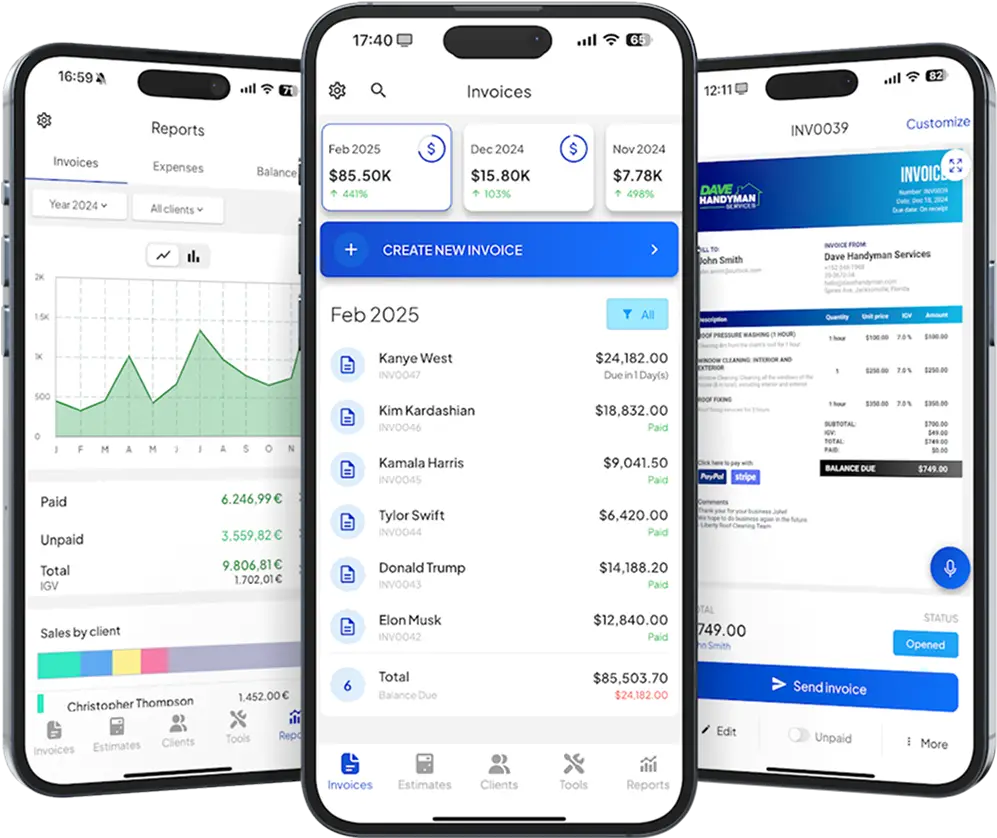
Invoice Fly brings the paperwork for a service job into one place. You can create an estimate, request approval or a deposit, send the final invoice, and track when the customer views or pays it.
Beyond this basic estimate-to-payment process, the app supports recurring billing, payment reminders, time tracking, receipts, expenses, client management, and business reports. These features are available with both paid plans, which do not advertise limits on invoices or estimates.
Having these tools in one app helps contractors and service professionals record job details as they work instead of leaving every administrative task until the end of the day.
However, Invoice Fly is not designed to replace full accounting or payroll software. Its focus is keeping estimates, invoices, payments, and follow-ups organized.
Still refining your billing process? Get tips on how to write an invoice that is clear and easy for customers to understand.
What Is Zoho Invoice?
Zoho Invoice is free invoicing software for freelancers, consultants, and small businesses. Its Zoho features include estimates, invoices, recurring billing, expenses, time tracking, projects, reports, online payments, and a customer portal.
Free does not mean unlimited. Zoho Invoice allows up to 500 invoices per year, two users, two organizations, and three projects. Its documents also carry “Powered by Zoho Invoice” branding. These limits are listed on the Zoho Invoice pricing page on Capterra.
Five hundred invoices may be plenty for a consultant, while a repair or cleaning business that bills several customers a day could reach the cap.
The platform can also connect with other Zoho products for accounting, customer management, analytics, digital signatures, and project work. The Zoho Invoice overview on Capterra provides a third-party summary of its tools.
Invoice Fly vs Zoho: Key Differences
Invoicing and Estimates
Invoice Fly and Zoho Invoice both support the full process from preparing an estimate to collecting payment. You can add customers, services, quantities, taxes, discounts, due dates, notes, and payment options, then convert an approved estimate into an invoice.
The main difference is capacity. Invoice Fly does not advertise an annual limit on invoices or estimates, which makes it better suited to businesses with high or seasonal billing volumes. Zoho Invoice allows up to 500 invoices per year, or an average of about 42 per month. Its quotes can include expiration dates and custom fields, and customers can accept them through the client portal.
Whichever app you use, a complete and clearly structured invoice can help prevent customer questions and payment delays. Review Invoice Fly’s checklist of professional invoice elements before sending your next bill.
Invoice Templates and Customization
Both apps let you create branded, professional invoices, but Zoho offers more design flexibility. You can customize colors, fonts, logos, addresses, item tables, custom fields, and receipts. You can also assign templates to specific contacts and create invoices in multiple languages.
Invoice Fly keeps customization simpler, with options for logos, colors, business details, taxes, discounts, notes, due dates, job images, and itemized charges. Its streamlined controls make it easier to create invoices without spending much time on layout.
Zoho is the stronger choice for businesses with detailed branding requirements or multilingual clients. Invoice Fly is better suited to users who value speed and simplicity.
Recurring Invoices and Payment Reminders
Invoice Fly keeps recurring billing straightforward. You can schedule repeat invoices, track their status, and remind customers about upcoming or overdue payments. Before automating a bill, confirm the amount, service period, invoice due date, and invoice payment terms.
Zoho offers more advanced controls through recurring profiles, which can include unbilled project time and supported automatic payment options. Its reports also track failed payments, retry attempts, and expiring cards, making it better suited to businesses with more complex recurring billing needs.
Expense Tracking and Receipt Management
Both platforms let you save receipt images and organize business expenses. Invoice Fly allows mobile workers to record purchases for fuel, supplies, parts, and materials alongside their estimates and invoices.
Zoho offers more detailed expense controls. You can categorize expenses, track mileage, attach receipts, and add billable costs to customer invoices. Its autoscan feature can also read uploaded receipts and fill in key expense details.
Invoice Fly is a practical choice for contractors who want to manage job expenses and billing in one workflow. Zoho is better suited to businesses that need a more configurable expense system.
Good recordkeeping matters whichever platform you choose. The IRS lists invoices, receipts, and paid bills among the records businesses may need to retain in Publication 583.

Time Tracking and Project Management
Invoice Fly keeps time tracking focused on billing. You can record hours by client or job, then use those entries to calculate labor costs and create accurate invoices.
Zoho provides more project structure, organizing time by project and task. You can review unbilled hours, add time and expenses to invoices, and share timesheets and progress with clients through the portal. This makes Zoho a better fit for collaborative projects, although its three-project and two-user limits may be restrictive for businesses managing several active jobs.
Online Payments
Invoice Fly connects with supported payment providers, including Stripe and PayPal. Your chosen provider determines the transaction fees, payout times, and payment methods available to customers. This setup is a good fit for businesses that already use Stripe or PayPal and want to keep payments connected to their billing process.
Zoho supports a wider selection of payment gateways, although availability varies by country. Customers can pay through the client portal, and businesses can also record offline payments. Zoho does not charge a subscription fee, but payment providers may still apply processing or other transaction fees.
Customer Management and Client Portals
Invoice Fly keeps customer information organized in one profile, including contact details, documents, payment history, statements, tags, and revenue data. This straightforward setup works well for tradespeople who mainly need quick access to customer records and payment status.
Zoho offers more client-facing features through its self-service portal. Customers can approve quotes, view invoices and timesheets, make payments, check statements, and leave feedback. This makes Zoho better suited to businesses that need ongoing client collaboration.
Integrations and the Zoho Ecosystem
Zoho Invoice connects with Zoho’s CRM, accounting, analytics, project management, and electronic signature products. These integrations can be valuable for businesses already using the Zoho ecosystem, although they may require additional setup and decisions about how information moves between tools.
Invoice Fly is more self-contained, which means fewer systems for contractors to set up and manage. However, neither platform covers every aspect of running a business. The US Small Business Administration offers practical guidance on financial and operational tasks beyond invoicing.
Ease of Use and Mobile Access
Invoice Fly and Zoho Invoice are available through web browsers and mobile apps, but Invoice Fly offers a more streamlined experience. It focuses on common field tasks such as pricing jobs, tracking time, saving receipts, sending invoices, and checking payment status.
Zoho is also user-friendly, but its wider range of templates, portals, projects, roles, reports, and integrations requires more setup. This added flexibility may be worthwhile for businesses that need it, while users with simpler billing needs may prefer Invoice Fly’s more direct approach.
Tip! For additional insights on Zoho, read recent reviews on G2 or Trustpilot. Focus on patterns that reflect your priorities rather than relying on a single rating.

Invoice Fly vs Zoho Pricing
| Pricing detail | Invoice Fly | Zoho Invoice |
|---|---|---|
| Price | $8.99/week or $98.99/year | Free |
| Usage limits | Unlimited invoices and estimates | 500 invoices per year, 2 users, 2 organizations, and 3 projects |
Zoho Invoice is a permanently free invoicing platform, but it has annual invoice, user, project, and organization limits. Invoice Fly requires a subscription but removes invoice and estimate limits. Zoho offers better value for smaller businesses within its allowances, while Invoice Fly provides more flexibility for higher-volume invoicing.

Invoice Fly vs Zoho for Freelancers and Small Businesses
Invoice Fly’s invoice automation process is particularly well suited to freelancers, contractors, and small service businesses that need to create estimates and invoices wherever work happens. You can price a job, track hours, save receipts, and send the final bill without worrying about annual invoice or estimate limits. That flexibility leaves room for busy weeks, seasonal demand, and business growth.
Zoho may still be a good choice if you invoice a small group of regular clients and want to avoid a subscription. It offers extensive customization and a useful client portal, but the limits of 500 invoices per year, three projects, and two users may become restrictive as your workload grows.
Invoice Fly vs Zoho: Which Should You Choose?
Choose Invoice Fly if you want a fast, field-friendly way to move from estimate to payment. Its unlimited invoices and estimates make it especially appealing to contractors and service businesses that bill frequently, face seasonal demand, or simply do not want to monitor annual limits.
Choose Zoho Invoice if avoiding a subscription is your top priority and you need deeper customization, a client portal, structured projects, or connections to other Zoho apps. Just make sure its limits on invoices, projects, users, and organizations leave enough room for your business.
Ultimately, Invoice Fly offers a more focused experience for professionals who want to spend less time managing billing software and more time completing paid work. Zoho provides more configuration for free, but Invoice Fly’s simpler approach and open invoicing capacity make it the stronger choice for a busy, growing service business.