Website for Plumbers: Design, Pages, And Must-Have Features
Table of Contents
- Why Your Plumbing Company Needs a Website
- How to Describe Your Plumbing Company on Your Site
- How to Create a Website for a Plumbing Company
- Basic Plumbing Website Pages
- What to Include on a Plumbing Company Website
- Inspiring Examples of the Best Websites for Plumbers
- After You Have Created a Plumber Website
- Make Every Website Enquiry Count
- FAQs
A website for plumbers is one of the most effective ways to generate leads, build trust, and turn online searches into booked jobs.
A well-designed plumbing website clearly explains your services, showcases customer reviews, highlights your service areas, and makes it easy for homeowners to call or book an appointment from any device.
This guide will cover:
- Why every plumbing company needs a website
- How to describe your plumbing business online
- How to create a plumbing website
- The essential pages every plumbing website should include
- Features that help generate more calls and bookings
- Examples of effective plumbing websites
- What to do after your website goes live
- Frequently asked questions
Why Your Plumbing Company Needs a Website
Plumber Consulting Homeowner Kitchen
According to the U.S. Bureau of Labor Statistics, employment for plumbers, pipefitters, and steamfitters is projected to grow 4% over the next decade.
As more homeowners search online for plumbing services, having a professional website can help your business stand out.
A professional website helps you:
- Show the plumbing services you offer
- Explain the areas you serve
- Display customer reviews
- Make it easy to call or book online
- Appear in local Google searches
Dedicated pages for services like drain cleaning, water heater installation, and leak detection help customers find the information they need while improving your visibility in local search results.
If you’re starting a new company, how to start a plumbing business covers the licensing, pricing, and systems you’ll need. As your business grows, plumbing software can help manage bookings, scheduling, estimates, and invoices from one place.
How to Describe Your Plumbing Company on Your Site
The U.S. Bureau of Labor Statistics notes that plumbers perform a wide range of repair and installation work, so clearly listing your services helps customers know you’re the right fit.
Your homepage should quickly explain what you do, where you work, and how customers can contact you.
For example:
Licensed plumbing company providing emergency repairs, drain cleaning, water heater installation, and pipe replacement across Denver and surrounding areas.
Then build trust by highlighting:
- Licensed and insured technicians
- Same-day or emergency service
- Years of experience
- Customer reviews
- Guarantees or warranties
Focus on how you’ll solve the customer’s problem rather than telling your company’s history.
Once a customer gets in touch, a plumbing estimate template helps you send a clear, professional quote before work begins.
How to Create a Website for a Plumbing Company
tradesperson using laptop instructions
You don’t need to be a web designer to build a professional plumbing website. Many plumbers use website builders that include ready-made templates, while others hire a designer to create a custom site.
Here are the three most common options.
Use a Website Builder
Website builders are the easiest way to get online.
Platforms like Wix, Squarespace, and Mighty Sites include plumbing templates, drag-and-drop editors, contact forms, and online booking. Most don’t require any coding, making them a good choice for solo plumbers and small businesses.
Build a WordPress Website
WordPress gives you more control over your website’s design and features.
You can add plumbing-specific themes, SEO tools, booking systems, and review plugins as your business grows. It takes more time to set up than a website builder, but it’s often the best option if you plan to invest in long-term SEO and content marketing.
Hire a Web Designer
If you don’t want to build the website yourself, you can hire a professional.
A web designer can create a custom website that reflects your brand and includes features like online booking, financing applications, customer portals, and CRM integrations. This option usually costs more but saves time and delivers a polished result.
Keep It Simple
Whichever option you choose, focus on the basics.
Your website should load quickly, work well on mobile devices, clearly explain your services, and make it easy for customers to call or book an appointment. A simple website for plumbers that helps visitors find what they need will usually outperform one that’s overloaded with unnecessary features.
Basic Plumbing Website Pages
Every website for plumbers should include a handful of core pages that answer customer questions and make it easy to book a job. As your business grows, you can expand with additional service pages, location pages, and educational content.
Home Page
Your homepage is often the first page customers see, so it should explain your plumbing business within a few seconds.
Include:
- A headline explaining what you do
- A short summary of your services
- Your phone number at the top of the page
- A “Book Now” or “Request Service” button
- Customer reviews
- Service areas
- Photos of your team
- Emergency availability if offered
Avoid cluttering the page with long paragraphs. Most visitors scan before deciding whether to call, so use short sections, clear headings, and obvious calls to action.
Services Pages
Rather than listing every service on one page, create dedicated pages for each major service on your plumbing website.
Examples include:
- Drain cleaning
- Water heater installation
- Leak detection
- Pipe repair
- Sewer line repair
- Emergency plumbing
- Toilet repair
- Faucet installation
Individual service pages perform better in search results because they target specific searches. They also give you space to explain the repair process, answer common questions, and showcase completed work.
If you provide a wide range of plumbing services, dedicated pages also make it easier for customers to find exactly what they need.
Pricing
Most plumbers can’t publish fixed prices because every job is different. However, giving visitors a general idea of your pricing builds trust.
You could include:
- Typical call-out fees
- Starting prices
- Free estimate information
- Financing options
- Factors that affect pricing
For example:
“Drain cleaning starts from $150, while water heater installations vary depending on the unit and installation requirements.”
If you’re unsure how to present pricing, how to price plumbing jobs explains how many contractors calculate profitable rates.
About
The About page helps customers feel comfortable inviting you into their home.
Include:
- Years in business
- Licenses and certifications
- Service areas
- Company values
- Meet the team
- Photos of your technicians
Rather than writing a lengthy company history, explain why customers can trust your business.
Booking
Your booking page should make contacting your business effortless.
Include:
- Online booking form
- Phone number
- Email address
- Service areas
- Business hours
- Emergency contact information
- Preferred appointment times
Many customers browse websites for plumbing outside office hours. A booking form allows them to request service even when you’re unavailable.
What to Include on a Plumbing Company Website
homeowner booking plumber phone
Beyond your core pages, several features help convert visitors into customers.
Locations
If you serve multiple cities or counties, create dedicated location pages rather than listing every town on one page.
Each page should include:
- Local services
- Areas covered
- Customer reviews
- Emergency availability
- Contact information
Location pages improve local SEO while reassuring customers that you work in their neighborhood.
Reviews
Customer reviews remain one of the strongest trust signals for any plumbing business. Display reviews throughout your plumber website instead of hiding them on a single testimonials page.
Include:
- Google reviews
- Facebook recommendations
- Customer photos where available
- Real names (with permission)
Before and After Photos
Photos help homeowners visualize the quality of your work.
Examples include:
- Bathroom plumbing remodels
- Water heater replacements
- Pipe repairs
- Drain cleaning
- Leak detection
- Commercial plumbing projects
AI Chat Bot
An AI chatbot can answer common questions when you’re busy on jobs.
It can help visitors:
- Book appointments
- Check service areas
- Learn about your services
- Ask basic pricing questions
- Find emergency contact details
This helps reduce missed leads while improving customer experience.
Call Booking Form
A simple booking form gives customers another convenient way to contact you.
Ask only for:
- Name
- Phone number
- Address
- Plumbing issue
- Preferred appointment time
Keeping forms short generally results in more enquiries.
Inspiring Examples of the Best Websites for Plumbers
Looking at successful websites for plumbers can help improve your own. The best sites use simple navigation, mobile-friendly design, and clear booking options.
Mr. Rooter
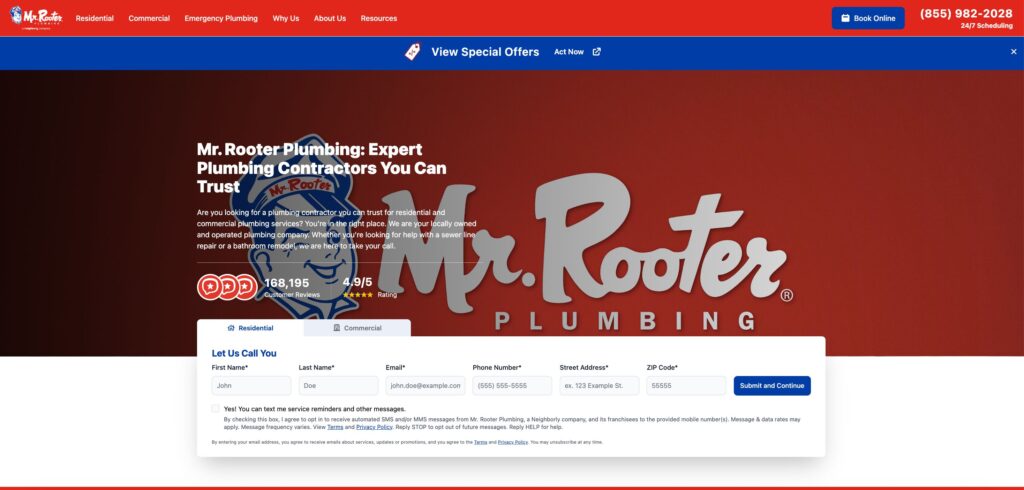
The Mr. Rooter website features a bold homepage with a prominent online booking form, emergency phone number, and clear navigation. Customer ratings, service categories, and multiple contact options make it easy for homeowners to request plumbing services quickly.
Benjamin Franklin Plumbing
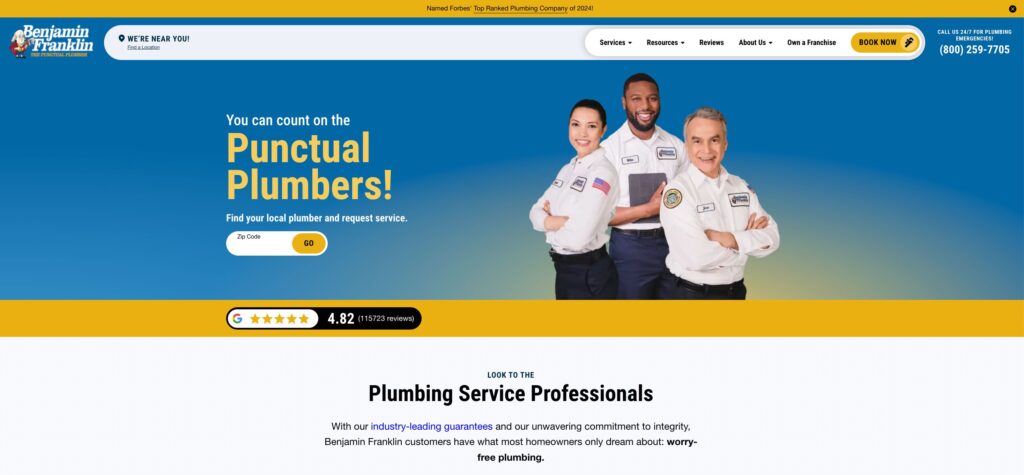
The Benjamin Franklin Plumbing website uses a clean, modern layout with a prominent “Book Now” button, location finder, and customer review rating displayed above the fold.
Its simple navigation and strong calls to action make it easy for visitors to find a local plumber and request service in just a few clicks.
After You Have Created a Plumber Website
Publishing your website is only the beginning. To attract more customers, make sure people can find it.
Add your plumbing website to:
- Google Business Profile
- Social media profiles
- Email signatures
- Business cards
- Service vehicles
Keep your website updated with new reviews, recent projects, and helpful content to improve your visibility in local search results.
If you’re growing your business, how to start a plumbing business covers licensing, marketing, pricing, and other essentials beyond your website.
Make Every Website Enquiry Count
Every enquiry from your website is a potential customer, so responding quickly and professionally matters.
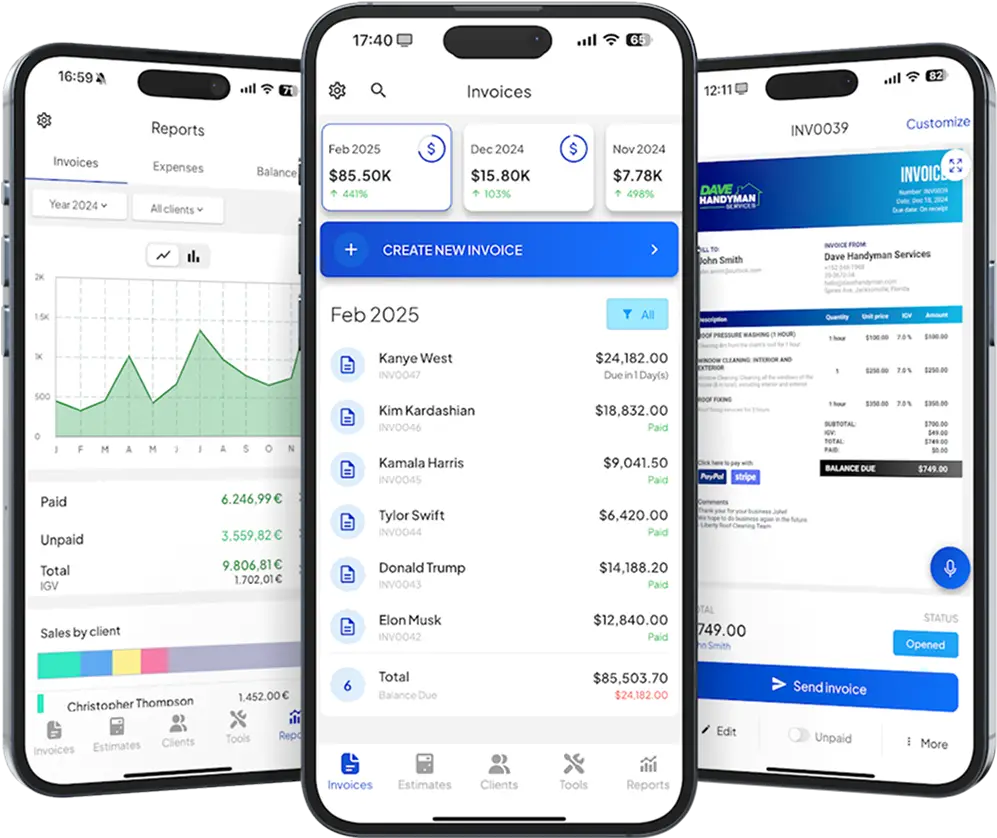
Using a plumbing estimate template lets you send clear quotes soon after someone requests service. After the work is complete, a plumbing invoice template, invoice maker, or free invoice generator helps you invoice the job, while plumbing software keeps your customer details, schedules, and paperwork organized as your business grows.