General Contractor Tools Every Professional Needs
Table of Contents
- What Are General Contractor Tools?
- Core Hand Tools Every General Contractor Needs
- Essential Power Tools for General Contractors
- Tool Belts, Storage, and On-Site Organization
- Digital Tools and Software for General Contractors
- Project and Document Management Tools for General Contractors
- Building Your General Contractor Tool List
- Conclusion
- FAQs
The right general contractor tools keep projects on schedule, protect your crew, and deliver consistent results job after job. A solid setup starts with hand tools like hammers, tape measures, speed squares, and levels, plus power tools such as drills, impact drivers, and saws. Many pros pair a general contractor tool belt with a suspension rig and labeled storage with digital tools: tracking software, inventory management apps, and AI tools that control budgets and avoid costly mistakes.
This guide breaks down a practical general contractor tool list, plus the software that turns your toolbox into a project management system.
What Are General Contractor Tools?
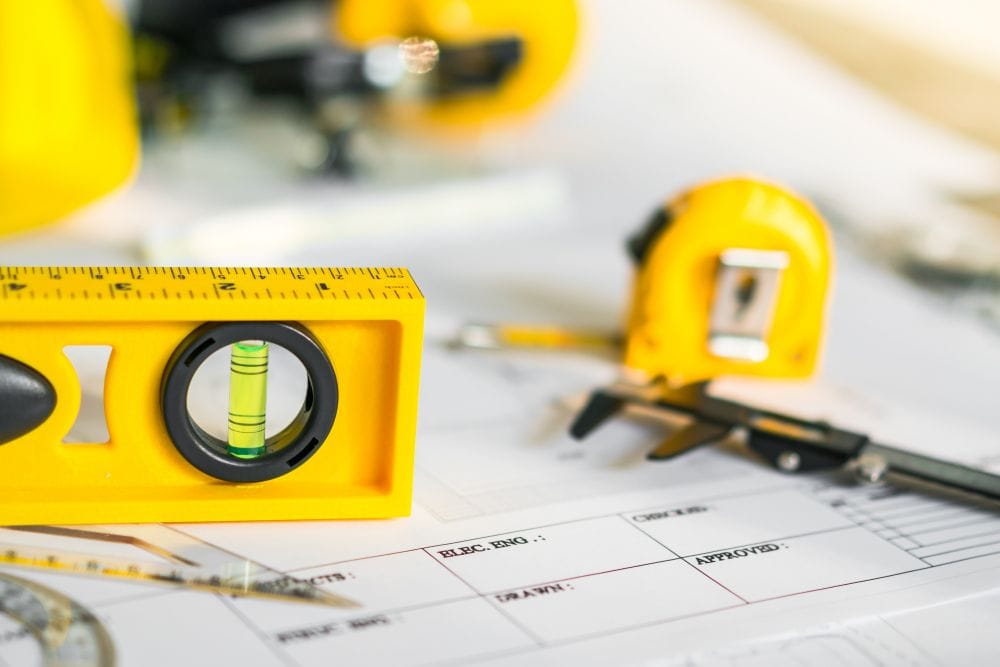
General contractor tools cover everything a contractor uses to plan, build, and manage a job. That’s everything from a tape measure to inventory management software. They fall into four categories: hand tools, power tools, storage gear, and digital tools.
Do general contractors supply tools for their crew? Usually, workers bring their own personal tool kit, while larger or specialty equipment is owned or rented by the company. Make sure you know before you bid.
Tool Categories at a Glance
| Category | Examples | Primary Purpose |
|---|---|---|
| Hand tools | Tape measure, speed square, hammer, utility knife | Daily measuring, layout, fastening, and demolition |
| Power tools | Drill, impact driver, circular saw, reciprocating saw | Faster cutting, drilling, fastening, and finishing |
| Storage & organization | Tool belt, suspension rig, tool bags, rolling tool box | Keep tools accessible, organized, and protected |
| Digital tools | Tool tracking software, inventory management, AI contractor apps | Manage equipment, schedules, budgets, and documentation |
Tip! See what a contractor does for the fuller picture, and if you’re still working out the basics, starting a general contracting business the right way makes budgeting for tools easier from day one.
Core Hand Tools Every General Contractor Needs
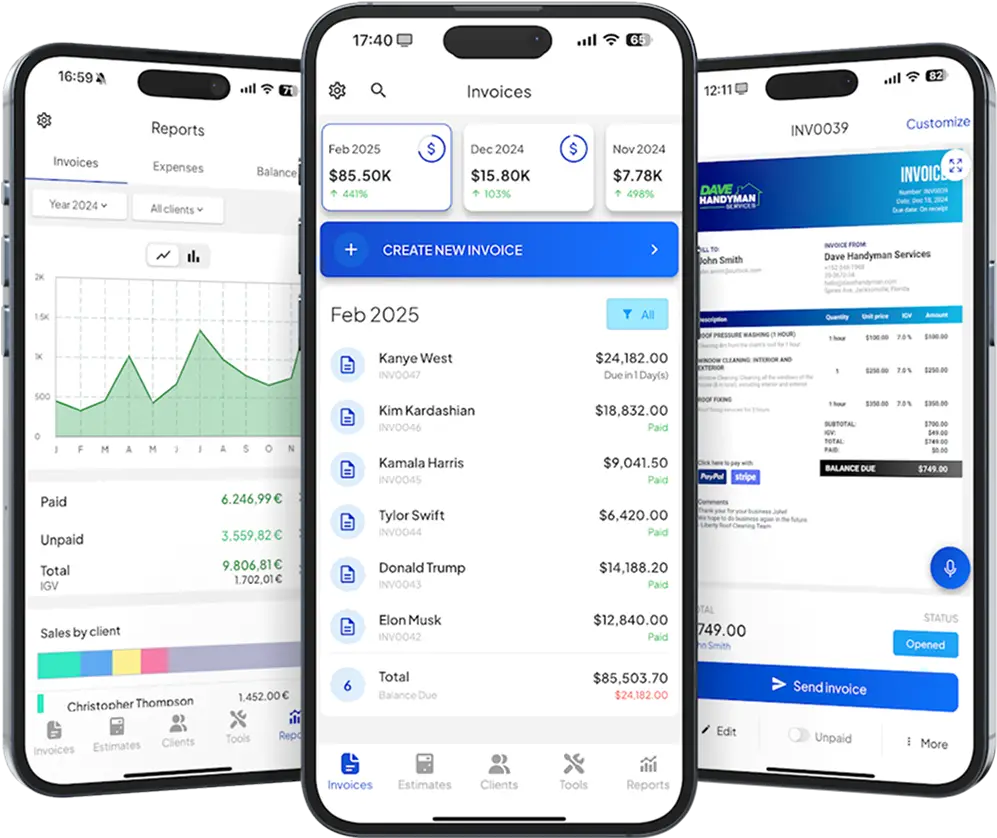
Hand tools are the foundation of any general contractor tool list — no batteries, no downtime.
Measuring and Layout Tools
- Tape measure (25-foot standard)
- Speed square for angle checks
- Torpedo level and a longer framing level
- Chalk line for straight cuts
Cutting and Fastening Tools
- Utility knife and wood chisels
- Screwdrivers, flathead and Phillips
- Adjustable wrench and pliers
Impact and Demolition Tools
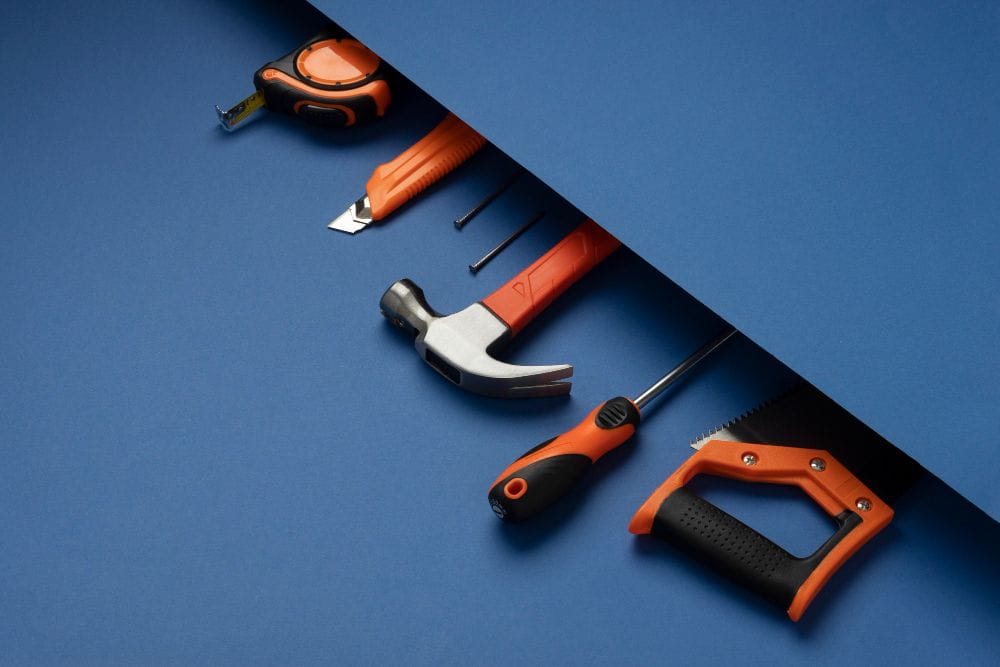
- Hammer (16–20 oz framing hammer)
- Pry bar for demolition
- Nail set for finishing work
Essential Power Tools for General Contractors
Drills and Impact Drivers
A cordless drill and impact driver are two of the most-used tools for general contractors — ideally on a matched battery system. Used for hanging cabinets, driving deck screws, etc.
Saws for Cutting
Top power tools for general contractors almost always include a circular saw, a reciprocating saw (“sawzall”) for demolition, and a miter saw for trim work.
Specialty Power Tools
Contractors may also need a rotary hammer for concrete, a nail gun for framing, or an orbital sander for finish work. Often rented for one-off jobs.
Tool Belts, Storage, and On-Site Organization
General Contractor Tool Belt and Suspension Rig
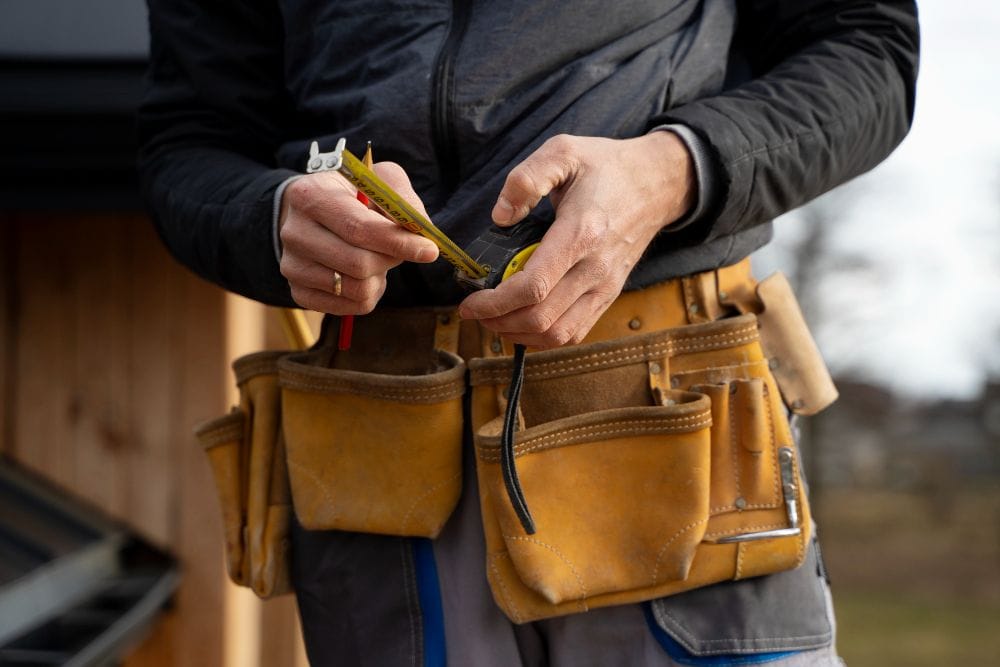
A general contractor tool belt keeps essentials within reach without weighing down your hips. Many pros now use a work waist tool belt with a suspension rig, shifting weight to the shoulders and cutting lower back strain on long shifts.
Tool Bags, Boxes, and Storage Systems
A rolling tool box handles larger equipment, modular tool bags cover transport, and bin or drawer systems keep fasteners organized by size.
Organizing for Speed and Safety
Labeling bins and doing a quick end-of-day count help crews move faster and avoid lost equipment. Prime contractors and subcontractors also share joint responsibility for jobsite compliance, so an organized site protects you legally, not just efficiently.
Digital Tools and Software for General Contractors
Tool Tracking and Inventory Management
A tool tracking and management solution for general contractors shows where every drill, ladder, or piece of equipment is, since lost tools quietly eat into profit. An inventory tracking tool flags maintenance needs too.
Asset Tracking and Management
Asset management tools go further than inventory lists, covering larger equipment like generators and vehicles. A good asset tracking tool for general contractors logs usage for maintenance and insurance records.
AI Tools for General Contractors
Best AI tools for general contractors in 2026 center on scheduling, budgeting, and photo-based progress tracking, often built into one contractor app.
According to InvoiceFly’s Salary & Time Gap Report 2026, contractors lose hundreds of hours a year to non-billable admin like invoicing. An invoice maker helps recover that time for paid work.

Project and Document Management Tools for General Contractors
Punch List Tools That Integrate with Procore
Top punch list tools for general contractors that integrate with Procore let field teams flag issues, assign fixes, and close them out without switching apps, keeping walkthroughs faster.
Document Management Software
Best document management tools for general contractors in 2025 and 2026 centralize permits, contracts, change orders, and inspection reports in one searchable place instead of scattered emails and files.
Email Marketing and CRM Tools
An email marketing tool for general contractor businesses helps stay in touch with past clients for repeat work, while a contractor CRM built for the trades keeps leads and follow-ups organized better than generic sales software.
Building Your General Contractor Tool List
How to Choose the Best Tools for General Contractors
Start with the jobs you take on most often. Framing calls for different priorities than finish carpentry. Buy quality where tools see daily use, and rent specialty equipment for occasional jobs. The Bureau of Labor Statistics puts the median wage for construction managers at $106,980, so balance tool purchases against your expected revenue and how much general contractors make in your market.
Recommended Brands and Starter Kits
Milwaukee, DeWalt, and Makita are common go-to brands for durable batteries and wide tool ecosystems. A starter kit includes a drill, impact driver, circular saw, tape measure, level, and a general contractor tool belt.
Upgrading as Your Business Grows
As crews grow, revisit your general contractor estimate process. Use a free contractor estimate template to help build tool costs into pricing. A clear general contractor job description also helps new hires arrive ready to use your tools.
Conclusion
A strong general contractor tool list combines dependable hand tools, the right power tools for your specialty, smart storage, and digital software that keeps projects and equipment under control. Physical tools help crews work faster and safer; tracking and document tools keep the business side just as efficient. As you grow, revisiting your general contracting business setup keeps your tools and operations growing together.