What Is a Quotation in Business? When to Send & What to Include
Table of Contents
What is a quotation in business, and how is it different from other pricing documents like estimates or invoices? If you run a small business, work as a freelancer, contractor, or in a trade, a quotation (or quote) is a simple document you give a customer that says: “This is what I will do, and this is what it will cost.” It shows the work you’ll do, the price, how and when they will pay, when the job will happen, and how long the price stays the same.
You normally send a quotation before the customer decides to hire you, so they can read it, compare it with other quotes, and then choose who to work with. Once the customer accepts your quote, it can act like an agreement: it says what you will do and how much they will pay you.
Quotations help small businesses and workers avoid problems later. They make it clear what work is included, what is not, and what the price covers.
They show exactly what work you will do and what the customer is paying for. This helps avoid confusion and money disputes, and makes it easier for customers to say yes to your seervices more quickly.
In this guide, you’ll learn what a quotation is, how it is different from an estimate or an invoice, when to send a quote, what to put in it, the main types of quotes you can use, and simple answers to common questions about using quotes to manage and grow your revenue.
What is a quotation in business?

A quotation in business is a simple document that tells a customer what you will do and what it will cost. A quotation (or quote) sets out a clear price for specific work or services before the customer decides to hire you. It becomes the written offer they can read, compare with other quotes, and then accept if they want to go ahead.
In most service businesses, a quotation is a fixed price offer. It shows:
- What job or service you will do
- How much the customer will pay in total
- How and when the customer will pay
- When the work will start and finish
- How long the quotation or quote stays valid
Once the customer accepts the quotation, it can act like an agreement. You deliver the work as described, and they pay the price you both agreed. The easiest way to create a quote is using a free quote generator.
Example of a quote
For example, a landscaping company might send a quotation for a backyard project that includes lawn installation, irrigation setup, and labor. The document would list each service, the total cost (e.g., $3,500), and a validity period such as 30 days.
Quotations are especially common in service industries like construction, marketing, IT, and consulting. They help standardize pricing and reduce disputes by documenting everything in advance.
If you run a business or want to start one, it’s useful to know the documents you use from the first price talk to the final payment.
Start with our guides on what is an estimate and the article you are currently reading, which is a guide to quotation. These will teach you how to set prices and send clear offers to customers.
Then read about what is an invoice to see how to ask for payment after the work is done.
If you work with repeat customers, learn what is billing and how billing works for ongoing jobs. After you get paid, our guide on what is a receipt explains why you should always give proof of payment for each job.
Why do businesses need to use quotes?
Quotations play a key role in how businesses communicate pricing and secure work. Instead of long explanations, here are the main reasons businesses rely on quotes:
- Clear pricing upfront: A quotation shows exactly what the customer is paying for. It breaks down services, quantities, and total cost, so there are no surprises later.
- Faster decision-making: When customers receive a clear, structured quote, they can quickly compare options and approve the job without back-and-forth emails.
- Reduced disputes: A written quote documents the scope of work and price. If issues come up later, both sides can refer back to the agreed terms.
- More professional image: A detailed quotation shows organization and credibility. This can make a big difference when competing against other businesses offering similar services.
- Better pricing control: Quotes help businesses include all costs (labor, materials, and overhead expenses) so nothing gets missed. This also helps protect your profit margin.
- Higher conversion rates: A well-presented quote builds trust and makes it easier for customers to say yes, especially when everything is clearly outlined.
If you regularly send quotes, using a free quote generator can help you create professional, accurate documents in minutes without manual formatting.
When to send a quotation
You should send a quotation when a customer asks for pricing and the job is clear enough for you to give a fixed cost. At this point, you understand what needs to be done, roughly how long it will take, and what materials or tools you’ll need.
This usually happens after an initial chat, site visit, or short consultation where you ask questions and look at the work. Once you have the details, you can write a quote that the customer can review and compare with other offers.
For example:
- A contractor visits a property, checks the work, and then sends a quote for $8,000
- A marketing agency reviews a client brief and quotes $1,500 for a campaign
- A freelancer receives a project description and replies with one fixed price for the job
If you send a quotation too early, you risk guessing and giving the wrong price. If you send it too late, you can slow down the sales process and give the customer time to choose someone else.
How long is a quote valid for?
Most quotations include a validity period, which is the time frame during which the price remains fixed. This is typically between 7 and 30 days.
For example:
- A supplier may issue a quote valid for 14 days due to fluctuating material costs
- A freelancer may offer a 30-day validity period for services
This protects the business from price changes in labor, materials, or market conditions. If the customer accepts the quote within that time, the price stays the same.
Can a quotation price change?
Yes, but only under certain conditions.
Once a quotation is accepted, the price is generally fixed. However, it can change if:
- The scope of work is modified
- Additional services are requested
- Unexpected issues arise
For example, a contractor quoting $10,000 for a renovation may need to revise pricing if structural issues are discovered. In such cases, a revised quotation is usually issued.
Before acceptance, businesses can adjust quotes if costs change, but they should clearly communicate updates to the customer.
How to use quotation in business

Using a quote in business is a key step between your first talk with a customer and the final invoice. It turns a rough price discussion into a clear written quote the customer can read, understand, and accept.
Businesses use a quotation to:
- Show a clear price before any work starts
- List what is included and what is not in the job
- Get written approval so both sides know what to expect
A simple workflow for using a quotation looks like this:
- A customer asks about a job or service
- You ask questions, visit the site, or review a brief
- You send a quotation in business that explains the work and the price
- The customer accepts the quote in writing (email, signature, or message)
- You do the work based on the quotation and then send an invoice for payment
From the customer’s side, a quotation or quote helps them:
- Compare prices from different businesses
- Check exactly what they are paying for
- Decide whether to move forward with the job
When you use a quotation for each job, you can help reduce confusion and avoid disputes over price or scope of work. Quotation makes it easier for customers to approve and finally pay for work on time.
For example, a graphic designer might send a quote for logo design services. Once the client approves it, the designer begins work based on the agreed terms.
Customers use quotations to:
- Compare pricing from different vendors
- Understand what is included in the service
- Decide whether to proceed
In real-world scenarios, quotes are often part of a workflow:
- Inquiry from customer
- Discussion or consultation
- Quotation sent
- Customer approval
- Work begins
If you’re in construction or trade services, this construction quotation guide shows how quotes fit into real project workflows.
What does a quotation include
A well-structured quotation contains several key elements that ensure clarity and professionalism.
- Itemized breakdown
- List of products or services
- Quantities and individual prices
- Total cost
- Final fixed price
- Any taxes or discounts included
- Terms and conditions
- Payment terms (e.g., 50% upfront, 50% on completion)
- Delivery timelines
- Warranty or service terms
- Validity period
- How long the quote remains valid (e.g., 14 days)
- Business information
- Seller and buyer details
- Contact information
For example, a cleaning company might include:
- Weekly cleaning service: $120
- Monthly total: $480
- Payment due within 7 days
Elements of a quote
When creating a quote, remember to include these sections.
- Header information: This section includes the seller’s business name, address, contact details, and often a company logo, which makes it easy for the customer to identify the seller.
- Customer details: For record-keeping purposes, it also helps to include the customer’s name, company (if applicable), and their contact details.
- Quote number: The quote number acts as a unique identifier for each quote, allowing both the business and the customer to easily reference the quote in future communications.
- Date of issue: Along with the quote number, it’s important to highlight when the quote is issued, helping businesses to keep track of quotes, especially when adjustments are required.
- List of products/services: Within a quote, you have the opportunity to provide a detailed breakdown of what’s being quoted, clarifying quantities, unit prices, and any unique details.
- Estimated price: Most importantly, a quote should have a total estimated cost for the products/services listed. This should also include taxes and other charges if applicable.
- Terms and conditions: If you have any special terms, such as delivery timelines or payment conditions, a quote provides an opportunity to outline these details ahead of the transaction.
- Validity Period: Since prices often change from year to year, it’s essential to specify how long the quote remains valid. After this period, the terms or pricing may be subject to revision.
If you need a faster way to structure this, using a free quote generator can help standardize your documents.
Types of business quotes
There are several types of quotations used in different situations, depending on how pricing is structured.
Fixed price quote
A fixed price quote is the most common. It provides a set cost for the entire job. For example, a contractor may quote $6,000 for a kitchen remodel.
Time-based quote
A time-based quote charges based on hours or days. For instance, a consultant might quote $100 per hour for 20 hours of work.
Unit-based quote
A unit-based quote is used for products or services priced per item. A supplier might quote $10 per unit for 500 units.
Recurring quote
A recurring quote applies to ongoing services. For example, a maintenance company may quote $300 per month for regular service.
Each type of quote serves a different purpose depending on the nature of the work and how predictable the costs are.
Is a quotation legally binding?

A quotation can become legally binding once it is accepted by the customer, especially if it includes clear terms and conditions.
When a customer agrees to a quote (either by signing it, approving it in writing, or confirming via email) it can form a contract. This means the business is expected to deliver the services at the agreed price, and the customer is expected to pay.
For example, if a client accepts a $2,000 quote for website development, the business cannot later increase the price without agreement.
However, the exact legal status may depend on local laws and how the quotation is structured. Including clear terms helps strengthen its enforceability.
What happens if a customer doesn’t pay a quote?
If a customer accepts a quotation but fails to pay, the situation is treated as a breach of agreement.
In practice, businesses may:
- Send reminders or follow-up invoices
- Pause or stop work
- Charge late fees if stated in terms
- Take legal action if necessary
For example, a contractor who completes a $5,000 project based on an accepted quote may pursue payment through legal channels if the client refuses to pay.
Clear payment terms in the quotation can help prevent these issues. You can also transition an approved quote into a bill using a free invoice generator.
Quotes vs other documents
Quotes are only one of several documents you use to talk about price and payment. In business, it helps to know not only what quotation is, but also how a quotation compares to other paperwork like estimates, invoices, proposals, and proforma invoices so you use the right document at the right time.
Quotation vs business proposal
A quotation and a business proposal serve different purposes, even though both are used in sales.
A quotation focuses on pricing and specific deliverables. It is usually requested by a customer who already knows what they need. The document answers a simple question: “How much will this cost?”
A business proposal, on the other hand, is more detailed and persuasive. It often includes strategy, timelines, case studies, and explanations of how the service will solve a problem.
For example, a freelance web designer might send:
- A proposal explaining design approach, timeline, and goals
- A quotation showing a fixed price of $2,000 for the project
In short, proposals sell the idea, while quotations confirm the price.
Quotation vs. proforma invoice
A proforma invoice looks similar to a quotation but serves a slightly different role.
A quotation is sent before a buyer commits. It is an offer that outlines pricing and terms. A proforma invoice is usually issued after the buyer shows intent to proceed but before the final invoice is created.
For instance, an exporter selling goods internationally may send:
- A quotation with pricing details
- A proforma invoice for customs or advance payment
According to the U.S. Department of Commerce, proforma invoices are often used in international trade to declare value before shipment.
The proforma invoice often includes more formal billing details and may be used for financial or legal purposes, while a quotation is mainly for agreement on price.
Quotation vs. estimate
One of the most common points of confusion is the difference between a quotation and an estimate.
A quotation provides a fixed price that does not change once accepted, unless the scope changes. An estimate is an approximate cost that can vary depending on actual work done.
For example:
- A plumber may give an estimate of $150–$300 for a repair
- After inspection, they provide a quotation of $220 for the job
Estimates are useful when details are unclear. Quotations are used when the scope is defined and pricing can be locked in.
If you want to go deeper into pricing models, see hourly vs flat rate pricing.
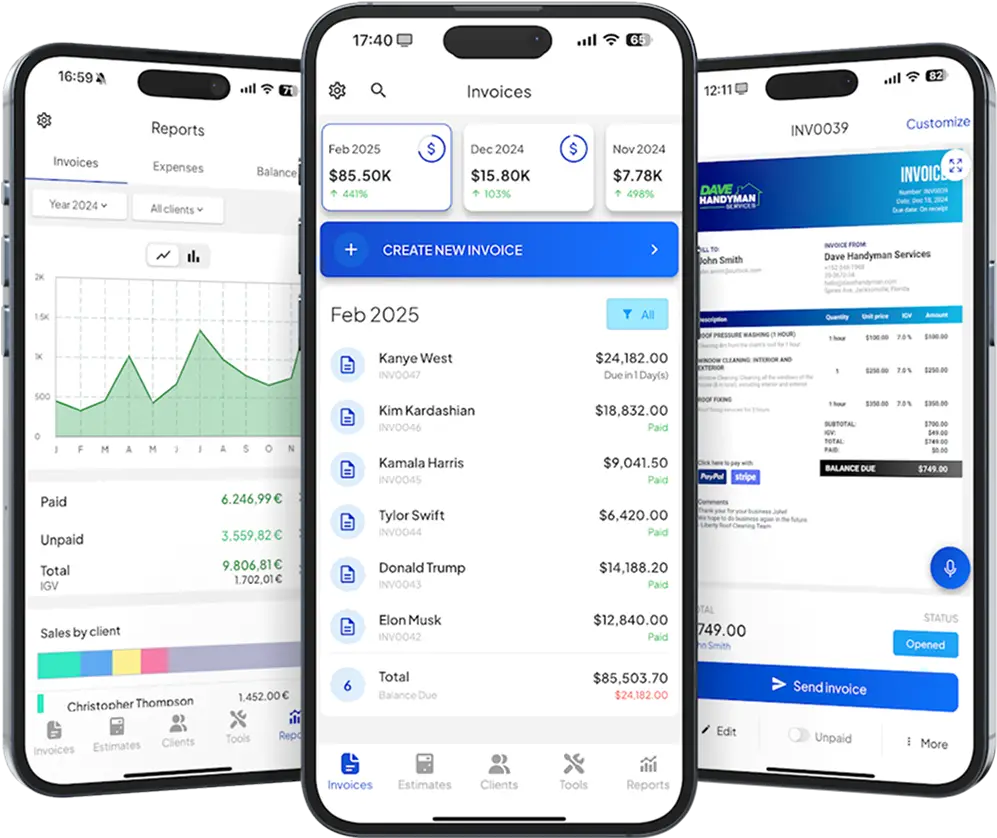
Create quotations with Invoice Fly
Using digital tools makes it faster to create and manage quotations without manual work.
For example, a freelancer can reuse templates for consistent pricing, while a contractor can send quotes right after a site visit to win jobs faster.
Common features include:
- Pre-built quote templates
- Automatic calculations
- Easy editing and duplication
- Quote tracking
Once a quote is approved, the next step is turning it into an invoice. Invoice Fly lets you handle this in one place: create, send, track, and convert quotes without re-entering details.If you want a simpler workflow, try the invoice maker and manage everything from quote to payment in one place.