Invoice Fly vs QuickBooks: Which Is Better for Your Business?
Table of Contents
Choosing invoicing software comes down to one practical question: do you mainly need to send invoices and get paid, or do you also want help managing your books? That is the key difference in this Invoice Fly vs QuickBooks comparison.
Invoice Fly keeps estimates, invoices, and payments simple without asking you to learn a full accounting system. QuickBooks covers those tasks too, but also handles bank reconciliation, bills, and financial reports. The better fit depends on the work you manage each day and how much accounting support you need. Here’s how they compare.
Invoice Fly vs QuickBooks at a Glance
| Feature | Invoice Fly | QuickBooks Online |
|---|---|---|
| Best for | Straightforward estimating, invoicing, and payment tracking | Invoicing plus bookkeeping and financial management |
| Starting regular price | $8.99/week or $98.99/year | $38/month for Simple Start |
| Invoices and estimates | Unlimited on both paid plans | Included; some tools vary by plan |
| Recurring invoices | Yes | Yes |
| Online payments | Through connected Stripe or PayPal accounts, supporting cards, digital wallets, ACH, and SEPA | Through QuickBooks Payments |
| Payment reminders and status | Automatic reminders; sent, viewed, paid, and overdue tracking | Reminders, status updates, and payment matching |
| Expense and receipt tools | Expense tracking and dedicated receipt scanner | Bank-feed categorization, receipt capture, and bookkeeping records |
| Time tracking | Built in | Basic time tracking from Essentials; advanced QuickBooks Time plans cost extra |
| Full bookkeeping | No | Yes |
| Bills and bank reconciliation | Not designed for full bill management or bank reconciliation | Yes; available tools vary by plan |
| Inventory and project profitability | No | Included with Plus |
| Mobile and browser access | Yes | Yes |
Quick verdict: Invoice Fly is a strong fit if you want to spend less time on estimates, invoices, receipts, and payment follow-ups. QuickBooks makes more sense if you also need bookkeeping, bank reconciliation, bill management, inventory, project reports, or a system your accountant can work in.

What Is Invoice Fly?
Invoice Fly is invoicing and estimating software for freelancers, contractors, and small service businesses. It is built around the admin tasks that often pile up after a busy day, from preparing quotes to checking which customers have paid.
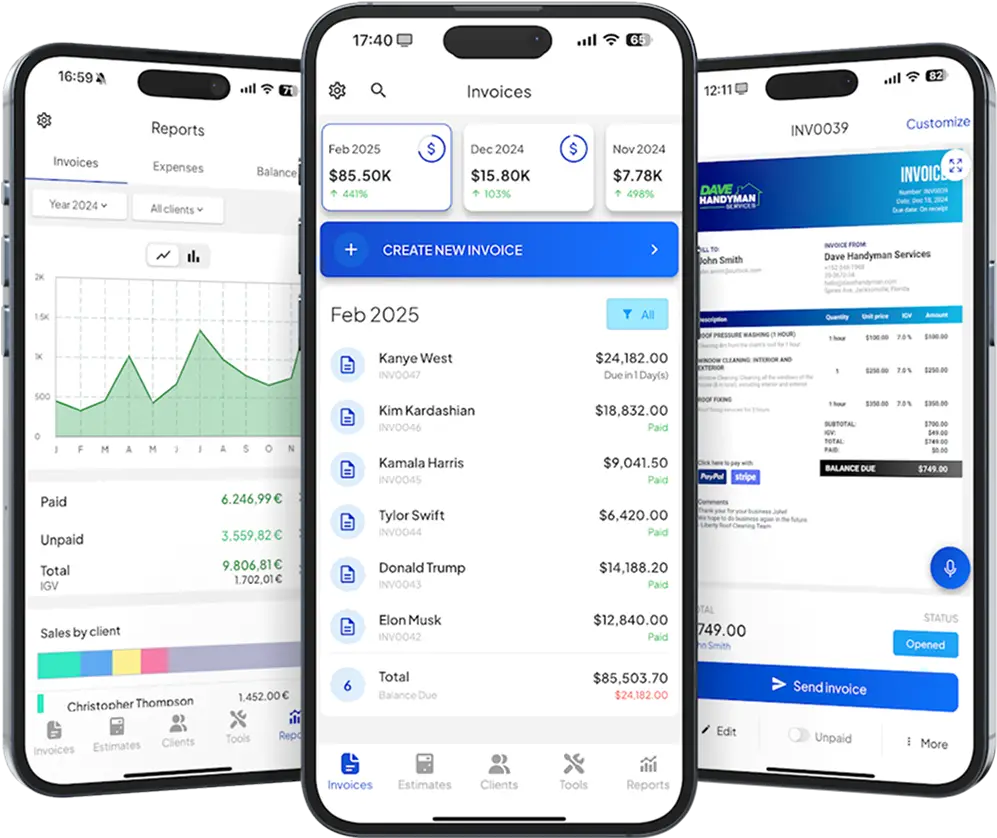
The app guides you through the full billing process without requiring a complicated accounting setup. You can send an estimate, request a signature or deposit, and turn the approved work into an invoice that shows the customer what they owe. You can then accept payment through a connected Stripe or PayPal account.
Invoice Fly’s invoice software tracks whether each invoice was sent, viewed, paid, or overdue, so you know when to follow up. Both paid plans include unlimited invoices and estimates, along with recurring invoices, customization, reports, time tracking, receipt scanning, client records, and expense tracking.
Invoice Fly is not a full accounting system. You may need another solution if your business requires balance sheets, bank reconciliation, bill management, inventory accounting, or detailed month-end reports.
What Is QuickBooks?
QuickBooks Online is Intuit’s cloud accounting platform. Invoicing is only one part of what it does. The software also imports bank activity, categorizes income and expenses, stores receipts, manages bills, produces financial reports, and gives accountants access to the books.
QuickBooks features vary across four main plans. Simple Start gives one user the main accounting and invoicing tools. Essentials supports three users and adds more reports and basic employee time tracking. Plus supports five users and adds inventory, budgets, and project profitability. Advanced supports 25 users and adds custom reports, workflows, user permissions, and batch transactions.
These extra tools can save time when every invoice and payment needs to flow into your accounts. The tradeoff is that QuickBooks takes longer to set up and learn than a focused invoicing app. You can review QuickBooks pricing to see the current plans before choosing a subscription.
Invoice Fly vs QuickBooks: Key Differences
Invoicing and Estimates
Both products cover the basics well. You can create estimates, turn accepted work into invoices, customize documents, collect payments, and set up recurring invoices and reminders. If you are still deciding what your invoices should include, this guide on how to write an invoice can help you compare their fields and customization options.
Invoice Fly keeps estimating and invoicing at the center of the experience. Its estimate and quote software supports signatures and deposit requests. A contractor can confirm the scope of a job and collect money upfront instead of chasing approval through emails and text messages.
QuickBooks connects invoices to your accounting records. It also supports custom sales forms and progress invoicing. When a customer pays, QuickBooks can update the invoice, accounts receivable, and financial reports. If you only need to send documents and track payments, you may not need these extra accounting tools.
Accounting and Bookkeeping
Accounting is where the two products differ most. QuickBooks can categorize transactions, connect financial accounts, reconcile activity, manage bills, and produce accounting reports. Higher plans add budgets, inventory, project profitability, and more financial controls.
Invoice Fly takes a simpler approach. Its reports help you monitor revenue, expenses, invoices, and clients, which may be enough if your main goal is to stay on top of everyday billing. However, it is not designed to replace full accounting software.
Whichever platform you choose, the software is only one part of managing your finances. The SBA’s business-management resources can help you understand the wider financial responsibilities of running a company. The FDIC’s small-business training also covers practical skills such as recordkeeping and cash-flow management.
Expense Tracking and Receipt Management
Invoice Fly includes expense tracking, business reports, and a dedicated receipt scanner app. You can scan a receipt as soon as you buy materials or supplies instead of finding a faded copy in your truck, bag, or desk months later.
QuickBooks connects receipts and expenses to your bookkeeping. Its mobile app can read receipt details, match a receipt to a bank transaction, or create a new expense. You can also mark an eligible cost as billable and add it to a customer invoice.

Time Tracking and Business Management
Invoice Fly includes time tracking for professionals who bill by the hour. You can assign time entries to a client or project, then use those records when you create an invoice. That means fewer notes to keep and less chance of forgetting billable time at the end of the week.
QuickBooks Essentials, Plus, and Advanced include basic time tracking for billable customer hours. Intuit also sells separate QuickBooks Time plans with more tools for managing employees. Plus adds project profitability and inventory. Advanced adds more workflows and user controls.
Online Payments and Payment Reminders
Getting paid on time can make a real difference to a small business. In the Federal Reserve’s Small Business Credit Survey, 51% of surveyed employer firms reported uneven cash flow as a financial challenge. Both Invoice Fly and QuickBooks offer tools that can make payment collection and follow-up easier.
With Invoice Fly, customers can pay through a connected Stripe or PayPal account. The available payment methods, fees, and payout times depend on the provider and your account. Invoice Fly also tracks payment status and sends automatic reminders. Adding clear invoice payment terms gives customers the due date and payment details upfront, which can help prevent confusion later.
QuickBooks uses its own QuickBooks Payments service, so payments connect directly to your invoices and accounting records. Fees depend on the payment method and account, so check the current QuickBooks Payments rates before signing up.
Ease of Use and Mobile Access
Both platforms work on mobile devices and in a browser. Invoice Fly focuses on fewer tasks, which can make it faster to learn. If you want to create an estimate from a job site, record an expense, check a payment, or send an invoice, you can get to the tool you need without working through a full accounting system.
QuickBooks asks more of you during setup, and some accounting terms may take time to learn. In return, it gives you a fuller view of income, expenses, debts, cash flow, and profit. It also connects with many other business apps, which can become more valuable as your company grows.
Invoice Fly vs QuickBooks Pricing
| Pricing detail | Invoice Fly | QuickBooks Simple Start | QuickBooks Essentials | QuickBooks Plus | QuickBooks Advanced |
|---|---|---|---|---|---|
| Price | $8.99/week or $98.99/year | $38/month | $85/month | $140/month | $340/month |
| Users | 1 | 1 | 3 | 5 | 25 |
| Main features | Unlimited invoices and estimates with full paid access | Core accounting, reports, invoices, and payments | Enhanced reports and basic time tracking | Inventory, budgets, and project profitability | Custom reporting, workflows, permissions, and batch tools |
Invoice Fly’s pricing plans cost less, and its yearly plan costs less than paying the weekly rate for a full year. QuickBooks costs more, but its plans include broader accounting and bookkeeping tools. Check each provider’s website for the latest details before signing up. Payment processing, payroll, QuickBooks Time, expert bookkeeping, and other add-ons may cost extra.
Invoice Fly vs QuickBooks for Freelancers and Small Businesses
If you are looking for an alternative to QuickBooks, focus on the work you want to make easier. Invoice Fly may be the better QuickBooks alternative for freelancers, cleaners, landscapers, electricians, and consultants who want to finish admin work quickly and get back to paying jobs. It brings estimates, invoices, receipts, billable time, and payment follow-ups together without requiring a full set of books. A consistent invoice automation process can reduce repetitive work even further.
QuickBooks may work as an Invoice Fly alternative for a growing business with employees, inventory, bills, several users, or an outside accountant. Those businesses may benefit from its financial statements, bank reconciliation, project-profitability data, and integrations. Smaller service businesses that do not need those tools may find Invoice Fly easier and more cost-effective.
Think about what slows you down each week. If it is creating documents and following up on payments, Invoice Fly keeps those jobs simple. If it is moving information between your invoicing app, bank records, and accounting system, QuickBooks can keep everything together and reduce duplicate work.

Invoice Fly vs QuickBooks: Which Should You Choose?
When comparing QuickBooks vs Invoice Fly, the decision comes down to how much accounting support you need. Invoice Fly is likely to offer better value if your priority is managing estimates, invoices, expenses, time, and payments without a complicated setup.
Choose QuickBooks when full bookkeeping, bank reconciliation, or detailed financial reporting is essential to your business. Otherwise, Invoice Fly gives most freelancers, contractors, and small service businesses the everyday tools they need at a lower subscription price.